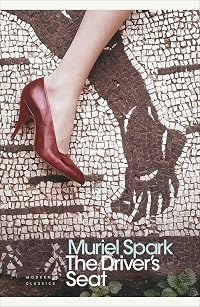
The Driver's Seat
by Muriel Spark
On This Page
Description
Spark's 1970 novel of a woman gone mad was dubbed "so stark as to be nightmarish" by The New Yorker. The story details the last day of protagonist Lise, who, while on holiday in Europe, is about to be murdered.Tags
Recommendations



























Member Recommendations

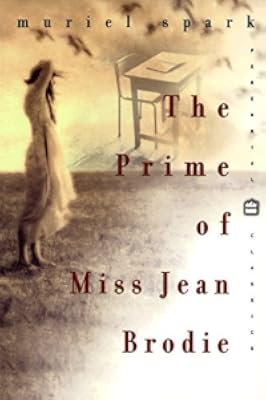
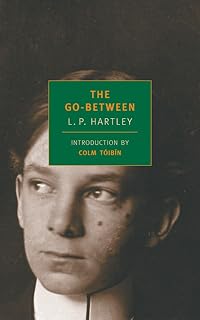
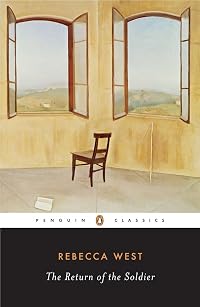
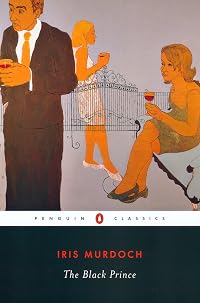
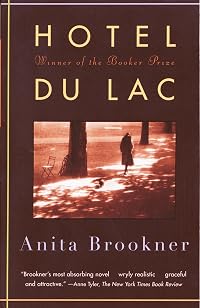
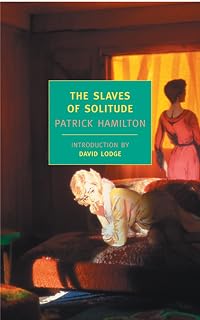
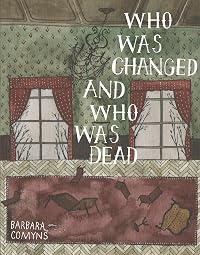
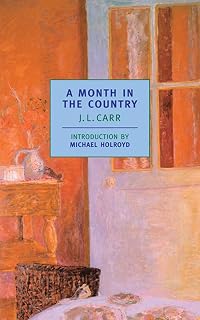
AaronPt Both are odd, short novels that mess around with the conventions of crime fiction.

Member Reviews
This is only my second ever Spark; I greatly enjoyed The Prime of Miss Jean Brodie, and seeing a familiar author was what prompted me to pick this up at a second-hand stall with high expectations.
Well, expectations be damned, nothing could have prepared me for the dark, brilliant chaos of The Driver’s Seat. Not one of her most famous works, I understand, this slim volume clocks in at barely over one hundred pages in my Penguin edition. It’s the perfect choice for an evening of being transported to a completely mental world of loud, non-matching colours, where nothing is as it seems.
I’ll give my best to talk about it spoiler-free, although that’s exceptionally difficult. It captures around 24 hours of a woman’s life. When we show more first meet Lise, she’s looking to buy a dress in preparation for a long overdue holiday abroad, “in the South”, as she calls it. The very choice of dress, as well as her general behaviour in the shops, already has the reader asking many questions about Lise’s personality and state of mind. As in any great work, it’s only a careful reading that helps us piece the story together and answer at least some of the nagging questions. One such important clue is, for instance:
"the accountant’s office where she has worked continually, except for the months of illness, since she was eighteen, that is to say, for sixteen years and some months."
This helps us figure out Lise’s age, and confirms that we’re not looking at an ordinary heroine.
It seems unimaginable to describe a character’s manic determination in any other way than in the present tense. In the world of this novella, things are happening, they are happening now, and they are happening loudly. Lise’s journey mirrors her preparations: only one kind of dress will do, just as only one kind of man will do to complete her quest, and she recognises both the instant she sees them.
Like the old Mrs Fiedke, the readers find themselves wanting to help Lise find her man, looking left and right through the crowds of tourists (few of them boasting colours as bold as our girl), past the disturbing headlines of a military coup (at least it’s not happening to us!).
With her old-fashioned lipstick and loud dress with a modestly low hem (we don’t even see her knees!), Lise navigates the brave new world of air travel, novel electronics, sexual revolution, student demonstrations, hippies, and pop music with an “abstract eagerness to be somewhere else”. But which one of the oddball men she meets is the one she’s looking for? And where is it that she wants to be?
A strange remnant of another time, Lise has had the answers long before the reader asked the questions. She plays by her rules, with a striking method to her madness, a reminder to
"never talk to the sort of girls that you wouldn’t leave lying about in your drawing-room for the servants to pick up."
This book feels like an out-of-body experience at the end of which you’re thrust back into your mortal coil with a new appreciation for life, the changes it brings, and the stories of strangers, few of which ever end up being told properly. show less
Well, expectations be damned, nothing could have prepared me for the dark, brilliant chaos of The Driver’s Seat. Not one of her most famous works, I understand, this slim volume clocks in at barely over one hundred pages in my Penguin edition. It’s the perfect choice for an evening of being transported to a completely mental world of loud, non-matching colours, where nothing is as it seems.
I’ll give my best to talk about it spoiler-free, although that’s exceptionally difficult. It captures around 24 hours of a woman’s life. When we show more first meet Lise, she’s looking to buy a dress in preparation for a long overdue holiday abroad, “in the South”, as she calls it. The very choice of dress, as well as her general behaviour in the shops, already has the reader asking many questions about Lise’s personality and state of mind. As in any great work, it’s only a careful reading that helps us piece the story together and answer at least some of the nagging questions. One such important clue is, for instance:
"the accountant’s office where she has worked continually, except for the months of illness, since she was eighteen, that is to say, for sixteen years and some months."
This helps us figure out Lise’s age, and confirms that we’re not looking at an ordinary heroine.
It seems unimaginable to describe a character’s manic determination in any other way than in the present tense. In the world of this novella, things are happening, they are happening now, and they are happening loudly. Lise’s journey mirrors her preparations: only one kind of dress will do, just as only one kind of man will do to complete her quest, and she recognises both the instant she sees them.
Like the old Mrs Fiedke, the readers find themselves wanting to help Lise find her man, looking left and right through the crowds of tourists (few of them boasting colours as bold as our girl), past the disturbing headlines of a military coup (at least it’s not happening to us!).
With her old-fashioned lipstick and loud dress with a modestly low hem (we don’t even see her knees!), Lise navigates the brave new world of air travel, novel electronics, sexual revolution, student demonstrations, hippies, and pop music with an “abstract eagerness to be somewhere else”. But which one of the oddball men she meets is the one she’s looking for? And where is it that she wants to be?
A strange remnant of another time, Lise has had the answers long before the reader asked the questions. She plays by her rules, with a striking method to her madness, a reminder to
"never talk to the sort of girls that you wouldn’t leave lying about in your drawing-room for the servants to pick up."
This book feels like an out-of-body experience at the end of which you’re thrust back into your mortal coil with a new appreciation for life, the changes it brings, and the stories of strangers, few of which ever end up being told properly. show less
Strange little book this one at just over 100 pages. In this very short space of time Spark creates Lise, a very memorable character who I was never quite sure of. I spent the whole time wondering why she’s strange, what her motivations are, and whether she should be pitied or, in fact, envied.
While the central character is strong, those around Lise are only barely sketched in. The writing has a very ephemeral feel about it. Sometimes I wondered if other characters were only figments of Lise’s imagination.
The title may perhaps refer to the fact that she lives life on her own terms and isn’t bothered about how others view her. She dictates exactly what happens to her right up to her tragic finale.
But is it really a tragedy if you show more decide how you want your life to turn out even if others think you are out of your mind? I think this is maybe what Spark is trying to get at. However, it’s really too short to get a thesis of any strength across.
In effect, it’s a well-written short story about self-determinism. Whether that’s self-determinism gone wrong or not is up to the reader to decide it seems. show less
While the central character is strong, those around Lise are only barely sketched in. The writing has a very ephemeral feel about it. Sometimes I wondered if other characters were only figments of Lise’s imagination.
The title may perhaps refer to the fact that she lives life on her own terms and isn’t bothered about how others view her. She dictates exactly what happens to her right up to her tragic finale.
But is it really a tragedy if you show more decide how you want your life to turn out even if others think you are out of your mind? I think this is maybe what Spark is trying to get at. However, it’s really too short to get a thesis of any strength across.
In effect, it’s a well-written short story about self-determinism. Whether that’s self-determinism gone wrong or not is up to the reader to decide it seems. show less
This was just a magnificent read, and totally unexpected. It has the charm and wit that you'd expect from Muriel Spark, combined with her extraordinary talent of flashing forward when you least expect it, but for a crime novel this one really has you guessing up until the last few pages, and even then you come away thinking - what on earth was that? This will count as one of those books I wish I could reread with a blank memory so that the surprises could all happen again.
STELLAR job of twisting this one! Dame Spark takes us on a twisting, turning ride to the ultimate ending by turning the classic murder mystery story inside out, & approaching it by describing the last few days of Lise' life. All we ever know of her is her first name, we don't know where she comes from, just that she worked for 18 years at some firm, & went on a holiday to Italy, where she does some strange things, like stuffing her passport in between the cushions of a cab & knowingly letting the cab drive off without it, befriending random strangers & then stealing their cars, telling everyone she meets different stories about her life, etc. This was a book I couldn't put down, & finished inside of 2 HOURS. It's a short novella, but is show more eerie, creepy, & riveting. show less
From the first paragraph of "The Driver's Seat," it's clear there is something very wrong with our protagonist, Lise, and the feeling only intensifies as the story goes on. She yells at shop attendants, buys garish, mismatched clothes, bursts into tears without provocation, and in her modern apartment, all the furniture--bed, desk, shelves--tucks seamlessly into pinewood walls, much as Lise tucks parts of herself away from our view.
This is a deeply unnerving story. The economical prose is measured but not clinical. Lise's disturbances--laughing too loud and for too long, taking undue interest in strangers, lying, putting on accents--are largely harmless breaches of the social code. But they raise our hackles, tingling our primal sense show more that someone who constantly flouts these unspoken rules is an outsider, an unknown, a malevolent force. Lise feels like an invader here, and the effect is marvelously frightening, not to mention ironic given the shocking reveal that comes about a quarter of the way through.
Lots to chew on here. This, to me, is the platonic ideal of a book club read: short, easy to read, endlessly discussable, provokes a strong emotional reaction. You can read it here. show less
This is a deeply unnerving story. The economical prose is measured but not clinical. Lise's disturbances--laughing too loud and for too long, taking undue interest in strangers, lying, putting on accents--are largely harmless breaches of the social code. But they raise our hackles, tingling our primal sense show more that someone who constantly flouts these unspoken rules is an outsider, an unknown, a malevolent force. Lise feels like an invader here, and the effect is marvelously frightening, not to mention ironic given the shocking reveal that comes about a quarter of the way through.
Lots to chew on here. This, to me, is the platonic ideal of a book club read: short, easy to read, endlessly discussable, provokes a strong emotional reaction. You can read it here. show less
The trick of challenging the reader's assumptions by reversing the conventions of a particular literary genre is one that's difficult to pull off in anything longer than a short story (and even there it can seem like a joke that goes stale before it reaches its punchline, as Martin Amis has demonstrated). I think Muriel Spark just about gets away with it here. She doesn't throw the trick in our face, but gives us several chapters to work out for ourselves what she's up to, and she doses the comedy very neatly so that things never become merely silly: we are always kept aware that there is something very nasty going on behind all the absurdity. It is very much of its time: we would probably throw up our arms in horror and call it show more tasteless if it had been written in the last decade (or by a man, for that matter), but I think it still bears reading today. show less
What a strange, disconcerting novella, a kind of inverted crime novel and black comedy in which we know what seems to be the most important part of the ending very early.
The main protagonist is Lise, and we are introduced to her as she is arguing with a shop assistant trying to sell her a stain resistant dress. We can see from the start that Lise is at best eccentric and possibly mad, and we follow her demise almost in slow motion. As ever with Spark there are some very funny observations, but she seems determined to flout the conventions of the form throughout, and on her own terms she succeeds brilliantly.
The main protagonist is Lise, and we are introduced to her as she is arguing with a shop assistant trying to sell her a stain resistant dress. We can see from the start that Lise is at best eccentric and possibly mad, and we follow her demise almost in slow motion. As ever with Spark there are some very funny observations, but she seems determined to flout the conventions of the form throughout, and on her own terms she succeeds brilliantly.
Members
- Recently Added By
Lists

1001 Books You Must Read Before You Die
1,448 works; 1,134 members

The Guardian's 1000 Novels Everyone Must Read
1,005 works; 550 members

Booker Prize
491 works; 62 members

Books Read in 2016
4,666 works; 199 members

Lost Man Booker Prize Longlist 1970
6 works; 2 members

Booker Prize Shortlist: Titles Not Yet Read
161 works; 4 members

Cooper
79 works; 1 member

Published in 1970
58 works; 7 members

1970s Thrillers
10 works; 2 members
Author Information

101+ Works 22,776 Members
Muriel Spark has been called "our most chillingly comic writer since Evelyn Waugh" by the London Spectator, and the New Yorker praised her novel Memento Mori ri (1959) as "flawless." Her fiction is marked by its remarkable diversity, wit, and craftsmanship. "She happens to be, by some rare concatenation of grace and talent, an artist, a show more serious---and most accomplished---writer, a moralist engaged with the human predicament, wildly entertaining, and a joy to read" (SRSR). She became widely known in the United States when the New Yorker devoted almost an entire issue to The Prime of Miss Jean Brodie (1961). Set in Edinburgh in the 1930s, this is the story of a schoolteacher, her unorthodox approach to life, and its effect on her select group of adolescent girls. Though their idol turns out to have feet of clay, she leaves an indelible mark on their lives. The Girls of Slender Means (1963), also warmly praised, is a sardonic look at the vivacity of youth and the anxieties of young womanhood. Reviewing The Mandelbaum Gate (1965) for the New Republic, Honor Tracy wrote: "There is an abundance here of invention, humor, poetry, wit, perception, that all but takes the breath away. . . . The story, in fact, is pure adventure, with the suspense as artfully maintained as anywhere by Graham Greene, but this is only one ingredient. There are memorable descriptions of the Holy Land, fascinating insights into the jumble of intrigue and piety surrounding the Holy Places, and penetrating studies of Arabs. . . . In each of [Spark's] novels heretofore one of her qualities has tended to predominate over the others. Here for the first time they are all impressively marshaled side by side, resulting in her best work so far." The daughter of an Englishwoman and a Scottish-Jewish father, Spark was born and educated in Edinburgh. After her marriage in 1938, she lived for some years in Central Africa, a period rarely reflected in her work. During World War II, she returned to Britain, where she worked in the Political Intelligence Department of the Foreign Office after the breakup of her marriage. She has been a magazine editor and written poetry and literary criticism. Spark has lived in London's Camberwell section, the setting of The Ballad of Peckham Rye (1960), but now makes her home in New York. Her novels reflect her conversion to Roman Catholicism. (Bowker Author Biography) Writer Muriel Spark was born in Edinburgh on February 1, 1918. In 1934-1935 she took a course in commercial correspondence and précis writing at Heriot-Watt College. After her marriage in 1937, she lived for some years in Central Africa. During World War II, she returned to Britain, where she worked in the Political Intelligence Department of the Foreign Office after the breakup of her marriage. After the war, she began her literary career. She became General Secretary of the Poetry Society, worked as an editor and wrote studies of Mary Shelley, John Masefield and the Brontë sisters. Her first book of poetry, The Fanfarlo and Other Verse, was published in 1952 and her first novel, The Comforters, was published in 1957. She wrote over twenty books including The Prime of Miss Jean Brodie and The Finishing School. She won numerous awards and honors including the 1965 James Tait Black Memorial Prize for The Mandelbaum Gate, the 1992 U. S. Ingersoll Foundation T. S. Eliot Award, the 1997 David Cohen British Literature Prize for Lifetime Achievement, and in 1993 she became Dame Commander of the Order of the British Empire in recognition of her services to literature. The Scottish Arts Council created the Muriel Spark International Fellowship in 2004. She died on April 13, 2006. (Bowker Author Biography) show less
Some Editions
Awards and Honors
Series
Belongs to Publisher Series
Work Relationships
Common Knowledge
- Canonical title
- The Driver's Seat
- Original title
- The Driver's Seat
- Original publication date
- 1970
- People/Characters
- Lise
- Dedication
- For Dario Ambrosiani
- First words
- 'And the material doesn't stain,' the salesgirl says.
- Quotations
- Her lips are slightly parted: she, whose lips are usually pressed together with the daily disapprovals of the accountants’ office where she has worked continually, except for the months of illness, since she was 18, that is... (show all) to say, for 16 years and some months. Her lips, when she does not speak or eat, are normally pressed together like the ruled line of a balance sheet, marked straight with her old-fashioned lipstick, a final and judging mouth, a precision instrument.
- Last words
- (Click to show. Warning: May contain spoilers.)He sees already the gleaming buttons of the policemen's uniforms, hears the cold and the confiding, the hot and the barking voices, sees already the holsters and epaulets and all those trappings devised to protect them from the indecent exposure of fear and pity, pity and fear.
- Blurbers
- Lodge, David; Schiff, Stephen
Classifications
Statistics
- Members
- 1,211
- Popularity
- 20,479
- Reviews
- 63
- Rating
- (3.66)
- Languages
- 11 — Chinese, Danish, Dutch, English, French, German, Greek, Italian, Spanish, Swedish, Turkish
- Media
- Paper, Audiobook, Ebook
- ISBNs
- 34
- ASINs
- 19