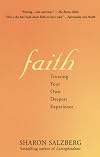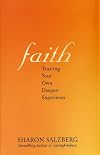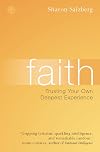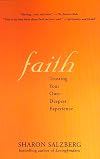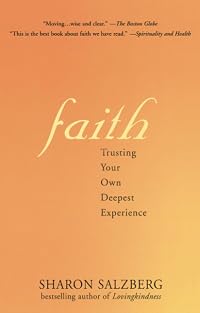
Faith: Trusting Your Own Deepest Experience
by Sharon Salzberg
On This Page
Description
In this beautifully written work, one of America's most beloved meditation teachers offers discerning wisdom on understanding faith as a healing quality. Through the teachings of Buddha and insight gained from her lifelong spiritual quest, Salzberg provides us with a road map for cultivating a feeling of peace that can be practiced by anyone of any tradition.Tags
Recommendations























Member Reviews
Faith by renowned meditation teacher Sharon Salzberg is one of those books that can change your entire perspective of the world. There are few books that can do that, that can challenge the foundation of your reality. For me, such books were On the Genealogy of Morals by Friedrich Nietzsche and Walden by Henry David Thoreau. As a heavy reader of religion and spirituality, I thought I’d never read a book on faith apart from God, or a deity we know as God. I didn’t think the word could exist without God.
But Salzberg challenges all of this. She speaks of her version of faith, one that doesn’t revolve around God at all. Salzberg lost her mother at nine when she witnessed her hemorrhage right before her eyes. Her father left the family show more when she was a young child and ended up institutionalized. To experience such devastation in childhood, it is no wonder that she could dismiss God entirely, or any higher being. But miraculously, Salzberg doesn’t reject God, or she doesn’t say so. She just has a different view of faith.
She begins by explaining that the word faith in Pali, the language of the original Buddhist texts, means “to place the heart upon.” In Faith, part memoir, part essay, Salzberg shares many beliefs and tents of Buddhism that have shaped her spirituality and concept of faith. To her faith is to keep walking forward, even in the dark. It’s the strength to take that magnitude of risk, though you know not what lies ahead.
I found this concept of faith wholly original, a Godless faith. What kind of faith can you really have without the power of God?
Deeper into her book, Salzberg speaks of an immense interconnectedness among us, and a truth like protective hands that holds her. It sounds like God, but she doesn’t elaborate as to what this is. Her concept sounds oddly familiar, like the invisible hand that Newton referred to in his writings, or that unexplainable uplifting force that Tolstoy explains at the end of his memoir. Both are referring to God, and it sounds like Salzberg is too, but she isn’t.
Suffering, such as when we experience trauma or loss, she says, comes from feeling alone, separate from everyone and everything around us. The core aspect of despair is this sense of utter isolation and disconnection. She explains that Buddhist teachings reveal that it is in deep suffering that faith can be uncovered and renewed. It is at this low point, the abyss, that we begin to sense this interconnectedness, that we are intimately connected to a bigger reality.
But what is that thread that connects us? What is it that makes us so united and so whole? What is the source of this unity? To me, that source of unity is God, and I wonder, what is this source to Salzberg? How does she refer to this interconnectedness that is just there?
Though Salzberg’s book doesn’t answer all of my questions, Faith is still a beautifully written, poignant, pivotal book that can stretch all notions of spirituality. show less
But Salzberg challenges all of this. She speaks of her version of faith, one that doesn’t revolve around God at all. Salzberg lost her mother at nine when she witnessed her hemorrhage right before her eyes. Her father left the family show more when she was a young child and ended up institutionalized. To experience such devastation in childhood, it is no wonder that she could dismiss God entirely, or any higher being. But miraculously, Salzberg doesn’t reject God, or she doesn’t say so. She just has a different view of faith.
She begins by explaining that the word faith in Pali, the language of the original Buddhist texts, means “to place the heart upon.” In Faith, part memoir, part essay, Salzberg shares many beliefs and tents of Buddhism that have shaped her spirituality and concept of faith. To her faith is to keep walking forward, even in the dark. It’s the strength to take that magnitude of risk, though you know not what lies ahead.
I found this concept of faith wholly original, a Godless faith. What kind of faith can you really have without the power of God?
Deeper into her book, Salzberg speaks of an immense interconnectedness among us, and a truth like protective hands that holds her. It sounds like God, but she doesn’t elaborate as to what this is. Her concept sounds oddly familiar, like the invisible hand that Newton referred to in his writings, or that unexplainable uplifting force that Tolstoy explains at the end of his memoir. Both are referring to God, and it sounds like Salzberg is too, but she isn’t.
Suffering, such as when we experience trauma or loss, she says, comes from feeling alone, separate from everyone and everything around us. The core aspect of despair is this sense of utter isolation and disconnection. She explains that Buddhist teachings reveal that it is in deep suffering that faith can be uncovered and renewed. It is at this low point, the abyss, that we begin to sense this interconnectedness, that we are intimately connected to a bigger reality.
But what is that thread that connects us? What is it that makes us so united and so whole? What is the source of this unity? To me, that source of unity is God, and I wonder, what is this source to Salzberg? How does she refer to this interconnectedness that is just there?
Though Salzberg’s book doesn’t answer all of my questions, Faith is still a beautifully written, poignant, pivotal book that can stretch all notions of spirituality. show less
In this beautifully written work, one of America's most beloved meditation teachers offers discerning wisdom on understanding faith as a healing quality. Through the teachings of Buddha and insight gained from her lifelong spiritual quest, Salzberg provides us with a road map for cultivating a feeling of peace that can be practiced by anyone of any tradition.
This is the first complete book of Salzberg's that I've read, having read several of her essays and articles. I really liked her perspective of looking at faith as a verb.
This book helped me understand faith in ways I never had before, from a Buddhist perspective.
Faith by Sharon Salzberg
1. “Love everybody,” Love everyone across all faiths and backgrounds.
2. “Serve everybody” Serve humanity with kindness, honesty, and open-mindedness. And a willingness to learn. To grow. And to thrive. To have no conflict with anyone. But to be at peace with yourself. And others.
3. “Always remember God” Always remember God and the trials and tribulations He has brought you through. Seek to understand. Not to judge. See to uplift. Not to dismay. Seek to inspire. Not to put people into a down ast mood. Encourage them. Across all backgrounds and ages.
4. “Do not believe anything just because i have saod it.” Do not believe anything just because a leader said it. Do your own research. Dig show more deeper. Find your own truth. Write it down. Share it. Spread love, peace and joy. Not negativity, disunity and discord.
5. “Don’t believe anything just because an elder or someone you respect has said it.” Respect your elders. But ask questions. Eo not believe blind,y.
6. “Put it into practice.” Put whqt you learn about whatyou are learning into practice. Find your own truths and put it into practice. Test it out.
7. “See for yourself if it is true.” See for yourself if what you believe is true. If not question yourself and others until you find the truth. In anything. Do not believe what someone says or weites as the truth. That is their story. That is their experience. It is not yours. Remember that.
8. “To move from the floating world of broght faith to the more solid ground of verified faith i would have to ask questions.” Ask questions through writing and journaling.
9. “I would have to find a voice.” Find your voice and use it in a positive, uplifting way.
10. “I would have to explore the teachings for myself.” Read the text of your faith and explore it deeply and question why you would believe what you believe. Explain it as if you were new coming intoyour faith and not knowing anything.
11. “Buddhism has led me over and over again back to the even more decided challenge of finding out what is true for myself.” Find out what is true for yourself. In your faith. In your personal life. In your relationships. And in your ability to understand through conversations and habits building.
12. “However, the innunction to “find out for yourself” ran headlong into the adaptive stance of my childhood, which was to avoid direct involvement and keep my distance.” Your childhood was what it was. But that does not mean you shiuld blame others for how your siblings turned out. That is on them. Release your family from their responsibilities and duties and expectations that thdy have of you. And live your own life free of their ways and attitudes. But keep your two brothers in your life. And your sister-in-law. Dump the rest. You have no need for them anymore. Be honest about the kind of relationship you want with people going forward and have it with them irrespective of how your family tries to cntrol you or tell you how to conduct your life.
13. The Buddha encouraged people not to simply defer to his authority.” Do not defer automatically to the authority of your church leaders. But have a deep connection with them. Without losing your ability to question them and let them help you see deeper into God’s love and power for you and healing of the church.
show less
1. “Love everybody,” Love everyone across all faiths and backgrounds.
2. “Serve everybody” Serve humanity with kindness, honesty, and open-mindedness. And a willingness to learn. To grow. And to thrive. To have no conflict with anyone. But to be at peace with yourself. And others.
3. “Always remember God” Always remember God and the trials and tribulations He has brought you through. Seek to understand. Not to judge. See to uplift. Not to dismay. Seek to inspire. Not to put people into a down ast mood. Encourage them. Across all backgrounds and ages.
4. “Do not believe anything just because i have saod it.” Do not believe anything just because a leader said it. Do your own research. Dig show more deeper. Find your own truth. Write it down. Share it. Spread love, peace and joy. Not negativity, disunity and discord.
5. “Don’t believe anything just because an elder or someone you respect has said it.” Respect your elders. But ask questions. Eo not believe blind,y.
6. “Put it into practice.” Put whqt you learn about whatyou are learning into practice. Find your own truths and put it into practice. Test it out.
7. “See for yourself if it is true.” See for yourself if what you believe is true. If not question yourself and others until you find the truth. In anything. Do not believe what someone says or weites as the truth. That is their story. That is their experience. It is not yours. Remember that.
8. “To move from the floating world of broght faith to the more solid ground of verified faith i would have to ask questions.” Ask questions through writing and journaling.
9. “I would have to find a voice.” Find your voice and use it in a positive, uplifting way.
10. “I would have to explore the teachings for myself.” Read the text of your faith and explore it deeply and question why you would believe what you believe. Explain it as if you were new coming intoyour faith and not knowing anything.
11. “Buddhism has led me over and over again back to the even more decided challenge of finding out what is true for myself.” Find out what is true for yourself. In your faith. In your personal life. In your relationships. And in your ability to understand through conversations and habits building.
12. “However, the innunction to “find out for yourself” ran headlong into the adaptive stance of my childhood, which was to avoid direct involvement and keep my distance.” Your childhood was what it was. But that does not mean you shiuld blame others for how your siblings turned out. That is on them. Release your family from their responsibilities and duties and expectations that thdy have of you. And live your own life free of their ways and attitudes. But keep your two brothers in your life. And your sister-in-law. Dump the rest. You have no need for them anymore. Be honest about the kind of relationship you want with people going forward and have it with them irrespective of how your family tries to cntrol you or tell you how to conduct your life.
13. The Buddha encouraged people not to simply defer to his authority.” Do not defer automatically to the authority of your church leaders. But have a deep connection with them. Without losing your ability to question them and let them help you see deeper into God’s love and power for you and healing of the church.
show less
Ratings
Members
- Recently Added By
Author Information

52+ Works 3,578 Members
Sharon Salzberg is a central figure in the field of meditation and a world-renowned teacher and author. She is the cofounder of the Insight Meditation Society in Barre, Massachusetts, and the author of ten books, including the New York Times bestseller Real Happiness. Acclaimed for her down-to-earth teaching style, Salzberg offers a secular, show more modern approach to Buddhist teachings, making them instantly accessible. show less
Common Knowledge
- Original publication date
- 2002
Classifications
Statistics
- Members
- 410
- Popularity
- 75,866
- Reviews
- 5
- Rating
- (4.33)
- Languages
- English
- Media
- Paper, Audiobook, Ebook
- ISBNs
- 5
- UPCs
- 1
- ASINs
- 3