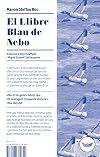
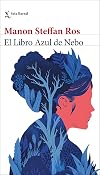
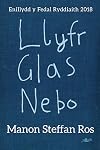
The Blue Book of Nebo
by Manon Steffan Ros
On This Page
Description
Prize-winner in three categories of the 2019 Wales Book of the Year Award, The Blue Book of Nebo paints a spellbinding and eerie picture of society's collapse, and the relationships that persist after everything as we know it disappears. After nuclear disaster, Rowenna and her young son are among the rare survivors in rural north-west Wales. Left alone in their isolated hillside cottage, after others have died or abandoned the towns and villages, they must learn new skills in order to remain show more alive. With no electricity or modern technology they must return to the old ways of living off the land, developing new personal resources. While they become more skilled and stronger, the relationship between mother and son changes in subtle ways, as Dylan must take on adult responsibilities, especially once his baby sister Mona arrives. Despite their close understanding, mother and son have their own secrets, which emerge as in turn they jot down their thoughts and memories in a found notebook. As each reflects on their old life and the events since the disaster which has brought normal, twenty-first century life to an end, The Blue Book of Nebo becomes a collective confidante, representing the future of their people and a new history to live by. In this prize-winning and best-selling new novel, Manon Steffan Ros not only explores the human capacity to find new strengths when faced with the need to survive, but also the structures and norms of the contemporary world. show lessTags
Recommendations











Member Recommendations
Member Reviews
At first, the news were not that alarming - bombs went off in American cities. For Rowenna and her son Dylan, tucked in rural Wales, this is half a world away - although she was worried enough to go and buy all the food she could. Then the power went off and never came back. Then the local power plant (or something in that direction) went up and the clouds brought radiation sickness. But this is not where this book starts. That was all in the past, in 2018, when Dylan was 6, when The End came. Now he is 14 and for the last 8 years he had lived with his mother in their isolated house - never meeting anyone besides the neighbors who left in the first months of the new world. For all he knows, the two of them are the last people on Earth show more (well, not exactly - because there is Mona, his 2 years old sister and he learned a few months ago that that would have required at least one more person to be alive. But he will never ask - because when his mother does not like a question, she closes up - and that hurts).
If one knows anything about Welsh legends, they would recognize what the title of the book is playing on - the Red Book of Hergest and the Black Book of Carmarthen preserved enough of the legends in the same way this book preserves the chronicles of these times (if you do not recognize the reference, Dylan will tell you pretty early in the books). The first chapter starts with Dylan telling us how they found the notebook he is now writing in -- because this whole book is a diary, written by two people - Rowenna and Dylan. Early on, he writes about their now-and-here, she writes about the past - including The End. But that division soon melts away and both of them write about whatever they feel like writing about. And that's how we finally learn what happened - although we never get the full picture - Rowenna never knew the bigger story so we never do either. It is a story of survival and finding the will to continue, to preserve your life. But somewhere in there is also a love song for the Welsh language and literature - because when she is sure that everything is over, Rowenna saves books, despite not being a big reader) - both in English and in Welsh. She even learns to love again her mother tongue - she was reared up speaking Welsh but she stopped using it because her teachers wanted the book Welsh and hers was the lived-in version so she just gave up. The book is full if these almost randomly thrown ideas which make you think about the world we live in.
The short novel (novella really) is heartbreaking at times although in a few places it felt forced - the author was looking for the emotion instead of letting the prose elicit it. And the end managed to surprise me - if I knew it was coming, I would have thought of it was a hopeful end but reading it at the end of the story, it felt like a nightmare made real. I had to stop and think of my reaction to it - it did nor make any sense on the surface. And yet it does - because the story turns on its head the concept of what is normal and good - and makes you wonder if the world we live in is really worth saving if it gets to that.
It is a depressing book on so many levels. The story of survival, of a child growing into an adult overnight and of a mother, who even in that world finds a way to punish is not always an easy read (not that Rowenna is a bad mother but she is a person and getting stuck with someone who depends on you, seeing that someone grow up long before his time takes its toll). But at the same time it is a not so bad way to make the reader look into their own life and figure out what is really important. And to make you slow down and appreciate what you have.
The story's style is deceptively easy - as all of it is written by a boy who learned his language from books and from a woman who never wrote anything since school (and was not a big reader either). So there is some simplicity in the language which may make the whole narrative sound almost shallow. I do not know how that sounded in Welsh but as the book was translated into English by the author, I assume that this was intentional (although I am not that sure about the places where it seemed to slip a bit). But that language sells the story even more than the narrative does - because it fits, you can imagine both Rowenna and her son and you wonder if you could have survived if that happened to you. And when a book makes you think that way, the book did its job (even if it has issues and is not perfect). show less
If one knows anything about Welsh legends, they would recognize what the title of the book is playing on - the Red Book of Hergest and the Black Book of Carmarthen preserved enough of the legends in the same way this book preserves the chronicles of these times (if you do not recognize the reference, Dylan will tell you pretty early in the books). The first chapter starts with Dylan telling us how they found the notebook he is now writing in -- because this whole book is a diary, written by two people - Rowenna and Dylan. Early on, he writes about their now-and-here, she writes about the past - including The End. But that division soon melts away and both of them write about whatever they feel like writing about. And that's how we finally learn what happened - although we never get the full picture - Rowenna never knew the bigger story so we never do either. It is a story of survival and finding the will to continue, to preserve your life. But somewhere in there is also a love song for the Welsh language and literature - because when she is sure that everything is over, Rowenna saves books, despite not being a big reader) - both in English and in Welsh. She even learns to love again her mother tongue - she was reared up speaking Welsh but she stopped using it because her teachers wanted the book Welsh and hers was the lived-in version so she just gave up. The book is full if these almost randomly thrown ideas which make you think about the world we live in.
The short novel (novella really) is heartbreaking at times although in a few places it felt forced - the author was looking for the emotion instead of letting the prose elicit it. And the end managed to surprise me - if I knew it was coming, I would have thought of it was a hopeful end but reading it at the end of the story, it felt like a nightmare made real. I had to stop and think of my reaction to it - it did nor make any sense on the surface. And yet it does - because the story turns on its head the concept of what is normal and good - and makes you wonder if the world we live in is really worth saving if it gets to that.
It is a depressing book on so many levels. The story of survival, of a child growing into an adult overnight and of a mother, who even in that world finds a way to punish is not always an easy read (not that Rowenna is a bad mother but she is a person and getting stuck with someone who depends on you, seeing that someone grow up long before his time takes its toll). But at the same time it is a not so bad way to make the reader look into their own life and figure out what is really important. And to make you slow down and appreciate what you have.
The story's style is deceptively easy - as all of it is written by a boy who learned his language from books and from a woman who never wrote anything since school (and was not a big reader either). So there is some simplicity in the language which may make the whole narrative sound almost shallow. I do not know how that sounded in Welsh but as the book was translated into English by the author, I assume that this was intentional (although I am not that sure about the places where it seemed to slip a bit). But that language sells the story even more than the narrative does - because it fits, you can imagine both Rowenna and her son and you wonder if you could have survived if that happened to you. And when a book makes you think that way, the book did its job (even if it has issues and is not perfect). show less
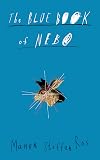
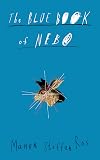
Why did I think this was a fun kids book? Gave it to my kid for Christmas two years ago fergodssake. Hope he’s not scarred for life. I mean the hare has two heads…
It was a great decision of mine to hunt out Welsh authors this year as every one of them has been great.
But it’s not a fun kids book.
It was a great decision of mine to hunt out Welsh authors this year as every one of them has been great.
But it’s not a fun kids book.
Rating: 3.5* of five
The Publisher Says: Prize-winner in three categories of the 2019 Wales Book of the Year Award, The Blue Book of Nebo paints a spellbinding and eerie picture of society’s collapse, and the relationships that persist after everything as we know it disappears.
After nuclear disaster, Rowenna and her young son are among the rare survivors in rural north-west Wales. Left alone in their isolated hillside cottage, after others have died or abandoned the towns and villages, they must learn new skills in order to remain alive. With no electricity or modern technology they must return to the old ways of living off the land, developing new personal resources.
While they become more skilled and stronger, the relationship between show more mother and son changes in subtle ways, as Dylan must take on adult responsibilities, especially once his baby sister Mona arrives. Despite their close understanding, mother and son have their own secrets, which emerge as in turn they jot down their thoughts and memories in a found notebook. As each reflects on their old life and the events since the disaster which has brought normal, twenty-first century life to an end, The Blue Book of Nebo becomes a collective confidante, representing the future of their people and a new history to live by.
In this prize-winning and best-selling new novel, Manon Steffan Ros not only explores the human capacity to find new strengths when faced with the need to survive, but also the structures and norms of the contemporary world.
I RECEIVED A DRC FROM THE PUBLISHER VIA EDELWEISS+. THANK YOU.
My Review: Post-apocalyptic stories have been a staple of my reading diet since the early 1970s, when we thought a new Ice Age was looming. *sigh* sounds lovely in fiery 2025, no? This means you'd nest be at the top of your game to hope to impress the old curmudgeon.
Not really happening here. It's a YA for sophisticated high-schoolers who love Greta Thunberg. Well enough executed, but I'm not fourteen anymore; I'd gift it to smart fourteen-year-olds in a heartbeat.
Deep Vellum says "$12.95 please" when you check your enook out. Worth every penny. show less
The Publisher Says: Prize-winner in three categories of the 2019 Wales Book of the Year Award, The Blue Book of Nebo paints a spellbinding and eerie picture of society’s collapse, and the relationships that persist after everything as we know it disappears.
After nuclear disaster, Rowenna and her young son are among the rare survivors in rural north-west Wales. Left alone in their isolated hillside cottage, after others have died or abandoned the towns and villages, they must learn new skills in order to remain alive. With no electricity or modern technology they must return to the old ways of living off the land, developing new personal resources.
While they become more skilled and stronger, the relationship between show more mother and son changes in subtle ways, as Dylan must take on adult responsibilities, especially once his baby sister Mona arrives. Despite their close understanding, mother and son have their own secrets, which emerge as in turn they jot down their thoughts and memories in a found notebook. As each reflects on their old life and the events since the disaster which has brought normal, twenty-first century life to an end, The Blue Book of Nebo becomes a collective confidante, representing the future of their people and a new history to live by.
In this prize-winning and best-selling new novel, Manon Steffan Ros not only explores the human capacity to find new strengths when faced with the need to survive, but also the structures and norms of the contemporary world.
I RECEIVED A DRC FROM THE PUBLISHER VIA EDELWEISS+. THANK YOU.
My Review: Post-apocalyptic stories have been a staple of my reading diet since the early 1970s, when we thought a new Ice Age was looming. *sigh* sounds lovely in fiery 2025, no? This means you'd nest be at the top of your game to hope to impress the old curmudgeon.
Not really happening here. It's a YA for sophisticated high-schoolers who love Greta Thunberg. Well enough executed, but I'm not fourteen anymore; I'd gift it to smart fourteen-year-olds in a heartbeat.
Deep Vellum says "$12.95 please" when you check your enook out. Worth every penny. show less
3.5 Beautiful writing and chilling premise - the time after The End - when nuclear bombs have been dropped worldwide and chaos reigns and life is reduced to survival off the grid. This story takes place in Wales, which is off the grid already in some ways. Rowenna and her 14 year old son Dylan (he was 6 when it went down) and toddler Mona live out in the country, and when the nearby nuclear plant is destroyed or melts down, that knocks out a lot of the population. When the first bombs fell on the US and then London, Rowenna did some prepper work - just in time before electricity failed and supplies got scarce and looting began. Now 8 years in they are pretty self-sufficient, and have finally overcome conscience to take useful things show more from empty houses in town. Books have been the main grab - Dylan is basically self-educated, reading whatever he could get hands on, and has been the reliant gardener and handyman for the family. The title refers to a journal he and his 'Mam' share - each recounting their memories and experiences, promising not to read the other's writing. The two different perspectives are interesting and lots of questions get answered (where did Mona come from?!) but there are a few things that just don't hold water. I sort of looked past it because the story hums along and is more cautionary tale/allegory, than needing to be completely literal. For example, "I suppose instinct makes you save that which you're most in danger of losing." (53) Here it is Rowenna's Welsh heritage, and the things that make us human. show less
This short novel couldn't help but make me think of a Welsh version of The Road.
It took some time, but I eventually connected with the two main protagonists who
are isolated in an apocalyptic scenerio and write in a blue book. There are a series of
unfortunate situations and just lots of time mired in anxiety contemplating death.
However, this life toughens them up to survive and carry on. And when the time eventually comes...
when some semblence of civilization creeps threatens to creep back into their lives, they
are frightened once more.
They are changed now and have a new awareness of themselves.
One may find it hard to read this without connecting the experience of the Covid lockdowns to the novel. The strange isolation and show more unknowing, with so many dying and no obvious cure.
I liked the book. show less
It took some time, but I eventually connected with the two main protagonists who
are isolated in an apocalyptic scenerio and write in a blue book. There are a series of
unfortunate situations and just lots of time mired in anxiety contemplating death.
However, this life toughens them up to survive and carry on. And when the time eventually comes...
when some semblence of civilization creeps threatens to creep back into their lives, they
are frightened once more.
They are changed now and have a new awareness of themselves.
One may find it hard to read this without connecting the experience of the Covid lockdowns to the novel. The strange isolation and show more unknowing, with so many dying and no obvious cure.
I liked the book. show less
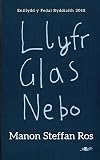
Roedd LLyfr Gas Nebo'n nofel hawdd i'w darllen ac ar adegau'n eich tynnu chi ymlaen i ddarllen y bennod nesaf pan oedd pethau eraill yn galw (megis cwsg!)
Roedd o leiaf dau o'r prif gmeriadau'n ddigon crwn i'ch tynnu i fewn i'w byd - ond i mi. roedd eu datbygiad yn anghytbwys ac anorffenedig a'r byd ei hun yn gysgodlen yn hytrach na lle tri-dimensiwn estynedig.
Roedd y gosodiad i'r stori, sef sefyllfa apocoliptig wedi rhyw ddamwain (niwcliar) yn anorffenedig, anwyddonol ac anghredadwy ar adegau. A'r diweddglo'n rhy hawdd - dyfodiad deus ex machina, yn ddiamau.
Efallai nad dyna oedd y pwynt - h.y. fe hybwyd y llyfr yn wreiddiol fel i un i'r ieuenctid (er iddi ennill ddarllenwyr o bob oedran) a theithi'r meddwl ifanc a'u hargyfyngau show more cydwybod a thensiynau eu hagyffred o berthynasau teuluol a chariadus yw'r cwbl o ddibenion yr awdur - h.y. drama ar lwyfan gyda llenni cefndir shimpyl ond digon da ar gyfer cyfleu y stori?
Ond hyd yn oed ar y telerau hyn, cefais fy siomi, nid yn unig yn niffyg dyfnder a phresenodeb y cymeriadau eraill, ond yng nghig a gwaed y prif gymeriadau hefyd - rhyw wagle neu ddiffyg cytbwysedd yn nhriniaeth yr awdur o'r fam a'i mab y eu hymgais i oroesi - yn gyntaf fel uned ac yn raddol fel dau fydd yn y pendraw yn gorfod dilyn eu rhawd unigol ac unig. Mae diffyg hefyd yn yr 'arallfyd', sef yn yr ymgais a gewch ym mhob llenyddiaeth ffantasi o werth i greu byd creadadwy anghyfarwydd sydd rywsut yn ein dysgu, ein procio neu'n adlewyrchu'n ddifyr o annifyr ar ein byd distadl a ffaeledig ni.
Efallai y byddai'n decach i feddwl am LGN yn fwy fel nofela - neu stori fer estynedig iawn - neu amlinelliad am ddrama (mae hi ar daith eisoes!) a'r ffilm anochel (all fod yn wirioneddol dda yn y dwylo iawn) a ddaw bid siwr.
Dwi eisoes yn dechrau anghofio ei naws, ei chymeriadau a'i stori - yn wahanol er enghraifft i straeon byrion gwyddonias Owain Owain (Y Peiriant Pigmi, Y Dydd Olaf etc) show less
Roedd o leiaf dau o'r prif gmeriadau'n ddigon crwn i'ch tynnu i fewn i'w byd - ond i mi. roedd eu datbygiad yn anghytbwys ac anorffenedig a'r byd ei hun yn gysgodlen yn hytrach na lle tri-dimensiwn estynedig.
Roedd y gosodiad i'r stori, sef sefyllfa apocoliptig wedi rhyw ddamwain (niwcliar) yn anorffenedig, anwyddonol ac anghredadwy ar adegau. A'r diweddglo'n rhy hawdd - dyfodiad deus ex machina, yn ddiamau.
Efallai nad dyna oedd y pwynt - h.y. fe hybwyd y llyfr yn wreiddiol fel i un i'r ieuenctid (er iddi ennill ddarllenwyr o bob oedran) a theithi'r meddwl ifanc a'u hargyfyngau show more cydwybod a thensiynau eu hagyffred o berthynasau teuluol a chariadus yw'r cwbl o ddibenion yr awdur - h.y. drama ar lwyfan gyda llenni cefndir shimpyl ond digon da ar gyfer cyfleu y stori?
Ond hyd yn oed ar y telerau hyn, cefais fy siomi, nid yn unig yn niffyg dyfnder a phresenodeb y cymeriadau eraill, ond yng nghig a gwaed y prif gymeriadau hefyd - rhyw wagle neu ddiffyg cytbwysedd yn nhriniaeth yr awdur o'r fam a'i mab y eu hymgais i oroesi - yn gyntaf fel uned ac yn raddol fel dau fydd yn y pendraw yn gorfod dilyn eu rhawd unigol ac unig. Mae diffyg hefyd yn yr 'arallfyd', sef yn yr ymgais a gewch ym mhob llenyddiaeth ffantasi o werth i greu byd creadadwy anghyfarwydd sydd rywsut yn ein dysgu, ein procio neu'n adlewyrchu'n ddifyr o annifyr ar ein byd distadl a ffaeledig ni.
Efallai y byddai'n decach i feddwl am LGN yn fwy fel nofela - neu stori fer estynedig iawn - neu amlinelliad am ddrama (mae hi ar daith eisoes!) a'r ffilm anochel (all fod yn wirioneddol dda yn y dwylo iawn) a ddaw bid siwr.
Dwi eisoes yn dechrau anghofio ei naws, ei chymeriadau a'i stori - yn wahanol er enghraifft i straeon byrion gwyddonias Owain Owain (Y Peiriant Pigmi, Y Dydd Olaf etc) show less
Post nuclear world where a mother and son are surviving in the welsh countryside. Reading survivalist books like this do cause me anxiety, because I honestly don’t know if I’d want to try to be a survivor or just peace out. But it was such a beautiful, quiet story. I shed tears. It was well done.
https://youtube.com/@chanelchapters
https://youtube.com/@chanelchapters
Members
- Recently Added By
Published Reviews
ThingScore 100
Originally published to acclaim in Welsh, this staggering novel collates the alternating accounts of 14-year-old Dylan and his mother, written in the blue notebook of the title. For eight years, ever since the power went out and the old normal disappeared, they've worked to survive in the remote village of Nebo. What Mam misses, Dylan has no use for, being perfectly adapted to the new world show more and his place in it. A tender, tragic post-apocalyptic story, told with great simplicity and power. show less
added by Cynfelyn
Lists

Carnegie Medal Winners In Order
85 works; 1 member
Author Information

32+ Works 243 Members
Awards and Honors
Awards
Common Knowledge
- Canonical title*
- Llyfr glas Nebo
- Original title
- Llyfr Glas Nebo
- Original publication date
- 2018
- People/Characters
- Dylan Llywelyn Williams; Rowenna Williams; Mona Greta Williams; David Thorpe; Susan Elizabeth Thorpe; Gaynor [Blue Book of Nebo] (show all 7); Gwion [Blue Book of Nebo]
- Important places
- Nebo, Gwynedd, Wales
- Dedication
- To my friend Allun Jones, who gave me faith in my own voice.
- First words
- Mam says that it's best to write like this now.
- Quotations
- Mam isn't a woman who argues - she just closes herself, like a door or a book. (p. 6)
Pwyll is a good name for a hare, I think. The ll is different but still pretty, an unexpected sort of pretty, just like the hare. (p. 27)
She somehow knew when to chatter and when to stay siletn when one of her ladies settled in the chiar. Sometimes people needed to hear endless empt talk about the price of carrots, and the infuriating din of the bin lorry in t... (show all)he morning, and all the shops that were shutting over on the high street in Caernarfon, and how sad it was to see so many empty windows. And sometimes, not often, but more often than you would have thought, she left the air empty, quiet, so that the lady in the chair could let her heavy words fill the silence. (p. 29)
Blood is thicker than water, but there's so much water. (p. 31)
... wars, when important people argued and then got less important people to kill one another. (p. 38)
I suppose instinct makes you save that which you're most in danger of losing. (p. 47)
I was seven and I had created food, and somewhere, in my little boy mind, I knew who I was, and who I was meant to be. (p. 54)
Pitch-black hair, that shade of black when the sunshine falls on a blackbird. Shiny and smooth. (p. 55)
Having children is the most selfish act possible. (p. 56)
Maybe you should treat every book equally and decide which ones you think are sacred. (p. 63)
"Forgive us our apathy."
"It's from a poem by Aled Lewis Evans."
We lived without silence. (p. 92)
That's how people live forever, I think, in the little memories in familiar places. (p. 134)
Usually, we only steal the really important stuff, like matches or rat poison or books. - Last words
- (Click to show. Warning: May contain spoilers.)"Are you okay?" I asked, and Mam squeezed my hand, her wet eyes sparkling in the new lights.
- Blurbers*
- Edwards, Sonia (barnwraig y Fedal Ryddiaith) (barnwraig y Fedal Ryddiaith); Baines, Menna (barnwraig y Fedal Ryddiaith) (barnwraig y Fedal Ryddiaith); Rhys, Manon (barnwraig y Fedal Ryddiaith) (barnwraig y Fedal Ryddiaith)
- Original language
- Welsh
- Canonical DDC/MDS
- 891.6633
*Some information comes from Common Knowledge in other languages. Click "Edit" for more information.
Classifications
- Genres
- Fiction and Literature, General Fiction, Science Fiction, Teen, Young Adult
- DDC/MDS
- 891.6633 — Literature & rhetoric Asian Literature East Indo-European and Celtic literatures Celtic languages Welsh Welsh fiction 2000–
- LCC
- PB2299 .S74 .L5813 — Language and Literature Modern languages. Celtic languages and literature Modern languages. Celtic languages Celtic languages and literature Brittanic group Welsh. Cymric
- BISAC
Statistics
- Members
- 151
- Popularity
- 216,280
- Reviews
- 12
- Rating
- (4.16)
- Languages
- 5 — Catalan, English, Polish, Spanish, Welsh
- Media
- Paper, Audiobook, Ebook
- ISBNs
- 12
- ASINs
- 3