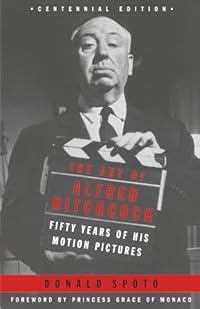
The Art of Alfred Hitchcock
by Donald Spoto
On This Page
Description
This definitive illustrated survey of all of Alfred Hitchcock's films is a book no movie buff or Hitchcock fan can afford to be without. The monumental scope of Alfred Hitchcock's work remains unsurpassed by any other movie director, past or present. So many of his movies have achieved classic status that even a partial list--Psycho, The Birds, Rear Window, Vertigo, Spellbound--brings a flood of memories. In this essential text, reissued on the occasion of Hitchcock's centennial, show more internationally renowned Hitchcock authority Donald Spoto describes and analyzes every movie made by this master filmmaker. Illustrated throughout with shots from each film, The Art of Alfred Hitchcock also includes a storyboard section, a complete filmography, and "A Hitchcock Album" (sixteen pages of photos) as an added celebration of his life. show lessTags
Recommendations










Member Reviews
An at times confusing mess of a book; it is an extremely poor use of the talents of those involved in the various films. Spoto's aim was to do a critical and artistic analysis of the various movies themselves but he often lets his own biases - for favorite / not liked performers or genres as an example - color his reviews. Instead of looking at things with an open and unbiased mind he comes across as more like writing whiny fanfiction. And yes...fiction it is. For the weirdest attribution of this book is its tendency for it, written by a supposedly knowledgeable critic of Hitchcock, to get several major (and I mean major) key plot points wrong. I'll leave things spoiler free here but as an example without giving anything away when I got show more the book I had just seen 'Strangers on a Train' and flipped to that section...and Spoto literally got several major points including segments of the ending wrong. In reading the book further he made quite a few mistakes like that. Just wondering how on Earth someone was able to get a book published with so many errors in it on such noted films. show less
Some figures in the cinematic world simply excite so much continuing attention that, even long after death, they and their art and lives are the subjects of compulsive fascination to the point where virtually everyone who can string together a sentence feels that they must contribute something to already massive amount of writings about such people. For example, on the performing side of the cinematic world, everyone knows that he or she can unravel the hidden secrets and mysteries of both Marilyn Monroe (virtually a cottage industry in and of herself) and James Dean. For those who worked behind the scenes,though, no one can touch the appeal of "The Master of Suspense", Alfred Hitchcock.
In light of this, its instructive to go back to show more one of the truly seminal works concerning Hitchcock the artist. It's essential to remember that for much of Hitchcock's active working life, he was not taken all that seriously as an artist, due in no small part to the genre in which he worked (genre film making was considered far lesser than "serious" straight drama") and to the director-producer's absolute genius for self-promotion (his participation in a film, highlighted by his famous silhouette drawing, later filled out at the start of the weekly TV anthology series he hosted for a decade, was a virtual guarantee of success for very long time). What so many conventional minded critics and historians (let alone those in the industry)failed to see was the serious and thrillingly precise artist who lurked behind the brilliantly conceived black comedy facade.
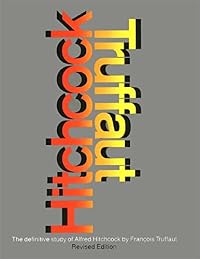
Though not the first book to explore the artist as opposed to the purveyor of popular entertainment (that honor would be split amongst Robin Wood's breakthrough, if brief, Hitchcock's Films, the renowed French director Eric Rohmer's Hitchcock, the First Forty-Four Films, and, especially, another great French film maker, Francois Truffaut's eternally famous book length interview with the director), Donald Spoto's The Art of Alfred Hitchock is vitally important as the first full length career study of the director by a US author. (Hitchcock had just finished and released his 53rd and last film, 1976's Family Plot before the author wrote this work and, though the director stated more was on the way, that proved a futile claim and the book ended up a complete study.)
Though the author provides a very brief biographical sketch for the director (he would later, infamously, write a lengthy and also influential biography of Hitchcock, infused with disappointment that the idol proved all too human and, sadly, causing the author to reverse some of his flattering opinions from the earlier tome), this is a study of the work. The opening chapter is a fairly quick run-through of Hitchcock's early British work up to 1934's The Man Who Knew Too Much (a story the director would notably remake in Hollywood in 1956). From his international triumph with 1935's still celebrated The 39 Steps until Family Plot, the author dedicates one chapter to each film.
These chapters are, of course, the heart of this work. Looking at them again with eyes which have witnessed so much writing about Hitchcock in the years in between, so much of it academic, so much of it very pretentious (everyone seems to have some angle of their own to which they wish to bend the meaning of Hitchcock's films), one can appreciate the virtues of the earlier work all the more.
Spoto is quite adept at pointing out the many interesting motifs which run throughout the film maker's works (quite predominately Hitchcock and mothers) but, unlike too many afterward, he doesn't belabor these motifs and bring up such concepts as "gaze" (though one can indeed feel someone's gaze in these films). He also notes, though not using the tag, that Hitchcock believed in a "plastic cinema" the way playwright Tennessee Williams believed in the concept of "plastic theater", meaning that every object or color or spatial relationship observed by the viewer contributes to the overall feeling and impression of the dramatic moment (yes, the French called it mise-en-scene). The wonder of Hitchcock's work is that these things can be picked up on or not by the viewer but absorbed either way. The joy of many an academic critic is to find meanings and find meanings and find meanings in all of this. The joy of this book is that it just finds meanings and somewhat lets the reader draw conclusions.
It is also important to note that when this book was first published, the five films to which Hitchcock held the rights (1948's Rope, 1954's Rear Window, 1955's The Trouble with Harry, the second The Man Who Knew Too Much, and, most notably, 1958's Vertigo) were long out of circulation and would be for another decade. One of the key factors regarding this is the fact that Vertigo is the ultimate film to the author(and, yes, the most recent poll conducted by the highly influential British film magazine Sight and Sound controversially agrees but that begs a chicken and egg question). The longest chapter in the book is devoted to this film (with Psycho, the second highest ranking of Hitchcock's film in the aforementioned poll, getting the next longest chapter). The chapter might well have read like a mash note if the film, once it was restored to view, hadn't lived up to reputation.
The book has undergone one revision (with no major changes) since publication. It is a tribute to it that all the volumes which have followed in its wake have not diminished its many virtues. It is still one of the key works in the meaningful study of Hitchcock's career. show less
In light of this, its instructive to go back to show more one of the truly seminal works concerning Hitchcock the artist. It's essential to remember that for much of Hitchcock's active working life, he was not taken all that seriously as an artist, due in no small part to the genre in which he worked (genre film making was considered far lesser than "serious" straight drama") and to the director-producer's absolute genius for self-promotion (his participation in a film, highlighted by his famous silhouette drawing, later filled out at the start of the weekly TV anthology series he hosted for a decade, was a virtual guarantee of success for very long time). What so many conventional minded critics and historians (let alone those in the industry)failed to see was the serious and thrillingly precise artist who lurked behind the brilliantly conceived black comedy facade.
Though not the first book to explore the artist as opposed to the purveyor of popular entertainment (that honor would be split amongst Robin Wood's breakthrough, if brief, Hitchcock's Films, the renowed French director Eric Rohmer's Hitchcock, the First Forty-Four Films, and, especially, another great French film maker, Francois Truffaut's eternally famous book length interview with the director), Donald Spoto's The Art of Alfred Hitchock is vitally important as the first full length career study of the director by a US author. (Hitchcock had just finished and released his 53rd and last film, 1976's Family Plot before the author wrote this work and, though the director stated more was on the way, that proved a futile claim and the book ended up a complete study.)
Though the author provides a very brief biographical sketch for the director (he would later, infamously, write a lengthy and also influential biography of Hitchcock, infused with disappointment that the idol proved all too human and, sadly, causing the author to reverse some of his flattering opinions from the earlier tome), this is a study of the work. The opening chapter is a fairly quick run-through of Hitchcock's early British work up to 1934's The Man Who Knew Too Much (a story the director would notably remake in Hollywood in 1956). From his international triumph with 1935's still celebrated The 39 Steps until Family Plot, the author dedicates one chapter to each film.
These chapters are, of course, the heart of this work. Looking at them again with eyes which have witnessed so much writing about Hitchcock in the years in between, so much of it academic, so much of it very pretentious (everyone seems to have some angle of their own to which they wish to bend the meaning of Hitchcock's films), one can appreciate the virtues of the earlier work all the more.
Spoto is quite adept at pointing out the many interesting motifs which run throughout the film maker's works (quite predominately Hitchcock and mothers) but, unlike too many afterward, he doesn't belabor these motifs and bring up such concepts as "gaze" (though one can indeed feel someone's gaze in these films). He also notes, though not using the tag, that Hitchcock believed in a "plastic cinema" the way playwright Tennessee Williams believed in the concept of "plastic theater", meaning that every object or color or spatial relationship observed by the viewer contributes to the overall feeling and impression of the dramatic moment (yes, the French called it mise-en-scene). The wonder of Hitchcock's work is that these things can be picked up on or not by the viewer but absorbed either way. The joy of many an academic critic is to find meanings and find meanings and find meanings in all of this. The joy of this book is that it just finds meanings and somewhat lets the reader draw conclusions.
It is also important to note that when this book was first published, the five films to which Hitchcock held the rights (1948's Rope, 1954's Rear Window, 1955's The Trouble with Harry, the second The Man Who Knew Too Much, and, most notably, 1958's Vertigo) were long out of circulation and would be for another decade. One of the key factors regarding this is the fact that Vertigo is the ultimate film to the author(and, yes, the most recent poll conducted by the highly influential British film magazine Sight and Sound controversially agrees but that begs a chicken and egg question). The longest chapter in the book is devoted to this film (with Psycho, the second highest ranking of Hitchcock's film in the aforementioned poll, getting the next longest chapter). The chapter might well have read like a mash note if the film, once it was restored to view, hadn't lived up to reputation.
The book has undergone one revision (with no major changes) since publication. It is a tribute to it that all the volumes which have followed in its wake have not diminished its many virtues. It is still one of the key works in the meaningful study of Hitchcock's career. show less
Broad, not deep, but one of the frequently quoted sources. Reads well, too.
Succinct.
Ratings
Members
- Recently Added By
Lists

Books about Alfred Hitchcock
6 works; 1 member
Author Information

42+ Works 4,542 Members
Donald Spoto was born on June 28, 1941 in New Rochelle, New York. He received a B.A. from Iona College in 1963 and a M.A. and Ph.D. in theology (New Testament studies) from Fordham University in 1966 and 1970, respectively. He taught theology, Christian mysticism, and biblical literature at the university level for twenty years. He has written show more more than 25 biographies of film and theatre celebrities including The Art of Alfred Hitchcock, The Kindness of Strangers: The Life of Tennessee Williams, Diana: The Last Year, Jacqueline Bouvier Kennedy Onassis: A Life, Enchantment: The Life of Audrey Hepburn, High Society: The Life of Grace Kelly, Possessed: The Life of Joan Crawford, and The Redgraves: A Family Epic. He also wrote biographies on religious figures including The Hidden Jesus: A New Life, Reluctant Saint: The Life of Francis of Assisi, and Joan: The Mysterious Life of the Heretic Who Became a Saint. (Bowker Author Biography) show less
Common Knowledge
- Canonical title
- The Art of Alfred Hitchcock
- Alternate titles
- Art of Alfred Hitchcock
- Original publication date
- 1976
- People/Characters
- Alfred Hitchcock
- First words
- Alfred Joseph Hitchcock was born in London on August 13, 1899, the youngest of three children of Emma and William Hitchcock, who was a moderately successful poultry dealer and grocer.
- Last words
- (Click to show. Warning: May contain spoilers.)He's—Hitchcock!
Classifications
- Genres
- Nonfiction, General Nonfiction, Biography & Memoir
- DDC/MDS
- 791.43 — Arts & recreation Recreation, sports, and performing arts Movies, TV, Video Motion pictures, radio, television, podcasting Motion pictures
- LCC
- PN1998 .A3 .H564 — Language and Literature Literature (General) Literature (General) Drama Motion pictures
- BISAC
Statistics
- Members
- 408
- Popularity
- 75,735
- Reviews
- 4
- Rating
- (4.08)
- Languages
- 5 — English, French, German, Portuguese, Spanish
- Media
- Paper, Ebook
- ISBNs
- 16
- ASINs
- 1