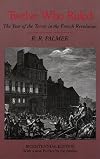
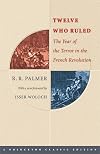
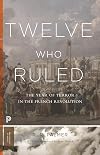
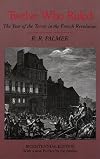
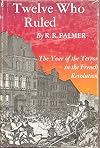
Twelve Who Ruled: The Year of the Terror in the French Revolution
by R. R. Palmer
On This Page
Description
The Reign of Terror continues to fascinate scholars as one of the bloodiest periods in French history, when the Committee of Public Safety strove to defend the first Republic from its many enemies, creating a climate of fear and suspicion in revolutionary France. R. R. Palmer's fascinating narrative follows the Committee's deputies individually and collectively, recounting and assessing their tumultuous struggles in Paris and their repressive missions in the provinces. A foreword by Isser show more Woloch explains why this book remains an enduring classic in French revolutionary studies. show lessTags
Recommendations
















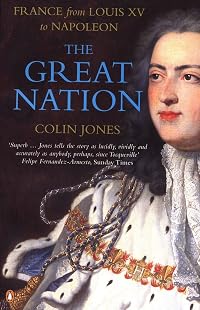

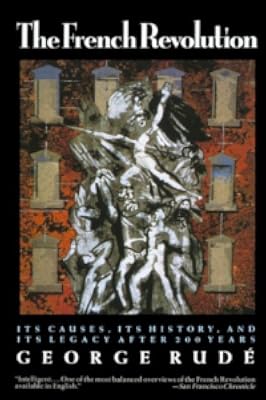
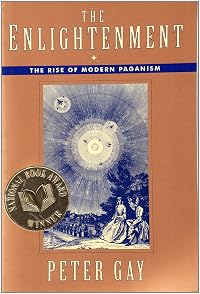
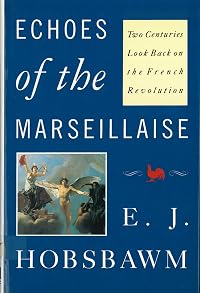


Member Recommendations
Member Reviews
It's been a while since I've read a book about the French Revolution, an obsession of mine since the age of 15 that remains undimmed. 'Twelve Who Ruled' has been on my to-read list for seven and a half years, as it took me a while to get hold of a copy. It was first published in 1941 and I read a 1971 edition that was apparently purchased by Leicester Polytechnic University, now De Montfort, in 1973. Palmer examines the year of the Terror, 1793-4, via analysis of the activities of the twelve man Committee of Public Safety. While their actions in Paris were already well known to me, I found the chapters following committee members as representatives on mission more novel. The massacres at Lyons are well-covered by other histories of the show more period, but the missions to Alscace and Brittany are not usually mentioned. The war at sea is discussed as well as the war on land and I was reminded that in 1793 England planned to invade France and France to invade England. Neither actually did. Palmer also doesn't dwell exclusively or even predominantly on Robespierre. Much as he fascinates me, I have a whole biography of him on the shelf if required. It's refreshing to find comparisons of the political writings and activities of the different committee members, as well as their various fates during the Empire and Restoration. Robespierre's total ascendance over the Committee is essentially a historical convenience:
[b:Ending the Terror: The French Revolution After Robespierre|15577972|Ending the Terror The French Revolution After Robespierre|Bronisław Baczko|https://s.gr-assets.com/assets/nophoto/book/50x75-a91bf249278a81aabab721ef782c4a74.png|21464302] by Bronisław Baczko is a great examination of how this happened in the period immediately after Thermidor.
Palmer's writing style is clear and highly readable, once I became used to him calling the Montagnards 'Mountaineers'. Perhaps this was normal in American scholarship at the time. He reflects upon the personalities and thoughts of the committee members and others, while acknowledging when he indulges in speculation. Who would not be tempted to? I must also admit that the occasional generalisation in a history book can be acceptable when I agree with it. Palmer's attitude towards the French Revolution is quite akin to my own: guardedly admiring, critical of its many failings yet inspired by its philosophies. Long before [b:In Defence of the Terror: Liberty or Death in the French Revolution|14451267|In Defence of the Terror Liberty or Death in the French Revolution|Sophie Wahnich|https://i.gr-assets.com/images/S/compressed.photo.goodreads.com/books/1373996644l/14451267._SY75_.jpg|20093667] was published in 2012, Palmer here defends the Terror - but only up to a point. He is critical, indeed dismissive, both of scholars who absolve Robespierre of all wrong-doing and those who treat the Terror as an exercise in totally pointless blood-letting. There is also greater emphasis on economic policy here than I've generally found, as the revolutionaries made so many grand speeches extolling principles that it is easy to overlook their more mundane regulatory decisions. The economy of the Terror is nonetheless interesting and important. I had not previously realised that a fleet of ships bringing wheat from America more or less rescued France from famine in 1794. It's also striking how difficult it was to co-ordinate fair distribution of food across the country while laws governing maximum prices were in effect.
'Twelve Who Ruled' is undoubtedly an appealing work of history. However I also greatly appreciated it from the perspective of historiography. Palmer published it in 1941 and refers in the text to the events of 1940, specifically the capitulation of France. The preoccupations of the time he was writing are prominent throughout: war economics, nationalism, and the stability of dictatorships. This in no way detracted from his analysis, indeed I enjoyed it. During the Terror, France was at war on almost all fronts and Palmer sees in its policies the seeds of later war economies. For example, Parisian workers were employed by the government to manufacture muskets, whether they liked it or not. By Thermidor, they were producing about five hundred a day. Given that the Industrial Revolution had not yet reached France, that is amazing. As Palmer puts it, 'In the summer of 1794 the nationally owned workshops of Paris were probably the greatest arsenal of small arms in the world'. This level of and justification for economic intervention was new, although the government did not intend such nationalisation of manufacture to last beyond the war. However, the political philosophy of the Terror came to depend upon the continuation of the war, which created paradoxes and fragilities that contributed to Thermidor. Palmer hints at the totalitarian regime of his time that took war economics to its greatest extreme: the Nazis. I didn't realise the extent of this until I read [b:The Wages of Destruction: The Making and Breaking of the Nazi Economy|711592|The Wages of Destruction The Making and Breaking of the Nazi Economy|Adam Tooze|https://i.gr-assets.com/images/S/compressed.photo.goodreads.com/books/1309285737l/711592._SY75_.jpg|697854] by Adam Tooze, which I recommend.
Similarly, Palmer sees the beginning of modern nationalism in laws enacted during the Terror that treated foreigners in general and the English in particular as inherently suspect. Trade with England was also outlawed. Given that France and England were at war, this seems less surprising today, yet for the time it was quite new. Chapter ten recounts in some detail a revealing Convention debate about whether the government was 'nationalising' the war. St Just gave a speech defending the government from this charge by claiming that France quarreled only with England's government, aristocracy, and businessmen:
Thirdly, the examination of whether Robespierre was a dictator (not by most definitions) and whether the Committee was an oligarchy (of sorts, albeit unstable) is shadowed by the dictatorships of 1940. Palmer mentions a hope that totalitarian regimes of the 20th century prove as brief and unstable as the technically undemocratic period of the Terror. I say technically undemocratic as the Committee was continually responding to pressures from the democratically elected Convention (although it purged Convention members), from the Jacobin and other clubs (although these were also purged), from the popular press (although this was selectively suppressed), and the public (although under the Law of Suspects anyone could be arrested). Dissent persisted nonetheless and the Committee did not take formal steps to make themselves dictators or emperors. Their position was inherently temporary and there were both formal and informal mechanisms for their removal, which operated during Thermidor. Crucially, as Palmer notes, the twelve did not foster anything like a cult of personality. That would have been antithetical to their professed philosophy of the sovereign people, un et indivisible. As with previous reading that deals with this period in any depth, this book has much to say about how difficult interpeting this literally makes government in practise. Once I got back into the world of the French Revolution after a couple of chapters, I found 'Twelve Who Ruled' involved, rewarding, and thought-provoking. It invited reflection on the twentieth century as well the eighteenth. show less
Terrorists of the Year Two identified the Terror with one man, that they might themselves, by appearing peaceable and humane, win the confidence of the moderates. Barère revealed what was going on, writing in self-defense when he himself was accused: 'Is his grave not wide enough for us to empty into it all our hatreds?' This was precisely what happened. The living sought a new harmony by agreeing to denounce the dead.
[b:Ending the Terror: The French Revolution After Robespierre|15577972|Ending the Terror The French Revolution After Robespierre|Bronisław Baczko|https://s.gr-assets.com/assets/nophoto/book/50x75-a91bf249278a81aabab721ef782c4a74.png|21464302] by Bronisław Baczko is a great examination of how this happened in the period immediately after Thermidor.
Palmer's writing style is clear and highly readable, once I became used to him calling the Montagnards 'Mountaineers'. Perhaps this was normal in American scholarship at the time. He reflects upon the personalities and thoughts of the committee members and others, while acknowledging when he indulges in speculation. Who would not be tempted to? I must also admit that the occasional generalisation in a history book can be acceptable when I agree with it. Palmer's attitude towards the French Revolution is quite akin to my own: guardedly admiring, critical of its many failings yet inspired by its philosophies. Long before [b:In Defence of the Terror: Liberty or Death in the French Revolution|14451267|In Defence of the Terror Liberty or Death in the French Revolution|Sophie Wahnich|https://i.gr-assets.com/images/S/compressed.photo.goodreads.com/books/1373996644l/14451267._SY75_.jpg|20093667] was published in 2012, Palmer here defends the Terror - but only up to a point. He is critical, indeed dismissive, both of scholars who absolve Robespierre of all wrong-doing and those who treat the Terror as an exercise in totally pointless blood-letting. There is also greater emphasis on economic policy here than I've generally found, as the revolutionaries made so many grand speeches extolling principles that it is easy to overlook their more mundane regulatory decisions. The economy of the Terror is nonetheless interesting and important. I had not previously realised that a fleet of ships bringing wheat from America more or less rescued France from famine in 1794. It's also striking how difficult it was to co-ordinate fair distribution of food across the country while laws governing maximum prices were in effect.
'Twelve Who Ruled' is undoubtedly an appealing work of history. However I also greatly appreciated it from the perspective of historiography. Palmer published it in 1941 and refers in the text to the events of 1940, specifically the capitulation of France. The preoccupations of the time he was writing are prominent throughout: war economics, nationalism, and the stability of dictatorships. This in no way detracted from his analysis, indeed I enjoyed it. During the Terror, France was at war on almost all fronts and Palmer sees in its policies the seeds of later war economies. For example, Parisian workers were employed by the government to manufacture muskets, whether they liked it or not. By Thermidor, they were producing about five hundred a day. Given that the Industrial Revolution had not yet reached France, that is amazing. As Palmer puts it, 'In the summer of 1794 the nationally owned workshops of Paris were probably the greatest arsenal of small arms in the world'. This level of and justification for economic intervention was new, although the government did not intend such nationalisation of manufacture to last beyond the war. However, the political philosophy of the Terror came to depend upon the continuation of the war, which created paradoxes and fragilities that contributed to Thermidor. Palmer hints at the totalitarian regime of his time that took war economics to its greatest extreme: the Nazis. I didn't realise the extent of this until I read [b:The Wages of Destruction: The Making and Breaking of the Nazi Economy|711592|The Wages of Destruction The Making and Breaking of the Nazi Economy|Adam Tooze|https://i.gr-assets.com/images/S/compressed.photo.goodreads.com/books/1309285737l/711592._SY75_.jpg|697854] by Adam Tooze, which I recommend.
Similarly, Palmer sees the beginning of modern nationalism in laws enacted during the Terror that treated foreigners in general and the English in particular as inherently suspect. Trade with England was also outlawed. Given that France and England were at war, this seems less surprising today, yet for the time it was quite new. Chapter ten recounts in some detail a revealing Convention debate about whether the government was 'nationalising' the war. St Just gave a speech defending the government from this charge by claiming that France quarreled only with England's government, aristocracy, and businessmen:
It is clear that the Committee of Public Safety was nationalising the war without intending to do so. What the members of the Committee believed was that there was no conflict between free nations; but a free nation was one which overthrew its king and its nobles, and which also, according to the somewhat temporary doctrine of 1793, attacked its rich business class. A nation which persisted in not imitating France was not free, and so not exactly a nation; the war therefore, though the Committee by its own admission consulted only the interests of France, was not a national war.
Thirdly, the examination of whether Robespierre was a dictator (not by most definitions) and whether the Committee was an oligarchy (of sorts, albeit unstable) is shadowed by the dictatorships of 1940. Palmer mentions a hope that totalitarian regimes of the 20th century prove as brief and unstable as the technically undemocratic period of the Terror. I say technically undemocratic as the Committee was continually responding to pressures from the democratically elected Convention (although it purged Convention members), from the Jacobin and other clubs (although these were also purged), from the popular press (although this was selectively suppressed), and the public (although under the Law of Suspects anyone could be arrested). Dissent persisted nonetheless and the Committee did not take formal steps to make themselves dictators or emperors. Their position was inherently temporary and there were both formal and informal mechanisms for their removal, which operated during Thermidor. Crucially, as Palmer notes, the twelve did not foster anything like a cult of personality. That would have been antithetical to their professed philosophy of the sovereign people, un et indivisible. As with previous reading that deals with this period in any depth, this book has much to say about how difficult interpeting this literally makes government in practise. Once I got back into the world of the French Revolution after a couple of chapters, I found 'Twelve Who Ruled' involved, rewarding, and thought-provoking. It invited reflection on the twentieth century as well the eighteenth. show less
The French Revolution is obviously a vast field of history, so it was nice to read such a focused work, and especially one that was so well-written. I'd previously read and really enjoyed Victor Hugo's famous novel Ninety-Three that covers the same time period, and this was an excellent non-fiction counterpart. It covers the actions of the twelve men who constituted the Committee of Public Safety during the Reign of Terror from September 5, 1793 until July 28, 1794. Palmer discusses their origins and pre-Revolutionary lives, how they managed to end up in their positions of power, their activities during that turbulent period, and the crises that led up to the day of 9 Thermidor, the famous Thermidorian Reaction, when Robespierre, the show more Committee's leader, was guillotined along with his colleague Saint-Just and the Revolution ended its most frenetic phase.
The book has a strong narrative style, which is excellent, because this is a confusing time to read about (though of course even more so to actually live through). There are plenty of different groups: the Convention, the Commune, the Committee, the clubs, and Palmer does a good job of explaining who all these groups are and how they related to each other. The Committee, which was intended to be a sort of cabinet, was instituted to solve France's leadership problem and add a little stability to a revolution that had been going on for nearly half a decade, with mixed results. The relationship between political and military instability during this period was notable, and reminded me somewhat of the US Civil War, with politically appointed generals often failing in their campaigns, while the results of those same campaigns threatened to discredit the government that sent them. Despite the increased effectiveness of the French army due to the levée en masse and other Republican techniques (in contrast to the more aristocratic navy, which suffered tremendously from its purges), the Committee's efforts to repel the foreign invaders only really began to pay off towards the end of the Terror.
An additional problem for the Committee was that they just weren't very popular, and hence didn't have a lot of legitimacy with important constituencies like, for example, the people of France. Palmer describes the law of 14 Frimaire, which significantly centralized power, as "an instrument of Terror because the government which it strengthened was the creation of a minority, the triumphant leaders of the Mountain, itself a party among republicans, who in turn were only a party among the original revolutionists, who in their turn did not include all the people in France. As in the name of liberty France now possessed the most dictatorial government it had ever known, so, in the name of the people, it now had the political system which, of all the systems in its history, probably the fewest people really liked." A classic component of leadership, and in fact maybe the biggest one, is the task of managing interactions with people who disagree with you. While the Committee was faced with challenges that would strain the capacities of even the best leaders (foreign invasions, economic collapse, rampant factionalism, religious turbulence, and all the small dervishes spawned by that larger tempest), their solution of the guillotine has done a lot to posthumously discredit their work.
And to that end, much of the modern Anglosphere understanding of the Revolution is in the Burke/Carlyle/Dickens tradition of seeing it as a senseless maelstrom of blood, headed by inflexible fanatics, sustained by mobs of howling peasants and red-eyed tricoteuses, and only ended by the operation of that same guillotine. However, once the Committee's decisions are seen in the light of the circumstances they faced, in large part they seem almost reasonable, as Palmer tries to show. An example is the debate over the role of religion in the new order. France at the time was very religious, and the Catholic Church was involved in many spheres of life in both positive and negative ways (see for example the famous career of Cardinal Richelieu in the previous century). Some of the revolutionaries wanted to completely dechristianize the country, some wanted to replace Christianity with a new state religion, some wanted to simply remove the Church's influence from political life, and some wanted no change at all. The Committee in many ways acted to check the impulses of the more radical revolutionaries to destroy all churches or defrock every priest, and it's instructive to note that many of those who were put to death were these more violent radicals.
Not that that really excuses the sometimes arbitrary arrests and executions ordered by Robespierre and the rest of the Committee, of course, but while tens of thousands did die during the Terror, many of those deaths were not ordered by the Committee, and additionally you also have to take into account the atrocities committed by the previous regime (e.g. Louis XIV's massacre of 8,000 Parisians in 1788) and the state of total war that existed at the time. Additionally, as as the book is explicit about, there's a difference between a revolutionary party as it's involved in overthrowing governments, and the same party when it has to then govern. Revolutionaries are fiery, aggressive, and iconoclastic, while government officials need to be bureaucratic, conciliatory, and predictable - individuals with one group of qualities do not often have the other, and Robespierre et al. did much to transition the fury of the regicide into the steadiness of the administrator. The end of the Terror was not the end of violence, but when the Convention finally turned on the Committee, those who remained benefited from the work that had gone on before.
In a way, one of the best indicators of the Committee's success was how much of its work was either kept or imitated, to the extent that the invading Allies suggested that they needed an international Committee of General Security to organize their armies as well as the French were doing. You can look at the Revolution as a sort of game theoretic move - once they introduced their methods of rationalizing, standardizing, and energizing, every other country was forced to adopt, adapt, or imitate their work.
Plus, they had some really inspiring words. Robespierre in particular was an excellent orator, and some of the book's best parts are where Palmer steps back and lets the power of their vision shine:
"We wish an order of things where all low and cruel passions are enchained by the laws, all beneficent and generous feelings awakened; where ambition is the desire to deserve glory and to be useful to one's country; where distinctions arise only from equality itself; where the citizen is subject to the magistrate, the magistrate to the people, the people to justice; where the country secures the welfare of each individual, and each individual proudly enjoys the prosperity and glory of his country; where all minds are enlarged by the constant interchange of republican sentiments and by the need of earning the respect of a great people; where industry is an adornment to the liberty that ennobles it, and commerce the source of public wealth, not simply of monstrous riches for a few families.
We wish in a word to fulfill the course of nature, to accomplish the destiny of mankind, to make good the promises of philosophy, to absolve Providence from the long reign of tyranny and crime. May France, illustrious formerly among peoples of slaves, eclipse the glory of all free peoples that have existed, become the model to the nations, the terror of oppressors, the consolation of the oppressed, the ornament of the universe; and in sealing our work with our blood may we ourselves see at last the dawn of universal felicity gleam before us! That is our ambition. That is our aim." show less
The book has a strong narrative style, which is excellent, because this is a confusing time to read about (though of course even more so to actually live through). There are plenty of different groups: the Convention, the Commune, the Committee, the clubs, and Palmer does a good job of explaining who all these groups are and how they related to each other. The Committee, which was intended to be a sort of cabinet, was instituted to solve France's leadership problem and add a little stability to a revolution that had been going on for nearly half a decade, with mixed results. The relationship between political and military instability during this period was notable, and reminded me somewhat of the US Civil War, with politically appointed generals often failing in their campaigns, while the results of those same campaigns threatened to discredit the government that sent them. Despite the increased effectiveness of the French army due to the levée en masse and other Republican techniques (in contrast to the more aristocratic navy, which suffered tremendously from its purges), the Committee's efforts to repel the foreign invaders only really began to pay off towards the end of the Terror.
An additional problem for the Committee was that they just weren't very popular, and hence didn't have a lot of legitimacy with important constituencies like, for example, the people of France. Palmer describes the law of 14 Frimaire, which significantly centralized power, as "an instrument of Terror because the government which it strengthened was the creation of a minority, the triumphant leaders of the Mountain, itself a party among republicans, who in turn were only a party among the original revolutionists, who in their turn did not include all the people in France. As in the name of liberty France now possessed the most dictatorial government it had ever known, so, in the name of the people, it now had the political system which, of all the systems in its history, probably the fewest people really liked." A classic component of leadership, and in fact maybe the biggest one, is the task of managing interactions with people who disagree with you. While the Committee was faced with challenges that would strain the capacities of even the best leaders (foreign invasions, economic collapse, rampant factionalism, religious turbulence, and all the small dervishes spawned by that larger tempest), their solution of the guillotine has done a lot to posthumously discredit their work.
And to that end, much of the modern Anglosphere understanding of the Revolution is in the Burke/Carlyle/Dickens tradition of seeing it as a senseless maelstrom of blood, headed by inflexible fanatics, sustained by mobs of howling peasants and red-eyed tricoteuses, and only ended by the operation of that same guillotine. However, once the Committee's decisions are seen in the light of the circumstances they faced, in large part they seem almost reasonable, as Palmer tries to show. An example is the debate over the role of religion in the new order. France at the time was very religious, and the Catholic Church was involved in many spheres of life in both positive and negative ways (see for example the famous career of Cardinal Richelieu in the previous century). Some of the revolutionaries wanted to completely dechristianize the country, some wanted to replace Christianity with a new state religion, some wanted to simply remove the Church's influence from political life, and some wanted no change at all. The Committee in many ways acted to check the impulses of the more radical revolutionaries to destroy all churches or defrock every priest, and it's instructive to note that many of those who were put to death were these more violent radicals.
Not that that really excuses the sometimes arbitrary arrests and executions ordered by Robespierre and the rest of the Committee, of course, but while tens of thousands did die during the Terror, many of those deaths were not ordered by the Committee, and additionally you also have to take into account the atrocities committed by the previous regime (e.g. Louis XIV's massacre of 8,000 Parisians in 1788) and the state of total war that existed at the time. Additionally, as as the book is explicit about, there's a difference between a revolutionary party as it's involved in overthrowing governments, and the same party when it has to then govern. Revolutionaries are fiery, aggressive, and iconoclastic, while government officials need to be bureaucratic, conciliatory, and predictable - individuals with one group of qualities do not often have the other, and Robespierre et al. did much to transition the fury of the regicide into the steadiness of the administrator. The end of the Terror was not the end of violence, but when the Convention finally turned on the Committee, those who remained benefited from the work that had gone on before.
In a way, one of the best indicators of the Committee's success was how much of its work was either kept or imitated, to the extent that the invading Allies suggested that they needed an international Committee of General Security to organize their armies as well as the French were doing. You can look at the Revolution as a sort of game theoretic move - once they introduced their methods of rationalizing, standardizing, and energizing, every other country was forced to adopt, adapt, or imitate their work.
Plus, they had some really inspiring words. Robespierre in particular was an excellent orator, and some of the book's best parts are where Palmer steps back and lets the power of their vision shine:
"We wish an order of things where all low and cruel passions are enchained by the laws, all beneficent and generous feelings awakened; where ambition is the desire to deserve glory and to be useful to one's country; where distinctions arise only from equality itself; where the citizen is subject to the magistrate, the magistrate to the people, the people to justice; where the country secures the welfare of each individual, and each individual proudly enjoys the prosperity and glory of his country; where all minds are enlarged by the constant interchange of republican sentiments and by the need of earning the respect of a great people; where industry is an adornment to the liberty that ennobles it, and commerce the source of public wealth, not simply of monstrous riches for a few families.
We wish in a word to fulfill the course of nature, to accomplish the destiny of mankind, to make good the promises of philosophy, to absolve Providence from the long reign of tyranny and crime. May France, illustrious formerly among peoples of slaves, eclipse the glory of all free peoples that have existed, become the model to the nations, the terror of oppressors, the consolation of the oppressed, the ornament of the universe; and in sealing our work with our blood may we ourselves see at last the dawn of universal felicity gleam before us! That is our ambition. That is our aim." show less
Palmer is rightly considered among the leading historians of the French Revolution. Twelve Who Ruled is an exceptional history of the Terror, managing to provide great depth and context while at the same time keeping the reader engaged. Though the Terror is an immensely political and fraught subject, Palmer manages to provide a clear-minded review of its development and fall, arguing that the Terror was at first justified by the chaos of its time but ultimately overtaken by its own logic.
For two years after the French revolution, France was ruled by a committee of twelve men. At the time of their ascent to power, France was in chaos, its ports closed by the British and foreign armies were driving toward its borders. The "Committee of Public Safety" as it was known, realized that if they failed in their mission to stabilize France, they would be treated as murderers of their king and destroy ers of the few democratic gains that had been accomplished by that time. As we shall see, the term
"democracy" was used very loosely indeed. R. R. Palmer recounts the events of "The Year of Terror" in Twelve Who Ruled.This book was finished in 1941, and it contains oblique (but not opaque) references to invading armies and the dangers show more of totalitarianism. The twelve were an interesting combination. Robespierre, a lonely bachelor and idealist, who was against capital punishment, fell under the guillotine. Carnot was a mathematical genius, former army officer and engineer. He became a revolutionary because advancement in the army was limited to aristocrats. Barere, like Robespierre a lawyer, was a shifty politician who believed in public participation in government. Saint-Just was the enfant-terrible of the revolution, originally a playboy, but eventually rising to become a dedicated and principled leader.
Saint-Andre was a Protestant minister (before 1787 it had been illegal to be a Protestant) and former ship captain who believed in secular control of religion because religious fervor too often conflicted with public order. Billan-Varenne was a self-educated lawyer and committed anti-Catholic who wanted to confiscate all church property and made good use of the guillotine. He was totally intolerant of others' viewpoints. The sullen Callot was the only one of the twelve not established in a profession. As an actor (considered social outcasts during the 18th century,) he craved recognition. Herault de Sechells was the only nobleman on the Committee, completely amoral and an egoist. Of the other three, Lindet, Pierre- Louis Prieur and Claude-Antoine Prieur (no relation,) not much is known. The peasantry, which comprised 4/5ths of the population, was not represented. None of the twelve had ever done manual labor, all were fairly well-off and except for Herault, were members of the middle class; provincials who knew nothing of the city proletariat. Why should this group lead the revolution and terror? Palmer's explanation is that all were intellectuals, steeped in philosophy, but ensnared in a middle class with no place to go. The aristocracy despised them and placed numerous artificial barriers in their paths. The church was corrupt, badly in need of reform, and had lost all moral and intellectual leadership.
The Committee longed for a simpler more natural form of government and religion. They detested compromise, tolerated no free discussion, even among themselves. Ironically they did not start the revolution but stepped into the vacuum it created. It is paradoxical that the French, who tried so hard to recreate the American Revolution, and who fervently believed in Constitutional government, feared factions and divisive thought. Robespierre's statement of 5 Nivose -- they had invented their own calendar based on the metric system which was mandatory but virtually ignored -- was a dramatic statement of the philosophy of dictatorship and an attempt to suppress factions. He should have read James Madison more thoroughly. Madison believed factions were an essential component of the defense against tyranny. Robespierre wanted to save the people from themselves. For him factionalism was synonymous with treasonable conspiracy (a la McCarthy, Alien and Sedition Acts, etc. -- 20th century Americans would do well to reread Madison.) Of course, the Committee failed politically. As a minority it decided it could succeed only by recourse to the Terror, to which it ultimately succumbed. Their goal was to create a democracy based on a common cause and belief system. Yet, paradoxically, even a century later, the Republic was associated with suppression of liberty, persecution of religion, violence and terror. More faith in diversity and democracy would have been their salvation. Democracy, totalitarianism, and intolerance cannot coexist. ' show less
"democracy" was used very loosely indeed. R. R. Palmer recounts the events of "The Year of Terror" in Twelve Who Ruled.This book was finished in 1941, and it contains oblique (but not opaque) references to invading armies and the dangers show more of totalitarianism. The twelve were an interesting combination. Robespierre, a lonely bachelor and idealist, who was against capital punishment, fell under the guillotine. Carnot was a mathematical genius, former army officer and engineer. He became a revolutionary because advancement in the army was limited to aristocrats. Barere, like Robespierre a lawyer, was a shifty politician who believed in public participation in government. Saint-Just was the enfant-terrible of the revolution, originally a playboy, but eventually rising to become a dedicated and principled leader.
Saint-Andre was a Protestant minister (before 1787 it had been illegal to be a Protestant) and former ship captain who believed in secular control of religion because religious fervor too often conflicted with public order. Billan-Varenne was a self-educated lawyer and committed anti-Catholic who wanted to confiscate all church property and made good use of the guillotine. He was totally intolerant of others' viewpoints. The sullen Callot was the only one of the twelve not established in a profession. As an actor (considered social outcasts during the 18th century,) he craved recognition. Herault de Sechells was the only nobleman on the Committee, completely amoral and an egoist. Of the other three, Lindet, Pierre- Louis Prieur and Claude-Antoine Prieur (no relation,) not much is known. The peasantry, which comprised 4/5ths of the population, was not represented. None of the twelve had ever done manual labor, all were fairly well-off and except for Herault, were members of the middle class; provincials who knew nothing of the city proletariat. Why should this group lead the revolution and terror? Palmer's explanation is that all were intellectuals, steeped in philosophy, but ensnared in a middle class with no place to go. The aristocracy despised them and placed numerous artificial barriers in their paths. The church was corrupt, badly in need of reform, and had lost all moral and intellectual leadership.
The Committee longed for a simpler more natural form of government and religion. They detested compromise, tolerated no free discussion, even among themselves. Ironically they did not start the revolution but stepped into the vacuum it created. It is paradoxical that the French, who tried so hard to recreate the American Revolution, and who fervently believed in Constitutional government, feared factions and divisive thought. Robespierre's statement of 5 Nivose -- they had invented their own calendar based on the metric system which was mandatory but virtually ignored -- was a dramatic statement of the philosophy of dictatorship and an attempt to suppress factions. He should have read James Madison more thoroughly. Madison believed factions were an essential component of the defense against tyranny. Robespierre wanted to save the people from themselves. For him factionalism was synonymous with treasonable conspiracy (a la McCarthy, Alien and Sedition Acts, etc. -- 20th century Americans would do well to reread Madison.) Of course, the Committee failed politically. As a minority it decided it could succeed only by recourse to the Terror, to which it ultimately succumbed. Their goal was to create a democracy based on a common cause and belief system. Yet, paradoxically, even a century later, the Republic was associated with suppression of liberty, persecution of religion, violence and terror. More faith in diversity and democracy would have been their salvation. Democracy, totalitarianism, and intolerance cannot coexist. ' show less
A very enlightening history of the Reign of Terror that followed the French Revolution. It begins with the rise of the Jacobins, and ends with the fall of Robespierre. A very detailed book, full of insights for anyone who wants to delve deeper into the motivating factors behind this particular episode in history.
This is an excellent account by a premiere twentieth-century historian.
if all histories were this good the world would be a better place.
Members
- Recently Added By
Lists

r/AskHistorians' Recommended Books
1,068 works; 18 members
Author Information

38+ Works 3,184 Members
Series
Belongs to Publisher Series
Common Knowledge
- Canonical title
- Twelve Who Ruled: The Year of the Terror in the French Revolution
- Original publication date
- 1941
- People/Characters
- Maximilien de Robespierre; Georges Jacques Danton; Louis Antoine de Saint-Just; Bertrand Barère de Vieuzac; Jean-Jacques Ambert; François Victor Alphonse Aulard (show all 68); Gracchus Babeuf; Paul Barras; Jean Pierre de Batz, Baron de Sainte-Croix; Marc Antoine Baudot; Jacques Nicolas Billaud-Varenne; François-Louis Bourdon de l'Oise; Napoleon Bonaparte (Emperor of the French); Jean Baptiste Bouchotte; Jacques Pierre Brissot; Jean-Jacques Régis de Cambacérès; Lazare Carnot; Jean-Baptiste Carrier; François Chabot; Joseph Chalier; Pierre Gaspard Chaumette; Marie-Joseph Blaise de Chénier; Jean-Baptiste du Val-de-Grâce, Baron de Clootz; Jean-Marie Collot d'Herbois; Georges Auguste Couthon; Adam Philippe, Comte de Custine; Jacques-Louis David; François Desfieux; Camille Desmoulins; Charles-François Dumouriez; Maurice Duplay; Ernest Dominique François Joseph Duquesnoy; Philippe François Fabre d'Églantine; Marie-Jean Hérault de Séchelles; Joseph Fouché; Antoine Quentin Fouquier-Tinville; Louis Marie Stanislas Fréron; Louis-Bernard Guyton, Baron de Morveau; François Hanriot; Jacques-René Hébert; Louis Lazare Hoche; Jean Nicolas Houchard; Jean-Baptiste Jourdan; Marc-Antoine Jullien; Jean-Baptiste Lacoste; Philippe-François-Joseph Le Bas; Robert Lindet; Louis XVI, King of France; Étienne Christophe Maignet; Jean-Paul Marat; Marie Antoinette; Albert Mathiez; Gaspard Monge, Comte de Péluse; Claude-François de Payan; Pierre Philippeaux; Jean-Charles Pichegru; William Pitt the Younger; Claude Antoine, comte Prieur-Duvernois (Prieur de la Côte d'Or); Pierre Louis Prieur de la Marne; Augustin Robespierre; Charles-Philippe Ronsin; Jean Bon Saint-André; Johann Georg Schneider (aka Eulogius Schneider); Jean-Lambert Tallien; Catherine Théot; Jacques-Alexis Thuriot de la Rosière; Marc-Guillaume Alexis Vadier; Pierre Jean Van Stabel
- Important places
- France; Paris, France
- Important events
- French Revolution (1789-1799); Reign of Terror (1793-1794)
- First words
- Anyone who had business with the government of the Reign of Terror directed his steps to the Tuileries, an old palace of the kings of France on the right bank of the Seine between the Louvre and the Tuileries Gardens, in whic... (show all)h then as now children played and chestnut trees blossomed in April.
- Last words
- (Click to show. Warning: May contain spoilers.)Shortly after making this confession, at the age of eighty-six, in the year 1841, almost half a century after his days of eminence, the last member of the Committee of Public Safety, with his hopes set on the future, left the troubled and revolutionary world in which he had always lived.
Classifications
- Genres
- History, Nonfiction, General Nonfiction, Biography & Memoir
- DDC/MDS
- 944.04 — History & geography History of Europe France and Monaco France Revolution 1789-1804
- LCC
- DC177 .P33 — History of Europe, Asia, Africa and Oceania France – Andorra – Monaco History of France Modern, 1515- Revolutionary and Napoleonic period, 1789-1815
- BISAC
Statistics
- Members
- 473
- Popularity
- 64,256
- Reviews
- 7
- Rating
- (3.89)
- Languages
- English, French
- Media
- Paper, Audiobook, Ebook
- ISBNs
- 10
- ASINs
- 14