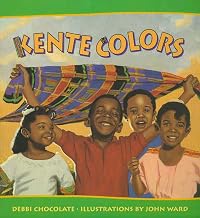
Kente Colors
by Debbi Chocolate
On This Page
Description
A rhyming description of the kente cloth costumes of the Ashanti and Ewe people of Ghana and a portrayal of the symbolic colors and patterns.Tags
Recommendations



Member Reviews
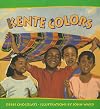
A joyful ode to kente celebrates the beauty and tradition of this West African fabric that is now so popular in America. Rhythmic verse shows the special meaning of colors and patterns while glorious paintings show kente as it is used and worn in Ghana, from babies' blankets to dancers' capes. An author's note further explains kente's rich symbolism. Readers young and old will delight in discovering the connections between African culture and the colorful cloth we love to wear.
This is an informational story about the purpose and delight of kente colors. The story doesn't follow one character or one season but takes an educational view on kente cloth.
The setting defined in Kente Colors are descriptive and beautiful. Since the storyline is about colors the viberant colors used give a great illustration for the background and surrounding environment of the kente cloth.
The setting defined in Kente Colors are descriptive and beautiful. Since the storyline is about colors the viberant colors used give a great illustration for the background and surrounding environment of the kente cloth.
From Publishers Weekly
The traditional kente cloth of the Ashante people of Ghana stretches to become the stuff of story hour. The cloth's vivid tones (red, yellow, blue, black and gold) are explored for their symbolic values and matched with scenes from African and African American culture and daily life. A spread devoted to "emerald kente," symbolizing a bountiful harvest, shows colorfully garbed characters reaping fruit. Indigo blue is the color of African skies, sheltering a lone shepherd and his flock. This latter choice may confuse some readers, however, as Chocolate (On the Day I Was Born) specifies in a preface that blue represents "love." Ward's (The Adventures of High John the Conqueror) high-intensity hues and kente-patterned show more borders suit the subject matter like a custom-made, bright silk kente robe. Ages 4-8.
Copyright 1996 Reed Business Information, Inc. --This text refers to an out of print or unavailable edition of this title.
From School Library Journal
PreSchool-Grade 3?A richly illustrated book that celebrates the tradition and use of the African kente cloth. The simple, rhyming text describes the multiplicity of colors used and the numerous ways the Ashanti of Ghana and the Ewe of Ghana and Togo incorporate the fabric into their daily lives. In an endnote, Chocolate explains the weaving process and the colors' meanings. Ward's lush paintings are wonderful. Deep blues, bright reds, blacks, golds, and purples fairly leap off the pages. This book is important in that it is the first to convey an understanding of kente cloth's history and cultural significance for a young audience.?Carol Jones Collins, Montclair Kimberley Academy, NJ
Copyright 1996 Reed Business Information, Inc. --This text refers to an out of print or unavailable edition of this title. show less
The traditional kente cloth of the Ashante people of Ghana stretches to become the stuff of story hour. The cloth's vivid tones (red, yellow, blue, black and gold) are explored for their symbolic values and matched with scenes from African and African American culture and daily life. A spread devoted to "emerald kente," symbolizing a bountiful harvest, shows colorfully garbed characters reaping fruit. Indigo blue is the color of African skies, sheltering a lone shepherd and his flock. This latter choice may confuse some readers, however, as Chocolate (On the Day I Was Born) specifies in a preface that blue represents "love." Ward's (The Adventures of High John the Conqueror) high-intensity hues and kente-patterned show more borders suit the subject matter like a custom-made, bright silk kente robe. Ages 4-8.
Copyright 1996 Reed Business Information, Inc. --This text refers to an out of print or unavailable edition of this title.
From School Library Journal
PreSchool-Grade 3?A richly illustrated book that celebrates the tradition and use of the African kente cloth. The simple, rhyming text describes the multiplicity of colors used and the numerous ways the Ashanti of Ghana and the Ewe of Ghana and Togo incorporate the fabric into their daily lives. In an endnote, Chocolate explains the weaving process and the colors' meanings. Ward's lush paintings are wonderful. Deep blues, bright reds, blacks, golds, and purples fairly leap off the pages. This book is important in that it is the first to convey an understanding of kente cloth's history and cultural significance for a young audience.?Carol Jones Collins, Montclair Kimberley Academy, NJ
Copyright 1996 Reed Business Information, Inc. --This text refers to an out of print or unavailable edition of this title. show less
This is an amazing book! It explains all about the kente colors.
Pierce College Library
Ages: 3-5 Years
Pierce College Library
Ages: 3-5 Years
Ratings
Members
- Recently Added By
Lists

African American
99 works; 3 members
Author Information

24 Works 2,540 Members
Classifications
- Genres
- Picture Books, Children's Books
- DDC/MDS
- 391.0089 — Society, government, & culture Customs, etiquette & folklore Costume and personal appearance Standard subdivisions
- LCC
- DT507 .C48 — History of Europe, Asia, Africa and Oceania Africa History of Africa West Africa. West Coast British West Africa Ashanti Empire
- BISAC
Statistics
- Members
- 160
- Popularity
- 204,770
- Reviews
- 4
- Rating
- (3.61)
- Languages
- English
- Media
- Paper
- ISBNs
- 9
- ASINs
- 1