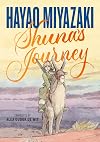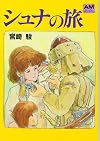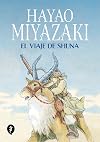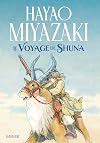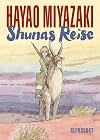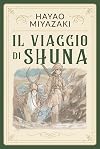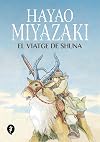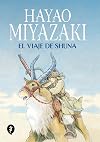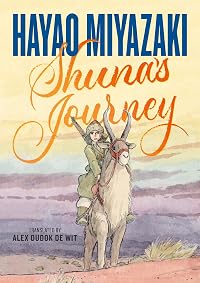
Shuna's Journey
by Hayao Miyazaki (Author, Illustrator)
On This Page
Description
"Shuna, the prince of a poor land, watches in despair as his people work themselves to death harvesting the little grain that grows there. And so, when a traveler presents him with a sample of seeds from a mysterious western land, he sets out to find the source of the golden grain, dreaming of a better life for his subjects. It is not long before he meets a proud girl named Thea. After freeing her from captivity, he is pursued by her enemies, and while Thea escapes north, Shuna continues show more toward the west, finally reaching the Land of the God-Folk. Will Shuna ever see Thea again? And will he make it back home from his quest for the golden grain?"-- show lessTags
Recommendations
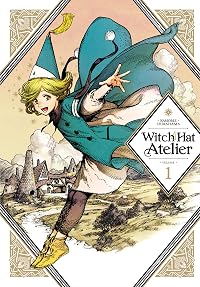
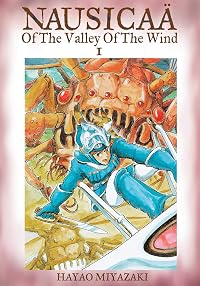
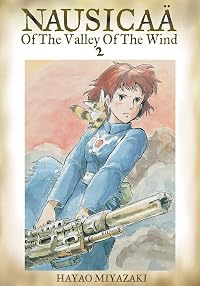


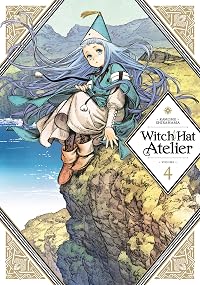
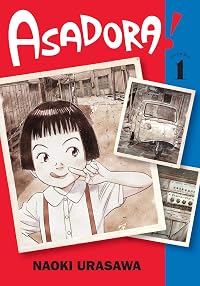
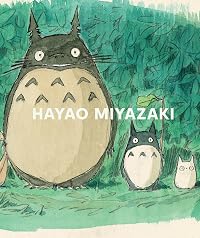

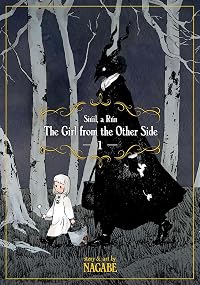

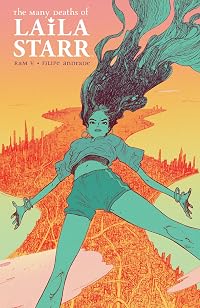

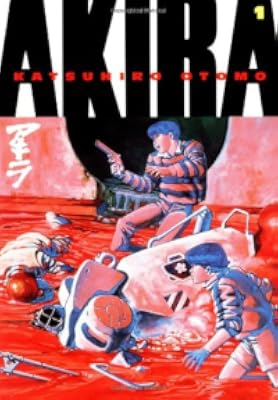
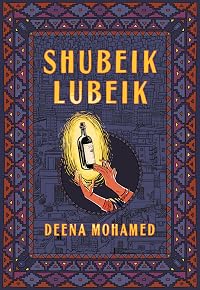

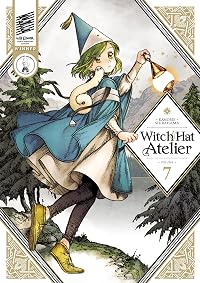
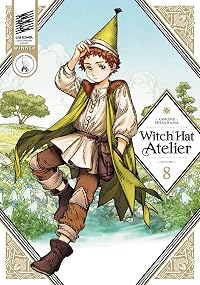
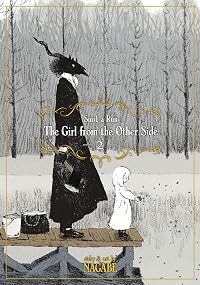
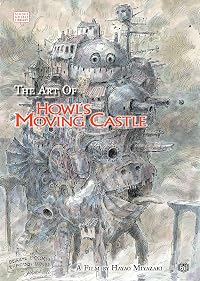
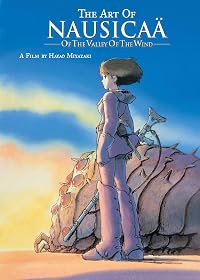


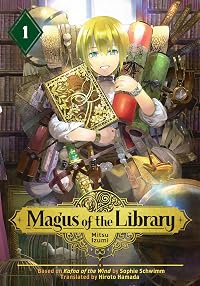


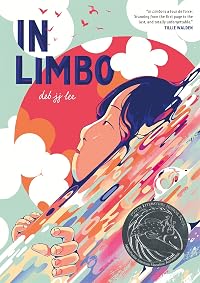
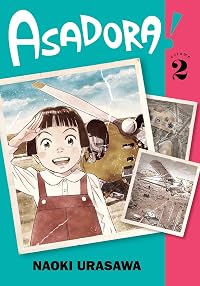
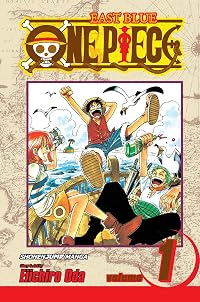


Member Recommendations

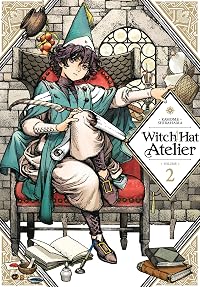
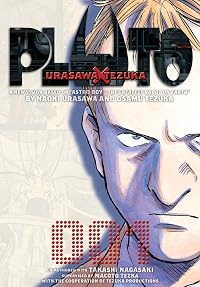
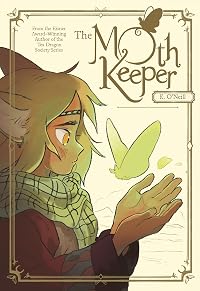
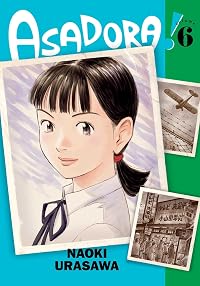
themulhern Same world, different characters and media.
Member Reviews
Shuna's Journey is a gorgeous watercolor emonogatari—an illustrated story with a format that's probably closest to what we in the West would associate with children's picture books (although not always in subject or age group, etc.), because it lacks speech bubbles and small panels. Miyazaki published the volume in 1983, just before Studio Ghibli launched.
The book tells the story of a young prince named Shuna who lives in a land constantly on the brink of starvation and who sets out on a journey to find a golden grain in the West able to feed his people forever. Along the way, he encounters man-eating ghouls and slave traders and a moon that races across the sky. To bring this golden grain back to his people, Shuna will have to steal show more from the Land of the God-Folk—and suffer the consequences.
The story is also loosely based on a Tibetan legend, The Prince Who Turned into a Dog, about Tibet's first encounter with barley. It also shares many similarities to Nausicaa and Princess Mononoke, which had been created or thought up around the same time—personally, I feel like the setting and design borrow a lot from Nausicaa, and the characters from Princess Mononoke (that, or the other way around, of course).
I had to read this twice, because I found the translator's notes to be so eye opening and thought provoking that I knew the second reading would have a different effect on me—and I was right. To be honest, I'm pretty sure that the first time reading this I was more focused on the beautiful watercolor illustrations than anything else. It really is a stunning graphic novel. But the deeper themes behind the more overt slave trade and kindness being repaid (which I'll leave you to read in the notes) are easier to miss through a casual read. And while the translator says that it was very fitting for Miyazaki's time, it also seems important for today's time, too.
Shuna's Journey definitely has the feeling of one of Miyazaki's older works and is filled with his trademark, beautiful style. The ending might provide more questions than answers, but it's a nice story that very much entranced me (although … his using women in burqas as the design for man-eating ghouls really took me out of the story …). I hope the other work mentioned in the notes gets translated as well! show less
The book tells the story of a young prince named Shuna who lives in a land constantly on the brink of starvation and who sets out on a journey to find a golden grain in the West able to feed his people forever. Along the way, he encounters man-eating ghouls and slave traders and a moon that races across the sky. To bring this golden grain back to his people, Shuna will have to steal show more from the Land of the God-Folk—and suffer the consequences.
The story is also loosely based on a Tibetan legend, The Prince Who Turned into a Dog, about Tibet's first encounter with barley. It also shares many similarities to Nausicaa and Princess Mononoke, which had been created or thought up around the same time—personally, I feel like the setting and design borrow a lot from Nausicaa, and the characters from Princess Mononoke (that, or the other way around, of course).
I had to read this twice, because I found the translator's notes to be so eye opening and thought provoking that I knew the second reading would have a different effect on me—and I was right. To be honest, I'm pretty sure that the first time reading this I was more focused on the beautiful watercolor illustrations than anything else. It really is a stunning graphic novel. But the deeper themes behind the more overt slave trade and kindness being repaid (which I'll leave you to read in the notes) are easier to miss through a casual read. And while the translator says that it was very fitting for Miyazaki's time, it also seems important for today's time, too.
Shuna's Journey definitely has the feeling of one of Miyazaki's older works and is filled with his trademark, beautiful style. The ending might provide more questions than answers, but it's a nice story that very much entranced me (although … his using women in burqas as the design for man-eating ghouls really took me out of the story …). I hope the other work mentioned in the notes gets translated as well! show less
With his village just eking by at a slowly dwindling subsistence level, a young prince sets off atop his faithful yak in search of a magic grain that will bring bumper crops. Wait, is this a Norman Borlaug biography? Or a messed up version of Jack and the Beanstalk?
Actually inspired by a story from Tibetan folklore called "The Prince Who Turned into a Dog," Studio Ghibli director Hayao Miyazaki reimagines it into a fantasy quest with cannibals, slave traders, and giants. You'd think that would be exciting, but the story is told almost entirely in captions in a monotone narration that left me feeling removed from the story and its wooden characters. Plus, the dog transformation is metaphorical instead of literal in Miyazaki's version, so show more no cute puppies for me, just a dumb old yak.
FOR REFERENCE:
The Japanese translation of "The Prince Who Turned into a Dog" by Kimishima Hisako originally appeared in 1964 in the folklore anthology, 白いりゅう 黒いりゅう: 中国のたのしいお話 (Dragon black dragon white - pleasant talk of China, ISBN 9784001103076). In 2013 it was turned into a picture book with illustrations by Jin Goto: 犬になった王子――チベットの民話 (The Prince Who Turned into a Dog - A Tibetan Folk Tale, ISBN 9784001112429). show less
Actually inspired by a story from Tibetan folklore called "The Prince Who Turned into a Dog," Studio Ghibli director Hayao Miyazaki reimagines it into a fantasy quest with cannibals, slave traders, and giants. You'd think that would be exciting, but the story is told almost entirely in captions in a monotone narration that left me feeling removed from the story and its wooden characters. Plus, the dog transformation is metaphorical instead of literal in Miyazaki's version, so show more no cute puppies for me, just a dumb old yak.
FOR REFERENCE:
The Japanese translation of "The Prince Who Turned into a Dog" by Kimishima Hisako originally appeared in 1964 in the folklore anthology, 白いりゅう 黒いりゅう: 中国のたのしいお話 (Dragon black dragon white - pleasant talk of China, ISBN 9784001103076). In 2013 it was turned into a picture book with illustrations by Jin Goto: 犬になった王子――チベットの民話 (The Prince Who Turned into a Dog - A Tibetan Folk Tale, ISBN 9784001112429). show less
This feels like a Studio Ghibli movie, naturally. A remarkable piece of art, and instantly a new favourite of mine.
Shuna's Journey has bits and pieces of Nausicaa of the Valley of the Wind, as well as other pieces of classic Miyazaki fare, including Princess Mononoke. It is a beauitiful reworking of a Tibetan folktale, as well as a classic Studio Ghibli that gradually becomes even more strange and wondrous than it initially promises. This is a wonder of the imagination, and I am dying to read the manga about warring Central Asian tribes by Miyazaki that is mentioned in the introduction.
I am already dying to revisit this.
Shuna's Journey has bits and pieces of Nausicaa of the Valley of the Wind, as well as other pieces of classic Miyazaki fare, including Princess Mononoke. It is a beauitiful reworking of a Tibetan folktale, as well as a classic Studio Ghibli that gradually becomes even more strange and wondrous than it initially promises. This is a wonder of the imagination, and I am dying to read the manga about warring Central Asian tribes by Miyazaki that is mentioned in the introduction.
I am already dying to revisit this.
Loosely based on a Tibetan folktale, Shuna's Journey was originally published in 1983, two years before the launch of Studio Ghibli. Reading it now, it’s this epic, ancient, futuristic, sprawling storyline full of gods and slaves and ancient decaying civilizations. It contains all the themes you come to expect from Miyazaki - particularly his focus on people grown estranged by nature and a world knocked askew by greed. It has a noble hero and a smart heroine. And yet, Shuna's Journey is not a manga proper but rather an illustrated story. It almost reads a storyboard for a film that never was. The watercolor illustrations are quite wonderous as one would expect from Miyazaki.
The storyline might be one of Miyazaki's most somber and show more adult stories he has ever penned. Shuna's Journey tackles themes of human trafficking making this work more teen and adult oriented than a work for children. This is not to say that older children can't understand this, it just skews more towards an older audience. I would say this is suitable for middle grade readers and up.
To have this in print, is a rare gem, and a fascinating glimpse into Miyazaki's early career. You can see in this story Miyazaki's key narrative occupations coming to life and it's a beautiful and epic thing to witness. show less
The storyline might be one of Miyazaki's most somber and show more adult stories he has ever penned. Shuna's Journey tackles themes of human trafficking making this work more teen and adult oriented than a work for children. This is not to say that older children can't understand this, it just skews more towards an older audience. I would say this is suitable for middle grade readers and up.
To have this in print, is a rare gem, and a fascinating glimpse into Miyazaki's early career. You can see in this story Miyazaki's key narrative occupations coming to life and it's a beautiful and epic thing to witness. show less
The last book I read in 2022, and what a way to close the year! You could analyze the crap out of this book, or read it as the simple and compelling story it is. It goes without saying, but if you're a fan of Miyazaki's filmography, you'll easily pick out numerous foundational ideas that eventually worked their way into his films. This English translation (which I've been told is the first of it's kind, and was only published in February) has two excellent afterwards by both the author and translator, which I recommend you read to fully appreciate the story. Great story, beautiful artwork, solid translation.
A rather high body count tale of a young man who has real reasons for his journey but only one solution to dealing with those who both outnumber and oppose him. Not much cleverness, just head first into the fray. The illustration style is anime, but quality anime, expressive and quirky.
This is the first time I believe this story has been translaed to Spanish, and the timing couldn't have been more auspicious given Hayao earned his second Oscar. I am uncertain if this edition was translated directly from Japanese or it is a second translation over the English version. One part of the text mentions it is a Japanse -> Spanish translation. But at the same time, the book includes a 3 page message from the English language translator.
As I expected, even though this edition was printed in Mexico City, the translation is in Spain Spanish instead of a neutral Latin American. It isn't badly translated per se, but it does use some seseo verb tenses and unusual words that are not in common use in Latin America.
What we do get is show more very high quality printing with glorious riveting colors. So while I might regard some linguistic preference reservations about the translation despite being a Mexican subsidiary of the US editorial, the printing quality is fabulous. A worthy collector's item for hardcore Ghibli Studio artwork fans.
I was always aware Hayao wrote Nausicaä manga over the years, but I never knew he wrote this story. And given my copy is the 2nd print barely fresh out of the printing house, I have high hopes sales will be good enough to entice the editorial to translate the rest of Hayao's work to Spanish. Manga sells like hot pancakes in Mexico no matter the cost, and I have high hopes Nausicaä would sell very well even if each tome was priced at 300 mxn a pop.
Given I am unfamiliar with Hayao's work, I entered this book with no prior knowledge of it, only that it instantly has artwork and character designs that were used later on in Nausicaä and The Princess Mononoke.
It is a simple story, imbued with Hayao's magical touch and a strong & brave female supporting character to help Shuna along the way. A fast read that I finished in just 1 hour, it's a fun story that can be enjoyed even by people that are not well attuned to Hayao's feature films.
Good read. show less
As I expected, even though this edition was printed in Mexico City, the translation is in Spain Spanish instead of a neutral Latin American. It isn't badly translated per se, but it does use some seseo verb tenses and unusual words that are not in common use in Latin America.
What we do get is show more very high quality printing with glorious riveting colors. So while I might regard some linguistic preference reservations about the translation despite being a Mexican subsidiary of the US editorial, the printing quality is fabulous. A worthy collector's item for hardcore Ghibli Studio artwork fans.
I was always aware Hayao wrote Nausicaä manga over the years, but I never knew he wrote this story. And given my copy is the 2nd print barely fresh out of the printing house, I have high hopes sales will be good enough to entice the editorial to translate the rest of Hayao's work to Spanish. Manga sells like hot pancakes in Mexico no matter the cost, and I have high hopes Nausicaä would sell very well even if each tome was priced at 300 mxn a pop.
Given I am unfamiliar with Hayao's work, I entered this book with no prior knowledge of it, only that it instantly has artwork and character designs that were used later on in Nausicaä and The Princess Mononoke.
It is a simple story, imbued with Hayao's magical touch and a strong & brave female supporting character to help Shuna along the way. A fast read that I finished in just 1 hour, it's a fun story that can be enjoyed even by people that are not well attuned to Hayao's feature films.
Good read. show less
Members
- Recently Added By
Lists

Books Read in 2023
5,547 works; 145 members

Books recommended by Calgary Public Library staff
1,588 works; 4 members

Leídos en 2024 por primera vez: Excelentes (R. D.)
12 works; 1 member

Favorite Kids Graphic Novels
262 works; 1 member
Author Information

Some Editions
Awards and Honors
Awards
Distinctions
Work Relationships
Common Knowledge
- Canonical title
- Shuna's Journey
- Original title
- シュナの旅
- Alternate titles
- Shuna no Tabi
- Original publication date
- 1983-06-15
- People/Characters
- Shuna; Yakkul; Thea; Thea's sister
- Important places
- Tibet
- Dedication
- The whole first second team wishes to extend deep thanks to Studio Ghibli for the care and help at every step.
And special thanks to Sylvain Coissard for making this project possible. - First words
- These things may have happened long ago; they may be still to come. No one really knows anymore.
- Last words
- (Click to show. Warning: May contain spoilers.)Shuna's journey is not yet over. The road to the valley is long, and his troubles are far from finished -- but that's a story for another time.
- Blurbers
- del Toro, Guillermo; Ridley, Daisy
- Original language
- Japanese
- Disambiguation notice
- 2022 American edition contents: Shuna's Journey -- Author's Afterword -- Note from the Translator
Classifications
- Genres
- Graphic Novels & Comics, Teen
- DDC/MDS
- 741.5952 — Arts & recreation Drawing & decorative arts Drawing Comic books, graphic novels, fotonovelas, cartoons, caricatures, comic strips History, geographic treatment, biography Asian Japanese
- LCC
- PN6790 .J33 .M5889513 — Language and Literature Literature (General) Literature (General) Collections of general literature Comic books, strips, etc.
- BISAC
Statistics
- Members
- 678
- Popularity
- 42,265
- Reviews
- 22
- Rating
- (4.27)
- Languages
- 8 — Catalan, Chinese, English, French, German, Italian, Japanese, Spanish
- Media
- Paper
- ISBNs
- 13
- ASINs
- 3