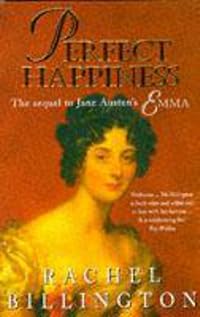
Perfect Happiness
by Rachel Billington
On This Page
Description
Sequel to Emma. A year after her marriage to Mr. George Knightley, Emma is still living at her family home, Harfield. However, happiness is proceeded with restlessness and Mr. Knightley finds himself dealing with a wife who is changing before his eyes.Tags
Recommendations














Member Reviews
What a miserable book. Once again, feminism has defied history to choke the life out of Jane Austen’s characters. Desperate to make the point that marriage robs women of their independence (as motherhood drains them of any intelligence), Rachel Billington has re-written Emma as a depressing, bitter rant on the historical role of women. Set one year after the happy conclusion of the original novel, Perfect Happiness is a dark and cynical perspective of the Knightleys’ marriage, which successfully reverses all the humour and charm of Austen’s Emma. Opening with two deaths, one a cruel plot device and the other a form of euthanasia, any trace of ‘perfect happiness’, or even mild contentment, is quickly extinguished.
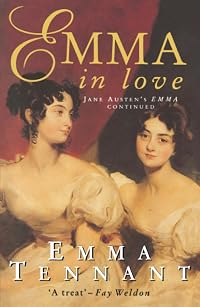
I will admit show more that I only read this ‘sequel’ to Emma, universally panned on its publication in 1996, as an experiment, and so wasn’t expecting to like or even approve of Billington’s negative treatment. (Emma Tennant, Lightweight Champion of Published Fan Fiction, released her own disturbing Emma-ulation of Austen’s novel at the same time, and the two writers had a bit of a face-off in the press about whose book is the best. I’m a bit scared to find out.) Apart from the culling of innocent characters, however, I was hopeful, or at least, not too distressed – until what began as a sensible, if contemporary, continuation of my favourite novel started falling apart at the seams.
Emma Knightley has the one-year itch. She loves her husband, who gave up his house and his independence to live with Emma and her fretful father at Hartfield, but their comfortable, happy life in Highbury bores her (‘Why, in the face of such goodness, was she tempted to become bad?’) Emma, as Billington constantly reminds the reader with her limited store of adjectives, is ‘young’ and ‘strong’ (or ‘not weak’), but she hates being treated like a child by her older husband (‘Stop acting like one!’ was my short answer to her petulant teenage angst). And this was my first indication that the author might have failed to understand Austen’s heroine, because Billington was obviously labouring under the misapprehension that the age difference between Emma and Mr Knightley makes him an old man and Emma a victim of Regency grooming. Emma is 21, Mr Knightley is 38. I hate to sound like a card-carrying Janeite, insisting – usually erroneously – that ‘It isn’t like that in the book!’, but Billington’s constant harping on the age gap started to grate on my nerves almost immediately. If Emma thought or spoke of her husband as ‘an old man’ once, she did it a thousand times. George Knightley is not old, nor is he a father figure – Emma already has a father. Mr Knightley is a close friend and neighbour, well known and liked by the Woodhouses, who later becomes Emma’s brother-in-law, and then falls in love with her when he recognises what a beautiful young woman she has become. I know fifteen year olds have a problem (of the ‘Ew! Gross!’ variety) with the match, but I expected more from a mature, married author.
In fact, Billington seems to be in complete denial about the marriage. Taking literally Emma’s comment at the end of Austen’s novel that she could never call Mr Knightley by his first name, Mrs Knightley turns into Mrs Bennet and refers to her husband throughout as ‘Knightley’. On her own part, both Mr Perry and Mr Elton call her ‘Miss Woodhouse’ on her first clandestine outing into Highbury (Mr Knightley has told her to stay at home, like he would), yet she only corrects Frank Churchill. One year on, and the people of Highbury are still calling her by her maiden name? Rubbish. Yet this Emma is in no hurry to accept the role of wife – or mother. ‘She, Emma, could not regret that she was still at liberty, unfettered by the joys of bringing new life into the world!’ (In balance, at least Billington doesn’t end the book with an announcement, after eighteen months of infertility.)
I have no issue with Emma and Knightley needing time to adjust to living together, or even arguing on occasion – being of different temperament but all too similar natures – yet I cannot see why she would turn against him, her best friend, or that he would keep anything from her. The whole clichéd complication of the plot, however, is a lack of trust and communication between the Knightleys. Emma thinks that her husband sees her as ‘the child he had always known’ – can’t think why, with all the whining and sulking she does – and that he prefers the matronly, docile Harriet Martin, and he thinks she is still in love with the newly widowed Frank Churchill, transformed by Billington from a selfish flirt into a demented Heathcliffian villain. And just to hammer home the feminist foundation of the whole book, if words and phrases like ‘independence’ and ‘unquestioning slave’ are too subtle, one of the few new characters stirred into the story is an outlandish bluestocking called Philomena Tidmarsh, who lives with her stepson and announces ‘I do not like men, in general’. Mrs Tidmarsh, an orphan forced into marriage at sixteen with a man of fifty, says what she thinks, reads philosophy and poetry, plays the harp, and will never marry again. The relationship between Emma and her new friend threatens to encroach on Emma Tennant’s twisted territory, so dearly does Mrs Tidmarsh ‘like’ Emma, and Emma respect her independent friend!
The one interesting and original storyline, however unlikely, that Billington contributes is that of John Knightley’s bankruptcy. Although laden with symbolism like the rest of the novel – ‘John Knightley’s downfall had taught Emma about the possibility of misfortune within her family circle’ – and completely out of character for Mr Knightley’s staid and domesticated brother, at least this subplot wasn’t ‘recycled’ directly from Austen, like Harriet and Frank and a whole paragraph cribbed straight from Emma (‘the butcher still carried his tray ...’) I also quite admired Mr Knightley’s solution to his brother’s debt, even though there was no reason apart from the author’s sheer perversity why he couldn’t tell Emma about her own family.
Rachel Billington obviously had an agenda when writing this tawdry follow-up, but I doubt if it was a love of the original novel and a desire to visit the happy and familiar faces of Highbury again. Errors abound – from calling Mrs Suckling ‘Selina’ and ‘Serena’ in different chapters, and referring to Mr Woodhouse’s cook as ‘Sterne’ and not ‘Serle’ – but the real mistake was the usual pretension of modern authors: applying twentieth century interpretations to nineteenth century novels. Emma Woodhouse is witty, lively and compassionate, for all her ‘little faults’, but Mrs Knightley is selfish, demanding, immature and cruel, suspicious of her husband and sick of her father. Where Austen’s Emma imagined that she was only doing good and helping others, Billington’s version imagines that the world is against her and lashes out in anger. Badly done, indeed! show less
I will admit show more that I only read this ‘sequel’ to Emma, universally panned on its publication in 1996, as an experiment, and so wasn’t expecting to like or even approve of Billington’s negative treatment. (Emma Tennant, Lightweight Champion of Published Fan Fiction, released her own disturbing Emma-ulation of Austen’s novel at the same time, and the two writers had a bit of a face-off in the press about whose book is the best. I’m a bit scared to find out.) Apart from the culling of innocent characters, however, I was hopeful, or at least, not too distressed – until what began as a sensible, if contemporary, continuation of my favourite novel started falling apart at the seams.
Emma Knightley has the one-year itch. She loves her husband, who gave up his house and his independence to live with Emma and her fretful father at Hartfield, but their comfortable, happy life in Highbury bores her (‘Why, in the face of such goodness, was she tempted to become bad?’) Emma, as Billington constantly reminds the reader with her limited store of adjectives, is ‘young’ and ‘strong’ (or ‘not weak’), but she hates being treated like a child by her older husband (‘Stop acting like one!’ was my short answer to her petulant teenage angst). And this was my first indication that the author might have failed to understand Austen’s heroine, because Billington was obviously labouring under the misapprehension that the age difference between Emma and Mr Knightley makes him an old man and Emma a victim of Regency grooming. Emma is 21, Mr Knightley is 38. I hate to sound like a card-carrying Janeite, insisting – usually erroneously – that ‘It isn’t like that in the book!’, but Billington’s constant harping on the age gap started to grate on my nerves almost immediately. If Emma thought or spoke of her husband as ‘an old man’ once, she did it a thousand times. George Knightley is not old, nor is he a father figure – Emma already has a father. Mr Knightley is a close friend and neighbour, well known and liked by the Woodhouses, who later becomes Emma’s brother-in-law, and then falls in love with her when he recognises what a beautiful young woman she has become. I know fifteen year olds have a problem (of the ‘Ew! Gross!’ variety) with the match, but I expected more from a mature, married author.
In fact, Billington seems to be in complete denial about the marriage. Taking literally Emma’s comment at the end of Austen’s novel that she could never call Mr Knightley by his first name, Mrs Knightley turns into Mrs Bennet and refers to her husband throughout as ‘Knightley’. On her own part, both Mr Perry and Mr Elton call her ‘Miss Woodhouse’ on her first clandestine outing into Highbury (Mr Knightley has told her to stay at home, like he would), yet she only corrects Frank Churchill. One year on, and the people of Highbury are still calling her by her maiden name? Rubbish. Yet this Emma is in no hurry to accept the role of wife – or mother. ‘She, Emma, could not regret that she was still at liberty, unfettered by the joys of bringing new life into the world!’ (In balance, at least Billington doesn’t end the book with an announcement, after eighteen months of infertility.)
I have no issue with Emma and Knightley needing time to adjust to living together, or even arguing on occasion – being of different temperament but all too similar natures – yet I cannot see why she would turn against him, her best friend, or that he would keep anything from her. The whole clichéd complication of the plot, however, is a lack of trust and communication between the Knightleys. Emma thinks that her husband sees her as ‘the child he had always known’ – can’t think why, with all the whining and sulking she does – and that he prefers the matronly, docile Harriet Martin, and he thinks she is still in love with the newly widowed Frank Churchill, transformed by Billington from a selfish flirt into a demented Heathcliffian villain. And just to hammer home the feminist foundation of the whole book, if words and phrases like ‘independence’ and ‘unquestioning slave’ are too subtle, one of the few new characters stirred into the story is an outlandish bluestocking called Philomena Tidmarsh, who lives with her stepson and announces ‘I do not like men, in general’. Mrs Tidmarsh, an orphan forced into marriage at sixteen with a man of fifty, says what she thinks, reads philosophy and poetry, plays the harp, and will never marry again. The relationship between Emma and her new friend threatens to encroach on Emma Tennant’s twisted territory, so dearly does Mrs Tidmarsh ‘like’ Emma, and Emma respect her independent friend!
The one interesting and original storyline, however unlikely, that Billington contributes is that of John Knightley’s bankruptcy. Although laden with symbolism like the rest of the novel – ‘John Knightley’s downfall had taught Emma about the possibility of misfortune within her family circle’ – and completely out of character for Mr Knightley’s staid and domesticated brother, at least this subplot wasn’t ‘recycled’ directly from Austen, like Harriet and Frank and a whole paragraph cribbed straight from Emma (‘the butcher still carried his tray ...’) I also quite admired Mr Knightley’s solution to his brother’s debt, even though there was no reason apart from the author’s sheer perversity why he couldn’t tell Emma about her own family.
Rachel Billington obviously had an agenda when writing this tawdry follow-up, but I doubt if it was a love of the original novel and a desire to visit the happy and familiar faces of Highbury again. Errors abound – from calling Mrs Suckling ‘Selina’ and ‘Serena’ in different chapters, and referring to Mr Woodhouse’s cook as ‘Sterne’ and not ‘Serle’ – but the real mistake was the usual pretension of modern authors: applying twentieth century interpretations to nineteenth century novels. Emma Woodhouse is witty, lively and compassionate, for all her ‘little faults’, but Mrs Knightley is selfish, demanding, immature and cruel, suspicious of her husband and sick of her father. Where Austen’s Emma imagined that she was only doing good and helping others, Billington’s version imagines that the world is against her and lashes out in anger. Badly done, indeed! show less
The jacket of this sequel to Jane Austen's "Emma" rather grandly calls it "The sequel..." rather than "A sequel". Given the situation at the end of "Emma" it seems to me likely that six different contemporary novelists could come up with six differing and equally believable continuations. If this one is reminscent rather of Georgette Heyer than of Jane Austen herself it is hardly surprising. Constructing plausible characters, dialogue and events in the style of a writer of 200 years ago is quite different from imitating a contemporary. Nevertheless, lovers of the original should be amused and interested to see what Ms Billington has made of the original characters.
Ratings
Members
- Recently Added By
Author Information
45+ Works 637 Members
Lady Rachel Billington is the daughter of the late Earl and Countess of Longford. She is the author of fifteen novels and eight children's books Gered Mankowitz is the son of the celebrated author and playwright Wolf Mankowitz, and is a world renowned photographer
Classifications
Statistics
- Members
- 47
- Popularity
- 638,520
- Reviews
- 2
- Rating
- (3.13)
- Languages
- English
- Media
- Paper, Audiobook
- ISBNs
- 5