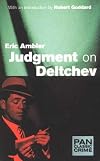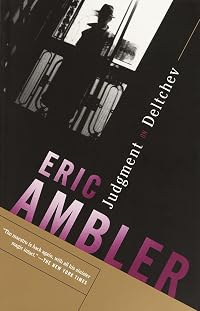
Judgment on Deltchev
by Eric Ambler
On This Page
Description
Foster's dramatic skill is well-known in London's West End theaters. So perhaps it wasn't so surprising when he was hired by an American newspaper publisher to cover the trial of Yordan Delchev for treason. Accused of membership in the sinister Officer Corps Brotherhood and of masterminding a plot to assassinate his country's leader, Delchev may in fact be a pawn and his trial all show. But when Foster meets Madame Delchev, the accused's powerful wife, he suddenly become enmeshed in more show more life-threatening intrigue than he could have imagined. show lessTags
Recommendations























Member Reviews
One of Ambler's better Cold War era thrillers. This one centres around the show trial of a supposed traitor to a fictional Eastern European state, and the political muck that's raked up in its wake. Like a lot of the best Amblers it's fast paced and well-plotted, with an interesting and shady group of characters and a morally ambiguous tone that prefigures the works of writers like le Carre and Deighton.
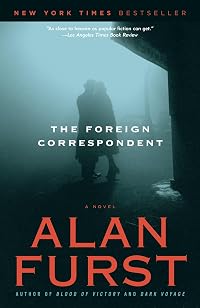
Although this book is set in post-World War Two, Alan Furst’s debt to Eric Ambler jumps off the page in Judgment on Deltchev. Ambler’s protagonist is an amateur at the cloak-and-dagger game, a game that he never really intended to play. Foster (we never learn his first name) is a playwright sent by an American newspaper publisher to cover a show trial in an unnamed Eastern Bloc country. Deltchev, the former leader of the People’s Party and the government, now stands accused of treachery, treason and conspiracy to assassinate the new leader.
Foster slowly allows himself to be drawn deeper and deeper into the behind the scenes machinations until he finds himself in very deep trouble indeed. His minder, Pashik, tries to keep him in show more check, but Foster only sees that as an effort to control what he writes. A former (?) British spy turned journalist lurks around the edges. Can he be trusted? Doubtful. Good old Pashik turns out to be a bit more complex than he first seems, but is he dangerous? Has the reactionary Officer Corps Brotherhood come back to life? At first convinced of Deltchev’s innocence, Foster’s doubts grow as the trial proceeds. Surely there must be *something* behind the outlandish charges.
In addition to spinning out a fascinating tale of intrigue, on the very first page Ambler lays out an excellent and concise explanation of the purpose and methods of the political show trial. “Where treason to the state is defined simply as opposition to the government in power, the political leader convicted of it will not necessarily lose credit with the people….[H]is death at the hands of a tyrannical government may serve to give his life a dignity it did not before possess….His trial, therefore, is no formality, but a ceremony of preparation and precaution. He must be discredited and destroyed as a man so that he may safely dealt with as a criminal.”
Ambler also creates the feel of life under a dictatorship (returning to my thesis of Furst’s debt to Ambler). Freedom of movement is constrained and access to information is tightly controlled. For Foster to meet with citizens is pregnant with risks. The triumvirate of life (food, booze, and tobacco) is scarce. (Women aren’t exactly abundant either.) The place is gray and bland by day with dark corners and long shadows by night. Are you paranoid or are you really being followed? Or both?
Highest recommendation. show less
Foster slowly allows himself to be drawn deeper and deeper into the behind the scenes machinations until he finds himself in very deep trouble indeed. His minder, Pashik, tries to keep him in show more check, but Foster only sees that as an effort to control what he writes. A former (?) British spy turned journalist lurks around the edges. Can he be trusted? Doubtful. Good old Pashik turns out to be a bit more complex than he first seems, but is he dangerous? Has the reactionary Officer Corps Brotherhood come back to life? At first convinced of Deltchev’s innocence, Foster’s doubts grow as the trial proceeds. Surely there must be *something* behind the outlandish charges.
In addition to spinning out a fascinating tale of intrigue, on the very first page Ambler lays out an excellent and concise explanation of the purpose and methods of the political show trial. “Where treason to the state is defined simply as opposition to the government in power, the political leader convicted of it will not necessarily lose credit with the people….[H]is death at the hands of a tyrannical government may serve to give his life a dignity it did not before possess….His trial, therefore, is no formality, but a ceremony of preparation and precaution. He must be discredited and destroyed as a man so that he may safely dealt with as a criminal.”
Ambler also creates the feel of life under a dictatorship (returning to my thesis of Furst’s debt to Ambler). Freedom of movement is constrained and access to information is tightly controlled. For Foster to meet with citizens is pregnant with risks. The triumvirate of life (food, booze, and tobacco) is scarce. (Women aren’t exactly abundant either.) The place is gray and bland by day with dark corners and long shadows by night. Are you paranoid or are you really being followed? Or both?
Highest recommendation. show less
Had I read Judgment on Deltchev before his other postwar novels, I think I would have clearly understood where Ambler is coming from. It's not just the experience and brutality of World War II that changed the upbeat tone of his prewar works into something more sinister laden. It's his seeing how Communist liberation was destroying the Balkans and the area of Europe he seems so enamored with.
This novel turns around an assassination. But it's not so much the actual assassination that is at the heart of the plot per se but the assassination of ideals. This novel makes an interesting complement, in a way, to Koestler's Darkness at Noon. In both, the beliefs that furthered commitment to communism twist back upon themselves and end not in show more tragedy but in obscure destruction of the soul.
The plot of Judgment on Deltchev does plod a bit towards the end and engage in excessive explanations. But the story and lesson from it is worth it. show less
This novel turns around an assassination. But it's not so much the actual assassination that is at the heart of the plot per se but the assassination of ideals. This novel makes an interesting complement, in a way, to Koestler's Darkness at Noon. In both, the beliefs that furthered commitment to communism twist back upon themselves and end not in show more tragedy but in obscure destruction of the soul.
The plot of Judgment on Deltchev does plod a bit towards the end and engage in excessive explanations. But the story and lesson from it is worth it. show less
Eric Ambler - [Judgement on Deltchev]
Ambler was a British author of thrillers and specialised in spy thrillers. He was noted for adding a new realism into his novels. His novels appeared in two batches: the first six from 1936 to 1940 and then a gap of eleven years until Judgement of Deltchev which appeared in 1951: he continued publishing novels until 1981. His most acclaimed novel before the second world war was [The Mask of Dimitrios], which I read and enjoyed some years ago.
Judgement of Deltchev is a story based around the show trial of Bulgarian politician Nikola Petkov who was executed in 1947. Ambler turns these events into a power struggle between the ruling elite, and in his novel it is Deltchev who is on trial for treason in show more an unnamed Eastern European state. In several of his spy thrillers Ambler uses the trope of an amateur getting involved in a deadly political game and it is used again here. Foster is an American playwright, who unexpectedly receives a commission to report on a show trial taking place in a Balkan state. It is a first person account by Foster who admits that he finds himself over his head in the intrigue. He is met by Pashik on his arrival in the country, who becomes his guide/handler. He takes an instant dislike to Pashik who tells him that his account of the trial must go through the official censorship channels. Pashik's advice is to write nothing until he leaves the country. Foster strains against the restrictions imposed and seeks to meet members of Deltchev's family and his political allies to round out a portrait of the accused. This digging for information gets him involved in the political power struggle and endangers his and Pashik's life. A feature of the novel is the relationship between Foster and Pashik, with each of them struggling to trust each other.
The story has elements of mystery as the reader stumbles along in the dark with Foster as he tries to understand the events going on around him. Ambler creates a realistic atmosphere of subterfuge in a milieu of an eastern European state emerging from the second world war, with rival factions searching for influence in the East (Russia) or the West America. Fosters investigations serve to arouse the suspicions of almost everyone he meets and it becomes clear there is much more going on behind the scenes of the show trial. It all leads to a tense climax with Foster barely escaping becoming involved in a coup d'etat.
Amber has to rely on at least three significant information dumps within the novel to keep the reader informed of the necessary background to the story, and these happen when Forster seemingly puts himself in danger. It is however, a well written plot based novel with some interesting characters and reminded me a little of Graham Greene's entertainments, although characterisation and psychology in Amber's novel take second place to the unfolding story. Reading the novel some 70 years after publication enabled me to step back from the contemporary issues of the time, and the criticism that Ambler was more unsympathetic to the Eastern block countries than in his pre-war novels. 3.5 stars. show less
Ambler was a British author of thrillers and specialised in spy thrillers. He was noted for adding a new realism into his novels. His novels appeared in two batches: the first six from 1936 to 1940 and then a gap of eleven years until Judgement of Deltchev which appeared in 1951: he continued publishing novels until 1981. His most acclaimed novel before the second world war was [The Mask of Dimitrios], which I read and enjoyed some years ago.
Judgement of Deltchev is a story based around the show trial of Bulgarian politician Nikola Petkov who was executed in 1947. Ambler turns these events into a power struggle between the ruling elite, and in his novel it is Deltchev who is on trial for treason in show more an unnamed Eastern European state. In several of his spy thrillers Ambler uses the trope of an amateur getting involved in a deadly political game and it is used again here. Foster is an American playwright, who unexpectedly receives a commission to report on a show trial taking place in a Balkan state. It is a first person account by Foster who admits that he finds himself over his head in the intrigue. He is met by Pashik on his arrival in the country, who becomes his guide/handler. He takes an instant dislike to Pashik who tells him that his account of the trial must go through the official censorship channels. Pashik's advice is to write nothing until he leaves the country. Foster strains against the restrictions imposed and seeks to meet members of Deltchev's family and his political allies to round out a portrait of the accused. This digging for information gets him involved in the political power struggle and endangers his and Pashik's life. A feature of the novel is the relationship between Foster and Pashik, with each of them struggling to trust each other.
The story has elements of mystery as the reader stumbles along in the dark with Foster as he tries to understand the events going on around him. Ambler creates a realistic atmosphere of subterfuge in a milieu of an eastern European state emerging from the second world war, with rival factions searching for influence in the East (Russia) or the West America. Fosters investigations serve to arouse the suspicions of almost everyone he meets and it becomes clear there is much more going on behind the scenes of the show trial. It all leads to a tense climax with Foster barely escaping becoming involved in a coup d'etat.
Amber has to rely on at least three significant information dumps within the novel to keep the reader informed of the necessary background to the story, and these happen when Forster seemingly puts himself in danger. It is however, a well written plot based novel with some interesting characters and reminded me a little of Graham Greene's entertainments, although characterisation and psychology in Amber's novel take second place to the unfolding story. Reading the novel some 70 years after publication enabled me to step back from the contemporary issues of the time, and the criticism that Ambler was more unsympathetic to the Eastern block countries than in his pre-war novels. 3.5 stars. show less
One of Ambler's better Cold War era thrillers. This one centres around the show trial of a supposed traitor to a fictional Eastern European state, and the political muck that's raked up in its wake. Like a lot of the best Amblers it's fast paced and well-plotted, with an interesting and shady group of characters and a morally ambiguous tone that prefigures the works of writers like le Carre and Deighton.
Another Ambler meditation on European politics, wrapped around a nifty thriller. This one is set in a small Balkan country, during the period of Communist take-over that followed the second world war. Deltchev is the (previoius) leader of a (non-communist) leftist party, on trial for crimes against the state. The manouverings behind the show trial , and the complex characters and choices involved, are the core of the book. It is an indictment of Stalinism, a powerful period piece, and a top notch thriller.
' SEM DÚVIDA NENHUMA O MAIS SENSACIONAL ESCRITOR POLICIAL DA INGLATERRA.
Jun 15, 2021Portuguese (Brazil)
Members
- Recently Added By
Lists

Welcome to Ruritania!
22 works; 5 members
Author Information

71+ Works 10,362 Members
Eric Ambler was born in London on June 28, 1909. Ambler toured in the late 1920s as a music-hall comedian and wrote plays, following in the footsteps of his parents, who were entertainers. After studying engineering at London University from 1924 to 1927, he took an apprenticeship in engineering at the Edison Swan Electric Company. When the show more company became part of Associated Electrical Industries, he worked in its advertising department and wrote avant-garde plays in his spare time. By 1937 he was the director of a London ad agency. He later resigned and moved to Paris where he dedicated himself to writing. In 1936, his first novel, The Dark Frontier, appeared and followed by another five by 1940, as well as working as script consultant for Alexander Korda. During World War II he joined first the artillery and was then later posted to a combat photographic unit. He served in Italy as assistant director of army cinematography and during this period, wrote and produced nearly one hundred training and propaganda films. After the war Ambler was screenwriter for the Rank organization and starting from 1951 he published a number of novels with Charles Rodda under the pseudonym Eliot Reed. Several of his novels were made into films, including A Coffin for Dimitrios in 1944, Journey into Fear in 1942, and Topkapi in 1964. Ambler also wrote screenplays, including those for The Cruel Sea in 1953 and The Guns of Navarone in 1961. In the 1960s he moved to Hollywood and was responsible for the TV shows Checkmate and The Most Deadly Game. Ambler received the Gold Dagger in 1959 for Passage of Arms, in 1967 for Dirty Story and in 1972 for The Levanter. He also received the Diamond Dagger in 1986 plus an Edgar in 1964 for The Light of Day and was nominated Grand Master in 1975. Ambler was named an Officer of the Order of the British Empire in 1981, and received other literary awards in France and Sweden. He died in London in October 1998. Ambler published 23 novels total, 19 under his own name and four in collaboration Eric Amber died in London on October 22, 1998, at the age of 89. (Bowker Author Biography) show less
Some Editions
Awards and Honors
Distinctions
Series
Belongs to Publisher Series
Crime de la Crime (Arbeiderspers)
Seuil, Points roman (R217)
Work Relationships
Is contained in
Common Knowledge
- Canonical title
- Judgment on Deltchev
- Original title
- Judgment on Deltchev
- Alternate titles*
- Uno strano processo
- Original publication date
- 1951
- People/Characters
- Yordan Deltchev; Georghi Pashik; Petlarov; Foster; Madame Deltchev; Sibley
- Epigraph
- "Many things in your good people cause me disgust, and, verily, not their evil. I would that they had a madness by which they succumbed, like this pale criminal!" -- Nietzsche: Thus Spake Zarathustra
- Dedication
- To F with thanks
- Quotations
- Where treason to the state is defined simply as opposition to the government in power, the political leader convicted of it will not necessarily lose credit with the people.
- Last words
- (Click to show. Warning: May contain spoilers.)"No thanks," I said. "I've seen it."
*Some information comes from Common Knowledge in other languages. Click "Edit" for more information.
Classifications
Statistics
- Members
- 363
- Popularity
- 86,710
- Reviews
- 7
- Rating
- (3.83)
- Languages
- 9 — Danish, Dutch, English, French, German, Greek, Italian, Spanish, Swedish
- Media
- Paper, Audiobook, Ebook
- ISBNs
- 27
- ASINs
- 18