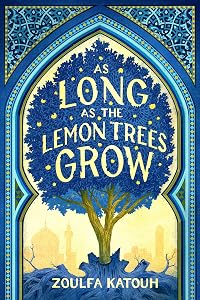
As Long as the Lemon Trees Grow
by Zoulfa Katouh
On This Page
Description
A love letter to Syria and its people, As Long as the Lemon Trees Grow is a speculative novel set amid the Syrian Revolution, burning with the fires of hope, love, and possibility. Perfect for fans of The Book Thief and Salt to the Sea.Salama Kassab was a pharmacy student when the cries for freedom broke out in Syria. She still had her parents and her big brother; she still had her home. She had a normal teenager’s life.
Now Salama volunteers at a hospital in Homs, helping the show more wounded who flood through the doors daily. Secretly, though, she is desperate to find a way out of her beloved country before her sister-in-law, Layla, gives birth. So desperate, that she has manifested a physical embodiment of her fear in the form of her imagined companion, Khawf, who haunts her every move in an effort to keep her safe.
But even with Khawf pressing her to leave, Salama is torn between her loyalty to her country and her conviction to survive. Salama must contend with bullets and bombs, military assaults, and her shifting sense of morality before she might finally breathe free. And when she crosses paths with the boy she was supposed to meet one fateful day, she starts to doubt her resolve in leaving home at all.
Soon, Salama must learn to see the events around her for what they truly are—not a war, but a revolution—and decide how she, too, will cry for Syria’s freedom. show less
Tags
Recommendations

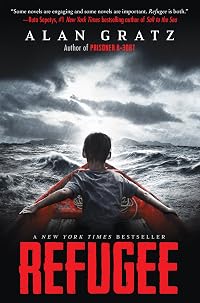
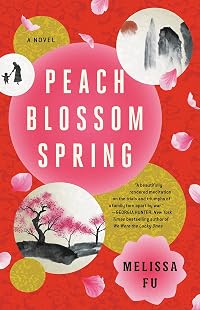



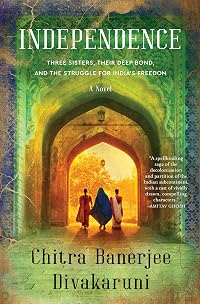
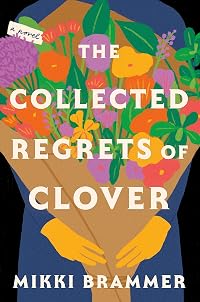







Member Reviews
As Long As The Lemon Trees Grow is a magical realism (slightly speculative fiction-y?) story about an 18 year old girl, Salama Kassab, living in Homs, Syria at the start of the Syrian Revolution with her pregnant sister-in-law, Layla. Before, she was studying pharmacy in college. Now, she volunteers at the hospital during the day and cares for Layla at night, all while being haunted by a man-like being named Khawf, who relentlessly makes her relive her darkest memories and see her deepest fears.
It feels like combining The Book Thief by Markus Zusak, Grave of the Fireflies (Studio Ghibli film), loads of Syrian culture and imagery, epiphany and marjorie by Taylor Swift (per the author's acknowledgements even!), and sprinkle in a bit of show more the whimsy and the gentle romances from the more lighthearted Studio Ghibli films.
Reading this book felt like I was running a marathon. I felt like my heart was racing the entire time. There really was not a single dull moment in this book. And of course, with a book that takes place during a war, you come to expect sadness and death are lurking close by - so every moment I felt like I was holding my breath and hoping for the best. Salama's fears and anxieties felt like they were mine as well. That said, even if a war is happening, the author did an incredible job of making this more than just a book about war, while also staying honest about the reality of war. That sounds sloppy, but it's difficult to explain. There were many pockets of light in this book. She very easily could have made the entire story dark, but as she notes in the author's note - it is a book about hope. I think she did an amazing job and I can already tell this story is going to live in my brain rent free for a long time. (PS- speaking of the end, DO NOT skip her acknowledgements! Not only is Zoulfa Katouh a beautiful story teller, but she single-handedly made me wish we were best friends just by writing acknowledgements.)
Things I liked:
• I loved Salama's use of the term "might life". The moments she allows herself to imagine a different life and daydream a little were so sweet. (daydreamer girlies rise)
• I loved Khawf - not only as a character, but also as the idea of having a human-ish embodiment of fear - so Khawf isn't actually Khawf, but he's just the darker parts of Salama's mind? I had this debate with myself over and over again while I was reading. Is he some kind of demon? Or is he really just a creation in Salama's mind? But he can't be Salama, because she's so sweet and Khawf is so dark - but that's not true, is it? Salama can have dark thoughts (who doesn't?) and still be sweet.
• I'm OBSESSED with the layers of Studio Ghibli references and imagery. I usually don't like it very much when books make such specific references to real world media/pop culture, but it works soooo well for this story. I would actually fly to Japan and beg Hayao Miyazaki to adapt this story into a Studio Ghibli film if I could.
• I also loved learning from the author's note at the end that many of the attacks/events that happen in the story are based on true events that have happened in Syria, and some of the victims referenced were also real people.
Things I didn't like:
• nothing?????????????? show less
It feels like combining The Book Thief by Markus Zusak, Grave of the Fireflies (Studio Ghibli film), loads of Syrian culture and imagery, epiphany and marjorie by Taylor Swift (per the author's acknowledgements even!), and sprinkle in a bit of show more the whimsy and the gentle romances from the more lighthearted Studio Ghibli films.
Reading this book felt like I was running a marathon. I felt like my heart was racing the entire time. There really was not a single dull moment in this book. And of course, with a book that takes place during a war, you come to expect sadness and death are lurking close by - so every moment I felt like I was holding my breath and hoping for the best. Salama's fears and anxieties felt like they were mine as well. That said, even if a war is happening, the author did an incredible job of making this more than just a book about war, while also staying honest about the reality of war. That sounds sloppy, but it's difficult to explain. There were many pockets of light in this book. She very easily could have made the entire story dark, but as she notes in the author's note - it is a book about hope. I think she did an amazing job and I can already tell this story is going to live in my brain rent free for a long time. (PS- speaking of the end, DO NOT skip her acknowledgements! Not only is Zoulfa Katouh a beautiful story teller, but she single-handedly made me wish we were best friends just by writing acknowledgements.)
Things I liked:
• I loved Salama's use of the term "might life". The moments she allows herself to imagine a different life and daydream a little were so sweet. (daydreamer girlies rise)
• I loved Khawf - not only as a character, but also as the idea of having a human-ish embodiment of fear - so Khawf isn't actually Khawf, but he's just the darker parts of Salama's mind? I had this debate with myself over and over again while I was reading. Is he some kind of demon? Or is he really just a creation in Salama's mind? But he can't be Salama, because she's so sweet and Khawf is so dark - but that's not true, is it? Salama can have dark thoughts (who doesn't?) and still be sweet.
• I'm OBSESSED with the layers of Studio Ghibli references and imagery. I usually don't like it very much when books make such specific references to real world media/pop culture, but it works soooo well for this story. I would actually fly to Japan and beg Hayao Miyazaki to adapt this story into a Studio Ghibli film if I could.
• I also loved learning from the author's note at the end that many of the attacks/events that happen in the story are based on true events that have happened in Syria, and some of the victims referenced were also real people.
Things I didn't like:
• nothing?????????????? show less
"Even the custodial staff were promoted to nurses. Having spent one year at pharmacy school, I was the equivalent of a seasoned doctor, and after their last pharmacist was buried under the rubble of his home, there was no other choice."
"At first I used to flinch, try to stop my trembling, and stutter an explanation of how all the doctors are busy. That I'm just as capable. But now, if anybody tries to cost me precious seconds, I just tell them, This or death. That helps them reach their decision pretty quickly."
"'And don't forget to pray. Prayers are answered when rain falls,' she reminds me."
"She's in the past, and I don't want to jolt her out of her daydream. Even though the memories ache, it's the only way we get to see our loved show more ones -- replaying their words to us, letting our imaginations magnify or soften their voices however we please."
"'Oh my God, if you're going to drag out your answers, I will hit you on your head,' she says with a fierce look."
"It might be difficult at first. The world might be too loud or too silent. It might be neon bright or pitch black, but slowly, it'll put itself back together. It will resemble something normal. Then you'll see the colours, Salama."
"'The most beautiful sunsets are always the ones that come after a rain,' I said to Layla once when we were at her family's summer house in the countryside."
"Every lemon will bring forth a child and the lemons will never die out."
"'Salama, you've done everything. The rest is up to God. To fate. If you're meant to be in Munich, you will be, even if the whole military rips this place apart. And if you're not, then not even a private plane landing in the middle of Freedom Square to whisk you away will do that.'"
"He smiles. 'It might sound cheesy, but I'm sure our souls met way before they found their way into our bodies. I think that's where we know each other from.'"
Homs is alive in As Long As the Lemon Trees Grow even as it dies. Zoulfa Katouh's debut is a gut-punch of a love letter to Syria, equal parts shattering and radiant. Set in besieged Homs during the revolution, it follows Salama, an 18-year-old pharmacy student thrust into makeshift-medic territory, as she wrestles with an impossible choice: stay and resist, or flee and survive. Katouh conjures a city of lemon trees and luminous sunsets alongside rubble, checkpoints, and hospital corridors that never empty. The contrast is entirely deliberate and utterly devastating: she weaves Salama's harrowing present, treating the wounded and making decisions no teenager should ever have to make, against radiant memories of a Syria that existed just months before. There is something almost unbearable about reading a place rendered so tenderly while knowing its fate, and Katouh holds that tension with a steadiness that genuinely impressed me. I was on the edge of my seat for stretches of this book in a way that reminded me why I read. show less
"At first I used to flinch, try to stop my trembling, and stutter an explanation of how all the doctors are busy. That I'm just as capable. But now, if anybody tries to cost me precious seconds, I just tell them, This or death. That helps them reach their decision pretty quickly."
"'And don't forget to pray. Prayers are answered when rain falls,' she reminds me."
"She's in the past, and I don't want to jolt her out of her daydream. Even though the memories ache, it's the only way we get to see our loved show more ones -- replaying their words to us, letting our imaginations magnify or soften their voices however we please."
"'Oh my God, if you're going to drag out your answers, I will hit you on your head,' she says with a fierce look."
"It might be difficult at first. The world might be too loud or too silent. It might be neon bright or pitch black, but slowly, it'll put itself back together. It will resemble something normal. Then you'll see the colours, Salama."
"'The most beautiful sunsets are always the ones that come after a rain,' I said to Layla once when we were at her family's summer house in the countryside."
"Every lemon will bring forth a child and the lemons will never die out."
"'Salama, you've done everything. The rest is up to God. To fate. If you're meant to be in Munich, you will be, even if the whole military rips this place apart. And if you're not, then not even a private plane landing in the middle of Freedom Square to whisk you away will do that.'"
"He smiles. 'It might sound cheesy, but I'm sure our souls met way before they found their way into our bodies. I think that's where we know each other from.'"
Homs is alive in As Long As the Lemon Trees Grow even as it dies. Zoulfa Katouh's debut is a gut-punch of a love letter to Syria, equal parts shattering and radiant. Set in besieged Homs during the revolution, it follows Salama, an 18-year-old pharmacy student thrust into makeshift-medic territory, as she wrestles with an impossible choice: stay and resist, or flee and survive. Katouh conjures a city of lemon trees and luminous sunsets alongside rubble, checkpoints, and hospital corridors that never empty. The contrast is entirely deliberate and utterly devastating: she weaves Salama's harrowing present, treating the wounded and making decisions no teenager should ever have to make, against radiant memories of a Syria that existed just months before. There is something almost unbearable about reading a place rendered so tenderly while knowing its fate, and Katouh holds that tension with a steadiness that genuinely impressed me. I was on the edge of my seat for stretches of this book in a way that reminded me why I read. show less
When her city of Homs comes under fire in the Syrian revolution, an 18-year-old pharmacy student faces a gut-wrenching decision.
Salama, an avid horticulturalist, is living a nightmare: Her father and older brother were captured by government forces during a protest; her mother died in a bombing. Salama’s left with Layla, her pregnant sister-in-law and best friend—and Khawf, Arabic for fear. Khawf is the personification of her trauma who pushes her to attempt the treacherous journey by sea to seek refuge in Germany. Starving and exhausted, Salama nevertheless wavers. Wracked with guilt over what might happen to Layla and her baby if they delay, she finds meaning in helping her beloved homeland by volunteering at a hospital. But the show more burden of treating streams of victims, many of them children who die in agonizing ways, takes a toll on her fragile mental health. Salama meets 19-year-old Kenan, who is caring for his orphaned younger siblings and is committed to doing his part by uploading videos of protests to YouTube. Their blossoming love is an act of hopeful defiance, but as the Free Syrian Army’s hold on Homs becomes increasingly tenuous, the reality of their dire fate should they be captured heightens the urgency. Harrowing moments are juxtaposed against painfully beautiful memories of peaceful times, and readers will linger over the many exquisite sentences in this memorable novel that honors the stories of countless Syrians.
Searing in its intensity. (author’s note) (Fiction. 14-18)
-Kirkus Review show less
Salama, an avid horticulturalist, is living a nightmare: Her father and older brother were captured by government forces during a protest; her mother died in a bombing. Salama’s left with Layla, her pregnant sister-in-law and best friend—and Khawf, Arabic for fear. Khawf is the personification of her trauma who pushes her to attempt the treacherous journey by sea to seek refuge in Germany. Starving and exhausted, Salama nevertheless wavers. Wracked with guilt over what might happen to Layla and her baby if they delay, she finds meaning in helping her beloved homeland by volunteering at a hospital. But the show more burden of treating streams of victims, many of them children who die in agonizing ways, takes a toll on her fragile mental health. Salama meets 19-year-old Kenan, who is caring for his orphaned younger siblings and is committed to doing his part by uploading videos of protests to YouTube. Their blossoming love is an act of hopeful defiance, but as the Free Syrian Army’s hold on Homs becomes increasingly tenuous, the reality of their dire fate should they be captured heightens the urgency. Harrowing moments are juxtaposed against painfully beautiful memories of peaceful times, and readers will linger over the many exquisite sentences in this memorable novel that honors the stories of countless Syrians.
Searing in its intensity. (author’s note) (Fiction. 14-18)
-Kirkus Review show less
Recommended by Laure at Odyssey
Salama was in her second year of college, studying to be a pharmacist, when the Syrian revolution broke out and her city of Homs became a war zone. Now, Salama's mother is dead, her father and brother are either dead or being tortured, and Salama volunteers at the hospital alongside Dr. Zian, a father figure to her in the chaos and blood.
Salama lives with her best friend and sister-in-law, Layla, who is seven months pregnant and no longer leaves the house for fear of snipers. At night, Salama is tormented by a hallucination in the form of a man named Khawf, who replays horrible memories or imagines horrific scenes, in an attempt at self-preservation - to get Salama to leave Syria. At last, Salama arranges show more passage for herself and Layla on a boat, but then she meets Kenan when she saves the life of his younger sister, Lama. Kenan, who studied animation, now documents protests and posts videos online; he and Salama bond over their love of Studio Ghibli movies, and dream of telling stories together. But can Salama convince him to leave with her before he becomes a martyr?
Violence from bombs, bullets, and even sarin gas attacks, on top of starvation, make this a truly wrenching read. Characters face relentless danger and impossible decisions. An epilogue tells of their fates.
See also: The Lost Year by Katherine Marsh, 83 Days in Mariupol by Don Brown, Other Words for Home by Jasmine Warga
Quotes
"Life is more than just survival, Salama." (Layla, 10)
Working here [at the hospital] has hardened and softened my heart in ways I never guessed it would. (32)
No one takes a rickety boat on the sea if there is another choice. (35)
"I can't save them....Everyone is dying. Nothing I do works." (Salama to Layla, 143)
"Feelings give you hope. There's nothing wrong with finding comfort amid what's happening." (Layla to Salama, 145)
"At this point, Salama, all you can hope for is survival. Not happiness." (Khawf, 154)
Survivor's remorse is a second skin we are cursed to wear forever. (169)
"This isn't an easy choice, but it's not wrong." (Salama to Kenan, 180)
"It's my way of asking forgiveness for leaving." (Salama to Layla, re: attending the anniversary protest, 238)
Being this close to leaving is allowing the suppressed dreams to wake up and grow like ivy between the cracks. (275)
Fate has his strings, but we're the ones who twist them together with our actions. (316)
"It wasn't your fault."
"Then why does it feel like it was?" (Khawf and Salama, 378) show less
Salama was in her second year of college, studying to be a pharmacist, when the Syrian revolution broke out and her city of Homs became a war zone. Now, Salama's mother is dead, her father and brother are either dead or being tortured, and Salama volunteers at the hospital alongside Dr. Zian, a father figure to her in the chaos and blood.
Salama lives with her best friend and sister-in-law, Layla, who is seven months pregnant and no longer leaves the house for fear of snipers. At night, Salama is tormented by a hallucination in the form of a man named Khawf, who replays horrible memories or imagines horrific scenes, in an attempt at self-preservation - to get Salama to leave Syria. At last, Salama arranges show more passage for herself and Layla on a boat, but then she meets Kenan when she saves the life of his younger sister, Lama. Kenan, who studied animation, now documents protests and posts videos online; he and Salama bond over their love of Studio Ghibli movies, and dream of telling stories together. But can Salama convince him to leave with her before he becomes a martyr?
Violence from bombs, bullets, and even sarin gas attacks, on top of starvation, make this a truly wrenching read. Characters face relentless danger and impossible decisions. An epilogue tells of their fates.
See also: The Lost Year by Katherine Marsh, 83 Days in Mariupol by Don Brown, Other Words for Home by Jasmine Warga
Quotes
"Life is more than just survival, Salama." (Layla, 10)
Working here [at the hospital] has hardened and softened my heart in ways I never guessed it would. (32)
No one takes a rickety boat on the sea if there is another choice. (35)
"I can't save them....Everyone is dying. Nothing I do works." (Salama to Layla, 143)
"Feelings give you hope. There's nothing wrong with finding comfort amid what's happening." (Layla to Salama, 145)
"At this point, Salama, all you can hope for is survival. Not happiness." (Khawf, 154)
Survivor's remorse is a second skin we are cursed to wear forever. (169)
"This isn't an easy choice, but it's not wrong." (Salama to Kenan, 180)
"It's my way of asking forgiveness for leaving." (Salama to Layla, re: attending the anniversary protest, 238)
Being this close to leaving is allowing the suppressed dreams to wake up and grow like ivy between the cracks. (275)
Fate has his strings, but we're the ones who twist them together with our actions. (316)
"It wasn't your fault."
"Then why does it feel like it was?" (Khawf and Salama, 378) show less
I don’t know why it took me so long to read As Long as the Lemon Trees Grow—maybe because I knew it would be a difficult one. But wow, I’m so glad I finally picked it up. This book is an emotional, eye-opening journey that gripped my heart and didn’t let go. It sheds light on the unimaginable horrors of the Syrian conflict, but also the resilience and love that can exist even in the darkest of times.
I have many Syrian friends who have family still in Syria or who have come here. Their food and culture are so vibrant and beautiful, and it’s absolutely devastating what has been done to their country. Reading this book made me think of them even more deeply—it’s a powerful reminder of their strength and the hope they carry.
I show more was so relieved that there was a happy ending in this story. I wish with all my heart that could be the case for many more people in real life. As Long as the Lemon Trees Grow is an unforgettable read, and I cannot recommend it enough. show less
I have many Syrian friends who have family still in Syria or who have come here. Their food and culture are so vibrant and beautiful, and it’s absolutely devastating what has been done to their country. Reading this book made me think of them even more deeply—it’s a powerful reminder of their strength and the hope they carry.
I show more was so relieved that there was a happy ending in this story. I wish with all my heart that could be the case for many more people in real life. As Long as the Lemon Trees Grow is an unforgettable read, and I cannot recommend it enough. show less
Simply an amazing debut novel based on the ongoing conflict and atrocities in Syria!
As Long As the Lemon Trees Grow is the amazing debut novel by Syrian author Zoulfa Katouh. It is a gripping tale from start to finish and exudes the ever-present fear of the main characters and their neighbors. The story is absolutely heart-wrenching and made even more so with the understanding that it is based on actual events and ongoing conditions in Syria. The tension was constant from the beginning but continued to build as the story unfolded. The author doesn't pull any punches. There is no softening of the blows of the revolution's impact on the characters or the reader. There is death and danger at every turn of the page. I had to step away from show more the story to recover before going on. I can't imagine the reality of those that cannot.
The story is told in first-person from Salama's point of view, so we are privy to her thoughts and feelings. The effects of her PTSD manifest themselves in Khawf, who shows up at all hours of the day or night to harangue and taunt her. But Salama is an extraordinary and extremely likable young woman, a real underdog everyone will want to succeed. Amid her desperate daily life, romance finds its way to her, and it is accomplished in a most natural way and satisfying way.
The story isn't all heartbreak; there are moments of joy and recollections of good times. There are descriptions of life in pre-revolution Syria, college memories, friends and family, food and drink, and mentions of the glories of Syria's past. Layla and Salama have been best friends since childhood, and they still have some BFF moments, sharing secrets and giggling together when they can, although, under the circumstances, this is infrequent. (This book also presents one of the biggest and most shockingly blindsiding twists I have ever encountered in a plot. All I will say is I totally did not see that coming.)
With its engaging heroine and other main characters and tense, desperate plot, I highly recommend AS LONG AS THE LEMON TREES GROW to readers of young adult fiction and suspense, especially those who enjoy stories based on actual events. Please note that the subject matter is tough and comes with a list of content or trigger warnings.
I voluntarily reviewed this after receiving an Advanced Review Copy from the author or publisher through NetGalley and TBR and Beyond Book Tours. show less
As Long As the Lemon Trees Grow is the amazing debut novel by Syrian author Zoulfa Katouh. It is a gripping tale from start to finish and exudes the ever-present fear of the main characters and their neighbors. The story is absolutely heart-wrenching and made even more so with the understanding that it is based on actual events and ongoing conditions in Syria. The tension was constant from the beginning but continued to build as the story unfolded. The author doesn't pull any punches. There is no softening of the blows of the revolution's impact on the characters or the reader. There is death and danger at every turn of the page. I had to step away from show more the story to recover before going on. I can't imagine the reality of those that cannot.
The story is told in first-person from Salama's point of view, so we are privy to her thoughts and feelings. The effects of her PTSD manifest themselves in Khawf, who shows up at all hours of the day or night to harangue and taunt her. But Salama is an extraordinary and extremely likable young woman, a real underdog everyone will want to succeed. Amid her desperate daily life, romance finds its way to her, and it is accomplished in a most natural way and satisfying way.
The story isn't all heartbreak; there are moments of joy and recollections of good times. There are descriptions of life in pre-revolution Syria, college memories, friends and family, food and drink, and mentions of the glories of Syria's past. Layla and Salama have been best friends since childhood, and they still have some BFF moments, sharing secrets and giggling together when they can, although, under the circumstances, this is infrequent. (This book also presents one of the biggest and most shockingly blindsiding twists I have ever encountered in a plot. All I will say is I totally did not see that coming.)
With its engaging heroine and other main characters and tense, desperate plot, I highly recommend AS LONG AS THE LEMON TREES GROW to readers of young adult fiction and suspense, especially those who enjoy stories based on actual events. Please note that the subject matter is tough and comes with a list of content or trigger warnings.
I voluntarily reviewed this after receiving an Advanced Review Copy from the author or publisher through NetGalley and TBR and Beyond Book Tours. show less
"As long as the Lemon Trees Grow" moved me from the start. It was a beautiful tribute to Syria and its citizens and follows the journey of Salama, an eighteen-year-old pharmacist turned doctor during the Syrian Revolution. Salama and Layla stole my heart from the start and I was continually concerned for them as well as Kenyan and his two younger siblings, Yusuf and Lama. With the revolution in full swing, I feared that one of them would be injured or worse among the bombings and sniper attacks that constantly rained down on them. By the end of the novel, my nerves were in shreds.
Zoulfa Katouh's writing was gorgeous. It was heartbreaking, inspirational and deeply moving. However, she did not downplay the atrocities that the citizens of show more Syria faced daily and so "As long as the Lemon Trees Grow" was often very uncomfortable. It was raw, honest and powerful. The author poured her heart and soul into this novel and the result was an amazing debut that everyone should read. show less
Zoulfa Katouh's writing was gorgeous. It was heartbreaking, inspirational and deeply moving. However, she did not downplay the atrocities that the citizens of show more Syria faced daily and so "As long as the Lemon Trees Grow" was often very uncomfortable. It was raw, honest and powerful. The author poured her heart and soul into this novel and the result was an amazing debut that everyone should read. show less
Members
- Recently Added By
Published Reviews
ThingScore 75
In a wartorn Homs hospital, 18-year-old Salama works as one of the few surgeons left, despite having just a year of pharmacy training. She's surrounded by remembered trauma and present violence, but she can't bear the thought of leaving Syria, although Khawf, the fierce hallucination who visits her, insists she must save her pregnant sister-in-law. But when Salama meets Kenan and begins to show more fall in love with him, she must decide what to do for the best. Though the writing is repetitive at times, this "love letter to Syria" is a unique novel for 14+, blending beauty, horror and a defiant sense of hope. show less
added by Cynfelyn
Lists

Goodreads YA Choice Awards
14 works; 1 member

Books Read in 2024
4,727 works; 128 members

Arab and Arab Diaspora Literature We Recommend
112 works; 53 members

Top Five Books of 2025
954 works; 303 members
Author Information

4 Works 1,330 Members
Some Editions
Awards and Honors
Awards
Distinctions
Notable Lists
Common Knowledge
- Original publication date
- 2022
- People/Characters
- Salama; Khawf; Layla; Kenan
- Important places
- Homs, Syria
- Important events
- Syrian civil war
- Original language*
- Engels
*Some information comes from Common Knowledge in other languages. Click "Edit" for more information.
Classifications
Statistics
- Members
- 1,310
- Popularity
- 18,861
- Reviews
- 33
- Rating
- (4.41)
- Languages
- 11 — Catalan, Danish, Dutch, English, Finnish, French, German, Italian, Polish, Romanian, Swedish
- Media
- Paper, Audiobook, Ebook
- ISBNs
- 34
- ASINs
- 6