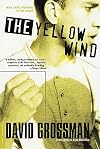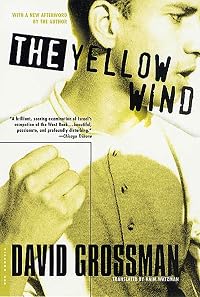
The Yellow Wind
by David Grossman
On This Page
Description
An account of the author's three month journey on the West Bank of the Jordan River and his awareness of the moral dilemmas inherent in the Palestinian predicament.Tags
Recommendations













Member Reviews
A very compelling, insightful, and frank depiction of the human face of the Israeli-Palestinian conflict.
Written 2 decades ago as part of a reporting assignment, this collection of articles is based on a 7-week encounter of the author with the Palestinian refugees and Israeli settlers in the Israeli-occupied West Bank. Grossman listens to their stories, asks penetrating and oftentimes uncomfortable questions about the occupation, tries to understand where they are coming from and what dreams they may have. He visits homes, kindergartens, universities, a radical Zionist settlement, and observes, probes, reflects without passing judgment. Together with him, we witness the pain and humiliation of dispossession, the bitter anger against show more the occupiers, the deep mistrust of each other, the intransigence of positions. We see his struggle with his inadequacy to make sense of the seemingly unending cycle of violence and fear, and we too feel a sense of futility. In a kindergarten, 2-3 yr old boys point make-believe guns and shoot him because he is a Jew. In a meeting with Israeli "terrorists" or extreme right members, he asks if they can imagine being in the Palestinian's shoes, and is told off saying this is a question they never ask.
This book earned international acclaim but, not surprisingly, was controversial at home. Grossman came out of this experience with the message that the occupation of one people by another degrades the moral and political life of both the occupier and the occupied. And this message would underlie what Grossman would later become, an outspoken peace activist.
Written 20 years ago, the actors might be different, but the message has not changed, and the questions remain. Essential reading for those who would like to understand even just a bit of this complex issue, from the perspective of those who actually live there. show less
Written 2 decades ago as part of a reporting assignment, this collection of articles is based on a 7-week encounter of the author with the Palestinian refugees and Israeli settlers in the Israeli-occupied West Bank. Grossman listens to their stories, asks penetrating and oftentimes uncomfortable questions about the occupation, tries to understand where they are coming from and what dreams they may have. He visits homes, kindergartens, universities, a radical Zionist settlement, and observes, probes, reflects without passing judgment. Together with him, we witness the pain and humiliation of dispossession, the bitter anger against show more the occupiers, the deep mistrust of each other, the intransigence of positions. We see his struggle with his inadequacy to make sense of the seemingly unending cycle of violence and fear, and we too feel a sense of futility. In a kindergarten, 2-3 yr old boys point make-believe guns and shoot him because he is a Jew. In a meeting with Israeli "terrorists" or extreme right members, he asks if they can imagine being in the Palestinian's shoes, and is told off saying this is a question they never ask.
This book earned international acclaim but, not surprisingly, was controversial at home. Grossman came out of this experience with the message that the occupation of one people by another degrades the moral and political life of both the occupier and the occupied. And this message would underlie what Grossman would later become, an outspoken peace activist.
Written 20 years ago, the actors might be different, but the message has not changed, and the questions remain. Essential reading for those who would like to understand even just a bit of this complex issue, from the perspective of those who actually live there. show less
I don't really remember how I came to acquire this book, which makes me suspect it was a bookslut slush stack pick. It is about Israel and Palestine, and while it was written in 1987, as two updates to the book point out, while things have changed, attitudes very much remain the same. And attitudes are very much what this book is about.
Grossman is an Israeli novelist who goes on a quest of sorts to understand the people impacted by the struggle. An Israeli himself, he seems to take Israeli "mainstream" opinions for granted, and never mentions them in this book. He does interview Arabs in refugee camps, West Bank university students, Israeli settlers, Palestinians working in near-slavery conditions in Tel Aviv. These interviews are show more terrifying and heartbreaking and soul sickening, and in his reactions to some of the stories Grossman, perhaps unintentionally, reveals his own gaze -- the way his own history in the occupations colors his perception. With the exception of the final essay, this is not done reflectively, which makes me doubt it was intentional. This is clearly a book written by an Israeli for Israelis.
But it strives to be honest and let the interviewed tell their own stories and build a picture of how trapped and locked in everyone is in the occupation -- occupied and occupiers alike. None see clearly through the veils of their own righteousness, even Grossman, who is struggling to remove his.
Don't read unless you're ready to complicate your own understanding of the Middle East. And may I recommend a hefty donation to Seeds of Peace at the end as a palate cleanser. show less
Grossman is an Israeli novelist who goes on a quest of sorts to understand the people impacted by the struggle. An Israeli himself, he seems to take Israeli "mainstream" opinions for granted, and never mentions them in this book. He does interview Arabs in refugee camps, West Bank university students, Israeli settlers, Palestinians working in near-slavery conditions in Tel Aviv. These interviews are show more terrifying and heartbreaking and soul sickening, and in his reactions to some of the stories Grossman, perhaps unintentionally, reveals his own gaze -- the way his own history in the occupations colors his perception. With the exception of the final essay, this is not done reflectively, which makes me doubt it was intentional. This is clearly a book written by an Israeli for Israelis.
But it strives to be honest and let the interviewed tell their own stories and build a picture of how trapped and locked in everyone is in the occupation -- occupied and occupiers alike. None see clearly through the veils of their own righteousness, even Grossman, who is struggling to remove his.
Don't read unless you're ready to complicate your own understanding of the Middle East. And may I recommend a hefty donation to Seeds of Peace at the end as a palate cleanser. show less
“One morning, soldiers came to the house and notified her that she had fifteen minutes to get all her belongings and her daughters out of the house, after which the house would be leveled. Sometimes, when I hear about the destruction of houses in the West Bank, I wonder what I would remove from my house during that quarter hour – the basic necessities, I suppose; bed linens and cooking utensils. But what about the photograph albums? And my manuscript? And books? And old letters? How much can you get out in a frenzied fifteen minutes?”
In 1987, Israeli novelist David Grossman spent three months on the West Bank, journeying to Palestinian camps and Jewish settlements, talking to university students, army reservists, villagers, show more prosecutors, everyday people, ordinary people living divided, exiled lives. As he explains:
“I wanted to meet the people who are themselves the real players in the drama, those who pay first the price of their actions and failures, courage, cowardliness, corruption, nobility. I quickly understood that we all pay the price, but not all of us know it.”
The ‘Yellow Wind’ refers to “the wind that will come from the gate of Hell (from the gates of Paradise comes only a pleasant, cool wind) – rih asfar, it is called by the local Arabs, a hot and terrible east wind which comes once in a few generations, sets the world afire, and people seek shelter from its heat in the caves and caverns, but even there it finds those it seeks, those who have performed cruel and unjust deeds, and there, in the cracks in the boulders, it exterminates them, one by one”.
It is an emotional, painful read and as with Grossman’s fiction (at least with To The End of the Land, the only other of his works I’ve read) well written. show less
This was an interesting book, but it disappointed me. It provided important information often not acknowledged, but I found much of the writing unclear. I had heard so much praise of David Grossman I'm looking forward to reading his fiction and expecting more clarity.
first hand report of the palestinian situation
תמונת מצב של הפלסתינאים החיים תחת כיבוש ושל התהום הפעורה בין שני העמים. כתיבה עיתונאית טובה, רגישה, קצת פיוטית מדי. דל בעובדות של ממש ועשיר בעובדות של הנפש. עם זאת, מעורר, מדכא ומדיר שינה.
Nov 28, 2011Hebrew
Ratings
Members
- Recently Added By
Lists

Best Israeli Reading
55 works; 12 members
Author Information

91+ Works 8,019 Members
David Grossman was born in Jerusalem on January 25, 1954, is an Israeli author of fiction, nonfiction, and youth and children's literature. His books have been translated into many languages. He is most known for his non-fiction work, The Yellow Wind. This is his study of the Palestinians in the Israeli-occupied West Bank and Gaza Strip. He was show more awarded the Prime Minister's Prize for Hebrew literature (1984) and the Israeli Publishers Association Prize for best Hebrew novel (1985). Grossman lives in Mevasseret Zion on the outskirts of Jerusalem. He is married to Michal Grossman, a child psychologist and the mother of his three children. (Bowker Author Biography) show less
Series
Belongs to Publisher Series
Common Knowledge
- Canonical title
- The Yellow Wind
- Original title
- הזמן הצהוב
- Original publication date
- 1988
Classifications
- Genres
- Nonfiction, History
- DDC/MDS
- 956.953 — History & geography History of Asia Middle East Asia: Turkey, Iraq, Syria, Lebanon, Israel, Jordan The Levant Jordan [West Bank now at 956.942]
- LCC
- DS110 .W47 .G7613 — History of Europe, Asia, Africa and Oceania Asia History of Asia Israel (Palestine). The Jews
- BISAC
Statistics
- Members
- 473
- Popularity
- 64,360
- Reviews
- 6
- Rating
- (4.05)
- Languages
- 9 — Dutch, English, German, Hebrew, Italian, Norwegian, Portuguese, Spanish, Swedish
- Media
- Paper, Ebook
- ISBNs
- 21
- ASINs
- 12