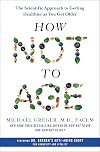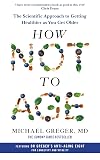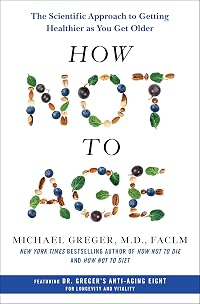
How Not to Age: The Scientific Approach to Getting Healthier as You Get Older
by Michael Greger
On This Page
Description
"Uncover the evidence-based science to slowing the effects of aging, from the New York Times bestselling author of the How Not to Die series When Dr. Michael Greger, founder of NutritionFacts.org, dove into the top peer-reviewed anti-aging medical research, he realized that diet could regulate every one of the most promising strategies for combating the effects of aging. We don't need Big Pharma to keep us feeling young-we already have the tools. In How Not to Age, the internationally show more renowned physician and nutritionist breaks down the science of aging and chronic illness and explains how to help avoid the diseases most commonly encountered in our journeys through life. Physicians have long treated aging as a malady, but getting older does not have to mean getting sicker. There are eleven pathways for aging in our bodies' cells and we can disrupt each of them. Processes like autophagy, the upcycling of unusable junk, can be boosted with spermidine, a compound found in tempeh, mushrooms, and wheat germ. Senescent "zombie" cells that spew inflammation and are linked to many age-related diseases may be cleared in part with quercetin-rich foods like onions, apples, and kale. And we can combat effects of aging without breaking the bank. Why spend a small fortune on vitamin C and nicotinamide facial serums when you can make your own for up to 2,000 times cheaper? Inspired by the dietary and lifestyle patterns of centenarians and residents of "blue zone" regions where people live the longest, Dr. Greger presents simple, accessible, and evidence-based methods to preserve the body functions that keep you feeling youthful, both physically and mentally. Brimming with expertise and actionable takeaways, How Not to Age lays out practical strategies for achieving ultimate longevity"-- show lessTags
Recommendations






Member Reviews
Once again Dr. Greger delivers on his series of how not to in the health topic of diet and what we consume in our daily lives.
This book is jam packed with so many topics and categories it is hard to keep track of them in your mind's eye. Most everything is backed up by prodigious research and studies that support or debunk many long held beliefs in what benefits us or what does not.
Dr. Greger is a die hard plant based diet advocate, actually more a zealot on vegetables. He sees the meats as the poisons that take a significant toll on your health and longevity.
He gets into some very esoteric topics on deep research into certain chemistry and complex subjects that I found somewhat hard to follow. But overall this book is infinitely useful show more to those looking for answers to longevity and the do's and dont's of nutrition and health. show less
This book is jam packed with so many topics and categories it is hard to keep track of them in your mind's eye. Most everything is backed up by prodigious research and studies that support or debunk many long held beliefs in what benefits us or what does not.
Dr. Greger is a die hard plant based diet advocate, actually more a zealot on vegetables. He sees the meats as the poisons that take a significant toll on your health and longevity.
He gets into some very esoteric topics on deep research into certain chemistry and complex subjects that I found somewhat hard to follow. But overall this book is infinitely useful show more to those looking for answers to longevity and the do's and dont's of nutrition and health. show less
How Not to Age: The Scientific Approach to Getting Healthier as You Get Older by Michael Greger, M.D., FACLM continues Greger's exploration into the research of how to eat the healthiest diet possible to live the healthiest life possible for the longest healthy life possible. While I understood the need for Greger to refer to videos on his website for further explanation given how long the book already is, I found it distracting at times. How Not to Age isn't a fountain of youth as much as a guide to the benefits of eating healthfully and avoiding unhealthy food. As anyone who has followed Gregor's work knows, the answers are often to follow a plant-based diet still I appreciate that Greger is honest enough to explore even the studies show more that tangentially point in other directions. How Not to Age debunks myths and explores studies including who paid for the studies and whether the sponsors have a vested interest in the outcome, particularly for their own income at the expense of the general public. show less
Diet and exercise
Does it take a thousand pages to say that an unhealthy diet is the main cause of death in the United States. No, but it does take that many pages to show the evidence that a whole food plant based diet eating a variety of foods is the key. Exercise is also important.
Eating a variety of plant based Whole Foods has been repeatedly shown to add years to a person’s life. That is easy to say. It takes all these pages to say it convincingly & that supplements (even if not adulterated) are not nearly as effective.
This book is not 1000 pages long, but it would have been if the publisher hadn’t restricted it. Thus there are over 8000 references, and uncounted inserted links.
Does it take a thousand pages to say that an unhealthy diet is the main cause of death in the United States. No, but it does take that many pages to show the evidence that a whole food plant based diet eating a variety of foods is the key. Exercise is also important.
Eating a variety of plant based Whole Foods has been repeatedly shown to add years to a person’s life. That is easy to say. It takes all these pages to say it convincingly & that supplements (even if not adulterated) are not nearly as effective.
This book is not 1000 pages long, but it would have been if the publisher hadn’t restricted it. Thus there are over 8000 references, and uncounted inserted links.
At 700+ pages, certainly not a slim volume, even if it might help you to slim. In fact borderline indigestible; fact piled on fact, every reference given to Greger‘s own research and publications both in print and online, often 20 or 30 refs per page .I did a kind of speed reading, browsing at each chapter and some of his summaries or comments, then looking up a few items of my own particular interests. he even has humour but does little to lift the heaviness of the whole enterprise.
Ratings
Members
- Recently Added By
Lists

LoanStars | Adult List: December 2023
10 works; 1 member
Author Information

25+ Works 2,938 Members
Michael Gregor was born on October 25, 1972. He is a graduate of Cornell University School of Agriculture and Tufts University School of Medicine. He writes and speaks on health issues. His subjects include animal agriculture, nutrition and human health. He promotes a vegan diet. Dr. Gregor serves as the Director of Public Health and Animal show more Agriculture for the Humane Society of the Unted States and Humane Society International. He also runs the popular website NutritionFacts.org. 30 show less
Classifications
- Genres
- Health & Wellness, Nonfiction, Science & Nature, General Nonfiction
- DDC/MDS
- 612.68 — Applied science & technology Medicine & health Human Body Systems Reproduction; Development; Maturation Longevity
- LCC
- RA776.75 .G744 — Medicine Public aspects of medicine Public aspects of medicine Public health. Hygiene. Preventive medicine Personal health and hygiene
- BISAC
Statistics
- Members
- 205
- Popularity
- 159,877
- Reviews
- 4
- Rating
- (4.39)
- Languages
- English, German, Portuguese
- Media
- Paper, Audiobook, Ebook
- ISBNs
- 11
- ASINs
- 7