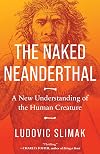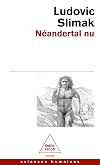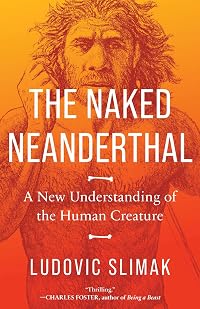
The Naked Neanderthal
by Ludovic Slimak
On This Page
Description
A riveting scientific journey exploring the enigma of the Neanderthal and the species' unique form of intelligence. What do we really know about our cousins, the Neanderthals? For over a century we saw Neanderthals as inferior to Homo Sapiens. More recently, the pendulum swung the other way and they are generally seen as our relatives: not quite human, but similar enough, and still not equal. Now, thanks to an ongoing revolution in palaeoanthropology in which he has played a key part, show more Ludovic Slimak shows us that they are something altogether different -- and they should be understood on their own terms rather than by comparing them to ourselves. As he reveals in this stunning book, the Neanderthals had their own history, their own rituals, their own customs. Their own intelligence, very different from ours. Slimak has travelled around the world for the past thirty years to uncover who the Neanderthals really were. A modern-day Indiana Jones, he takes us on a fascinating archaeological investigation: from the Arctic Circle to the deep Mediterranean forests, he traces the steps of these enigmatic creatures, working to decipher their real stories through every single detail they left behind. A thought-provoking adventure story, written with wit and verve, The Naked Neanderthal shifts our understanding of deep history -- and in the process reveals just how much we have yet to learn. show lessTags
Recommendations
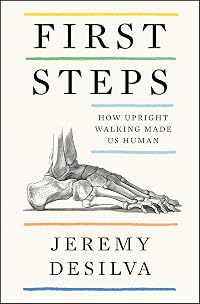
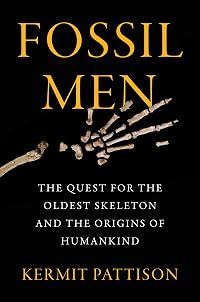


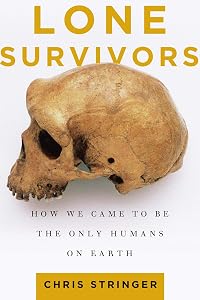
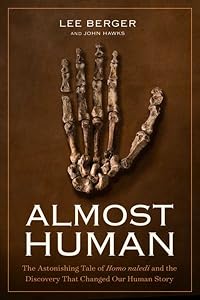
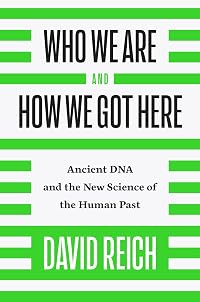
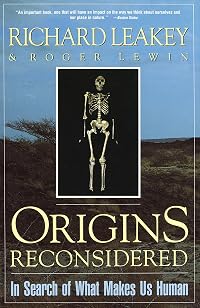
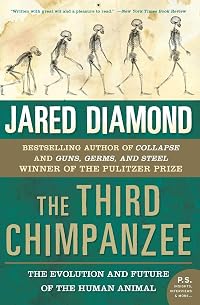


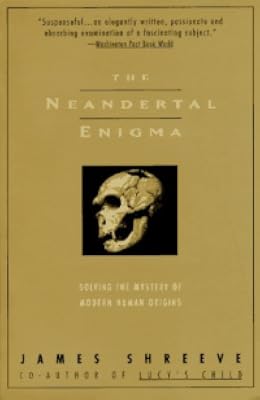






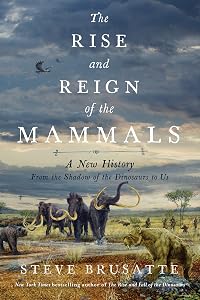













Member Recommendations
alv Recommended by Ludovic Slimak

The Vision of the Vanquished: The Spanish Conquest of Peru Through Indian Eyes, 1530-1570 by Nathan Wachtel
alv Recommended by Ludovic Slimak at the end of the book

alv Recommended by Ludovic Slimak at the end of the book.
Member Reviews
Ludovic Slimak is a Neanderthal researcher of long standing, but despite his scientific credentials, he is anything but sober and cautious. For the great majority of the book, his primary goal seems to be to buttonhole the reader and shout in his ear: “The Neanderthals are different than you and me!” A rather obvious message, you’d think; but he goes further. He swoons over the perception of a Russian researcher who tells him confidently: “Ludovic, they have no soul.” (“I will never be able to thank this researcher enough for saying those words,” sighs the author.) He calls the Neanderthal “A creature a bit like the creature of Frankenstein…unfathomable, since it is hidden in the shadows of the dead, without thoughts, show more without any words of his own.” This is the Neanderthal to Slimak: a thing, a thing that is in some way conscious, but without a soul. Or so he gives the impression.
In this he’s reminiscient of Descartes, who claimed that animals, being brutes, had no real capacity to suffer, and so enabled hundreds of years of grotesque experimentation on dogs, cats, and apes. At the time that I was born, it was a truism that what separated human beings from the animals was our ability to make tools. After Jane Goodall proved that chimps could make tools (as we’ve since learned that other mammals and birds can also do), the distinguishing feature of human personhood was our use of language. Washoe the chimp, Koko the gorilla, and Alex the African grey parrot are human by that standard. Still, humans keep reaching to find essential differences between us and animals, and they keep failing. Ability to recognize oneself in a mirror. The transmission of culture, defined as localized, learned knowledge, down generations in a family or tribe. All have since been identified in animals. It’s becoming clear that just as there is no single “missing link” between ancestral apes and modern humans, there is no dividing point between the state of being an animal and the state of being a person. There are only continuums.
To be fair, Slimak makes exactly this point at the beginning of chapter four. But Slimak continues his quest to hammer home that the Neanderthals are so different from us as to be essentially different (which is a faith-based claim, since there is no accepted, scientifically measurable distinction between the human and the nonhuman). We see that the Neanderthals honored their dead. So? Chimps grieve, too! Neanderthals adorned themselves. So do birds in New Guinea! It’s all more of an argument for respecting non-human minds than it is for dehumanizing Neanderthals, and it’s unfortunate that he spends so much effort on it, because very near the end of the book, Slimak suddenly softens and makes the point that I would have preferred that he start with.
Put shortly, as a dig archeologist, Slimak believes that there is a dramatic difference in Sapiens tools and Neanderthal tools, and that it has little to do with their quality as tools. “Observation of sapiens technological systems reveals systematic modes of planning and standardization….If we look at a hundred flints…we know the next 100,000 will be exactly the same. We understand instinctively what the maker was trying to do, which is never the case with Neanderthal artifacts….No two [Neanderthal] tools are alike, and that is remarkable. There is no doubt that particular skills were passed on. But this was a culture without normalization, without standardization, without systematic repetition, without that quasi-industrial character....Each Neanderthal tool is a creation in itself. It plays with the natural forms of the material, with the texture of the rock, with its colors, with its touch. There is a balance, an absolute perfection to the object which reveals a remarkable way of seeing the world.” Slimak sees this as “an infinite creativity beyond compare”; a “creativity that is beyond us.” To him, this suggests a fundamentally different, and very non-sapiens, way of looking at and being in the world.
Now, one of the issues I have with Slimak is that he never seems to have an opinion that he doesn’t carry to an extreme. Having praised the superb creativity of the Neanderthal artisan, he has to disparage that of our own: “The artisanal and artistic creations of sapiens are beautiful, but they are beautiful and nothing more...They rarely go any further. For sapiens, art is just an expression and affirmation of ego.” (Tell that to the hundreds of anonymous craftspeople who brought beauty to details that would never be seen, being too high on the spires of European cathedrals to be visible to the ordinary eye!) Still, I think he’s on to something when he says that “in the fields of creativity, sapiens was probably no match…and was in all likelihood intellectually inferior.” Again: badly expressed. Intellect and creativity are like qualities and creativity cannot be measured by intellect. But when I look at the shape of the Neanderthal skull, and I think about what it might mean to have a brain that was, on average, larger than ours but shaped very differently, I imagine a human being who was wise in ways no member of my own species is wise. I can only speculate on how. We will probably never know. And I think this is the essential difference, the mystery, that Slimak is awkwardly trying to preserve. show less
In this he’s reminiscient of Descartes, who claimed that animals, being brutes, had no real capacity to suffer, and so enabled hundreds of years of grotesque experimentation on dogs, cats, and apes. At the time that I was born, it was a truism that what separated human beings from the animals was our ability to make tools. After Jane Goodall proved that chimps could make tools (as we’ve since learned that other mammals and birds can also do), the distinguishing feature of human personhood was our use of language. Washoe the chimp, Koko the gorilla, and Alex the African grey parrot are human by that standard. Still, humans keep reaching to find essential differences between us and animals, and they keep failing. Ability to recognize oneself in a mirror. The transmission of culture, defined as localized, learned knowledge, down generations in a family or tribe. All have since been identified in animals. It’s becoming clear that just as there is no single “missing link” between ancestral apes and modern humans, there is no dividing point between the state of being an animal and the state of being a person. There are only continuums.
To be fair, Slimak makes exactly this point at the beginning of chapter four. But Slimak continues his quest to hammer home that the Neanderthals are so different from us as to be essentially different (which is a faith-based claim, since there is no accepted, scientifically measurable distinction between the human and the nonhuman). We see that the Neanderthals honored their dead. So? Chimps grieve, too! Neanderthals adorned themselves. So do birds in New Guinea! It’s all more of an argument for respecting non-human minds than it is for dehumanizing Neanderthals, and it’s unfortunate that he spends so much effort on it, because very near the end of the book, Slimak suddenly softens and makes the point that I would have preferred that he start with.
Put shortly, as a dig archeologist, Slimak believes that there is a dramatic difference in Sapiens tools and Neanderthal tools, and that it has little to do with their quality as tools. “Observation of sapiens technological systems reveals systematic modes of planning and standardization….If we look at a hundred flints…we know the next 100,000 will be exactly the same. We understand instinctively what the maker was trying to do, which is never the case with Neanderthal artifacts….No two [Neanderthal] tools are alike, and that is remarkable. There is no doubt that particular skills were passed on. But this was a culture without normalization, without standardization, without systematic repetition, without that quasi-industrial character....Each Neanderthal tool is a creation in itself. It plays with the natural forms of the material, with the texture of the rock, with its colors, with its touch. There is a balance, an absolute perfection to the object which reveals a remarkable way of seeing the world.” Slimak sees this as “an infinite creativity beyond compare”; a “creativity that is beyond us.” To him, this suggests a fundamentally different, and very non-sapiens, way of looking at and being in the world.
Now, one of the issues I have with Slimak is that he never seems to have an opinion that he doesn’t carry to an extreme. Having praised the superb creativity of the Neanderthal artisan, he has to disparage that of our own: “The artisanal and artistic creations of sapiens are beautiful, but they are beautiful and nothing more...They rarely go any further. For sapiens, art is just an expression and affirmation of ego.” (Tell that to the hundreds of anonymous craftspeople who brought beauty to details that would never be seen, being too high on the spires of European cathedrals to be visible to the ordinary eye!) Still, I think he’s on to something when he says that “in the fields of creativity, sapiens was probably no match…and was in all likelihood intellectually inferior.” Again: badly expressed. Intellect and creativity are like qualities and creativity cannot be measured by intellect. But when I look at the shape of the Neanderthal skull, and I think about what it might mean to have a brain that was, on average, larger than ours but shaped very differently, I imagine a human being who was wise in ways no member of my own species is wise. I can only speculate on how. We will probably never know. And I think this is the essential difference, the mystery, that Slimak is awkwardly trying to preserve. show less
Neanderthals, so far as we know, lived from about 400,000 years ago to about 40,000 years ago (a span of time greater than our own species is thought to have lived). They were hardly a stepping stone to Homo Sapiens. In fact they were a distinct evolutionary line, alongside and contemporary with us, a line that leads only to their own extinction.
Smilak’s objective in this book is to clear away popular misconceptions and outdated science with a clear, new perspective on Neanderthals and, in particular, begin to build some understanding of Neanderthal mentality, how they experienced the world differently than we do.
Evidence is scarce. We have fossil artifacts dating back to 40,000 years ago, and we have the remains of Neanderthal tools, show more gathered primarily from protective cave environments. Dating fossils and other artifacts from that distant a time is hampered by the limits of carbon 14 dating and by the mixing of soils and rocks that jumbles the fossils and artifacts of different origins together. Simply because two items are found close together doesn’t mean that they came from the same time or the same original location. In particular, when we are trying to determine what happened when Homo Sapiens and Neanderthals encountered one another, the precision we need is elusive.
What we have allows us to reconstruct Neanderthal physiology fairly well and even to construct the Neanderthal genome. What we don’t have is much evidence of how they lived, their social structures, why they produced the tools they produced, what their culture may have been like.
Slimak’s methodology tries to thread the needle between careful adherence to evidence and the kind of imaginative and speculative reconstruction necessary to build an understanding of something for which we have such scant evidence.
The need for imaginative identification (my terms, not Smilak’s) with Neanderthals comes up in discoveries of apparent cannibalism and of distinctive hunting and butchering practices in which only mature, prime-age male deer were hunted. The latter suggests some form of a “rite of passage.”
The cannibilism resists interpretation as simply a matter of food, as both the patterns of butchering (flint marks on bones) and evidence of plentiful other game suggest some ritualistic interpretation involving recognition and treatment of the dead. But all of that remains speculative.
Slimak’s methodological turn doesn’t mean that theories and interpretations of facts don’t depend on evidence. And Smilak shows that dependency in throwing doubt on claims that Neanderthals adorned themselves with shell necklaces and raptor claws (a claim he was actually associated with as a member of one study). Examination of the shells, he says, shows them to have been naturally pierced, as by bird beaks or crabs, not pierced for stringing into necklaces. The claws appear to have played a functional rather than distinctively ritual or symbolic role, as scraping tools.
We need particularly, as with these examples, to guard against projecting Sapiens-bound interpretations onto Neanderthal life. To assimilate Neanderthal culture to our own might seem to elevate Neanderthals, to grant them a peer status with us, but it also may disrespect them by minimizing their differences and distinctiveness, obscuring the presence alongside us of a humanity that is intelligent, cultural, but not us.
Maybe, in fact, instead of looking for artifacts like necklaces that are similar to Sapiens artifacts, we should be looking for some completely different cultural artifacts, things distinctively Neanderthal and perhaps at first unrecognizable as cultural artifacts to researchers steeped in Sapiens culture.
By Slimak’s thinking, no artifacts of Neanderthal art or decoration, no jewelry, adornments, paintings, or carved figures have been discovered. Functional artifacts, like flints and other tools, have been discovered and offer some narrow glimpse into the Neanderthal way of life. But mostly it’s a mystery.
What we know of contact between Sapiens and Neanderthals is primarily given by genetic evidence. The presence of Neanderthal genetic material in Sapiens is familiar to us today in our own genetic makeup. What is remarkable though is that genetic analysis of Neanderthal remains shows no reciprocal genetic influence — Neanderthal DNA did not at any point, so far as we can tell, contain Sapiens genetic material.
Slimak offers an explanation of that asymmetry that depends on “patrilocality.” Patrilocality is an apparently common practice between two groups of humans encountering one another and seeking some form of alliance. It is an exchange of females. Females of each group join the other group. The result will be some degree of cultural mixing but also, more importantly for this instance, genetic mixing.
But the genetic mixing goes only one direction, from the Neanderthal to the Sapiens. What Slimak proposes is that the patrilocality was asymmetric. Neanderthal females were integrated into Sapiens groups, but Sapiens females were not integrated into Neanderthal groups. The Neanderthal females thus contributed and continued to propagate Neanderthal genetic material into the Sapiens population, but Sapiens females did not do the same within the Neanderthal population. Slimak glosses this as “I take your sister but I don’t give you mine” from the Sapiens point of view.
I suppose the same result could come from an asymmetry in the fertility of hybrids, e.g., that the offspring of Neanderthal females and Sapiens males were fertile but that the offspring of Sapiens females and Neanderthal males were not. I don’t know how likely such an asymmetry would be, but that’s not the direction Slimak went.
Regardless of what happened when Neanderthals and Homo Sapiens interacted, one thing that appears true is that there was no enduring co-existence. In fact, as Slimak says, “Again, when Sapiens made an appearance, Neanderthals disappeared from the archaeological record.”
And by analysis of soot samples from fires within caves occupied by both Sapiens and Neanderthals, it appears that the replacement of Neanderthals by Sapiens wasn’t gradual, over thousands of years. It was sudden.
That we have no evidence of conflict between Neanderthals and Sapiens doesn’t surprise Slimak. The fossil and other evidence we have from that period over 40,000 years ago comes from caves, i.e., environments favorable to its preservation. If as is very likely, Neanderthals and Sapiens of the time spent most of their lives outside of caves, in more open spaces not favorable to preservation of fossils, tools, etc., we have very little to nothing to go on in discovering anything about their interactions in those more common environments, conflictual or otherwise.
Speaking of conflict, Slimak goes on to a more speculative discussion that finally hints of potential understandings of a distinctive Neanderthal mentality. Sapiens developed weapons technologies that provided them a novel advantage in hunting, and in any potential conflict with groups other than their own. These were mechanical propulsion, e.g., bows and arrows, light spears, or spear-throwing technologies. With these, Sapiens hunters could kill more efficiently and safely, maintaining a distance from their prey and killing more quickly and in greater quantity.
We don’t have evidence that Neanderthals developed such propulsive technologies. In fact, we find very little evidence of weapons at all in Neanderthal sites. Those flints and other objects that could have been used as weapons would have been fit only for use in close contact.
That technological advantage would have allowed Sapiens to provide for significantly larger populations, and to have the advantage in any competition or conflict with Neanderthals.
It also suggests to Slimak something interesting about that Neanderthal mentality. The technological progress in Sapiens weaponry was not coincidentally accompanied by a degree of standardization that is absent in Neanderthal tools altogether. Sapiens’ flint tools are the same, instance to instance. Neanderthal flints are not uniform, as if each were a separate creation. “No two Moustarian [Neanderthal] tools are alike,” he says, “and that is remarkable.”
Taken together, this tendency to diversity and constant creativity along with, relative to Sapiens, limitations on hunting efficiencies and safety, suggests thoughts about how Neanderthals saw themselves in the world distinctly from how Sapiens see themselves. For Sapiens, control and use take leading roles in our relationship to nature. Perhaps not so for Neanderthals. They may have lived in an accepted balance with prey, for example. They may have accepted a smaller place within the world, with little separation or control.
It’s important not to give in to the temptation to interpret the Neanderthal technologies as merely lacking qualities that Sapiens technologies possessed. As Slimak emphasizes, the creativity inherent in Neanderthal tool-making is itself a positive value, something indicative of a distinctive Neanderthal way of experiencing and being in the world. He says, “There is an absolute artisanal freedom, and probably a very rich freedom of thought about the world. I would suggest that the artisanal production of objects by the Neanderthals reveals a perception of reality that has no structural echo in what we see in sapiens societies, whether Paleolithic or modern-day.”
We have to keep in mind that, while we speak of Neanderthals as “cousins” of Sapiens, they are distant, long separated cousins. Our evolutionary lines diverged and went their separate ways for hundreds of thousands of years. show less
Smilak’s objective in this book is to clear away popular misconceptions and outdated science with a clear, new perspective on Neanderthals and, in particular, begin to build some understanding of Neanderthal mentality, how they experienced the world differently than we do.
Evidence is scarce. We have fossil artifacts dating back to 40,000 years ago, and we have the remains of Neanderthal tools, show more gathered primarily from protective cave environments. Dating fossils and other artifacts from that distant a time is hampered by the limits of carbon 14 dating and by the mixing of soils and rocks that jumbles the fossils and artifacts of different origins together. Simply because two items are found close together doesn’t mean that they came from the same time or the same original location. In particular, when we are trying to determine what happened when Homo Sapiens and Neanderthals encountered one another, the precision we need is elusive.
What we have allows us to reconstruct Neanderthal physiology fairly well and even to construct the Neanderthal genome. What we don’t have is much evidence of how they lived, their social structures, why they produced the tools they produced, what their culture may have been like.
Slimak’s methodology tries to thread the needle between careful adherence to evidence and the kind of imaginative and speculative reconstruction necessary to build an understanding of something for which we have such scant evidence.
The need for imaginative identification (my terms, not Smilak’s) with Neanderthals comes up in discoveries of apparent cannibalism and of distinctive hunting and butchering practices in which only mature, prime-age male deer were hunted. The latter suggests some form of a “rite of passage.”
The cannibilism resists interpretation as simply a matter of food, as both the patterns of butchering (flint marks on bones) and evidence of plentiful other game suggest some ritualistic interpretation involving recognition and treatment of the dead. But all of that remains speculative.
Slimak’s methodological turn doesn’t mean that theories and interpretations of facts don’t depend on evidence. And Smilak shows that dependency in throwing doubt on claims that Neanderthals adorned themselves with shell necklaces and raptor claws (a claim he was actually associated with as a member of one study). Examination of the shells, he says, shows them to have been naturally pierced, as by bird beaks or crabs, not pierced for stringing into necklaces. The claws appear to have played a functional rather than distinctively ritual or symbolic role, as scraping tools.
We need particularly, as with these examples, to guard against projecting Sapiens-bound interpretations onto Neanderthal life. To assimilate Neanderthal culture to our own might seem to elevate Neanderthals, to grant them a peer status with us, but it also may disrespect them by minimizing their differences and distinctiveness, obscuring the presence alongside us of a humanity that is intelligent, cultural, but not us.
Maybe, in fact, instead of looking for artifacts like necklaces that are similar to Sapiens artifacts, we should be looking for some completely different cultural artifacts, things distinctively Neanderthal and perhaps at first unrecognizable as cultural artifacts to researchers steeped in Sapiens culture.
By Slimak’s thinking, no artifacts of Neanderthal art or decoration, no jewelry, adornments, paintings, or carved figures have been discovered. Functional artifacts, like flints and other tools, have been discovered and offer some narrow glimpse into the Neanderthal way of life. But mostly it’s a mystery.
What we know of contact between Sapiens and Neanderthals is primarily given by genetic evidence. The presence of Neanderthal genetic material in Sapiens is familiar to us today in our own genetic makeup. What is remarkable though is that genetic analysis of Neanderthal remains shows no reciprocal genetic influence — Neanderthal DNA did not at any point, so far as we can tell, contain Sapiens genetic material.
Slimak offers an explanation of that asymmetry that depends on “patrilocality.” Patrilocality is an apparently common practice between two groups of humans encountering one another and seeking some form of alliance. It is an exchange of females. Females of each group join the other group. The result will be some degree of cultural mixing but also, more importantly for this instance, genetic mixing.
But the genetic mixing goes only one direction, from the Neanderthal to the Sapiens. What Slimak proposes is that the patrilocality was asymmetric. Neanderthal females were integrated into Sapiens groups, but Sapiens females were not integrated into Neanderthal groups. The Neanderthal females thus contributed and continued to propagate Neanderthal genetic material into the Sapiens population, but Sapiens females did not do the same within the Neanderthal population. Slimak glosses this as “I take your sister but I don’t give you mine” from the Sapiens point of view.
I suppose the same result could come from an asymmetry in the fertility of hybrids, e.g., that the offspring of Neanderthal females and Sapiens males were fertile but that the offspring of Sapiens females and Neanderthal males were not. I don’t know how likely such an asymmetry would be, but that’s not the direction Slimak went.
Regardless of what happened when Neanderthals and Homo Sapiens interacted, one thing that appears true is that there was no enduring co-existence. In fact, as Slimak says, “Again, when Sapiens made an appearance, Neanderthals disappeared from the archaeological record.”
And by analysis of soot samples from fires within caves occupied by both Sapiens and Neanderthals, it appears that the replacement of Neanderthals by Sapiens wasn’t gradual, over thousands of years. It was sudden.
That we have no evidence of conflict between Neanderthals and Sapiens doesn’t surprise Slimak. The fossil and other evidence we have from that period over 40,000 years ago comes from caves, i.e., environments favorable to its preservation. If as is very likely, Neanderthals and Sapiens of the time spent most of their lives outside of caves, in more open spaces not favorable to preservation of fossils, tools, etc., we have very little to nothing to go on in discovering anything about their interactions in those more common environments, conflictual or otherwise.
Speaking of conflict, Slimak goes on to a more speculative discussion that finally hints of potential understandings of a distinctive Neanderthal mentality. Sapiens developed weapons technologies that provided them a novel advantage in hunting, and in any potential conflict with groups other than their own. These were mechanical propulsion, e.g., bows and arrows, light spears, or spear-throwing technologies. With these, Sapiens hunters could kill more efficiently and safely, maintaining a distance from their prey and killing more quickly and in greater quantity.
We don’t have evidence that Neanderthals developed such propulsive technologies. In fact, we find very little evidence of weapons at all in Neanderthal sites. Those flints and other objects that could have been used as weapons would have been fit only for use in close contact.
That technological advantage would have allowed Sapiens to provide for significantly larger populations, and to have the advantage in any competition or conflict with Neanderthals.
It also suggests to Slimak something interesting about that Neanderthal mentality. The technological progress in Sapiens weaponry was not coincidentally accompanied by a degree of standardization that is absent in Neanderthal tools altogether. Sapiens’ flint tools are the same, instance to instance. Neanderthal flints are not uniform, as if each were a separate creation. “No two Moustarian [Neanderthal] tools are alike,” he says, “and that is remarkable.”
Taken together, this tendency to diversity and constant creativity along with, relative to Sapiens, limitations on hunting efficiencies and safety, suggests thoughts about how Neanderthals saw themselves in the world distinctly from how Sapiens see themselves. For Sapiens, control and use take leading roles in our relationship to nature. Perhaps not so for Neanderthals. They may have lived in an accepted balance with prey, for example. They may have accepted a smaller place within the world, with little separation or control.
It’s important not to give in to the temptation to interpret the Neanderthal technologies as merely lacking qualities that Sapiens technologies possessed. As Slimak emphasizes, the creativity inherent in Neanderthal tool-making is itself a positive value, something indicative of a distinctive Neanderthal way of experiencing and being in the world. He says, “There is an absolute artisanal freedom, and probably a very rich freedom of thought about the world. I would suggest that the artisanal production of objects by the Neanderthals reveals a perception of reality that has no structural echo in what we see in sapiens societies, whether Paleolithic or modern-day.”
We have to keep in mind that, while we speak of Neanderthals as “cousins” of Sapiens, they are distant, long separated cousins. Our evolutionary lines diverged and went their separate ways for hundreds of thousands of years. show less
The popular imagination unfortunately made a dummy caveman out of the Neanderthal. But there’s not enough information according to this book about these Neanderthals to make the assertions scientists have made of them. And the author takes great pains to remind us that we Sapiens are very good at seeing everything about other species through our own attributes. Neanderthals were apparently great at making usable objects anew each time as though they were artisans of one off goods. Sapiens are great at both creative stuff and repetition, being able to reach a whole other level of technological achievement by repeating tasks and honing their skills.
Paleo-archaeological types have studied both us and Neanderthals, who lived in Europe show more and Middle East and Russia for several hundred thousand years. Now somewhere in time, around the 40k years ago, Neanderthals encountered us, or we encountered them most likely in Europe somewhere maybe even in the Rhone valley where lots of humanoid remains seem to get found because it’s a good water route and habitat. But the thing is there is no evidence to say what happened. There’s no mass grave, no evidence of interaction etc. Soon after, Neanderthals died out.
But they did live on according to the artefacts left behind in places west of the Urals in Northern Russia, as far as the arctic circle. There, there was an abundance of large mammal wildlife because of a strange climate phenomenon – the great ice sheets of northern Europe were made by eastward moving Atlantic ocean moisture. Once it settled as far away as very western Russia, the weather beyond was mostly dry and not glacial. It was full of plains and forests. Mammoth and giant fauna fed the well adapted Neanderthals who lived there for a few thousand more years until their archaeological record disappeared. That was that.
I learned a few things here. One that humans are well adapted to changes in weather as long as its dry it doesn’t matter how cold we get, our metabolisms adjust to very cold weather within two weeks. Imagine that. The other thing I learned was that carbon dating can only give us a wide date of possibility, say around 1000 years of approximate time when something occurred. So you cannot say that Emperor Charlemagne had a conversation with Napoleon that colluded in the takeover of Europe in the 19thC.
The other thing I learned is that we humans use ourselves as a reference point. We keep looking for the clues that will compare Neanderthals to us. Like art and ritual and all that stuff. But it hasn’t existed in the artefacts discovered in many sites so far. And it’s hard to find evidence of peoples who largely lived outdoors and only settled in caves and shelters when needed. And then the problem is that those who came later, also dwelled in the same shelters and so on.
So, we need to think of Neanderthals as a completely different species to us and that tragically they became exist. As many species become extinct. And that is that. show less
Début un peu déroutant et partant à droite à gauche, l'astéroïde B 612, le petit Prince, les questions des enfants, l'imaginaire et la connaissance.
Ça continue comme ça a commencé. C'est si différent de ce à quoi je m'attendais que je ne sais qu'en faire ni comment le juger. Je cherchais un livre d'archéologie, de paléoanthropologie et j'ai un livre de réflexions personnelles un peu brouillon sur ce qui fait notre humanité.
A 45% de ma lecture, égarée dans les questions de légendes arthuriennes ou bretonnes, j'ai abandonné.
Un livre qui m'a plus déçue qu'intéressée.
Ce que j'ai retenu du début :
- La soumission au groupe et à l'autorité et donc une très grande efficacité découlant de ce besoin de faire unité.
- show more La subjectivité , "cette étrange superstition qui confère à l'homme sa croyance dans la suprématie de son imaginaire sur le monde réel"
- La culture : Sapiens s'organise profondément autour de constructions, non seulement imaginaires et irrationnelles mais aussi essentiellement invisibles aux membres de ces sociétés, aveugles à leur propres constructions mythologiques.
Voili voilou. show less
Ça continue comme ça a commencé. C'est si différent de ce à quoi je m'attendais que je ne sais qu'en faire ni comment le juger. Je cherchais un livre d'archéologie, de paléoanthropologie et j'ai un livre de réflexions personnelles un peu brouillon sur ce qui fait notre humanité.
A 45% de ma lecture, égarée dans les questions de légendes arthuriennes ou bretonnes, j'ai abandonné.
Un livre qui m'a plus déçue qu'intéressée.
Ce que j'ai retenu du début :
- La soumission au groupe et à l'autorité et donc une très grande efficacité découlant de ce besoin de faire unité.
- show more La subjectivité , "cette étrange superstition qui confère à l'homme sa croyance dans la suprématie de son imaginaire sur le monde réel"
- La culture : Sapiens s'organise profondément autour de constructions, non seulement imaginaires et irrationnelles mais aussi essentiellement invisibles aux membres de ces sociétés, aveugles à leur propres constructions mythologiques.
Voili voilou. show less
Jul 9, 2025French
Ratings
Members
- Recently Added By
Lists

Science: Life
4 works; 1 member
Author Information

5 Works 85 Members
Common Knowledge
- Canonical title
- The Naked Neanderthal
- Original title
- Néandertal nu: Comprendre la créature humaine
- Original language
- French
Classifications
- Genres
- Anthropology, Nonfiction, Science & Nature, General Nonfiction, History
- DDC/MDS
- 569.986 — Natural sciences & mathematics Fossils & Dinosaurs Fossil Mammalia Hominidae Neanderthals
- LCC
- GN285 .S6313 — Geography, Anthropology and Recreation Anthropology Anthropology Physical anthropology. Somatology Human evolution Fossil man. Human paleontology
- BISAC
Statistics
- Members
- 74
- Popularity
- 424,967
- Reviews
- 4
- Rating
- (3.81)
- Languages
- English, French, Spanish
- Media
- Paper, Audiobook, Ebook
- ISBNs
- 11
- ASINs
- 5