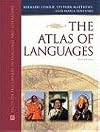
The Atlas of Languages: The Origin and Development of Languages Throughout the World
by Bernard Comrie (Editor), Stephen Matthews (Editor), Maria Polinsky (Editor)
On This Page
Description
Surveys the language families and writing systems of the world through text, maps, photographs, and charts, looking at the forces that have affected the dissemination and development of language, and discussing the issue of disappearing languages.Tags
Recommendations











































Member Reviews
This was a good introduction to the history of the world's languages. I would have liked to have learned more about certain languages but there are always other books. The last chapter on writing crammed in too much information for me in such a short section that I skimmed it. Normally, I would have been fascinated.
I seem to have a talent for selecting books that can only be read in small pieces; this was another of them. It was an interesting overview of the various languages and writing systems both past and present with numerous illustrations and maps. However, the text assumed a greater knowledge of linguistics than I have and that slowed me down. Also the book itself suffered from poorly constructed map keys, etc. that made it more difficult to understand. Overall this book is only average.
A *fantastic* book that tells the story of the world's languages. More than an atlas, it is a history of how languages developed and spread, with contemporary and historical statistics. Highly recommended for anyone interested in languages!
Interesting visual presentation of where various languages are spoken, along with some additional information on language relationships, numbers of speakers, etc.
Ratings
Members
- Recently Added By
Lists

Tiro Typeworks on Grapholinguistics
41 works; 1 member
Author Information

All Editions
Some Editions
Common Knowledge
- Original publication date
- 1996 (First Edition) (First Edition); 2003 (Revised edition) (Revised edition)
- People/Characters
- Arthur Evans; Edward Sapir
- Important places
- China; India; Crete, Greece; New Guinea; Solomon Islands; Tibet
- First words
- Foreword (by Jean Aitchison)
Humans, like cows, grasshoppers, woodpeckers, and many other animals, communicate primarily by sound.
Introduction
Long the subject of myth rather than science, the origins of language are becoming less obscure as clues to the pedigree of humankind are assembled from linguistic, archaeological, and genetic evidence.
Classifications
Statistics
- Members
- 427
- Popularity
- 72,178
- Reviews
- 4
- Rating
- (4.16)
- Languages
- 7 — Czech, Dutch, English, Estonian, French, German, Polish
- Media
- Paper
- ISBNs
- 17
- ASINs
- 1