On This Page
Description
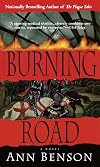
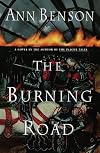
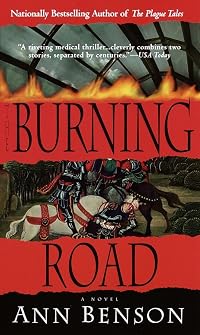
From the bestselling author of The Plague Tales comes a spellbinding new novel that sweeps from medieval France to America in the year 2007--interweaving two gripping stories and two extraordinary eras....In fourteenth-century France, pockets of plague still bring death to peasants and noblemen alike. Amid the fury and the chaos, Dr. Alejandro Canches searches for a safe haven, accompanied by his foster child, Kate--the illegitimate daughter of Edward Plantagenet. But both disease and show more human enemies pursue them, and their only hope for survival is a rebel leader... and medical secrets that lie hidden in an ancient manuscript.Seven hundred years later, Dr. Janie Crowe is searching for the cure for a crippling disease in a world where genetic engineering has gone mad. A repressive government wants to stop her, unnamed benefactors want to help her, and time is running out to find answers linking two dark eras, two dedicated doctors, and one miraculous book....From the Paperback edition. show lessTags
Recommendations

Member Reviews
In The Burning Road, Ann Benson picks up the twin stories she began in The Plague Tales. Dr. Alejandro Canches searches for a safe haven for himself and his foster daughter (now grown to womanhood) Kate. To evade pursuit, Alejandro has had to give up practicing his medical arts because that draws too much attention. But he still attempts to keep his mind sharp with an old book - written in Hebrew - that includes medical knowledge and alchemical recipes. But Alejandro is soon captured by an old enemy and his daughter falls under the care (and the spell) of a leader of a rebellion.
Dr. Janie Crowe's exploits in London have not made it any easier for her to be reassigned as a neurologist, so she spends her time working at a medical show more foundation. But soon she stumbles upon a mysterious set of cases of boys with shattered bones that catches her interest and threatens to expose a dangerous secret. But even as she is working, a larger danger looms as rumors of a new Outbreak start to spread.
This was definitely a weaker installment than the previous book. The stories were not tied together nearly as well - Janie's case has extremely little to do with Alejandro's troubles. The manuscript provides a tenuous link at best, and Alejandro's work on it is considerably less interesting than his attempts to grapple with the plague in the first book in the series.
I didn't like the way Benson handled Janie's personal relationships (although that may be a personal bias - I certainly spend four months away from my boyfriend without behaving like THAT), and I didn't really understand either the point or the methods of the underground movement she became involved in. The pacing in Janie's story was severely lacking in this book, which is a shame since it the double pacing worked so well in the last.
Alejandro's story fared better than Janie's in the continued tale, but it was still far from strong. Alejandro's degree of assimilation struck me as a bit far-fetched and
(MINOR SPOILERS)
his final choice to have the baby circumcised struck me as very wrong. Both of the child's parents were Christian, and to raise a child without Jewish blood as a Jew during a time when persecutions, killings, and ill-treatment of Jews was a matter of course struck me as jarring and a bit cruel under the circumstances. Particularly since Alejandro's faith is pretty well left out of the narrative, this move seemed out of character.
This one definitely suffers from sequel syndrome. The interconnections are weak - breaking the purpose for parallel stories. The characters behave unlike themselves, and the story lacks the punch that the first one had. This may be worth reading if the third picks up again, or if you simply can't bear to leave Alejandro and Janie after the first novel. But otherwise, I don't really recommend it. show less
Dr. Janie Crowe's exploits in London have not made it any easier for her to be reassigned as a neurologist, so she spends her time working at a medical show more foundation. But soon she stumbles upon a mysterious set of cases of boys with shattered bones that catches her interest and threatens to expose a dangerous secret. But even as she is working, a larger danger looms as rumors of a new Outbreak start to spread.
This was definitely a weaker installment than the previous book. The stories were not tied together nearly as well - Janie's case has extremely little to do with Alejandro's troubles. The manuscript provides a tenuous link at best, and Alejandro's work on it is considerably less interesting than his attempts to grapple with the plague in the first book in the series.
I didn't like the way Benson handled Janie's personal relationships (although that may be a personal bias - I certainly spend four months away from my boyfriend without behaving like THAT), and I didn't really understand either the point or the methods of the underground movement she became involved in. The pacing in Janie's story was severely lacking in this book, which is a shame since it the double pacing worked so well in the last.
Alejandro's story fared better than Janie's in the continued tale, but it was still far from strong. Alejandro's degree of assimilation struck me as a bit far-fetched and
(MINOR SPOILERS)
his final choice to have the baby circumcised struck me as very wrong. Both of the child's parents were Christian, and to raise a child without Jewish blood as a Jew during a time when persecutions, killings, and ill-treatment of Jews was a matter of course struck me as jarring and a bit cruel under the circumstances. Particularly since Alejandro's faith is pretty well left out of the narrative, this move seemed out of character.
This one definitely suffers from sequel syndrome. The interconnections are weak - breaking the purpose for parallel stories. The characters behave unlike themselves, and the story lacks the punch that the first one had. This may be worth reading if the third picks up again, or if you simply can't bear to leave Alejandro and Janie after the first novel. But otherwise, I don't really recommend it. show less
The follow-on book to The Plague Tales, this novel was okay. It didn't leave me with as many questions as the first book but clearly the author intends to write another. Oddly, the first book ended with one of the characters having a young child who is only just born at the end of the second book. It's a time slip novel, this book continues the trials and tribulations of the physician Alejandro Canches and his adopted daughter Kate (who remind me from time to time of Jean Valjean and Celeste always on the run in Les Miserables) in 1358, 10 years after the first book. The "future" advanced only 2 years from the first book to 2007. I continue to wonder why this author, who was writing in 1999, chose to make the future so near our own show more present day. She describes a time when antibiotics have become useless through overuse, people have id tags in their hands so they can pay for things, gas is rationed, Big Brother is everywhere. It's not implausible but not here yet so it still seems odd to me. I preferred the medieval period to the modern day in this one but neither story was really compelling and the book left me wanting. show less
The Burning Road is a gripping novel set against the background of two plagues, the Black Death of the 1350s and a present day plague called DR SAM. Benson’s characterizations are detailed and realistic, and the settings are so well crafted you feel you are there. Older teen readers will be drawn in by the riveting action in both time periods. A weakness, however, may be the complex sentence structure Benson uses, which can make her meaning confusing at times. This novel is an excellent vehicle for older teenagers to see, smell, and feel the way people lived during the era of the Black Death. And the modern day story helps them understand the implications a similar outbreak would have for them.
The sequel to my much-loved Plague Tales continues the future/past storylines and brings back the compelling characters. In the future, Janie deals with a possible scientific conspiracy, while in the past, Alejandro and his daughter are caught up in the Jacobite rebellion. War, plague, conspiracy...gotta love it!
Shelf Talk (Seattle Public Library) recommended this as a good match for Possession, but it makes an even better match for People of the Book. It is less intellectually-oriented than either of those, however, and much more a suspense novel. The narratives alternate apace and will keep you turning pages, but the present (actually, near future) world and characters are far more compelling than the historical ones against which they are balanced.
A well done novel bridging the effects of a plague on both Medieval Europe and the modern day western world. The story is tied together through a book which had been owned by the Medieval doctor and is now in the possession of the modern doctor.
Sequel to Plague Tales. To keep up you really need to read the first but both are well worth reading.
Members
- Recently Added By
Author Information

27 Works 2,304 Members
Dr Ann Benson FSA is a writer and lecturer on Garden and Architectural History, specialising in the history of the Tudor and Stuart periods.
Series

Belongs to Publisher Series
blanvalet (35525)
Common Knowledge
- Canonical title*
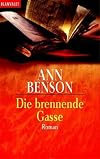
- Die brennende Gasse
- Original title
- The burning road
- Original publication date
- 1998
- People/Characters
- Alejandro Canches; Catherine Plantagenet (Kate); Janie Crowe; Tom MacAlester; Bruce Ransom; Caroline Porter (show all 13); Michael Rosow; Guillaume Karle; Guy de Chauliac; Kristina Warger (Wargirl); Geoffrey Chaucer; Nicholas Flamel; John Sandhaus
- Important places
- Paris, Île-de-France, France; Massachusetts, USA; Compiègne, Oise, Hauts-de-France, France; Avignon, Vaucluse, Provence-Alpes-Côte d'Azur, France
- First words*
- Wann hatte Alejandro Canches die Sprache auf dem Papyrus, der vor ihm lag, zuletzt gelesen?
- Last words*
- (Click to show. Warning: May contain spoilers.)"Wie sollten wir ihn sonst nennen?"
*Some information comes from Common Knowledge in other languages. Click "Edit" for more information.
Classifications
- Genres
- Fiction and Literature, Historical Fiction, Science Fiction
- DDC/MDS
- 813.54 — Literature & rhetoric American literature in English American fiction in English 1900-1999 1945-1999
- LCC
- PS3552 .E547659 .B87 — Language and Literature American literature American literature Individual authors 1961-
- BISAC
Statistics
- Members
- 277
- Popularity
- 116,729
- Reviews
- 9
- Rating
- (3.92)
- Languages
- English, German, Spanish
- Media
- Paper, Ebook
- ISBNs
- 13
- ASINs
- 2