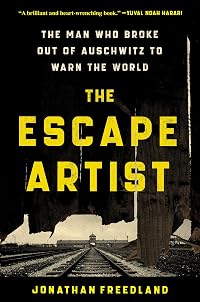
The Escape Artist: The Man Who Broke Out of Auschwitz to Warn the World
by Jonathan Freedland
On This Page
Description
"In April 1944, Rudolf Vrba became the first Jew to break out of Auschwitz--one of only four who ever pulled off that near-impossible feat. He did it to reveal the truth of the death camp to the world--and to warn the last Jews of Europe what fate awaited them at the end of the railway line. Against all odds, he and his fellow escapee, Fred Wetzler, climbed mountains, crossed rivers and narrowly missed German bullets until they had smuggled out the first full account of Auschwitz the world show more had ever seen--a forensically detailed report that would eventually reach Franklin Roosevelt, Winston Churchill and the Pope. And yet too few heeded the warning that Vrba--then just nineteen years old--had risked everything to deliver. Some could not believe it. Others thought it easier to keep quiet. Vrba helped save 200,000 Jewish lives--but he never stopped believing it could have been so many more. This is the story of a brilliant yet troubled man--a gifted "escape artist" who even as a teenager understood that the difference between truth and lies can be the difference between life and death, a man who deserves to take his place alongside Anne Frank, Oskar Schindler and Primo Levi as one of the handful of individuals whose stories define our understanding of the Holocaust"-- show lessTags
Recommendations




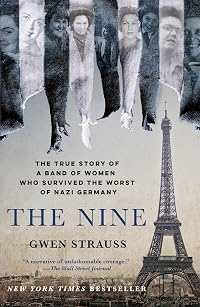
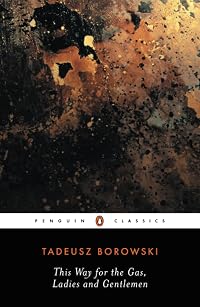
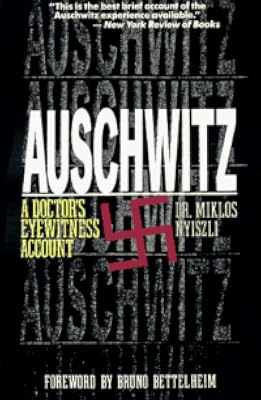
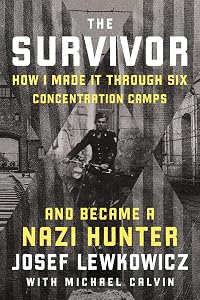



Member Reviews
Oscar Schindler saved over 1,000 Jews from the camps as we all remember from Spielberg's film. He was lauded as a hero by Israel and deservedly so. Less well known is Rudi Vrba who can be credited with saving 200,000 Hungarian Jews. Vrba was an inmate at Auschwitz for nearly two years where he experienced and witnessed the horrors there. Through his various jobs at the camp Vrba deduced that its major purpose was the mass murder of 90% of those arriving on the constant trains into the camp. He calculated from the culling of the arrivals how many went straight to the gas chambers. He was determined to escape to tell the story to warn the world about what was happening. He and another inmate made a daring escape, something almost show more unprecedented at the camp. After a perilous trek, he and his partner reached their homeland of Slovakia where they reported in great detail what was happening there. Vrba had learned that the next wave of deportations was to be Hungarian Jews and his intent was to make this known so that resistance might thwart the plan.
Vrba entrusted his report to leaders of the Jewish council with the expectation that they would issue a public warning. To his great frustration, the report produced very little action in this regard. Copies finally made their way to the press and to Allied wartime leaders who likewise for various reasons, some shallow and wrong-headed, did not take action. Finally, the Hungarian regime made some effort to stop the Nazi's plans which did spare 200,000 Budapest Jews from the trains but did not stop the roundups in the countryside.
Unlike Schindler, Vrba later received scant postwar recognition of his endeavor to warn of the impending extermination of Jews. This was largely because he publicly criticized for failure to take action the leader of the Jewish Council, a man who had been already declared a hero in Israel. He remained throughout his life very angry and bitter that others did not act on his report.
The book touches on the failures of Allied leaders to implement readily available measures to stop or slow down the heinous work of the extermination camps. Such measures as bombing the railways leading to the camps were not utilized. These failures are thoroughly told in book of several years ago "The Abandonment of the Jews". One aspect of this inaction was certainly the thread of antisemitism pervasive at many levels of government.
Vrba's descriptions of life in the camp are tough to read. One again grapples with the question of how in a nation noted for cultural and intellectual achievements such a horrific plan was implemented. I do think that in every society (even in 21st century America) there is a current of hatred and violence running close to the surface that only needs a spark of demagoguery to unleash it. Let us not think that the antisemitism of the 20th century is a thing of the past. show less
Vrba entrusted his report to leaders of the Jewish council with the expectation that they would issue a public warning. To his great frustration, the report produced very little action in this regard. Copies finally made their way to the press and to Allied wartime leaders who likewise for various reasons, some shallow and wrong-headed, did not take action. Finally, the Hungarian regime made some effort to stop the Nazi's plans which did spare 200,000 Budapest Jews from the trains but did not stop the roundups in the countryside.
Unlike Schindler, Vrba later received scant postwar recognition of his endeavor to warn of the impending extermination of Jews. This was largely because he publicly criticized for failure to take action the leader of the Jewish Council, a man who had been already declared a hero in Israel. He remained throughout his life very angry and bitter that others did not act on his report.
The book touches on the failures of Allied leaders to implement readily available measures to stop or slow down the heinous work of the extermination camps. Such measures as bombing the railways leading to the camps were not utilized. These failures are thoroughly told in book of several years ago "The Abandonment of the Jews". One aspect of this inaction was certainly the thread of antisemitism pervasive at many levels of government.
Vrba's descriptions of life in the camp are tough to read. One again grapples with the question of how in a nation noted for cultural and intellectual achievements such a horrific plan was implemented. I do think that in every society (even in 21st century America) there is a current of hatred and violence running close to the surface that only needs a spark of demagoguery to unleash it. Let us not think that the antisemitism of the 20th century is a thing of the past. show less
i kind of read my share of ww2 holocaust books when i was younger and have been off them for like 2 decades, probably. i've mostly avoided them since but still have a pretty good working knowledge of this time in history. yet i hadn't really heard about these men (but they should be heroes and household names). i had heard of their report (the vrba-wetzler report) but only because i've visited nuremberg and auschwitz-birkenau, not because i was taught about them or their sacrifice, or what they tried to do. certainly we have all heard of what the report contained, as much of what we know of the details started from that report. but i couldn't have told you that before reading this.
this book is incredibly interesting for more than just show more the obvious reasons. of course it's fascinating in the aspect of detailing the escape and how they did it, when no one had done it before. but there's so much more to this story. he shows us who walter vrba was, and how he was the perfect person to be able to escape and retain the information about the camps, the details about where the transports were from and how many people where on them. how he - again and again, even as he was obviously also so unlucky - was so lucky to escape notice or death or to be given a random chance that saved his life. over and over. but of course he was also in auschwitz and before that in europe for the rise of hitler, so not so totally lucky all the same. but the number of times that he almost was discovered or died (and others, too - it's like anyone who lived through this time and place can point to many instances of near death and randomly being saved) seemed incredible. maybe it was a bit of author's embellishment, but this is a story that is dramatic enough on its own.
so there's the amazing escape. but then the book is also really interesting because it's not just about their escape. it's about how the world responded to the information they worked so hard to bring to the public. they really wanted to bring it to the jews of hungary, who hadn't been deported yet, so that if those jews knew that if they got on the cattle cars, that they were heading for certain death. they wanted to save lives. and the people they shared this knowledge with were hesitant to distribute it, or refused to believe it, so more and more people died. shockingly, even the priest they told of the nearly 2 million dead was unmoved until they also mentioned that other priests were being killed along with the jews (except they arrived to auschwitz dead already).
but it wasn't as shocking to everyone; vrba and wetzler weren't actually bringing new information to everyone, since the allies knew 2 years before their escape what the nazis were doing. that the deportations weren't resettlement, but death sentences. this report, that vrba and wetzler thought would change the world, because knowledge like this should galvanize action, really did nothing because they all already knew. learning this is the sort of information that nearly broke me forever when i first read and the band played on. but it's no longer totally surprising to me. i mean, we see it today. i'm part of it today, how we stand by and do nothing. or go about our regular day, even when we see atrocities happening around us.
vrba was convinced that what kept the nazis able to kill so quickly in such high numbers was the efficiency with which they worked, and how complacent the people were. he and wetzler thought that if the jews knew that they were being led to their deaths, that they would make it harder for the nazis, which would slow the process down and ultimately save lives. and if the governments knew, they could do things like bomb the railway lines, making it impossible for the nazis to get more prisoners to the camps. but the governments - most noticeably america and britain - wouldn't even consider doing this. ("The War Department did not undertake a study of whether bombing the railway lines was militarily feasible. No one looked for alternative means of halting or even slowing the transports. Instead the operations division of the department's general staff came back with ... 'The best hope for the victims of Nazism was that Nazism be defeated.' The US military would not so much as look at any proposed operation that might require a 'diversion' from that effort.") i'm not sure i really understood before how much the world knew this was happening, and how they continued to refuse to do anything to stop or slow it. even when it wasn't much to ask. (to continue what they were saying about bombing the railway lines - they ended up bombing something else 5 miles away, which was useless, but didn't bomb the rails or the crematoria, for which they had maps and detailed drawings, so could have.)
later in life vrba wasn't given a lot of chance, like other survivors, to speak or engage with people about his story. he didn't fit the model type of person in that he wasn't going to forgive the nazis or the leaders of the jewish communities (who put together lists of jews for deportation, or who didn't fight back, or who knew about the report but didn't disseminate it). he wasn't going to speak in platitudes but talk about the truth, and this wasn't as well received as other survivors, who talk softly of what they witnessed or say that ultimately people are good. he didn't give people what they expected in that vein. he was angry, loud, unforgiving. and so made people uncomfortable, which isn't what they wanted. so he is lesser known. it reminds me of people of color today, who are not given the same platform to talk about racism, because what they say is hard to hear, compared to white people who talk about it, and who sometimes make it sound not as bad, more digestible.
this feels comprehensive, and is extremely readable in spite of the tough topic. it's an incredible escape story, but also the story of how the world didn't act.
"Between 1942 and 1944 an estimated 6 tons of dental gold were deposited in the vaults of the Reichsbank."
"...maybe their determination to act was more apparent than sincere. The determination to be documented demanding action stronger than the urge for action itself."
"'Familiar stuff,' read one colonial office memo written in London on 7 December 1942 [SO EARLY ON!! How many lives could have been saved!!!] responding to reports on mass killing. 'The Jews have spoiled their case by laying it on too thick for years past.'"
"Only when information is combined with belief does it become knowledge. And only knowledge leads to action. The French Jewish philosopher Raymond Aaron would say, when asked about the Holocaust, 'I knew, but I didn't believe it. And because I didn't believe it, I didn't know.'" show less
this book is incredibly interesting for more than just show more the obvious reasons. of course it's fascinating in the aspect of detailing the escape and how they did it, when no one had done it before. but there's so much more to this story. he shows us who walter vrba was, and how he was the perfect person to be able to escape and retain the information about the camps, the details about where the transports were from and how many people where on them. how he - again and again, even as he was obviously also so unlucky - was so lucky to escape notice or death or to be given a random chance that saved his life. over and over. but of course he was also in auschwitz and before that in europe for the rise of hitler, so not so totally lucky all the same. but the number of times that he almost was discovered or died (and others, too - it's like anyone who lived through this time and place can point to many instances of near death and randomly being saved) seemed incredible. maybe it was a bit of author's embellishment, but this is a story that is dramatic enough on its own.
so there's the amazing escape. but then the book is also really interesting because it's not just about their escape. it's about how the world responded to the information they worked so hard to bring to the public. they really wanted to bring it to the jews of hungary, who hadn't been deported yet, so that if those jews knew that if they got on the cattle cars, that they were heading for certain death. they wanted to save lives. and the people they shared this knowledge with were hesitant to distribute it, or refused to believe it, so more and more people died. shockingly, even the priest they told of the nearly 2 million dead was unmoved until they also mentioned that other priests were being killed along with the jews (except they arrived to auschwitz dead already).
but it wasn't as shocking to everyone; vrba and wetzler weren't actually bringing new information to everyone, since the allies knew 2 years before their escape what the nazis were doing. that the deportations weren't resettlement, but death sentences. this report, that vrba and wetzler thought would change the world, because knowledge like this should galvanize action, really did nothing because they all already knew. learning this is the sort of information that nearly broke me forever when i first read and the band played on. but it's no longer totally surprising to me. i mean, we see it today. i'm part of it today, how we stand by and do nothing. or go about our regular day, even when we see atrocities happening around us.
vrba was convinced that what kept the nazis able to kill so quickly in such high numbers was the efficiency with which they worked, and how complacent the people were. he and wetzler thought that if the jews knew that they were being led to their deaths, that they would make it harder for the nazis, which would slow the process down and ultimately save lives. and if the governments knew, they could do things like bomb the railway lines, making it impossible for the nazis to get more prisoners to the camps. but the governments - most noticeably america and britain - wouldn't even consider doing this. ("The War Department did not undertake a study of whether bombing the railway lines was militarily feasible. No one looked for alternative means of halting or even slowing the transports. Instead the operations division of the department's general staff came back with ... 'The best hope for the victims of Nazism was that Nazism be defeated.' The US military would not so much as look at any proposed operation that might require a 'diversion' from that effort.") i'm not sure i really understood before how much the world knew this was happening, and how they continued to refuse to do anything to stop or slow it. even when it wasn't much to ask. (to continue what they were saying about bombing the railway lines - they ended up bombing something else 5 miles away, which was useless, but didn't bomb the rails or the crematoria, for which they had maps and detailed drawings, so could have.)
later in life vrba wasn't given a lot of chance, like other survivors, to speak or engage with people about his story. he didn't fit the model type of person in that he wasn't going to forgive the nazis or the leaders of the jewish communities (who put together lists of jews for deportation, or who didn't fight back, or who knew about the report but didn't disseminate it). he wasn't going to speak in platitudes but talk about the truth, and this wasn't as well received as other survivors, who talk softly of what they witnessed or say that ultimately people are good. he didn't give people what they expected in that vein. he was angry, loud, unforgiving. and so made people uncomfortable, which isn't what they wanted. so he is lesser known. it reminds me of people of color today, who are not given the same platform to talk about racism, because what they say is hard to hear, compared to white people who talk about it, and who sometimes make it sound not as bad, more digestible.
this feels comprehensive, and is extremely readable in spite of the tough topic. it's an incredible escape story, but also the story of how the world didn't act.
"Between 1942 and 1944 an estimated 6 tons of dental gold were deposited in the vaults of the Reichsbank."
"...maybe their determination to act was more apparent than sincere. The determination to be documented demanding action stronger than the urge for action itself."
"'Familiar stuff,' read one colonial office memo written in London on 7 December 1942 [SO EARLY ON!! How many lives could have been saved!!!] responding to reports on mass killing. 'The Jews have spoiled their case by laying it on too thick for years past.'"
"Only when information is combined with belief does it become knowledge. And only knowledge leads to action. The French Jewish philosopher Raymond Aaron would say, when asked about the Holocaust, 'I knew, but I didn't believe it. And because I didn't believe it, I didn't know.'" show less
In April 1944, Rudolf Vrba became the first Jew to break out of Auschwitz—one of only four who ever pulled off that near-impossible feat. He did it to reveal the truth of the death camp to the world—and to warn the last Jews of Europe what fate awaited them at the end of the railway line. Against all odds, he and his fellow escapee, Fred Wetzler, climbed mountains, crossed rivers and narrowly missed German bullets until they had smuggled out the first full account of Auschwitz the world had ever seen—a forensically detailed report that would eventually reach Franklin Roosevelt, Winston Churchill and the Pope.
And yet too few heeded the warning that Vrba—then just nineteen years old—had risked everything to deliver. Some could show more not believe it. Others thought it easier to keep quiet. Vrba helped save 200,000 Jewish lives—but he never stopped believing it could have been so many more.
This is the story of a brilliant yet troubled man—a gifted “escape artist” who even as a teenager understand that the difference between truth and lies can be the difference between life and death, a man who deserves to take his place alongside Anne Frank, Oskar Schindler and Primo Levi as one of the handful of individuals whose stories define our understanding of the Holocaust. show less
And yet too few heeded the warning that Vrba—then just nineteen years old—had risked everything to deliver. Some could show more not believe it. Others thought it easier to keep quiet. Vrba helped save 200,000 Jewish lives—but he never stopped believing it could have been so many more.
This is the story of a brilliant yet troubled man—a gifted “escape artist” who even as a teenager understand that the difference between truth and lies can be the difference between life and death, a man who deserves to take his place alongside Anne Frank, Oskar Schindler and Primo Levi as one of the handful of individuals whose stories define our understanding of the Holocaust. show less
In April 1944, two Jewish prisoners, nineteen-year-old Walter Rosenberg and twenty-five-year-old Fred Wetzler, carried out a daring plan to escape from Auschwitz. Walter was desperate to break out of this horrendous place, not only because of its filth, lack of edible food, brutality of its guards, and ever-present threat of extermination. He was anxious to publicize what he knew about the Nazis' methodical efforts to eliminate European Jewry. Walter understood that many Jews believed the Nazis' lies about what would happen to them after resettlement. The Germans assured the Jews that they would remain with their families and keep their possessions. Walter hoped that if the victims knew the truth about their fate, they would find the show more strength to fight back with whatever tools they had at their disposal.
Jonathan Freeland's "The Escape Artist" is a compelling account of suffering, despair, and heroism. Walter was born in Slovakia, a country whose leaders collaborated enthusiastically with Hitler's henchmen. Because he was a Jew, this teenager, who had a facile mind and loved learning, was barred from attending school. Even before he was sent to Auschwitz, Walter's combination of chutzpah, savvy, and luck helped him outwit his enemies on more than one occasion.
In this well-researched book, Freedland describes Walter's experiences in Auschwitz, where he was incarcerated for almost two years. When Walter arrived as a seventeen-year-old, he was ordered to carry out exhausting tasks that sapped what little energy he had. Fortunately, he would later be transferred to "Kanada," a warehouse where the clothing, jewelry, money, and other belongings confiscated from the Jews were sorted for distribution to the Germans. The author provides telling details that prove, in no uncertain terms, that government officials, clergymen, and others in positions of power could have saved Jewish lives, but refused to do so; that few individuals took Walter's warnings to heart, even when he credibly sounded the alarm about the Nazis' heinous crimes; and finally, that survivors of Auschwitz, like Rudi, were often so traumatized that they had difficulty reintegrating themselves into society. Freedland follows up his suspenseful description of Walter's flight from Auschwitz with compelling historical information about what happened to Rudolph Vrba—the name Walter used after the Holocaust—when the war was finally over. Although Rudi went on to become a scientist and testified for the prosecution at Nazi war crimes trials, he was also paranoid, high-strung, and prone to explosive outbursts of anger. In "The Escape Artist," Freedland portrays Vrba as a tragic figure who embraced life but was far too troubled to fully appreciate it, even after his wartime experiences were a distant but haunting memory. show less
Jonathan Freeland's "The Escape Artist" is a compelling account of suffering, despair, and heroism. Walter was born in Slovakia, a country whose leaders collaborated enthusiastically with Hitler's henchmen. Because he was a Jew, this teenager, who had a facile mind and loved learning, was barred from attending school. Even before he was sent to Auschwitz, Walter's combination of chutzpah, savvy, and luck helped him outwit his enemies on more than one occasion.
In this well-researched book, Freedland describes Walter's experiences in Auschwitz, where he was incarcerated for almost two years. When Walter arrived as a seventeen-year-old, he was ordered to carry out exhausting tasks that sapped what little energy he had. Fortunately, he would later be transferred to "Kanada," a warehouse where the clothing, jewelry, money, and other belongings confiscated from the Jews were sorted for distribution to the Germans. The author provides telling details that prove, in no uncertain terms, that government officials, clergymen, and others in positions of power could have saved Jewish lives, but refused to do so; that few individuals took Walter's warnings to heart, even when he credibly sounded the alarm about the Nazis' heinous crimes; and finally, that survivors of Auschwitz, like Rudi, were often so traumatized that they had difficulty reintegrating themselves into society. Freedland follows up his suspenseful description of Walter's flight from Auschwitz with compelling historical information about what happened to Rudolph Vrba—the name Walter used after the Holocaust—when the war was finally over. Although Rudi went on to become a scientist and testified for the prosecution at Nazi war crimes trials, he was also paranoid, high-strung, and prone to explosive outbursts of anger. In "The Escape Artist," Freedland portrays Vrba as a tragic figure who embraced life but was far too troubled to fully appreciate it, even after his wartime experiences were a distant but haunting memory. show less
The amazing story of Rudolf Weber’s escape from Auschwitz and his life afterwards. Details and well researched, the book unfortunately reads more like a Discovery Channel documentary than an account. Rather too often emotive and inconsistent language is introduced which detracts from, rather than enhances, the horror. I much prefer Primo Levi’s powerful writing. That said, look beyond style and you find a powerful story, detailed and well-researched, which is a good read.
The Escape Artist is a remarkable book about Rudolf Vrba, one of very few who accomplished the arduous feat of escaping Auschwitz.
It's been a long time since I read anything on this period of history and was a visceral reminder of the horror that was the Holocaust. This book describes Vrba's determination to escape in order to tell the world what was happening in Auschwitz. His belief was that if only the world knew what was happening, someone would stop it.
He recognized that the Nazis' success in their death camps was predicated on their deception all the way to the gas chambers. Their victims never knew what was about to happen. If he was able to warn the world, they could resist.
The first part of the book describes Vrba's path to show more Auschwitz and his escape up to writing the Vrba-Wetzler report with a fellow escapee and was sent to politicians, world leaders and clergy across the world only to be disbelieved or inacted upon. Despite the inaction of any viable world leadership it is believed that the report saved up to 200,000 Hungarian Jews. The later half of the book describes Vrba's complicated life and relationships as well as his role in continuing to tell the story of Auschwitz. show less
It's been a long time since I read anything on this period of history and was a visceral reminder of the horror that was the Holocaust. This book describes Vrba's determination to escape in order to tell the world what was happening in Auschwitz. His belief was that if only the world knew what was happening, someone would stop it.
He recognized that the Nazis' success in their death camps was predicated on their deception all the way to the gas chambers. Their victims never knew what was about to happen. If he was able to warn the world, they could resist.
The first part of the book describes Vrba's path to show more Auschwitz and his escape up to writing the Vrba-Wetzler report with a fellow escapee and was sent to politicians, world leaders and clergy across the world only to be disbelieved or inacted upon. Despite the inaction of any viable world leadership it is believed that the report saved up to 200,000 Hungarian Jews. The later half of the book describes Vrba's complicated life and relationships as well as his role in continuing to tell the story of Auschwitz. show less
A very well written and engrossing book, Holocaust books often are for some reason. This one delivers. It will make an excellent movie, it has all the right elements. Walter Rosenberg is a hero against fascism, we need his inspiration now more than ever.
Members
- Recently Added By
Lists

2023 Notable Books for Adults
26 works; 2 members

Top Five Books of 2023
767 works; 317 members

Books Read in 2025
4,128 works; 98 members

Books Read in 2024
4,727 works; 128 members
Author Information

33+ Works 4,070 Members
Awards and Honors
Awards
Distinctions
Notable Lists
Common Knowledge
- Original publication date
- 2022-10-18
- People/Characters
- Rudolf Vrba; Alfred Wetzler
- Important places
- Auschwitz concentration camp, Oświęcim, Lesser Poland, Poland
- Important events
- Holocaust
- First words
- From the start he knew he was special.
- Original language
- English
Classifications
Statistics
- Members
- 863
- Popularity
- 31,678
- Reviews
- 31
- Rating
- (4.38)
- Languages
- English, Finnish, Spanish
- Media
- Paper, Audiobook, Ebook
- ISBNs
- 19
- ASINs
- 8