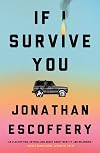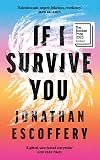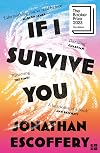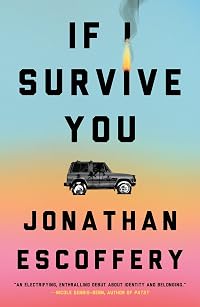
If I Survive You
by Jonathan Escoffery
On This Page
Description
"A collection of humorous and harrowing linked stories following a Jamaican-American family as they seek stability upon moving to Miami"--Tags
Recommendations





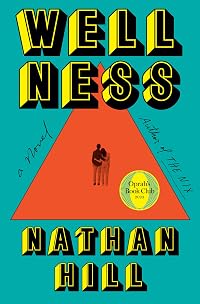
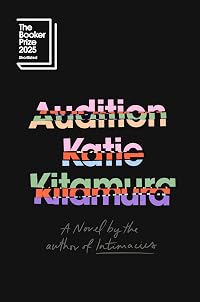
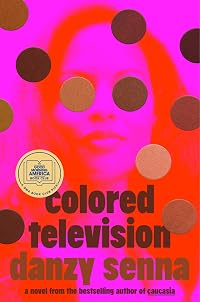
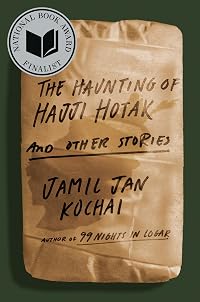

Member Recommendations
Member Reviews
A series of linked stories painfully recalling estrangement, lack of identity, and parental mistakes, this novel required two readings from me (worth it!) to figure out who was wronging whom the worst - the two brothers, Delano and Trelawny, making poor decisions; their father, breaking up the family in Delano's favor; and all those people encountered whose evaluation of Trelawny's race and origins put him into permanent limbo. He is Jamaican but not a rasta; looks Black but very light-skinned, looks Hispanic but can't speak the language, looks mixed race but isn't. The most memorable chapter features their younger cousin Cukie, whose encounters with his absent father in the Florida Keys is heart-wrenching. The eight stories are very show more affecting and should provide readers with a view of racism that would probably be new to them. show less
Born in America, Trelawny is the son of Jamaican immigrant parents. His older brother, Delano, is his father’s favorite. Trelawny starts out at age nine, in 1992, in South Miami. His family’s home is destroyed in Hurricane Andrew. When his parent divorce, Trelawny lives with his mother and Delano stays with his father. Trelawny is a bookish kid. He gets a scholarship to a northern midwestern college, but he graduates at the apex of the recession of 2008 and there are no jobs to be found. The narrative follows his life over the course of two decades.
This book packs an emotional punch. It focuses on the Jamaican American experience, and the depiction of race in America is spot on. The American tendency to “define” someone by a show more single term is parodied to humorous (but sad) effect. Trelawny’s mixed ethnicities lead him to be variously labeled as Puerto Rican, Dominican, Cuban, and black. He tries to fit in but still feels like an outsider.
It is told in a series of short stories, which easily flow together to form a novel. The first story in the book is one of the best I have read. Another set of striking stories is that of Trelawny’s cousin, Cukie, meeting his father for the first time and finding out exactly what kind of man abandons his child. This book covers a lot of ground – dysfunctional families, father-son dynamics, abandonment, race, class, financial struggles, underemployment, and identity. I am impressed by this author, especially considering this book is his debut.
I listened to the audio book, which is brilliantly narrated by Torian Brackett. I feel like audio is the way to go. It definitely helped with the single chapter told in Jamaican patois by Trelawny’s father. I will keep an eye out for future works by Jonathan Escoffery.
4.5 show less
This book packs an emotional punch. It focuses on the Jamaican American experience, and the depiction of race in America is spot on. The American tendency to “define” someone by a show more single term is parodied to humorous (but sad) effect. Trelawny’s mixed ethnicities lead him to be variously labeled as Puerto Rican, Dominican, Cuban, and black. He tries to fit in but still feels like an outsider.
It is told in a series of short stories, which easily flow together to form a novel. The first story in the book is one of the best I have read. Another set of striking stories is that of Trelawny’s cousin, Cukie, meeting his father for the first time and finding out exactly what kind of man abandons his child. This book covers a lot of ground – dysfunctional families, father-son dynamics, abandonment, race, class, financial struggles, underemployment, and identity. I am impressed by this author, especially considering this book is his debut.
I listened to the audio book, which is brilliantly narrated by Torian Brackett. I feel like audio is the way to go. It definitely helped with the single chapter told in Jamaican patois by Trelawny’s father. I will keep an eye out for future works by Jonathan Escoffery.
4.5 show less
The Publisher Says: A major debut, blazing with style and heart, that follows a Jamaican family striving for more in Miami, and introduces a generational storyteller.
In the 1970s, Topper and Sanya flee to Miami as political violence consumes their native Kingston. But America, as the couple and their two children learn, is far from the promised land. Excluded from society as Black immigrants, the family pushes on through Hurricane Andrew and later the 2008 recession, living in a house so cursed that the pet fish launches itself out of its own tank rather than stay. But even as things fall apart, the family remains motivated, often to its own detriment, by what their younger son, Trelawny, calls “the exquisite, racking compulsion to show more survive.”
Masterfully constructed with heart and humor, the linked stories in Jonathan Escoffery’s If I Survive You center on Trelawny as he struggles to carve out a place for himself amid financial disaster, racism, and flat-out bad luck. After a fight with Topper—himself reckoning with his failures as a parent and his longing for Jamaica—Trelawny claws his way out of homelessness through a series of odd, often hilarious jobs. Meanwhile, his brother, Delano, attempts a disastrous cash grab to get his kids back, and his cousin, Cukie, looks for a father who doesn’t want to be found. As each character searches for a foothold, they never forget the profound danger of climbing without a safety net.
Pulsing with vibrant lyricism and inimitable style, sly commentary and contagious laughter, Escoffery’s debut unravels what it means to be in between homes and cultures in a world at the mercy of capitalism and whiteness. With If I Survive You, Escoffery announces himself as a prodigious storyteller in a class of his own, a chronicler of American life at its most gruesome and hopeful.
I RECEIVED A DRC FROM THE PUBLISHER VIA NETGALLEY. THANK YOU.
My Review: When I think about braided-stories novels, there's always a little frisson of fear in my response. I don't always think it's the best idea to try to make a novel out of things that don't fit together naturally. If there's an organic flow among stories, what stops the author from making it into a regular novel-style novel? Why this technique, not another that doesn't make The Market shudder deep in its bones? All we ever hear is that stories are hard to sell, collections are death in the stores, writing stories is just as hard as writing novels but even less remunerative. I'm inured to this cant of can't by now. It's done its damage. I look askance at connected collections.
What, then, is the reason I decided to read this iteration of the story-novel? There's no one thing, there's a constellation of tweaks and trips. I find the idea of books others can't "understand" tempting. I am all for creative uses of the many kinds of English out there waiting to make my acquaintance. I'll walk a mile for a good story about people who just...can't...because they're my people. Because whatever else divides us, we have one thing in common: We don't Belong, and others do. That's worth a lot of effort...which, for the record, I did not think was needed in reading this book. The second story is in patwa but the rest? Not a bit of it.
It pleases me to use my time-honored technique called the Bryce Method to explicate the wonders herein to feast upon at Expendable Mudge Muses Aloud. show less
In the 1970s, Topper and Sanya flee to Miami as political violence consumes their native Kingston. But America, as the couple and their two children learn, is far from the promised land. Excluded from society as Black immigrants, the family pushes on through Hurricane Andrew and later the 2008 recession, living in a house so cursed that the pet fish launches itself out of its own tank rather than stay. But even as things fall apart, the family remains motivated, often to its own detriment, by what their younger son, Trelawny, calls “the exquisite, racking compulsion to show more survive.”
Masterfully constructed with heart and humor, the linked stories in Jonathan Escoffery’s If I Survive You center on Trelawny as he struggles to carve out a place for himself amid financial disaster, racism, and flat-out bad luck. After a fight with Topper—himself reckoning with his failures as a parent and his longing for Jamaica—Trelawny claws his way out of homelessness through a series of odd, often hilarious jobs. Meanwhile, his brother, Delano, attempts a disastrous cash grab to get his kids back, and his cousin, Cukie, looks for a father who doesn’t want to be found. As each character searches for a foothold, they never forget the profound danger of climbing without a safety net.
Pulsing with vibrant lyricism and inimitable style, sly commentary and contagious laughter, Escoffery’s debut unravels what it means to be in between homes and cultures in a world at the mercy of capitalism and whiteness. With If I Survive You, Escoffery announces himself as a prodigious storyteller in a class of his own, a chronicler of American life at its most gruesome and hopeful.
I RECEIVED A DRC FROM THE PUBLISHER VIA NETGALLEY. THANK YOU.
My Review: When I think about braided-stories novels, there's always a little frisson of fear in my response. I don't always think it's the best idea to try to make a novel out of things that don't fit together naturally. If there's an organic flow among stories, what stops the author from making it into a regular novel-style novel? Why this technique, not another that doesn't make The Market shudder deep in its bones? All we ever hear is that stories are hard to sell, collections are death in the stores, writing stories is just as hard as writing novels but even less remunerative. I'm inured to this cant of can't by now. It's done its damage. I look askance at connected collections.
What, then, is the reason I decided to read this iteration of the story-novel? There's no one thing, there's a constellation of tweaks and trips. I find the idea of books others can't "understand" tempting. I am all for creative uses of the many kinds of English out there waiting to make my acquaintance. I'll walk a mile for a good story about people who just...can't...because they're my people. Because whatever else divides us, we have one thing in common: We don't Belong, and others do. That's worth a lot of effort...which, for the record, I did not think was needed in reading this book. The second story is in patwa but the rest? Not a bit of it.
It pleases me to use my time-honored technique called the Bryce Method to explicate the wonders herein to feast upon at Expendable Mudge Muses Aloud. show less
Literary fiction I appreciated, but didn't quite enjoy. So hard to embrace any of the characters in the featured family, they are all so flawed and horrible to each other. But the writing is top-notch. The basic premise of these linked stories is this: "It occurs to you that people like you -- people who burn themselves up in pursuit of survival -- rarely survive anyone or anything." (230) It is a series of linked stories about a family living in Miami starting in the 80s to present day. Topper and Sanya moved from Jamaica with infant Delano to escape social and political violence there. But Miami has its own set of problems, and so does the family. Another son, Trelawney, is born in America and his experience becomes quite different show more from the rest of his family - he often gets the 'what are you?' question and struggles to answer. "The askers are expectant. They demand immediate gratification. Their question lifts you slightly off your adolescent toes, tilting you, not just because you don't understand it, but because even if you did understand this question, you wouldn't have an answer." (3) While his family might proudly say 'Jamaican' that doesn't mean much to him. Then there is his light skin tone. He isn't accepted by white people, or 'brown' people, who are Puerto Rican or Cuban at his school. There seems to be no category for him which doesn't help the 'what are you?' existential crisis he faces. "Now that you've been booted from the brown enclave, your vulnerability becomes your fragile, frantic solitary friend." Also, his family is rocky: his parents have been fighting because his father is too fond of rum and Delano who is four years older sides with the father - they are alike in temperament and skill. Trelawney is bookish and slight and has excised any hint of accent in his own speech, though his parents retain theirs. This troubled father-son dynamic repeats throughout the stories, including with their cousin Cukie and his deserter father Ox. Though both pairs bond through physical work, that is tested when payment and reward doesn't match. Trelawney who gets a college education isn't part of this, but he doesn't fare much better due to timing and circumstances. A couple hurricanes (Andrew, Irene) have an impact as well as the 2008 economic downturn, and on the personal level, pride and jealousy intervene. The bottom line is no one can catch a break to get to extended stability. Excellent, multi-faceted look at immigration, race, and family with a unique approach of what could almost be stand-alone stories (first and last told in 2nd person, which has an impact, one in Jamaican patois, and all in different view points with individual insight). Last great example of power-house writing: after a marriage split and horrible business fail, "Delano sees tomorrow and the next day and the next with startling clarity......court appearances, his father's attempt to collect...and worst of all the deficiency, the love he can't project across three thousand miles to his children, the love that can't serve as a beacon to call his family back to him. You can't project love while burying yourself. You can't emit love while flickering out, evaporating into the ether." (201) show less
Shortlisted for the Booker Prize 2023
Jonathan Escoffey illuminates the Jamaican-American experience in his moving debut novel If I Survive You. Through eight interconnected stories, he examines race, identity, sibling rivalry, father-son-conflict issues, and the perils of not fitting into neat little boxes.
Trelawney is the younger son of Topper and Sanya, Jamaican immigrants living in Miami. Unlike his older brother Delano, Trelawney was born in the US. Topper and Sanya had the light brown skin of many from the Jamaican middle class. In Multiethnic Miami, Trelawney was constantly asked, "What are you?" a question that would continuously haunt him. He was mistaken for Dominican in school until the Dominican kids learned he could not show more speak Spanish. The Blacks would not accept him because of his brown skin and prior association with the Dominicans. The Cubans saw him as too dark. He was too American in Jamaica, and in Miami, he was too Jamaican. Then, at his university in the Midwest, he entered a world with little nuance, where people were seen as either black or white, and others no longer saw him as Jamaican.
Due to constant shifts in his sense of identity and belonging, Trelawney experiences confusion, pain, and rage-- sentiments that extend to his fraught relations with his father and brother. Escoffery interweaves these sentiments throughout the novel with humor, grace, and a keen sense of irony.
While his female characters are well-drawn, they play a minimal role in the novel. A secondary focus in these stories is on male relationships and identity. Topper, a Miami contractor, has difficulty relating to the bookish, literary Trelawney. Their ongoing animosity and Topper's blatant favoritism of Delano fuel much of the internal conflict within the stories as Trelawny reduced to homelessness and living in his van, tries to figure out his place in his family and the larger world.
I liked If I Survive You. Escoffey's use of interconnected stories worked for the most part, although some of the stories were better developed than others. It is a strong debut. show less
Jonathan Escoffey illuminates the Jamaican-American experience in his moving debut novel If I Survive You. Through eight interconnected stories, he examines race, identity, sibling rivalry, father-son-conflict issues, and the perils of not fitting into neat little boxes.
Trelawney is the younger son of Topper and Sanya, Jamaican immigrants living in Miami. Unlike his older brother Delano, Trelawney was born in the US. Topper and Sanya had the light brown skin of many from the Jamaican middle class. In Multiethnic Miami, Trelawney was constantly asked, "What are you?" a question that would continuously haunt him. He was mistaken for Dominican in school until the Dominican kids learned he could not show more speak Spanish. The Blacks would not accept him because of his brown skin and prior association with the Dominicans. The Cubans saw him as too dark. He was too American in Jamaica, and in Miami, he was too Jamaican. Then, at his university in the Midwest, he entered a world with little nuance, where people were seen as either black or white, and others no longer saw him as Jamaican.
Due to constant shifts in his sense of identity and belonging, Trelawney experiences confusion, pain, and rage-- sentiments that extend to his fraught relations with his father and brother. Escoffery interweaves these sentiments throughout the novel with humor, grace, and a keen sense of irony.
While his female characters are well-drawn, they play a minimal role in the novel. A secondary focus in these stories is on male relationships and identity. Topper, a Miami contractor, has difficulty relating to the bookish, literary Trelawney. Their ongoing animosity and Topper's blatant favoritism of Delano fuel much of the internal conflict within the stories as Trelawny reduced to homelessness and living in his van, tries to figure out his place in his family and the larger world.
I liked If I Survive You. Escoffey's use of interconnected stories worked for the most part, although some of the stories were better developed than others. It is a strong debut. show less
Fresh and vital, totally absorbing, I really enjoyed this read. The book is a collection of connected short stories about a Jamaican family in Miami. Most of the stories are from the perspective of Trelawney, one of the family's two sons, but we also get stories from his brother Delano and his father and a cousin, Cukie. Trelawney is the only US born family member, and the difference does not end at place of birth. Trelawney, unlike Delano, is an American, he goes to high school, attends college in the Midwest (where he learns he is Black, among other things), and gets nothing but degradation from trying to live his life by those rules. His father rejects him utterly. His mother decides she is done serving men and sells his childhood show more home and heads back to Kingston (and then after realizing she has been in America too long and Kingston is no longer home moves to Florence.) He finds himself homeless, and then answerable to his self-serving father and brother for survival. To top things off he finds he has no tribe as a visually ethnically ambiguous English degree wielding underemployed 20-something in Miami or in his college time in the Midwest. This book is funny and heartbreaking, wise and wicked, and tells a unique story very very well.
I wish Escoffery had written this as a novel rather than as short stories. I did not need the other POVs. Trelawney is captivating, and his are the strongest stories by far. The Cukie story particularly was weirdly wedged in and would have been better as a freestanding short story. The changes in narrative kicked my butt out of the story, and it was a story I really wanted to stay in. So much of this was a 5-star, but it is a a high 4 even with the missteps. I cannot wait to see what he does next. show less
I wish Escoffery had written this as a novel rather than as short stories. I did not need the other POVs. Trelawney is captivating, and his are the strongest stories by far. The Cukie story particularly was weirdly wedged in and would have been better as a freestanding short story. The changes in narrative kicked my butt out of the story, and it was a story I really wanted to stay in. So much of this was a 5-star, but it is a a high 4 even with the missteps. I cannot wait to see what he does next. show less
If I Survive You is a book of eight short stories that tie together and provide an overall message about not only immigrants but also Americans' views of those who don't fit—multiculti as the main character, Trwlawny, defines himself. Many loose ends in the story seem metaphoric for the Jamaican immigrant parents and their children. Survival is a theme, but throughout the book, I wondered whose survival was the focus. Then I realized that "who deserves survival" is probably Escoffery's point.
Much is sinking, including Miami itself. Trelawny's childhood home is sinking. The family landscape business is not surviving. Trelawny's relationship with his father is in decline since Trelawny insists on going to college and doesn't want to show more get his hands dirty or do manual labor like his father. His father thinks he's soft. When he graduates from college and doesn't have a job, Trelawny's mother is in the process of returning to Jamaica, and the father favors his brother Delano. Trelawny becomes a homeless college graduate and struggles to survive.
Hurricanes unsettle the Jamaicans in Miami. The storms parallel the stormy relationships as each character explores the question of "Who am I?" and "Where do I fit?" After escaping homelessness, Trelawny has difficulty handling a job honestly and with integrity. His relationships with women are shaky, and his identity questions are frequent as he continues to be objectified by people from many strata of society.
Escoffery discusses complicated relationships in this book. The nuances of father and son dynamics are at the heart of the action. The relationship between Delano and his wife, Shelley, is interesting. So are the interactions between Delano and his children. Aside from the familial, Trelawn's relationships with his many bosses and women are complex, and money is an issue in many ways. Some of their life events mirror the political issues in Jamaica, their homeland. The mother's ambivalence and unrest play out in leaving her family for her homeland and eventually going to Italy. Many of the characters are SO unsettled, and racism prevails. The question of "what is black" is impossible to answer in the context of the book, and the author portrays marginalized family members and their powerlessness in an array of casual and institutionalized incidents. show less
Much is sinking, including Miami itself. Trelawny's childhood home is sinking. The family landscape business is not surviving. Trelawny's relationship with his father is in decline since Trelawny insists on going to college and doesn't want to show more get his hands dirty or do manual labor like his father. His father thinks he's soft. When he graduates from college and doesn't have a job, Trelawny's mother is in the process of returning to Jamaica, and the father favors his brother Delano. Trelawny becomes a homeless college graduate and struggles to survive.
Hurricanes unsettle the Jamaicans in Miami. The storms parallel the stormy relationships as each character explores the question of "Who am I?" and "Where do I fit?" After escaping homelessness, Trelawny has difficulty handling a job honestly and with integrity. His relationships with women are shaky, and his identity questions are frequent as he continues to be objectified by people from many strata of society.
Escoffery discusses complicated relationships in this book. The nuances of father and son dynamics are at the heart of the action. The relationship between Delano and his wife, Shelley, is interesting. So are the interactions between Delano and his children. Aside from the familial, Trelawn's relationships with his many bosses and women are complex, and money is an issue in many ways. Some of their life events mirror the political issues in Jamaica, their homeland. The mother's ambivalence and unrest play out in leaving her family for her homeland and eventually going to Italy. Many of the characters are SO unsettled, and racism prevails. The question of "what is black" is impossible to answer in the context of the book, and the author portrays marginalized family members and their powerlessness in an array of casual and institutionalized incidents. show less
Members
- Recently Added By
Lists

Books Read in 2023
5,547 works; 145 members

National Book Awards 2022 Longlist
50 works; 1 member

Anticipated 2022 & Early 2023 Releases
209 works; 4 members

Dublin Literary Award 2024 Longlist
66 works; 4 members

Booker Prize Longlist 2023
13 works; 1 member

WBS - Book Club
71 works; 1 member
Author Information

1 Work 528 Members
Some Editions
Awards and Honors
Awards
Distinctions
Notable Lists
Common Knowledge
- People/Characters
- Trelawney; Delano
- Important places
- Miami, Florida, USA; Jamaica
- Important events
- Hurricane Andrew
- Dedication
- To Mom, Dad, and Jason
- First words
- It begins with What are you? hollered from the perimeter of your front yard when you're nine - younger, probably.
- Last words
- (Click to show. Warning: May contain spoilers.)And when you're finished, and you are certain your father has heard, do what might divert you from the path to self-destruction: forgive yourselves.
Classifications
Statistics
- Members
- 532
- Popularity
- 56,123
- Reviews
- 20
- Rating
- (3.66)
- Languages
- English, French
- Media
- Paper, Audiobook, Ebook
- ISBNs
- 18
- ASINs
- 6