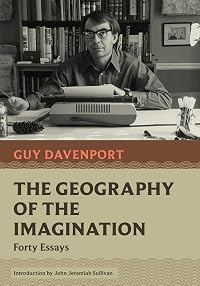
The Geography of the Imagination
by Guy Davenport
On This Page
Description
Forty essays on history, art, and literature from one of the most incisive, and most exhilarating, critical minds of the twentieth century. Guy Davenport was perhaps the last great American polymath. He provided links between art and literature, music and sculpture, modernist poets and classic philosophers, the past and present-and pretty much everything in between. Not only had Davenport seemingly read (and often translated from the original languages) everything in print, he also had the show more ability, expressed with unalloyed enthusiasm, to draw connections between how cultural synapses make, define, and reflect our civilization. In this collection, Guy Davenport serves as the reader's guide through history and literature, pointing out the values and avenues of thought that have shaped our ideas and our thinking. In these forty essays we find fresh thinking on Greek culture, Whitman, Spinoza, Wittgenstein, Melville, Tolkien, Ezra Pound, Wallace Stevens, Charles Olson, Marianne Moore, Eudora Welty, Louis Zukovsky, and many others. Each essay is a tour of the history of ideas and imagination, written with wit and startling erudition. show lessTags
Recommendations






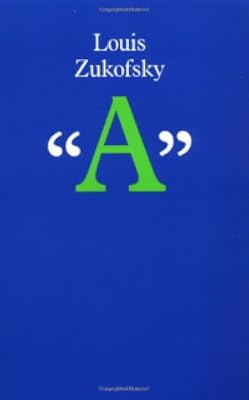


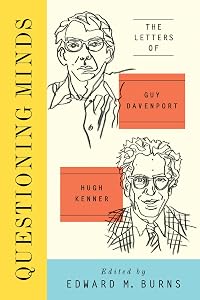
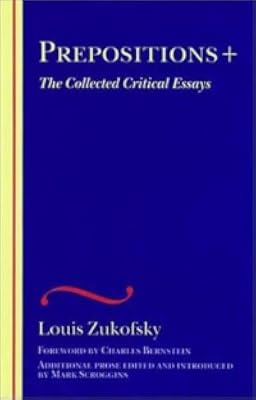
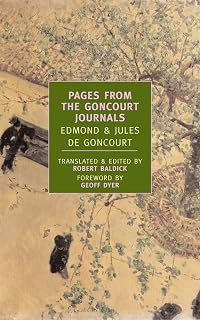
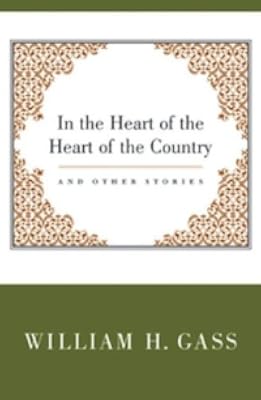

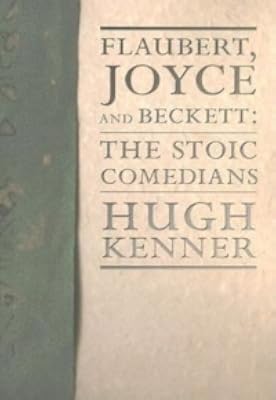




Member Recommendations

Member Reviews
I thoroughly enjoyed reading this excellent book. Although the forty essays collected here deal with a variety of subjects and were written for different occasions, there are several recurrent motifs. These include prehistoric cave paintings at Lescaux and elsewhere and the persistence of the myths of Persephone and Euridice. He is not shy about accolades, naming Louis Zukovsky as the greatest living American poet and Eudora Welty as the greatest prose writer. The modernists loom large, including Yeats, Stevens, and Williams, as well as enduring giants from the past, such as Homer, Poe, and Whitman. And above all, Joyce and Pound.
And the rehabilitation of Louis Agassiz was worth the price of admission.
Another recurring idea is that the show more poet “writes not for himself, but to provide the world with an articulate tongue.” Since Davenport was writing at a time when poets of personal experience (Lowell, Sexton, Plath, for instance) had more public acclaim than poets he championed, I would have liked to have seen him test this assertion on their best work.
Davenport is also an appreciative critic of visual art (pointing to another modern “greatest,” Tcherlitchew). I enjoyed his analysis of Grant Wood’s “American Gothic.”
I found some essays challenging to read, while others were relatively accessible. But all are written in the quiet, assured voice of one who has read widely, thought deeply, and is convinced he has something worthwhile to say. If that sounds elitist, so be it.
Final point: I read the hard-bound first edition. Its production was up to the usual high standards of North Point Press. show less
And the rehabilitation of Louis Agassiz was worth the price of admission.
Another recurring idea is that the show more poet “writes not for himself, but to provide the world with an articulate tongue.” Since Davenport was writing at a time when poets of personal experience (Lowell, Sexton, Plath, for instance) had more public acclaim than poets he championed, I would have liked to have seen him test this assertion on their best work.
Davenport is also an appreciative critic of visual art (pointing to another modern “greatest,” Tcherlitchew). I enjoyed his analysis of Grant Wood’s “American Gothic.”
I found some essays challenging to read, while others were relatively accessible. But all are written in the quiet, assured voice of one who has read widely, thought deeply, and is convinced he has something worthwhile to say. If that sounds elitist, so be it.
Final point: I read the hard-bound first edition. Its production was up to the usual high standards of North Point Press. show less
When Guy Davenport died in Kentucky in January 2005, the United States lost one of its last great men of letters. The experience of reading The Geography of the Imagination is truly a geographic sort of rush-- a "Cortez-seeing-the-Pacific-for-the-first-time" feeling (yes, I *know* who it was, and you know why I'm saying Cortez-- and if you don't, you can find out in Davenport.) In his writing, erudition is worn so lightly it turns into a hang-glider-- to read these essays is to be reminded, palpably and unmistakably, what being learned is *for.*
His was a mind to which nothing was foreign. Davenport wrote fiction, poetry, art and music criticism, and literary essays of wide-ranging and never-failing fascination. His anecdotes from a show more lifetime of studying under those who he admired will inspire and make you guffaw; his surprising connections between cultural moments a thousand years apart will make you blink with wonder.
He will also show you how easy a difficult text is, and how difficult an easy one. Davenport's efforts to create public appreciation and support of poets beyond the mainstream was a labor of love and radical commitment, and every American reader of poetry is indebted to him. It was from Davenport that I first learned who Jonathan Williams and Robert Kelly were, and why to read Lorine Niedecker and Ronald Johnson. He championed the reading of Olson and Zukofsky and will, if you let him, open up Pound's "Cantos" for you in ways that leave mere *explication du texte* rusting on the side of the road.
Davenport had read everything-- read and digested. Not just "Robinson Crusoe," but its two (!) sequels; not just "Moby-Dick," but "Clarel"; not just Thoreau, but Agassiz, Audubon, Muir, and Lewis and Clark. He compared dozens of translations of Homer and himself rendered the poems of Archilochus, Sappho and others; he studied Chinese inspired by Pound and Fenollosa; for Anglo-Saxon he went to learn from J.R.R. Tolkien. His erudition was always at the service of his curiosity, and high- and low-brow meant nothing to him, decades before it was cool to deconstruct a television commercial. In a few pages, sometimes one, his thought may leap like a living spark from O. Henry to James Joyce to Walt Disney, from Charles Ives to Rimbaud to the Lone Ranger; and moreover-- what is all the more refreshing-- *never* with the cuteness or cleverness that poisons "cultural studies" with the malaise of the always-already-passe. Despite his unflagging chastisement of know-nothing anti-intellectualism and laziness, Davenport was an optimist in a way that used to be considered characteristically American; but his enthusiasm extended to everything, old-world, new-world, what may yet be and what never was.
This is to say, that Davenport's great learning was first of all gratitude, which-- glory be to God-- he expressed over and over again in irrepressibly articulate and unfenced prose. Now that he is gone, who is left so catholic in interest and intrepid in craft? There are still a few truly wide-ranging scholars who do write beautiful and soul-changing sentences: George Steiner, Roberto Calasso, Martha Nussbaum, Anne Carson.... but for sheer generosity married to such voracious self-education, making such song and argument as to shake the mind awake and make the heart glad, Davenport was sui generis. We shall not see his like again. show less
His was a mind to which nothing was foreign. Davenport wrote fiction, poetry, art and music criticism, and literary essays of wide-ranging and never-failing fascination. His anecdotes from a show more lifetime of studying under those who he admired will inspire and make you guffaw; his surprising connections between cultural moments a thousand years apart will make you blink with wonder.
He will also show you how easy a difficult text is, and how difficult an easy one. Davenport's efforts to create public appreciation and support of poets beyond the mainstream was a labor of love and radical commitment, and every American reader of poetry is indebted to him. It was from Davenport that I first learned who Jonathan Williams and Robert Kelly were, and why to read Lorine Niedecker and Ronald Johnson. He championed the reading of Olson and Zukofsky and will, if you let him, open up Pound's "Cantos" for you in ways that leave mere *explication du texte* rusting on the side of the road.
Davenport had read everything-- read and digested. Not just "Robinson Crusoe," but its two (!) sequels; not just "Moby-Dick," but "Clarel"; not just Thoreau, but Agassiz, Audubon, Muir, and Lewis and Clark. He compared dozens of translations of Homer and himself rendered the poems of Archilochus, Sappho and others; he studied Chinese inspired by Pound and Fenollosa; for Anglo-Saxon he went to learn from J.R.R. Tolkien. His erudition was always at the service of his curiosity, and high- and low-brow meant nothing to him, decades before it was cool to deconstruct a television commercial. In a few pages, sometimes one, his thought may leap like a living spark from O. Henry to James Joyce to Walt Disney, from Charles Ives to Rimbaud to the Lone Ranger; and moreover-- what is all the more refreshing-- *never* with the cuteness or cleverness that poisons "cultural studies" with the malaise of the always-already-passe. Despite his unflagging chastisement of know-nothing anti-intellectualism and laziness, Davenport was an optimist in a way that used to be considered characteristically American; but his enthusiasm extended to everything, old-world, new-world, what may yet be and what never was.
This is to say, that Davenport's great learning was first of all gratitude, which-- glory be to God-- he expressed over and over again in irrepressibly articulate and unfenced prose. Now that he is gone, who is left so catholic in interest and intrepid in craft? There are still a few truly wide-ranging scholars who do write beautiful and soul-changing sentences: George Steiner, Roberto Calasso, Martha Nussbaum, Anne Carson.... but for sheer generosity married to such voracious self-education, making such song and argument as to shake the mind awake and make the heart glad, Davenport was sui generis. We shall not see his like again. show less
I continue to enjoy essay collections from the '50s, '60s, and '70s (this one a current re-issue). Most of the essays here are very dense. It sometimes felt like Davenport was simply 'erudition dumping' - so many references. But the central argument(s) and idea(s) of each piece always came through. In one of the latter essays, it became apparent that many of the writers he discusses were good friends or, at least, acquaintances. This made me wonder if they are the vital artists he makes them out to be. Still, an enlightening read. One minor complaint with this edition but I hate when the publication date (or year) of each piece isn't provided in any easily identifiable way. Perhaps it is OCD on my part. Recommend.
Dr. Guy Davenport studied at Duke and Oxford, and received his PhD at Harvard in 1961, with a dissertation on Ezra Pound’s poetry. The Geography of the Imagination compiles 40 erudite, closely reasoned essays, and I will readily confess that I have not read all of them. Each piece is filled with such vast background and erudition that, even for a culture vulture like me, it became overwhelming — too much to review. But there is a lot I can tell you:
Grant Wood’s well known and much-parodied painting American Gothic is over-rich with graphic references, according to the professor, from Scots-Presbyterian geometric fabric patterns, to the seven trees being a reference to those of King Solomon’s porch; the style of the house in the show more background gives the piece its title, American Gothic, as it is a classic of the American Gothic Revival style; a bamboo sunscreen on the porch has been purchased from China via Sears Roebuck; it rolls up, and suggests nautical technology applied to the prairie. Davenport takes some length to extoll the eyeglasses, invented in the Thirteenth Century, the same era that the buttonholes came into use in the configuration seen in the painting. The farmer’s modest wife secures her Reformation collar with a cameo brooch which recalls a style from the Sixth Century BCE; she is the product of the ages: she has the hair-do of a Medieval Madonna, and besides the collar and cameo, wears a Nineteenth-Century pinafore. The stock market crash of 1929 has put that look in her eye.
In a piece called “The Symbol of the Archaic,” Davenport points out that in the Western historic scheme“archaic” for more than a millennium meant ancient Greece and Rome. It wasn’t until the 20th Century that science helped the humanities dispel this myopia, and establish the true archaic in cave paintings from 40,000 years ago. He cites Pablo Picasso as one of the principal beneficiaries of this discovery: the artist apparently copied the lines sketched long ago on a wall in a cave in Spain in some of his most famous human figures. From this runway he soars into a discussion of Pablo Neruda and the historian William H. Prescott, who, he says, were “appalled by the brutality with which the indigenous cultures of the Americas were murdered.” References to Melville and the poet Charles Olson on the “ruins of the Second World War,” who in turn was one of the most insightful readers of Melville, whose “Clarel was one of the great (and greatly neglected) meditations on ruins (of Christianity as well as of cultures which he greatly expected he might have found more congenial than his own, if mankind had allowed them to survive)…”
Each essay that I read had these paths and tracings to cultural guides — readers and cognoscenti who understood the great artists — their great observations on culture, morals, antiquity, literature, society, and art, and fed these appreciative insights to those of us (like Professor Davenport), who thirsted for them, and who could explicate and appreciate them and do their bit for the rest of us in their turn.
A side note I have to add: in the piece “The Symbol of the Archaic,” Davenport includes a coinage by Ezra Pound: pejorocracy, ruling by the worst of men. These rulers are put in place because of rampant and willful stupidity, “as it [modernity] has no critical rules for analyzing reality such as the ancient cultures kept bright and sharp.”
Some of my few readers will appreciate literary essays; I eat them up for sustenance. They reach me in ways no other written thing can. I’ve just gleaned a little idea of the topography of the tip of the iceberg here; this review is simple reporting, moreso than my other reviews. Thanks for your support.
https://bassoprofundo1.blogspot.com/2025/09/the-geography-of-imagination-essays-... show less
Grant Wood’s well known and much-parodied painting American Gothic is over-rich with graphic references, according to the professor, from Scots-Presbyterian geometric fabric patterns, to the seven trees being a reference to those of King Solomon’s porch; the style of the house in the show more background gives the piece its title, American Gothic, as it is a classic of the American Gothic Revival style; a bamboo sunscreen on the porch has been purchased from China via Sears Roebuck; it rolls up, and suggests nautical technology applied to the prairie. Davenport takes some length to extoll the eyeglasses, invented in the Thirteenth Century, the same era that the buttonholes came into use in the configuration seen in the painting. The farmer’s modest wife secures her Reformation collar with a cameo brooch which recalls a style from the Sixth Century BCE; she is the product of the ages: she has the hair-do of a Medieval Madonna, and besides the collar and cameo, wears a Nineteenth-Century pinafore. The stock market crash of 1929 has put that look in her eye.
In a piece called “The Symbol of the Archaic,” Davenport points out that in the Western historic scheme“archaic” for more than a millennium meant ancient Greece and Rome. It wasn’t until the 20th Century that science helped the humanities dispel this myopia, and establish the true archaic in cave paintings from 40,000 years ago. He cites Pablo Picasso as one of the principal beneficiaries of this discovery: the artist apparently copied the lines sketched long ago on a wall in a cave in Spain in some of his most famous human figures. From this runway he soars into a discussion of Pablo Neruda and the historian William H. Prescott, who, he says, were “appalled by the brutality with which the indigenous cultures of the Americas were murdered.” References to Melville and the poet Charles Olson on the “ruins of the Second World War,” who in turn was one of the most insightful readers of Melville, whose “Clarel was one of the great (and greatly neglected) meditations on ruins (of Christianity as well as of cultures which he greatly expected he might have found more congenial than his own, if mankind had allowed them to survive)…”
Each essay that I read had these paths and tracings to cultural guides — readers and cognoscenti who understood the great artists — their great observations on culture, morals, antiquity, literature, society, and art, and fed these appreciative insights to those of us (like Professor Davenport), who thirsted for them, and who could explicate and appreciate them and do their bit for the rest of us in their turn.
A side note I have to add: in the piece “The Symbol of the Archaic,” Davenport includes a coinage by Ezra Pound: pejorocracy, ruling by the worst of men. These rulers are put in place because of rampant and willful stupidity, “as it [modernity] has no critical rules for analyzing reality such as the ancient cultures kept bright and sharp.”
Some of my few readers will appreciate literary essays; I eat them up for sustenance. They reach me in ways no other written thing can. I’ve just gleaned a little idea of the topography of the tip of the iceberg here; this review is simple reporting, moreso than my other reviews. Thanks for your support.
https://bassoprofundo1.blogspot.com/2025/09/the-geography-of-imagination-essays-... show less
While the backbone of this collection is its defense and decoding of the great modernists (Joyce, Pound) and early postmodernists (Zukofsky, Olson), the book also forays ceaselessly into all sorts of other areas: Dogon myth, Wittgenstein, Shaker aesthetics, hobbitry, the invention of the buttonhole, Stan Brakhage, and Indian arrowheads, to name but a few. Davenport's true genius is his ability to synthesize: he arranges these disparate subjects into a single staggering design so complete that the book seems to contain no digressions, only elaborations. A thrilling collection; highly recommended.
Our liveliest literary tradition, as usual, is an unknown, even an unsuspected one.
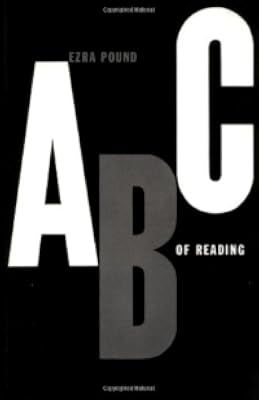
Being fair, I likely rounded up as I think this would've been pristine were it 31 or 32 essays rather than 40. Many reviewers have noted that this is a master class of sorts; well, it is of a certain reading/poetic ideology. Yeah, I used that word. While Davenport confesses to subsisting often on fried bologna, canned soup and candy bars, his reclusive career is one to be celebrated. There may be cost to such a choice. Davenport is a follower of Ezra Pound. This extends to the authors elected to his poetic canon in the [b:ABC of Reading|145108|ABC of Reading|Ezra Pound|https://images.gr-assets.com/books/1347568729s/145108.jpg|140013] and [b:Literary show more Essays of Ezra Pound|145107|Literary Essays of Ezra Pound|Ezra Pound|https://images.gr-assets.com/books/1347579025s/145107.jpg|140012]. This is sort of accepted without question. No need for everyone to learn Provencal but maybe someone should consider the merits of Auden or Gruppe 47?
It was wonderful learning about some new poets: Ronald Johnson features on my immediate horizon and I may now have sufficient impetus to purse Hugh Kenner's magnum opus. Yet questions remain, even-hound. Why exactly Eudora Weltry? I appreciate the situating of her plotlines into a Persephone tradition but still?
Despite the objections, there is much to marvel. I remain unsure of what my immediate course will be. Olsen and Duncan still intimidate but the essay on Whitman is one for the ages. show less
Being fair, I likely rounded up as I think this would've been pristine were it 31 or 32 essays rather than 40. Many reviewers have noted that this is a master class of sorts; well, it is of a certain reading/poetic ideology. Yeah, I used that word. While Davenport confesses to subsisting often on fried bologna, canned soup and candy bars, his reclusive career is one to be celebrated. There may be cost to such a choice. Davenport is a follower of Ezra Pound. This extends to the authors elected to his poetic canon in the [b:ABC of Reading|145108|ABC of Reading|Ezra Pound|https://images.gr-assets.com/books/1347568729s/145108.jpg|140013] and [b:Literary show more Essays of Ezra Pound|145107|Literary Essays of Ezra Pound|Ezra Pound|https://images.gr-assets.com/books/1347579025s/145107.jpg|140012]. This is sort of accepted without question. No need for everyone to learn Provencal but maybe someone should consider the merits of Auden or Gruppe 47?
It was wonderful learning about some new poets: Ronald Johnson features on my immediate horizon and I may now have sufficient impetus to purse Hugh Kenner's magnum opus. Yet questions remain, even-hound. Why exactly Eudora Weltry? I appreciate the situating of her plotlines into a Persephone tradition but still?
Despite the objections, there is much to marvel. I remain unsure of what my immediate course will be. Olsen and Duncan still intimidate but the essay on Whitman is one for the ages. show less
The essays collected hear will point you to writers, poets, and artists that you must have a relationship with. Many are introductions to, or critiques of, the works of others; some are brief biographies; others seem to be simply exceptionally lucid and attentive forays into whatever Davenport was thinking about at the time.
It's difficult to describe this wide-ranging adn erudite collection, but I will say that, after reading all of it, I am left with the nagging desire to spend the rest of my life studying at Davenport's feet. Unfortunately, he's no longer with us, except in collections such as this.
I expect to read these essays over and over, as I try to extract what I can from my reading of the best of literature 9archaic and show more modern), because Davenport touches on so much, and ties so much of the best works together.
Os. show less
It's difficult to describe this wide-ranging adn erudite collection, but I will say that, after reading all of it, I am left with the nagging desire to spend the rest of my life studying at Davenport's feet. Unfortunately, he's no longer with us, except in collections such as this.
I expect to read these essays over and over, as I try to extract what I can from my reading of the best of literature 9archaic and show more modern), because Davenport touches on so much, and ties so much of the best works together.
Os. show less
Members
- Recently Added By
Lists

Favourite Books
1,820 works; 309 members

Michael Dirda's Desert Island Books
62 works; 5 members

Mustich's 1000 Books to Read Before You Die: A Life Changing List
1,001 works; 20 members

Maybe This Year? Books to Look Forward To
412 works; 9 members
Author Information

63+ Works 2,738 Members
Author, artist, literary critic and translator Guy Davenport was born on November 23, 1927 in Anderson, South Carolina. He received his Bachelor of Arts degree from Duke University in 1948 and was selected as a Rhodes Scholar. He earned a Bachelor of Literature from Merton College, Oxford University in 1950 and a Doctor of Philosophy from Harvard show more University in 1961. He taught English at several universities from 1951 until his retirement in 1990. He received numerous awards including the O. Henry Award for short stories, the 1981 Morton Douwen Zabel award for fiction from the American Academy and Institute of Arts and Letters, and translation awards from PEN and the Academy of American Poets. He died on January 4, 2005 in Lexington, Kentucky. (Bowker Author Biography) show less
Some Editions
Awards and Honors
Common Knowledge
- Canonical title
- The Geography of the Imagination
- Original publication date
- 1981
- Dedication
- For Hugh Kenner
- First words
- The difference between the Parthenon and the World Trade Centre, between a French wine glass and a German beer mug, between Bach and John Philip Sousa, between Sophocles and Shakespeare, between a bicycle and a horse, though ... (show all)explicable by historical moment, necessity, and destiny, is before all a difference of imagination.
- Blurbers
- Kenner, Hugh; Steiner, George
Classifications
Statistics
- Members
- 555
- Popularity
- 53,565
- Reviews
- 11
- Rating
- (4.32)
- Languages
- English
- Media
- Paper, Ebook
- ISBNs
- 10
- ASINs
- 3