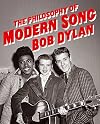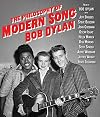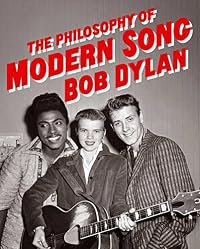
The Philosophy of Modern Song
by Bob Dylan
On This Page
Description
The Philosophy of Modern Song is Bob Dylan's first book of new writing since 2004's Chronicles: Volume One—and since winning the Nobel Prize for Literature in 2016. The audio is narrated by an all-star lineup including Bob Dylan, Jeff Bridges, Steve Buscemi, John Goodman, Oscar Isaac, Helen Mirren, Rita Moreno, Sissy Spacek, Alfre Woodard, Jeffrey Wright, and Renée Zellweger!Dylan, who began working on the book in 2010, offers his extraordinary insight into the nature of popular music. show more He writes over sixty essays focusing on songs by other artists, spanning from Stephen Foster to Elvis Costello, and in between ranging from Hank Williams to Nina Simone. He analyzes what he calls the trap of easy rhymes, breaks down how the addition of a single syllable can diminish a song, and even explains how bluegrass relates to heavy metal. These essays are written in Dylan's unique prose. They are mysterious and mercurial, poignant and profound, and often laugh-out-loud funny. And while they are ostensibly about music, they are really meditations and reflections on the human condition. Running throughout the book are a series of dream-like riffs that, taken together, resemble an epic poem and add to the work's transcendence.
In 2020, with the release of his outstanding album Rough and Rowdy Ways, Dylan became the first artist to have an album hit the Billboard Top 40 in each decade since the 1960s. The Philosophy of Modern Song contains much of what he has learned about his craft in all those years, and like everything that Dylan does, it is a momentous artistic achievement. show less
Tags
Recommendations








Member Reviews
You have to read this book like you would listen to a Bob Dylan song. Don't study it and wait for brilliance and look for the nuggets of awesomeness, although they will be there. Because doing it that way you will struggle through a lot of, "Is this brilliance or nonsense?" Just let it wash over you.
At first I was puzzled, but I just had to get into the groove. Then I felt like I was listening to "Theme Time Radio Hour". I could hear his one-of-a-kind voice rambling through it all.
I think my favorite line is, this being a close paraphrase - people always ask the songwriter what the song is about. If we had had more words to explain it, we would have put them in the song.
While I wish for the purposes of this review that I had bookmarked show more more great one-liners, that would have interfered with my experience. show less
At first I was puzzled, but I just had to get into the groove. Then I felt like I was listening to "Theme Time Radio Hour". I could hear his one-of-a-kind voice rambling through it all.
I think my favorite line is, this being a close paraphrase - people always ask the songwriter what the song is about. If we had had more words to explain it, we would have put them in the song.
While I wish for the purposes of this review that I had bookmarked show more more great one-liners, that would have interfered with my experience. show less
The Philosophy of Modern Song could have been a great book from any of, say, half-a-dozen approaches, none of which Bob Dylan chose. The 20th century's most renowned songwriter could have delivered what the title claimed: he could have investigated seriously the various facets of modern song from a philosophical or artistic perspective. Failing this, he could have written a 'how-to' book similar to Stephen King's On Writing – even a less-than-comprehensive book of this type, from such a distinguished creator, would have ensured sales to aspiring songwriters for a hundred years.
He could have written a retrospective of his own songbook, talking about his influences and ideas and sharing the stories behind their composition. Or, if the show more thought of this seemed too appalling, he could have written widely about the various remarkable songs created by other songwriters, many of whom – the Beatles, Tom Petty, Johnny Cash – he knew personally. He could have written a personal memoir, a sort of hybrid follow-up to 2004's Chronicles with his role as a songwriter as a through-line. He could have even, in the most desperate of my half-dozen proposals, written a frivolous 'My Top Ten/Top 100 Songs' book: it would have been scraping the bottom of the barrel, but from such a personality it could have been fun, and not a complete waste of time for the reader.
Because The Philosophy of Modern Song is largely a waste of time for the reader. The more devoted Dylanologists will work overtime to portray it as a work of exquisite and enigmatic genius – something which, I admit, can be said truly of much of Dylan's other output – but for the rest of us, there will be only a sense of bemusement followed by indifference. As the book settles into its stodgy rhythm, the reader quickly realises there will be no sustained insight or creative originality. The songs chosen vary from old classics of the 1920s and 1930s through to (by my reckoning) a Warren Zevon song from 2003, with a to-be-expected focus on the music of the Forties, Fifties and early Sixties – Dylan's own formative years. There appears to be no real reason behind the choices, nor their sequencing.
It's a bumpy ride, but this would still be forgivable if Dylan's insight was worth it. But his thoughts are not especially original: there's a bit of biographical information about each song/songwriter/singer – usually repeating well-known anecdotes or trivia – and, if you are lucky, maybe a sentence or two where Dylan remembers his remit and comments – tamely – on the composition or artistic spirit of the piece. Sometimes, Dylan omits this thin commentary altogether, but for every piece he begins with an extended, laboured riff which Dylanizes the song's lyrics – presumably to avoid copyright. For example, the entry for the Little Richard song 'Long Tall Sally' omits all commentary and just gives us the following:
"Long Tall Sally was twelve feet tall. She was part of the old biblical days in Samaria from the tribe called the Nephilim. They were giants that lived back before the cataclysm of the flood. You can see shots of these giants' skulls and such. There were people as tall as one-story [sic] buildings. They've uncovered bones of these giants in Egypt and Iraq. And she was built for speed, she could run like a deer. And Uncle John was her counterpart giant. Little Richard is a giant of a different kind, but so as not to freak anybody out he refers to himself as little, so as not to scare anybody." (pg. 263)
That's the entirety of what Dylan has to say about that song. To cover this sort of thing up, the publisher augments this with all the bells and whistles: large text, full-page illustrations and the like. Even here, the book proves an odd duck: photos of Lee Harvey Oswald and Jack Ruby accompany the song 'Ruby, Are You Mad?' by the Osborne Brothers, one of Albert Einstein on the violin accompanies Johnny Paycheck's 'Old Violin', and one of Paul McCartney on a slot machine accompanies 'Viva Las Vegas' (incidentally, Lennon/McCartney don't get any of their songs chosen by Dylan – very few of his contemporaries do). The 'Long Tall Sally' page is illustrated with a Fifties comic of a tall girl who can't get a date – much closer to the spirit of the song than Dylan's nonsense about the Nephilim. (Curiously, I wrote an article about Dylan a little over a year ago which began by discussing the Nephilim…)
The publisher has the gall to call these 'essays', but in truth it smacks of a cash-grab from them, or an easy way out of a contractual obligation from Dylan; a corralling of various notes Dylan might have had lying around since the writing of Chronicles, taken and pasted into a scrapbook of Americana and given the glossy 'premium' look to boost the RRP. Even if the occasional contemporary references – to woke politics, to Make America Great Again, to the 'OK Boomer' meme – prove that Dylan's updated those post-Chronicles notes, there's no sense that he's ever really here with us. Dylan never has a purpose here, and he never really engages with his topic. Consequently, the reader can't either.
At its best, the book provides a few sparks of life and a quotable line or two. The opinion of Dylan carries enough weight that if he says a song is great you want to check it out, and by the end of the book you'll have a big list of songs to listen to. The "essay" on Pete Seeger's 'Waist Deep in the Big Muddy' shows that the book can be entertaining when it wants to be, as it moves from one of Dylan's better introductory riffs to a discussion of lemmings to a potted history of how the song was censored and then increasingly accepted as society's thoughts on Vietnam changed. It ends with an astute plea to our own divided times and our social-media saturation:
"Turns out, the best way to shut people up isn't to take away their forum – it's to give them all their own separate pulpits. Ultimately most folks will listen to what they already know and read what they already agree with. They will devour pale retreads of the familiar and perhaps never get to discover they might have a taste for Shakespeare or flamenco dancing." (pg. 326)
Messages like this, which Dylan provides echoes of throughout the book, would have had greater impact if Dylan wasn't undergoing his own pale retread within. Because at its worst – and The Philosophy of Modern Song is regularly underwhelming – the book raises a disturbing thought: that Dylan isn't that deep. It's not a thought that long outlasts our closing of the book, for we remember how he could write well in Chronicles, and 2020's Rough and Rowdy Ways album showed he still has plenty of creative juice. But it's damning that the thought comes to mind anyway when reading the book. The Philosophy of Modern Song should have been the regal capstone to a career, but instead adds an unsightly scratch or two to the jester's crown. show less
He could have written a retrospective of his own songbook, talking about his influences and ideas and sharing the stories behind their composition. Or, if the show more thought of this seemed too appalling, he could have written widely about the various remarkable songs created by other songwriters, many of whom – the Beatles, Tom Petty, Johnny Cash – he knew personally. He could have written a personal memoir, a sort of hybrid follow-up to 2004's Chronicles with his role as a songwriter as a through-line. He could have even, in the most desperate of my half-dozen proposals, written a frivolous 'My Top Ten/Top 100 Songs' book: it would have been scraping the bottom of the barrel, but from such a personality it could have been fun, and not a complete waste of time for the reader.
Because The Philosophy of Modern Song is largely a waste of time for the reader. The more devoted Dylanologists will work overtime to portray it as a work of exquisite and enigmatic genius – something which, I admit, can be said truly of much of Dylan's other output – but for the rest of us, there will be only a sense of bemusement followed by indifference. As the book settles into its stodgy rhythm, the reader quickly realises there will be no sustained insight or creative originality. The songs chosen vary from old classics of the 1920s and 1930s through to (by my reckoning) a Warren Zevon song from 2003, with a to-be-expected focus on the music of the Forties, Fifties and early Sixties – Dylan's own formative years. There appears to be no real reason behind the choices, nor their sequencing.
It's a bumpy ride, but this would still be forgivable if Dylan's insight was worth it. But his thoughts are not especially original: there's a bit of biographical information about each song/songwriter/singer – usually repeating well-known anecdotes or trivia – and, if you are lucky, maybe a sentence or two where Dylan remembers his remit and comments – tamely – on the composition or artistic spirit of the piece. Sometimes, Dylan omits this thin commentary altogether, but for every piece he begins with an extended, laboured riff which Dylanizes the song's lyrics – presumably to avoid copyright. For example, the entry for the Little Richard song 'Long Tall Sally' omits all commentary and just gives us the following:
"Long Tall Sally was twelve feet tall. She was part of the old biblical days in Samaria from the tribe called the Nephilim. They were giants that lived back before the cataclysm of the flood. You can see shots of these giants' skulls and such. There were people as tall as one-story [sic] buildings. They've uncovered bones of these giants in Egypt and Iraq. And she was built for speed, she could run like a deer. And Uncle John was her counterpart giant. Little Richard is a giant of a different kind, but so as not to freak anybody out he refers to himself as little, so as not to scare anybody." (pg. 263)
That's the entirety of what Dylan has to say about that song. To cover this sort of thing up, the publisher augments this with all the bells and whistles: large text, full-page illustrations and the like. Even here, the book proves an odd duck: photos of Lee Harvey Oswald and Jack Ruby accompany the song 'Ruby, Are You Mad?' by the Osborne Brothers, one of Albert Einstein on the violin accompanies Johnny Paycheck's 'Old Violin', and one of Paul McCartney on a slot machine accompanies 'Viva Las Vegas' (incidentally, Lennon/McCartney don't get any of their songs chosen by Dylan – very few of his contemporaries do). The 'Long Tall Sally' page is illustrated with a Fifties comic of a tall girl who can't get a date – much closer to the spirit of the song than Dylan's nonsense about the Nephilim. (Curiously, I wrote an article about Dylan a little over a year ago which began by discussing the Nephilim…)
The publisher has the gall to call these 'essays', but in truth it smacks of a cash-grab from them, or an easy way out of a contractual obligation from Dylan; a corralling of various notes Dylan might have had lying around since the writing of Chronicles, taken and pasted into a scrapbook of Americana and given the glossy 'premium' look to boost the RRP. Even if the occasional contemporary references – to woke politics, to Make America Great Again, to the 'OK Boomer' meme – prove that Dylan's updated those post-Chronicles notes, there's no sense that he's ever really here with us. Dylan never has a purpose here, and he never really engages with his topic. Consequently, the reader can't either.
At its best, the book provides a few sparks of life and a quotable line or two. The opinion of Dylan carries enough weight that if he says a song is great you want to check it out, and by the end of the book you'll have a big list of songs to listen to. The "essay" on Pete Seeger's 'Waist Deep in the Big Muddy' shows that the book can be entertaining when it wants to be, as it moves from one of Dylan's better introductory riffs to a discussion of lemmings to a potted history of how the song was censored and then increasingly accepted as society's thoughts on Vietnam changed. It ends with an astute plea to our own divided times and our social-media saturation:
"Turns out, the best way to shut people up isn't to take away their forum – it's to give them all their own separate pulpits. Ultimately most folks will listen to what they already know and read what they already agree with. They will devour pale retreads of the familiar and perhaps never get to discover they might have a taste for Shakespeare or flamenco dancing." (pg. 326)
Messages like this, which Dylan provides echoes of throughout the book, would have had greater impact if Dylan wasn't undergoing his own pale retread within. Because at its worst – and The Philosophy of Modern Song is regularly underwhelming – the book raises a disturbing thought: that Dylan isn't that deep. It's not a thought that long outlasts our closing of the book, for we remember how he could write well in Chronicles, and 2020's Rough and Rowdy Ways album showed he still has plenty of creative juice. But it's damning that the thought comes to mind anyway when reading the book. The Philosophy of Modern Song should have been the regal capstone to a career, but instead adds an unsightly scratch or two to the jester's crown. show less
Presumably written as an amusing coda to be included in dutiful PhDs on the late works of Nobel prize winners this is a hollow, irritating and deeply unrewarding book. The prose is execrable, the insights ungiving, the arrogance and cynicism redolent on every page. Many reviewers have turned a blind eye to this and speculated as to light it throws on Dylan's 'body of work': mad pieces of Kremlinology out of which nothing astonishingly can be concluded other than Bob is perhaps even more whimsical in his old age than hitherto. It's all such a waste of time. At least I could listen to 'World Gone Wrong', which may have been the 'answer' to the question some thought this book posed. Playing the songs written about here? An utterly, utterly show more joyless experience. show less
Bob Dylan's The Philosophy of Modern Song is a collection of 66 essays analyzing various popular songs, exploring music as a reflection of the human condition, authenticity, love, and societal struggles, presented with his unique, often witty, prose, dreamlike riffs, and meditations on the "trap of easy rhymes," revealing deep connections between disparate artists (from Stephen Foster to Elvis Costello) and the enduring power of simple, honest expression. It's less a definitive list and more Dylan's personal, profound, and sometimes contradictory journey through the craft, showing how songs reveal enduring themes of perseverance and the quest for meaning in a chaotic world.
Key Themes & Content:
Analysis of Songs: Dylan offers unique show more insights into songs by artists like Hank Williams, Nina Simone, Elvis Costello, and Johnny Cash, focusing on lyrical craft, meaning, and impact.
The Human Condition: The essays are meditations on life, love, freedom, and hardship, showing how songs capture the timeless human search for self and connection.
Critique of Craft: He dissects the mechanics of songwriting, from the dangers of simple rhymes to the power of a single syllable, finding profundity in seemingly simple tunes.
Indeterminacy & Connection: Dylan argues songs are open-ended, their meanings shifting, but they all connect to an "invisible spider web" of human experience, linking genres like bluegrass to heavy metal.
Style: Written in his distinctive, enigmatic style, the book blends poetic intros (dreamlike riffs) with essayistic analysis, creating a personal, sometimes humorous, often profound reading experience.
In essence, it's Dylan's artistic autobiography through other artists' songs, highlighting music's ability to reveal deep truths about life, art, and the enduring spirit of perseverance. show less
Key Themes & Content:
Analysis of Songs: Dylan offers unique show more insights into songs by artists like Hank Williams, Nina Simone, Elvis Costello, and Johnny Cash, focusing on lyrical craft, meaning, and impact.
The Human Condition: The essays are meditations on life, love, freedom, and hardship, showing how songs capture the timeless human search for self and connection.
Critique of Craft: He dissects the mechanics of songwriting, from the dangers of simple rhymes to the power of a single syllable, finding profundity in seemingly simple tunes.
Indeterminacy & Connection: Dylan argues songs are open-ended, their meanings shifting, but they all connect to an "invisible spider web" of human experience, linking genres like bluegrass to heavy metal.
Style: Written in his distinctive, enigmatic style, the book blends poetic intros (dreamlike riffs) with essayistic analysis, creating a personal, sometimes humorous, often profound reading experience.
In essence, it's Dylan's artistic autobiography through other artists' songs, highlighting music's ability to reveal deep truths about life, art, and the enduring spirit of perseverance. show less
In junior high school, I bought a 45 rpm record and gave it to a girl. I did it hoping she would hear the words as mine, even though the voice was Ricky Nelson’s. In time, I lost faith that the sum of all wisdom was on the hit parade.
Bob Dylan’s Philosophy of Modern Song has rekindled that faith. It is amazing and amusing. He mines timeless truths from an ephemeral art form in essay after essay. To name one example: his riff on Edwin Starr’s “War”.
Once more, I confront the rating dilemma. If I give it five stars, those who know me might smile and say, “of course you did; you’ve been a huge Dylan fan for sixty years.” Should I give it fewer to show I’m capable of critical discernment? By midway through the book, I show more thought: “it’s no use; there is so much wisdom in the texts; so much creativity in the choice of songs, which for me balanced the familiar with songs I’d never heard of; and the well-chosen illustrations (even Basil Wolverton!) — I give up, everyone should read this.”
So five stars? Not so quick. The women described here come in one of two varieties: assorted witches and seductresses or open-armed, heart-of-gold women with low self-esteem. The experience of women who are neither (or perhaps a little of both) is missing. In this respect, the philosophy expressed here, for all its broad range and depth of insight, is that of a male. For that alone, I’ll knock a star off my rating of what is otherwise an excellent book. Dare I hope for a companion volume from Joan Baez? show less
Bob Dylan’s Philosophy of Modern Song has rekindled that faith. It is amazing and amusing. He mines timeless truths from an ephemeral art form in essay after essay. To name one example: his riff on Edwin Starr’s “War”.
Once more, I confront the rating dilemma. If I give it five stars, those who know me might smile and say, “of course you did; you’ve been a huge Dylan fan for sixty years.” Should I give it fewer to show I’m capable of critical discernment? By midway through the book, I show more thought: “it’s no use; there is so much wisdom in the texts; so much creativity in the choice of songs, which for me balanced the familiar with songs I’d never heard of; and the well-chosen illustrations (even Basil Wolverton!) — I give up, everyone should read this.”
So five stars? Not so quick. The women described here come in one of two varieties: assorted witches and seductresses or open-armed, heart-of-gold women with low self-esteem. The experience of women who are neither (or perhaps a little of both) is missing. In this respect, the philosophy expressed here, for all its broad range and depth of insight, is that of a male. For that alone, I’ll knock a star off my rating of what is otherwise an excellent book. Dare I hope for a companion volume from Joan Baez? show less
I'm thinking the heavy title is deliberately ironic. Bob is just playing DJ. He picks a lot of different things He riffs on the songs. He has more things to say about some songs than others. Some of the things he says are very interesting in a conversational way. But it's always about the songs -he never lets his Bobness get it the way. He's a listener just like you. You ARE supposed to go listen to the songs - I think that's the main idea!
Past getting you to give a listen, I think his intent with this is to discourage niche culture, and he talks about that. I think that's a worthy enough impulse to justify the book's existence. The selection is decidedly cross genre.
Past getting you to give a listen, I think his intent with this is to discourage niche culture, and he talks about that. I think that's a worthy enough impulse to justify the book's existence. The selection is decidedly cross genre.
The title is a tad tongue in cheek it seems to me. It's a strange collection of "essays" and "riffs" on 62 songs, Dylan writing about both the "facts" behind the song, their authors and recordings, and also his riffs are character sketches, in the 2nd person, about the songs, the way they might make you feel, the way the people singing them feel. Those riffs are like little stories, often without plot, but they really show how Dylan is able to get into a character, and inhabit a character; it's what makes him such a great writer and especially singer.
I saw in a review where someone said these were his "favorite" songs, but I don't find evidence of that; I think it was songs he felt like writing about at a certain time, and songs that show more meant a lot to him, I think in those characters and situations he finds in them. "Should" there have been other songs, other songwriters, mentioned? Maybe, but if you want to read about those other songs, then write about them.
My only complaint about the book is that the audio version (which is really great, with chapters read by both Dylan and a number of actors, all of whom bring their own insights in reading) doesn't include the songs themselves; I would really have loved to see it as kind of an extended version of one of his Theme Time Radio shows.
This is one of the best books I've read this year, and maybe for a long time before that. It's a generous, idiosyncratic book that is well worth having around. I imagine I'll listen to all the songs over the next few weeks as I page back through it. I highly recommend it. show less
I saw in a review where someone said these were his "favorite" songs, but I don't find evidence of that; I think it was songs he felt like writing about at a certain time, and songs that show more meant a lot to him, I think in those characters and situations he finds in them. "Should" there have been other songs, other songwriters, mentioned? Maybe, but if you want to read about those other songs, then write about them.
My only complaint about the book is that the audio version (which is really great, with chapters read by both Dylan and a number of actors, all of whom bring their own insights in reading) doesn't include the songs themselves; I would really have loved to see it as kind of an extended version of one of his Theme Time Radio shows.
This is one of the best books I've read this year, and maybe for a long time before that. It's a generous, idiosyncratic book that is well worth having around. I imagine I'll listen to all the songs over the next few weeks as I page back through it. I highly recommend it. show less
Members
- Recently Added By
Lists

Music
89 works; 1 member

Books Read in 2022
5,164 works; 113 members

Books Read in 2023
5,547 works; 145 members
Author Information

669+ Works 15,894 Members
Bob Dylan was born Robert Allen Zimmerman on May 24, 1941 in Duluth, Minnesota. He is a singer-songwriter and artist. He emerged on the New York music scene in 1961. He has recorded 38 studio albums including Bringing It All Back Home, Highway 61 Revisited, Blonde on Blonde, Blood on the Tracks, Oh Mercy, Time Out Of Mind, Love and Theft, and show more Modern Times. His songs include Blowin' in the Wind, The Times They Are a-Changin', and Like a Rolling Stone. He has published poetry and prose including a collection entitled Tarantula in 1971, a memoir entitled Chronicles: Volume One in 2004, and The Lyrics: 1961-2012 in 2016. He has received numerous awards including eleven Grammy Awards, a Golden Globe Award, and an Academy Award. In 1988, he was inducted into the Rock and Roll Hall of Fame. In 2008, the Pulitzer Prize jury awarded him a special citation for "his profound impact on popular music and American culture, marked by lyrical compositions of extraordinary poetic power." In 2012, he received the Presidential Medal of Freedom from President Barack Obama. In 2016, Dylan received the Nobel Prize in Literature "for having created new poetic expressions within the great American song tradition." (Bowker Author Biography) show less
Some Editions
Awards and Honors
Distinctions
Common Knowledge
- Canonical title*
- Låtskrivarkonsten
- Original publication date
- 2022-11
- Original language*
- Inglese
*Some information comes from Common Knowledge in other languages. Click "Edit" for more information.
Classifications
- Genres
- Music, General Nonfiction, Nonfiction, History, Biography & Memoir
- DDC/MDS
- 782.42 — Arts & recreation Music Vocal music [formerly: Dramatic music and production of musical drama] Secular forms of vocal music Songs
- LCC
- MT67 .D95 — Music Instruction and study Instruction and study Composition. Elements and techniques of music
- BISAC
Statistics
- Members
- 482
- Popularity
- 62,582
- Reviews
- 25
- Rating
- (3.65)
- Languages
- 6 — Dutch, English, Italian, Portuguese, Spanish, Swedish
- Media
- Paper, Audiobook, Ebook
- ISBNs
- 15
- ASINs
- 5