The Secret Countess
by Eva Ibbotson
On This Page
Description
After the Russian Revolution turns her world upside down, Anna, a young Russian countess, has no choice but to flee to England. Penniless, Anna hides her aristocratic background and takes a job as a servant in the household of the esteemed Westerholme family. Anna is overwhelmed by her new duties, and her instant attraction to Rupert, the handsome Earl of Westerholme. To make matters worse, Rupert appears to be falling for her, too. Anna finds it increasingly difficult to keep her secrets show more from unraveling; and then there's the small matter of Rupert's fiancée. show lessTags
Recommendations


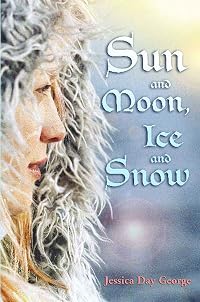
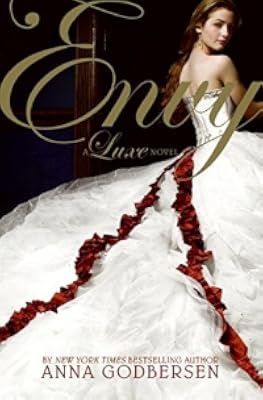
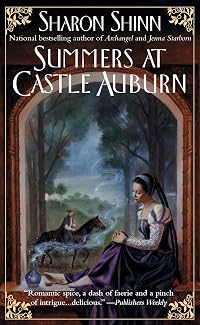
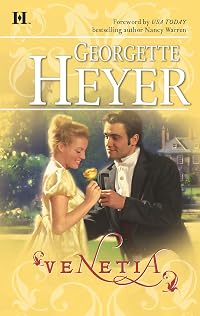
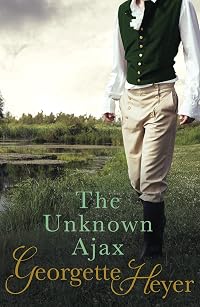
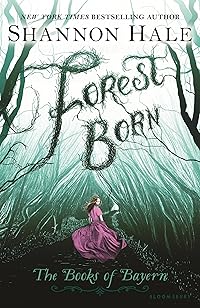

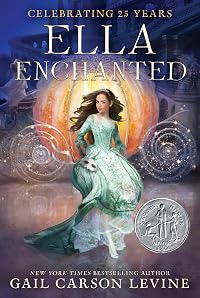
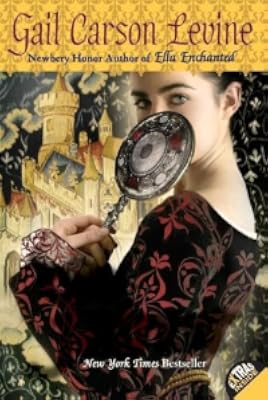
Member Recommendations

Member Reviews
Oh, it's fluff, alright, but such marvellous, hilarious, seductive fluff. What I love about Ibbotson's heroines is that they are rarely considered to be great beauties in their person, and they are utterly bewitching in their personalities. Anna is enchanting -- in her earnestness, in her odd pragmatism and in her wonderful kindness.
I've long been a fan of Eva Ibbotson's novels for younger, middle-grade readers, from the marvelous eco-fantasy, Island of the Aunts (originally published as Monster Island in Britain), to the humorous ghost-story, Dial-a-Ghost, and have been wanting to try one of her more romantic stories for young adults, so I was especially pleased that A Countess Below Stairs was chosen as the November selection, over in the Children's Fiction Club to which I belong. The story of Countess Anna Petrovna Grazinsky, a Russian aristocrat who, along with her family, loses everything to the revolution, and, having fled to England, takes a position as a maid in the home of Rupert Frayne, the Earl of Westerholme, it is a delightful book: romantic without show more being overwhelmed by its romance, full of characters that you either love, or love to hate, and involving enough that the reader will find herself putting off other tasks (I skipped swimming, this past Friday!) in order to finish it.
It has some flaws, of course, already ably set out by other reviewers: the characters are a little one-dimensional, when it comes to virtue and vice, being either very good or very bad; and there are some unexamined prejudices here, from the classism evident in the fact that Uncle Sebastian's groping ways are seen as "harmless" (by the characters that matter), to the depiction of the two overweight Herring children, whose obesity is treated as part of their family's general moral failure. I was definitely aware of these problems, but somehow, the pleasure of reading the story, my affection for the characters, carried me along (hence the four stars, rather than three), and I came away with a desire to read more of Ibbotson's work in this genre. Definitely a winner! show less
It has some flaws, of course, already ably set out by other reviewers: the characters are a little one-dimensional, when it comes to virtue and vice, being either very good or very bad; and there are some unexamined prejudices here, from the classism evident in the fact that Uncle Sebastian's groping ways are seen as "harmless" (by the characters that matter), to the depiction of the two overweight Herring children, whose obesity is treated as part of their family's general moral failure. I was definitely aware of these problems, but somehow, the pleasure of reading the story, my affection for the characters, carried me along (hence the four stars, rather than three), and I came away with a desire to read more of Ibbotson's work in this genre. Definitely a winner! show less
A Countess Below Stairs is a delightful romantic tale that's reminiscent of fairy tales like Cinderella or Anastasia. I thought it was a unique twist to read a story that's set in an English country manor house but told partly from the perspective of the servants below stairs. It gives the book kind of an Upstairs, Downstairs or Downton Abbey vibe. It takes place in approximately the same time period too, immediately following the first World War, which is another unique element. I haven't really read any other stories, romantic or otherwise, that are set in that time. It's also rather rare to find Russian main characters in romance too. It all made for a very enjoyable and lively narrative that was a lot of fun to read.
In her native show more Russia, Anna was practically royalty. She lived a very privileged life growing up, but when the Russian revolution came about and the tsar was overthrown, the aristocracy had to run for their lives. Anna's old nursemaid was sent ahead with the family jewels, but she never made the rendezvous with the family, leaving them to assume that she'd betrayed them. It also made them penniless refugees in their new country of England. Knowing they desperately need money, Anna decides to take a position as a housemaid, against her mother's and former governess's wishes. I really love and admire Anna. She's a truly lovely person who her father nicknamed “Little Candle” or “Little Star,” because of the bright vibrant quality to her personality. She's a very positive person who spreads joy and happiness wherever she goes, and this carries over to her new life as a servant. She's completely unpretentious. I don't know a lot about Russian culture, so whether this was a product of her heritage or simply a part of who she was, I couldn't say, although her cousin also embodied that quality. In any case, despite her lavish upbringing, Anna is very humble, never complains, and isn't afraid of hard work. Everyone seems to love her, and she always knows how to put each person at ease and make them feel special, because she takes the time to get to know and understand them. I enjoyed the exploration in contrasts between Anna and Muriel (the villainess). Both ladies were brought up in similar circumstances, as the daughters of wealthy parents, and yet they have polar opposite attitudes toward those less fortunate.
Rupert, our romantic hero, has just returned from fighting in WWI, where he piloted an airplane and was hailed as a war hero. As a second son, he never expected to become the earl, but he inherited when his older brother was killed in the war. Rupert made a promise to his brother to take care of Mersham, the family estate, if anything ever happened to him, and now feels honor-bound to keep that promise even though he's also inherited a mountain of debt along with the property. While in the hospital recovering from severe injuries sustained when his plane crashed, Rupert fell for his beautiful nurse and before he knew it they were engaged. With little to offer her financially, he probably never would have proposed except that she wormed her way into his life while he an invalid and she's more than sufficiently wealthy to save the family's estate. Unfortunately, he doesn't find out exactly what kind of person she is until she comes to stay at Mersham in the weeks leading up to the wedding, when she's far worse than a bridezilla. I felt really sorry for Rupert. Much like Anna he's a very kind and unpretentious person. I don't know that we get to know Rupert quite as well as Anna, but the one thing about him that really stands out is that he's a true gentleman whose word is his honor. He would never think of breaking it even though it means marrying a woman whom he's come to realize is going to make his life a living hell.
The secondary cast is a colorful and lively bunch. Rupert has very little close family left, but his mother and uncle live at Mersham with him, along with his adorable, snobbish dog who never goes below stairs. There's also, of course, the entire staff of the estate, and I loved every one of them. I felt like I got to know each of them and their circumstances in a way that made me really care about them. Without their care, concern, and meddling, Rupert would have been doomed to a horrible marriage. Then there are Rupert's friends and neighbors who are an eclectic mix of aristocracy and new money. Lastly, was Rupert's fiancée, Muriel, and her mentor, Dr. Lightbody, a leader in the New Eugenics movement, a belief system that was also later espoused by Hitler and the Nazis. Rarely have I ever felt such loathing for a character, villain or otherwise, as I did for Muriel. She's prejudicial in the extreme and carries out her plans for perfection in her new home with a subtle kind of glee that's utterly reprehensible. Each time she does something terrible, I didn't think she could possibly stoop any lower, but then she does something else even worse. I almost wanted her to get an even better comeuppance than what she did, but the trick the butler, Mr. Proom, pulled to get rid of her once and for all was still brilliant and had me grinning from ear to ear.
Most book websites have A Countess Below Stairs categorized as young adult fiction. I'm not entirely sure why this is, except for that fairy tale feel it has. I just read that Eva Ibbotson was surprised by this book and some of her others being repackaged for young adults, because she intended them for an adult audience. To be honest, it's probably more aptly categorized as new adult fiction, because of the ages of the main characters. They aren't star-crossed teenagers. Anna is twenty and although I don't recall Rupert's age ever being mentioned, he seems like he's probably in his early to mid-twenties. In all fairness, though, new adult is a relatively new genre classification that didn't exist back in 1981 when this book was first published, so maybe the YA classification was the closest the publisher could come. In any case, it's perfectly suitable for a YA audience. I only found one bad word in the entire book. There's no violence to speak of, and there's no sex, only chaste kisses. However, there is a little bit of sexual tension, including one scene where Rupert comes upon Anna naked, bathing in a lake, and some tastefully worded references to the sex act in the context of discussion rather than anyone actually doing it. Therefore, IMHO the book would be fine not only for teens but for more sensitive adult readers as well.
I very much enjoyed the ethnic and cultural diversity that's represented in the story. I felt like I learned a little something about pre-revolution Russian culture, which was interesting. Not only do we have Anna and her family from Russia, but one of Mersham's prominent neighbors is a Jewish family. Their daughter has a romance going on in the background with Rupert's best friend, Tom, while Tom's stepmother is an American married to a English aristocrat. I really like how these cultures come together and everyone accepts one another and are friends with everyone else. That is until Muriel upsets the apple cart. Then we get a great lesson in how prejudice can affect people from many different walks of life. Not only does Muriel snub those of other races and cultures, but she also discriminates against the physically disabled, the mentally disabled, and the elderly. Even the muscular, capable, long-time footman at Mersham isn't good enough, because he isn't tall enough to suit her. Basically anyone who doesn't fit her picture of perfection gets left out in the cold. It's a little like a small-scale preview of Nazi Germany a few years down the road.
Overall, I thoroughly enjoyed A Countess Below Stairs, and in some ways, it's kind of odd that I did. This was my first book by Eva Ibbotson, and I quickly discovered that her writing style is very different than most authors I've read. She tends to tell the story from a distance, almost as an omniscient narrator. She doesn't really engage in the deep POV that I typically prefer in my romances, yet I still felt like I knew all the characters fairly well. She more or less skips around to different character's perspectives, which is something that usually drives me crazy, but here I found it charming. Maybe it's because she really has a way with a turn of phrase and her descriptive prose drew me into her setting so that I could see it in my mind's eye. Maybe it was her wonderful cast of characters that was rather large, yet somehow she made me care about each and every one of them. Whatever the reasons, A Countess Below Stairs was an enchanting, feel-good story that engaged my attention and invited me into another world for a little while, one that I'd gladly inhabit if given the chance. I was very impressed by this first foray into Ms. Ibbotson's work and look forward to trying more of her books soon. show less
In her native show more Russia, Anna was practically royalty. She lived a very privileged life growing up, but when the Russian revolution came about and the tsar was overthrown, the aristocracy had to run for their lives. Anna's old nursemaid was sent ahead with the family jewels, but she never made the rendezvous with the family, leaving them to assume that she'd betrayed them. It also made them penniless refugees in their new country of England. Knowing they desperately need money, Anna decides to take a position as a housemaid, against her mother's and former governess's wishes. I really love and admire Anna. She's a truly lovely person who her father nicknamed “Little Candle” or “Little Star,” because of the bright vibrant quality to her personality. She's a very positive person who spreads joy and happiness wherever she goes, and this carries over to her new life as a servant. She's completely unpretentious. I don't know a lot about Russian culture, so whether this was a product of her heritage or simply a part of who she was, I couldn't say, although her cousin also embodied that quality. In any case, despite her lavish upbringing, Anna is very humble, never complains, and isn't afraid of hard work. Everyone seems to love her, and she always knows how to put each person at ease and make them feel special, because she takes the time to get to know and understand them. I enjoyed the exploration in contrasts between Anna and Muriel (the villainess). Both ladies were brought up in similar circumstances, as the daughters of wealthy parents, and yet they have polar opposite attitudes toward those less fortunate.
Rupert, our romantic hero, has just returned from fighting in WWI, where he piloted an airplane and was hailed as a war hero. As a second son, he never expected to become the earl, but he inherited when his older brother was killed in the war. Rupert made a promise to his brother to take care of Mersham, the family estate, if anything ever happened to him, and now feels honor-bound to keep that promise even though he's also inherited a mountain of debt along with the property. While in the hospital recovering from severe injuries sustained when his plane crashed, Rupert fell for his beautiful nurse and before he knew it they were engaged. With little to offer her financially, he probably never would have proposed except that she wormed her way into his life while he an invalid and she's more than sufficiently wealthy to save the family's estate. Unfortunately, he doesn't find out exactly what kind of person she is until she comes to stay at Mersham in the weeks leading up to the wedding, when she's far worse than a bridezilla. I felt really sorry for Rupert. Much like Anna he's a very kind and unpretentious person. I don't know that we get to know Rupert quite as well as Anna, but the one thing about him that really stands out is that he's a true gentleman whose word is his honor. He would never think of breaking it even though it means marrying a woman whom he's come to realize is going to make his life a living hell.
The secondary cast is a colorful and lively bunch. Rupert has very little close family left, but his mother and uncle live at Mersham with him, along with his adorable, snobbish dog who never goes below stairs. There's also, of course, the entire staff of the estate, and I loved every one of them. I felt like I got to know each of them and their circumstances in a way that made me really care about them. Without their care, concern, and meddling, Rupert would have been doomed to a horrible marriage. Then there are Rupert's friends and neighbors who are an eclectic mix of aristocracy and new money. Lastly, was Rupert's fiancée, Muriel, and her mentor, Dr. Lightbody, a leader in the New Eugenics movement, a belief system that was also later espoused by Hitler and the Nazis. Rarely have I ever felt such loathing for a character, villain or otherwise, as I did for Muriel. She's prejudicial in the extreme and carries out her plans for perfection in her new home with a subtle kind of glee that's utterly reprehensible. Each time she does something terrible, I didn't think she could possibly stoop any lower, but then she does something else even worse. I almost wanted her to get an even better comeuppance than what she did, but the trick the butler, Mr. Proom, pulled to get rid of her once and for all was still brilliant and had me grinning from ear to ear.
Most book websites have A Countess Below Stairs categorized as young adult fiction. I'm not entirely sure why this is, except for that fairy tale feel it has. I just read that Eva Ibbotson was surprised by this book and some of her others being repackaged for young adults, because she intended them for an adult audience. To be honest, it's probably more aptly categorized as new adult fiction, because of the ages of the main characters. They aren't star-crossed teenagers. Anna is twenty and although I don't recall Rupert's age ever being mentioned, he seems like he's probably in his early to mid-twenties. In all fairness, though, new adult is a relatively new genre classification that didn't exist back in 1981 when this book was first published, so maybe the YA classification was the closest the publisher could come. In any case, it's perfectly suitable for a YA audience. I only found one bad word in the entire book. There's no violence to speak of, and there's no sex, only chaste kisses. However, there is a little bit of sexual tension, including one scene where Rupert comes upon Anna naked, bathing in a lake, and some tastefully worded references to the sex act in the context of discussion rather than anyone actually doing it. Therefore, IMHO the book would be fine not only for teens but for more sensitive adult readers as well.
I very much enjoyed the ethnic and cultural diversity that's represented in the story. I felt like I learned a little something about pre-revolution Russian culture, which was interesting. Not only do we have Anna and her family from Russia, but one of Mersham's prominent neighbors is a Jewish family. Their daughter has a romance going on in the background with Rupert's best friend, Tom, while Tom's stepmother is an American married to a English aristocrat. I really like how these cultures come together and everyone accepts one another and are friends with everyone else. That is until Muriel upsets the apple cart. Then we get a great lesson in how prejudice can affect people from many different walks of life. Not only does Muriel snub those of other races and cultures, but she also discriminates against the physically disabled, the mentally disabled, and the elderly. Even the muscular, capable, long-time footman at Mersham isn't good enough, because he isn't tall enough to suit her. Basically anyone who doesn't fit her picture of perfection gets left out in the cold. It's a little like a small-scale preview of Nazi Germany a few years down the road.
Overall, I thoroughly enjoyed A Countess Below Stairs, and in some ways, it's kind of odd that I did. This was my first book by Eva Ibbotson, and I quickly discovered that her writing style is very different than most authors I've read. She tends to tell the story from a distance, almost as an omniscient narrator. She doesn't really engage in the deep POV that I typically prefer in my romances, yet I still felt like I knew all the characters fairly well. She more or less skips around to different character's perspectives, which is something that usually drives me crazy, but here I found it charming. Maybe it's because she really has a way with a turn of phrase and her descriptive prose drew me into her setting so that I could see it in my mind's eye. Maybe it was her wonderful cast of characters that was rather large, yet somehow she made me care about each and every one of them. Whatever the reasons, A Countess Below Stairs was an enchanting, feel-good story that engaged my attention and invited me into another world for a little while, one that I'd gladly inhabit if given the chance. I was very impressed by this first foray into Ms. Ibbotson's work and look forward to trying more of her books soon. show less
Note: This book is called The Secret Countess in the U.K.
This very predictable but oh-so-charming Cinderella-like tale with a Russian flavor is a joy to read.
Anna lives a charmed life with her wealthy parents, the Count and Countess Grazinsky in St. Petersburg, until the 1917 Russian Revolution forces them to flee to London. Anna and her mother take refuge with Anna’s former governess, Miss Pinfold, but it is crowded and they are short of funds, so Anna obtains a temporary position at Mersham, the manor house of the Westerholmes. Rupert, the only heir to survive World War I, is coming home, and he has instructed the servants to get the house in shape. Thus, Anna becomes part of the cleaning crew, and in no time endears herself to show more everyone both downstairs and upstairs with her hard work and cheerful disposition.
Rupert, now Earl of Westerholme, returns and brings a surprise with him: Muriel Hardwicke, a fiancé, whom he met while recuperating from a war injury. Muriel is beautiful, but cold and cruel, and in no time alienates everyone, even Rupert, who would never, however, go back on a promise. And in fact, Rupert is becoming more and more fascinated with Anna, even while Muriel is more and more taken with her eugenicist mentor, the evil Dr. Lightbody.
Another family plays a rather large role in this tale: that of the Byrnes, neighbors and friends of the Westerholmes. Tom Byrne is Rupert’s best friend. Tom’s little sister Ollie is everyone’s sweetheart. Tom is in love with a local girl, Susie, from a Jewish family. Tom keeps proposing, and Susie keeps saying no. In my favorite passage of the book, Tom begs to know why she won’t marry him:
"Susie studied him carefully. ‘Tom, have you ever looked at me? At me? Not someone you’ve made up inside your head.”
…’I’m plump now,’ she continued in her level, unemotional voice. ‘In ten years I’ll be fat, however much I diet. I have a hooked nose; most of the time I need glasses. My hair is frizzy and my ear…‘
‘How dare you!’ Tom had seized her shoulders; he was shaking her, hurting her. The famous Byrne temper, scourge of his red-haired ancestors since Doomsday, blazed in his eyes. ‘How dare you talk to me like that! You are insulting me!’
‘What do you mean?’
‘How dare you suppose that I don’t know who you are or what you are? That I don’t understand what I see? Do you take me for some kind of besotted schoolboy? It is unspeakable! You could weigh as much as a hippopotamus and shave your head and wear a wig and it wouldn’t make any difference to me. I never said you were beautiful. I never thought it. I said that you were you.”
The ending comes out as you might think in a Cinderella story, with those assisting the heroine being the downstairs help rather than a fairy godmother or cute little birds and mice.
Evaluation: There are some splendid characters in this book, from Rupert’s lonely old uncle to Anna’s Russian friends and relations, the whole downstairs crew, and even the dog Baskerville: they are all drawn quite fully but with felicitous economy. When Mr. Proom, the head butler at Mersham, explains that he wants to help Rupert be happy because “well, I taught Mr. Rupert to ride a bicycle,” you know everything you need to know about his feelings for Rupert. show less
This very predictable but oh-so-charming Cinderella-like tale with a Russian flavor is a joy to read.
Anna lives a charmed life with her wealthy parents, the Count and Countess Grazinsky in St. Petersburg, until the 1917 Russian Revolution forces them to flee to London. Anna and her mother take refuge with Anna’s former governess, Miss Pinfold, but it is crowded and they are short of funds, so Anna obtains a temporary position at Mersham, the manor house of the Westerholmes. Rupert, the only heir to survive World War I, is coming home, and he has instructed the servants to get the house in shape. Thus, Anna becomes part of the cleaning crew, and in no time endears herself to show more everyone both downstairs and upstairs with her hard work and cheerful disposition.
Rupert, now Earl of Westerholme, returns and brings a surprise with him: Muriel Hardwicke, a fiancé, whom he met while recuperating from a war injury. Muriel is beautiful, but cold and cruel, and in no time alienates everyone, even Rupert, who would never, however, go back on a promise. And in fact, Rupert is becoming more and more fascinated with Anna, even while Muriel is more and more taken with her eugenicist mentor, the evil Dr. Lightbody.
Another family plays a rather large role in this tale: that of the Byrnes, neighbors and friends of the Westerholmes. Tom Byrne is Rupert’s best friend. Tom’s little sister Ollie is everyone’s sweetheart. Tom is in love with a local girl, Susie, from a Jewish family. Tom keeps proposing, and Susie keeps saying no. In my favorite passage of the book, Tom begs to know why she won’t marry him:
"Susie studied him carefully. ‘Tom, have you ever looked at me? At me? Not someone you’ve made up inside your head.”
…’I’m plump now,’ she continued in her level, unemotional voice. ‘In ten years I’ll be fat, however much I diet. I have a hooked nose; most of the time I need glasses. My hair is frizzy and my ear…‘
‘How dare you!’ Tom had seized her shoulders; he was shaking her, hurting her. The famous Byrne temper, scourge of his red-haired ancestors since Doomsday, blazed in his eyes. ‘How dare you talk to me like that! You are insulting me!’
‘What do you mean?’
‘How dare you suppose that I don’t know who you are or what you are? That I don’t understand what I see? Do you take me for some kind of besotted schoolboy? It is unspeakable! You could weigh as much as a hippopotamus and shave your head and wear a wig and it wouldn’t make any difference to me. I never said you were beautiful. I never thought it. I said that you were you.”
The ending comes out as you might think in a Cinderella story, with those assisting the heroine being the downstairs help rather than a fairy godmother or cute little birds and mice.
Evaluation: There are some splendid characters in this book, from Rupert’s lonely old uncle to Anna’s Russian friends and relations, the whole downstairs crew, and even the dog Baskerville: they are all drawn quite fully but with felicitous economy. When Mr. Proom, the head butler at Mersham, explains that he wants to help Rupert be happy because “well, I taught Mr. Rupert to ride a bicycle,” you know everything you need to know about his feelings for Rupert. show less
An impoverished Russian countess, displaced due to the Russian revolution, takes a position as a housemaid in a grand English country home. She is soon beloved by everyone there, upstairs and down -- and even Rupert, the new Earl of Westerholme, is not completely unaware of her charms. However, the arrival of Rupert's fiancee Muriel brings many unwelcome changes to the estate. . . .
This book is delightfully funny and sweet. All of the characters are wonderful, but Anna is the one that really makes the book. She's one of those fictional characters that I really wish I could meet in person -- since I can't, I'm sure I'll be dropping by her book for many more visits in the future!
This book is delightfully funny and sweet. All of the characters are wonderful, but Anna is the one that really makes the book. She's one of those fictional characters that I really wish I could meet in person -- since I can't, I'm sure I'll be dropping by her book for many more visits in the future!
At first this book seemed too sugary-sweet, with Anna the main character too good to be true. Then we meet her foil, the too bad to be believed Muriel.
From this point on it's a battle of nice vs mean, and I found myself enjoying the rest of the book, along with Muriel's ultimate come-upance, largely as a result of her own snobbery.
From this point on it's a battle of nice vs mean, and I found myself enjoying the rest of the book, along with Muriel's ultimate come-upance, largely as a result of her own snobbery.
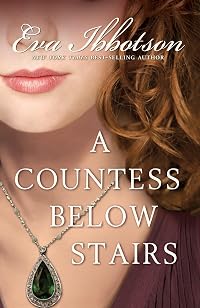
The covers of Ibbotson's books really do not do justice to how good they are. Based on the cover, and the fact that it was in the youth section of the bookstore, I was expecting something along the lines of "nice-but-not-great." I was extremely pleasantly surprised and ended up devouring this book. Ibbotson writes really well, and if she degenerates into sentimentality or cliche every once in a while, her style more than compensates for it. A Countess Below Stairs follows Anna, a Russian countess who grows up pampered in the motherland, but the Russian Revolution forces her and her family to flee to England. To make money for her now-impoverished family, Anna takes a post as a maid at an aristocratic estate, where she quickly endears show more herself to the other staff members - as well as Rupert, the lord of the manor. I thought this was a really sweet, romantic story. Ibbotson does change points of view a lot (a lot; every character, even the most minor, gets to tell part of the story), but it didn't bother me because the transitions were very easy to follow, and the different accounts were able to reveal different aspects of the story. I loved to hate Muriel, Rupert's appalling fiancee (the parts on eugenics were so horrifying they were actually a little bit funny), and the characters in general were very well done. The only one who seemed slightly unbelievable, in fact, was Anna herself - she seems to be a flawless heroine. Sorry for the long review...I just really liked this book! show less
Members
- Recently Added By
Lists

Books about characters you'd like to know
34 works; 15 members

Comfort Reads
221 works; 39 members

Books Read in 2014
2,343 works; 89 members

KayStJ's to-read list
1,616 works; 11 members

Historical Fiction
889 works; 90 members

Books with Noble Titles
179 works; 11 members

Guilty Pleasures
223 works; 86 members
Author Information

40+ Works 22,423 Members
Eva Ibbotson was born in Vienna, Austria, on January 21, 1925. She graduated from Bedford College, London with a degree in physiology in 1945 and the University of Durham with a degree in education in 1965. Her first book, The Great Ghost Rescue, was published in 1975. She primarily wrote children's book and romance novels for adults and young show more adults. Her other works include The Secret of Platform 13, The Star of Kazan, Which Witch?, Island of the Aunts, Dial-a-Ghost, The Ogre of Oglefort, A Company of Swans, and A Song For Summer. She won the Nestlé Smarties Book Prize for Journey to the River Sea. She died on October 20, 2010 at the age of 85. (Bowker Author Biography) show less
Some Editions
Awards and Honors
Awards
Series
Belongs to Publisher Series
blanvalet (35015)
Common Knowledge
- Canonical title
- The Secret Countess
- Original title
- A Countess Below Stairs
- Alternate titles
- A Countess Below Stairs
- Original publication date
- 1981
- People/Characters
- Anna Grazinsky; Ollie Byrne; Rupert Frayne (Earl of Westerholme); Muriel Hardwicke; Cyril Proom; Dr. Lightbody
- Important places
- Wiltshire, England, UK; St Petersburg, Russia
- Dedication
- For Jane
- First words
- In the fabled, glittering world that was St. Petersburg before the First World War there lived, in an ice-blue palace overlooking the river Neva, a family on whom the gods seemed to have lavished their gifts with an almost co... (show all)mical abundance.
- Quotations
- "Rupert, none of your servants are socialists, I hope?"
"Good heavens no, I shouldn't think so. I mean, I haven't asked. Surely you don't have to be a socialist to want to have a bath?"
"It often goes ... (show all)together," said Muriel sagely.
And so they played some of the world's loveliest piano music—the exiled homesick girl, the humiliated, tired old man. Not properly. Better than that. - Last words
- (Click to show. Warning: May contain spoilers.)And Anna smiled and laid her hand lightly on the bright curls, and turned to walk steadily to where Rupert waited: a man who had passed beyond all doubt and uncertainty - a man who had come home.
- Original language
- English
- Disambiguation notice
- This book was first published with the title "A Countess Below Stairs" and later as "The Secret Countess".
Classifications
Statistics
- Members
- 1,900
- Popularity
- 11,270
- Reviews
- 65
- Rating
- (4.00)
- Languages
- 6 — English, French, German, Italian, Spanish, Swedish
- Media
- Paper, Audiobook, Ebook
- ISBNs
- 43
- ASINs
- 9