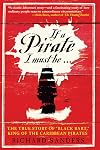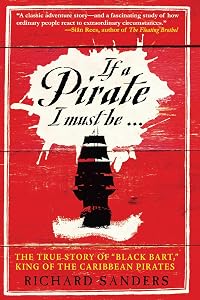
If a Pirate I Must Be...: The True Story of Bartholomew Roberts - King of the Caribbean
by Richard Sanders
On This Page
Description
History. Military. Nonfiction. HTML:In a page-turning tale brimming with adventure, author Richard Sanders tells of the remarkable exploits of Bartholomew Roberts (better known as Black Bart), the greatest of the Caribbean pirates. He drank tea instead of rum. He banned women and gambling on his ships. He never made his prisoners walk the plank, instead inviting them into his cabin for a friendly chat. And during the course of his extraordinary two-and-a-half-year career as a pirate captain, show more he captured four hundred prizes and brought trade in the eastern Caribbean to a standstill. In If a Pirate I Must Be..., Richard Sanders tells the larger-than-life story of Bartholomew Roberts, aka Black Bart. Born in a rural town, Roberts rose from third mate on a slave ship to pirate captain in a matter of months. Before long, his combination of audaciousness and cunning won him fame and fortune from the fisheries of Newfoundland to the slave ports of West Africa. Sanders brings to life a fascinating world of theater and ritual, where men (a third of whom were black) lived a close-knit, egalitarian life, democratically electing their officers and sharing their spoils. They were highly (if surreptitiously) popular with many merchants, with whom they struck incredibly lucrative deals. Yet with a fierce team of Royal Navy pirate hunters tracking his every move, Roberts' heyday would prove a brief one, and with his capture, the Golden Age of pirates would pass into the lore and legend of books and movies. Based on historical records, journals and letters from pirates under Roberts' command, and on writings by Roberts himself, If a Pirate I Must Be... is the true story of the greatest pirate ever to sail the Caribbean.Skyhorse Publishing, along with our Arcade, Good Books, Sports Publishing, and Yucca imprints, is proud to publish a broad range of biographies, autobiographies, and memoirs. Our list includes biographies on well-known historical figures like Benjamin Franklin, Nelson Mandela, and Alexander Graham Bell, as well as villains from history, such as Heinrich Himmler, John Wayne Gacy, and O. J. Simpson. We have also published survivor stories of World War II, memoirs about overcoming adversity, first-hand tales of adventure, and much more. While not every title we publish becomes a New York Times bestseller or a national bestseller, we are committed to books on subjects that are sometimes overlooked and to authors whose work might not otherwise find a home. show less
Tags
Recommendations











Member Recommendations
Member Reviews
Shiver me timbers! Thar be a book worth the read! Arrr!
I had only a small idea what to expect when I picked up If a Pirate I Must Be: The True Story of Black Bart, "King of the Caribbean Pirates" by Richard Sanders. A selection for my book club (known as the Manly Book Club by its members, but more on that another time), it had been described as containing some surprising insights into pirates that weren't commonly known. And this was true: I learned a lot about the men who sailed the seas of the early 18th century.
What's more, I found If a Pirate I Must Be an entertaining, page-turning, and well-written history. Sanders' history of Bartholomew "Black Bart" Roberts feels authentic, well-researched, and accurate. He relies on histories show more and accounts written at the time, including the journals of victims of the pirates, letters between colonial authorities writing to their masters in England beseeching them for relief from the marauders, and other documents of the period, including court testimony of pirates captured and tried.
Black Bart himself did not start out as a pirate, but his story mirrors that of many of the time. An aging sailor on a slaver ship, he was pressed into service when his slave ship was captured by pirates off of the coast of West Africa. Because of his experience as a seaman, he was a prize that an enterprising pirate crew could not pass up--and yet, his story is not unique. Pirates would frequently capture ships and force some number of the captured crew into their own, though often it was unnecessary. Slavers treated their own sailors more poorly than the slaves, because the slaves were worth more. Meanwhile, pirates would appear from over the horizon, capture and board the ship dressed in better clothing, and promise an equal share of gold and rum to any who joined their number. Their government was democratic, and even the captain was elected from among their number, losing his spot at just the vote of the men if they felt he was not guiding them to victory.
And yet, Bart did not go willingly. It would take some time before he would adopt his new place among the pirates, but not long before he was at their head. He would go on to rob the Portuguese treasure fleet off the shores of Brazil, lose all of it to deserters back in the Caribbean (where he would be near-marooned by his crew), and rebuild it all again to become one of the most prolific and successful of pirates of the era.
A few observations, then:
- Piracy, and pirates, looks a lot more like the depictions of Disney and Johnny Depp's "Pirates of the Caribbean" than I would have expected, even down to pirates' sexual ambiguity. Indeed, Sanders history depicts Black Bart as being almost chaste compared to the rest of his crew, though he appears to have developed an extremely close relationship with one of the sailors/passengers of a ship that he captured, the only thing that appears to reflect a romantic relationship that he formed during his reign.
- No one lived long. Whether they died from disease, malnutrition, battle, or any of the myriad of other causes, people were dying fast. Sanders mentions the especially high mortality rate in West Africa, noting that an English doctor had moved his family to a fort to serve a British slaving company there and within just a few months the entire family of six was dead from disease. This appears to be a common scenario of the time.
- In addition to democracy, pirates were incredibly egalitarian and rule based. They drafted and signed articles for each crew to govern their enterprise. Rules included not bringing women on board, each member receiving an equal share of loot (the captain getting a double and the quartermaster and surgeon a share and half), and, on Black Bart's ships, no gambling.
- Punch. These men drank as much, or more, as you've seen depicted in the movies. In fact, [SPOILER ALERT] Bart's fall finally came when he split his crew to pursue what they thought they were pursuing a ship carrying sugar, necessary for making rum.
- The golden age of piracy, extending from about 1715 to 1725, was brief and seems to have been largely due to economic forces around the end of the Spanish - British War that ended directly before. At the end of hostilities, large numbers of men were released from service in the British Navy, and with nowhere else to go, and, no other training or experience, many turned to piracy.
- A lot of the piracy seems to be as much "wink wink nod nod" with merchants working in cahoots with pirates as it was pirates capturing unsuspecting ships. In fact, few appeared to actually have fought back against the pirates. Rather, most seemed to roll over as soon as Black Bart flew out the skull and cross-bones (and yes, they did fly some version of this...several versions, actually).
If a Pirate I Must Be: The True Story of Black Bart, "King of the Caribbean Pirates" is a fun, fascinating, and interesting story. It's an age lost to history, full of pirates distinctly different from those who capture tankers off the coast of East Africa today, probably built out of the economic and historic factors of the age. Sanders has caught the flavor of the era with a history that is enjoyable and gripping to the very end of Black Bart's ignoble end.
show less
I had only a small idea what to expect when I picked up If a Pirate I Must Be: The True Story of Black Bart, "King of the Caribbean Pirates" by Richard Sanders. A selection for my book club (known as the Manly Book Club by its members, but more on that another time), it had been described as containing some surprising insights into pirates that weren't commonly known. And this was true: I learned a lot about the men who sailed the seas of the early 18th century.
What's more, I found If a Pirate I Must Be an entertaining, page-turning, and well-written history. Sanders' history of Bartholomew "Black Bart" Roberts feels authentic, well-researched, and accurate. He relies on histories show more and accounts written at the time, including the journals of victims of the pirates, letters between colonial authorities writing to their masters in England beseeching them for relief from the marauders, and other documents of the period, including court testimony of pirates captured and tried.
Black Bart himself did not start out as a pirate, but his story mirrors that of many of the time. An aging sailor on a slaver ship, he was pressed into service when his slave ship was captured by pirates off of the coast of West Africa. Because of his experience as a seaman, he was a prize that an enterprising pirate crew could not pass up--and yet, his story is not unique. Pirates would frequently capture ships and force some number of the captured crew into their own, though often it was unnecessary. Slavers treated their own sailors more poorly than the slaves, because the slaves were worth more. Meanwhile, pirates would appear from over the horizon, capture and board the ship dressed in better clothing, and promise an equal share of gold and rum to any who joined their number. Their government was democratic, and even the captain was elected from among their number, losing his spot at just the vote of the men if they felt he was not guiding them to victory.
And yet, Bart did not go willingly. It would take some time before he would adopt his new place among the pirates, but not long before he was at their head. He would go on to rob the Portuguese treasure fleet off the shores of Brazil, lose all of it to deserters back in the Caribbean (where he would be near-marooned by his crew), and rebuild it all again to become one of the most prolific and successful of pirates of the era.
A few observations, then:
- Piracy, and pirates, looks a lot more like the depictions of Disney and Johnny Depp's "Pirates of the Caribbean" than I would have expected, even down to pirates' sexual ambiguity. Indeed, Sanders history depicts Black Bart as being almost chaste compared to the rest of his crew, though he appears to have developed an extremely close relationship with one of the sailors/passengers of a ship that he captured, the only thing that appears to reflect a romantic relationship that he formed during his reign.
- No one lived long. Whether they died from disease, malnutrition, battle, or any of the myriad of other causes, people were dying fast. Sanders mentions the especially high mortality rate in West Africa, noting that an English doctor had moved his family to a fort to serve a British slaving company there and within just a few months the entire family of six was dead from disease. This appears to be a common scenario of the time.
- In addition to democracy, pirates were incredibly egalitarian and rule based. They drafted and signed articles for each crew to govern their enterprise. Rules included not bringing women on board, each member receiving an equal share of loot (the captain getting a double and the quartermaster and surgeon a share and half), and, on Black Bart's ships, no gambling.
- Punch. These men drank as much, or more, as you've seen depicted in the movies. In fact, [SPOILER ALERT] Bart's fall finally came when he split his crew to pursue what they thought they were pursuing a ship carrying sugar, necessary for making rum.
- The golden age of piracy, extending from about 1715 to 1725, was brief and seems to have been largely due to economic forces around the end of the Spanish - British War that ended directly before. At the end of hostilities, large numbers of men were released from service in the British Navy, and with nowhere else to go, and, no other training or experience, many turned to piracy.
- A lot of the piracy seems to be as much "wink wink nod nod" with merchants working in cahoots with pirates as it was pirates capturing unsuspecting ships. In fact, few appeared to actually have fought back against the pirates. Rather, most seemed to roll over as soon as Black Bart flew out the skull and cross-bones (and yes, they did fly some version of this...several versions, actually).
If a Pirate I Must Be: The True Story of Black Bart, "King of the Caribbean Pirates" is a fun, fascinating, and interesting story. It's an age lost to history, full of pirates distinctly different from those who capture tankers off the coast of East Africa today, probably built out of the economic and historic factors of the age. Sanders has caught the flavor of the era with a history that is enjoyable and gripping to the very end of Black Bart's ignoble end.
show less
A perfectly serviceable biography of Bartholomew "Black Bart" Roberts. Didn't knock my socks off, and some of the design elements didn't work for my taste, but it's well written and if you like this sort of thing, it may do just fine.
My spree of pirate books leads me to If a Pirate I Must Be, a biography of Bartholomew Roberts, AKA Black Bart, who was, according to the author, the most successful pirate during the Golden Age, who captured about 140 prizes in his two and a half years of operation before his death in battle, or about one per week. It's worth noting that the career of the most successful pirate lasted just two and a half years.
The book is a straightforward telling of Roberts' years as a pirate, with occaisional humourous asides:
"...Anstis proved rather less adept at containing the tensions within a large, successful pirate crew than Roberts and he was soon deposed by a one-handed pirate called John Fenn (sadly, it's not recorded whether Fenn wore a show more hook)."
There is also a handy appendix, with tables listing the names and ages of much of Roberts's crew, and a large list showing the details of the prizes Roberts had won. Maybe this is interesting only to me, but I love detail stuff like this.
A good, fun book, focusing on one of the more interesting characters at the very end of an interesting age. show less
The book is a straightforward telling of Roberts' years as a pirate, with occaisional humourous asides:
"...Anstis proved rather less adept at containing the tensions within a large, successful pirate crew than Roberts and he was soon deposed by a one-handed pirate called John Fenn (sadly, it's not recorded whether Fenn wore a show more hook)."
There is also a handy appendix, with tables listing the names and ages of much of Roberts's crew, and a large list showing the details of the prizes Roberts had won. Maybe this is interesting only to me, but I love detail stuff like this.
A good, fun book, focusing on one of the more interesting characters at the very end of an interesting age. show less
Fascinating. This book examines the society that formed these pirates, as well as the society that the pirates formed.
Full of surprising details and amazing stories, this is a book for anyone who wore an eyepatch.
Full of surprising details and amazing stories, this is a book for anyone who wore an eyepatch.
A true history of pirating around the coast of Africa, the Caribbean, and French territories. The book focusses on Bartholomew Roberts, Black Bart, and the life of the pirate. Also, included is a look at slaving at the beginning of the 1700. The story mostly takes place as Roberts and his pirates plague the shipping lanes and coasts. The story dispells a lot of rumors surrounding pirates at this time. A good, solid read....
Wonderfully written.
This was a very good, interesting, useful book. I took it on my Caribbean cruise to read, and it was an easy read, and even helped me with my own pirate novel! It is a little dry in places, but I gave it 5 starts to try to pull the average up because it deserves more than 4.
Members
- Recently Added By
Lists

Books read in 2025
49 works; 1 member
Author Information
2 Works 285 Members
Some Editions
Common Knowledge
- Canonical title
- If a Pirate I Must Be...: The True Story of Bartholomew Roberts - King of the Caribbean
- Original publication date
- 2007
- People/Characters
- Bartholomew Roberts
- Important places
- Caribbean Sea; Anomabu, Ghana (as Anamaboe, West Africa); Casnewydd Bach, Pembrokeshire, Wales, UK
- Epigraph
- In an honest service there is thin commons, low wages, and hard labour; in this, plenty and satiety, pleasure and ease, liberty and power. No, a merry life and a short one shall be my motto. - Bartholomew Roberts
- Dedication
- For Louis and Charlie, my own pirates
- First words
- The morning of 6 June 1719 found Bartholomew Roberts still an honest sailor - a slaver rather than a pirate.
- Last words
- (Click to show. Warning: May contain spoilers.)It was the greatest slaughter of pirates ever carried out by the Admiralty.
(Click to show. Warning: May contain spoilers.)This was where power now lay in the Atlantic world. - Blurbers
- Rees, Sian
Classifications
- Genres
- Nonfiction, History, General Nonfiction, Biography & Memoir, Travel
- DDC/MDS
- 910.45 — History & geography Geography & travel modified standard subdivisions of Geography and travel Pirates & Shipwrecks Ocean voyages, pirates
- LCC
- G537 .R74 .S36 — Geography, Anthropology and Recreation Geography (General) Adventures, shipwrecks, buried treasure, etc.
- BISAC
Statistics
- Members
- 271
- Popularity
- 118,983
- Reviews
- 9
- Rating
- (3.99)
- Languages
- English
- Media
- Paper, Ebook
- ISBNs
- 9
- ASINs
- 3