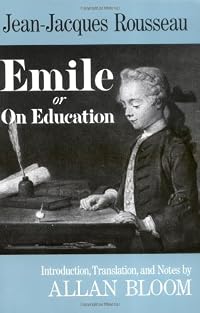
Émile; or, On Education
by Jean-Jacques Rousseau
On This Page
Description
Rousseau wrote about the difficulty of being a good individual within an inherently corrupting collectivity: society. Emile deals specifically with education, and outlines a system which would allow for human goodness. He uses the fictional story of Emile and his tutor to outline his ideas. The book was banned and publicly burned on its publication, but became a European bestseller and provided a basis for new education systems..
Tags
Recommendations


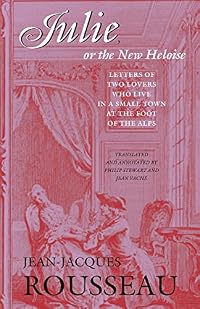
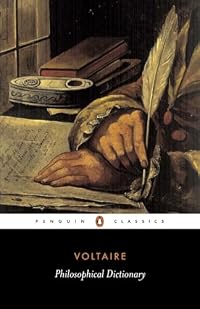
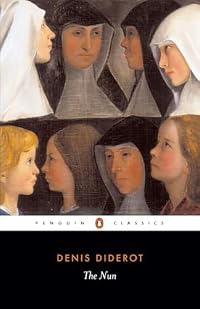
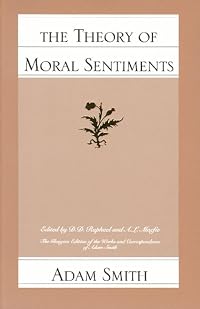






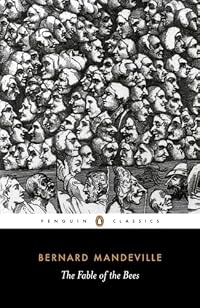
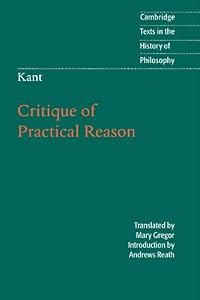
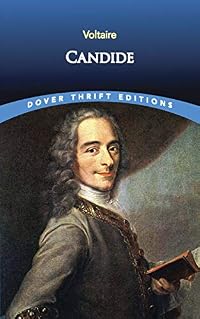
Member Recommendations

Member Reviews
A Huge "Thought Experiment"
Rousseau wants to reform the state of the decadent human institutions of his time. And what best place to start with than by educating people to be good citizens? So the philosopher conceives of a thought experiment where he plays the role of a tutor for more than 20 years of a young scholar named Emile. It's through this experience that we start to grasp the scope of his criticisms, and the way he wants to prepare people for the coming of a new order.
Throughout the text, readers are instilled to think on their own, to come to terms with a new way of thinking Man[kind] from its most profound roots, and how a child must be raised in conformity to nature (his/her nature, as Rousseau conceives it). So the child show more must be raised free, equal to all others around him/her, and connected to all through bonds of natural fraternity. As Emile grows, the goal starts to become more and more clear, as grows the scope of criticisms and reform proposals.
Rousseau shows himself as a very passionate writer, one who's not afraid in taking stances about a wide range of issues. The downside of this is that there are some portions of this book (specially Book IV) that are heavily outdated; nonetheless, with a sober hermeneutical attitude, one can somehow overcome these deficiencies to grasp a higher order of meaning underlying the whole of it (including the heavily time/place-specific context).
With so much to gain from it, this book is must-read, specially if one is interested in philosophy. show less
Rousseau wants to reform the state of the decadent human institutions of his time. And what best place to start with than by educating people to be good citizens? So the philosopher conceives of a thought experiment where he plays the role of a tutor for more than 20 years of a young scholar named Emile. It's through this experience that we start to grasp the scope of his criticisms, and the way he wants to prepare people for the coming of a new order.
Throughout the text, readers are instilled to think on their own, to come to terms with a new way of thinking Man[kind] from its most profound roots, and how a child must be raised in conformity to nature (his/her nature, as Rousseau conceives it). So the child show more must be raised free, equal to all others around him/her, and connected to all through bonds of natural fraternity. As Emile grows, the goal starts to become more and more clear, as grows the scope of criticisms and reform proposals.
Rousseau shows himself as a very passionate writer, one who's not afraid in taking stances about a wide range of issues. The downside of this is that there are some portions of this book (specially Book IV) that are heavily outdated; nonetheless, with a sober hermeneutical attitude, one can somehow overcome these deficiencies to grasp a higher order of meaning underlying the whole of it (including the heavily time/place-specific context).
With so much to gain from it, this book is must-read, specially if one is interested in philosophy. show less
I read this book as research for a writing project of my own. Once finished, I had no idea how I ought to rate it.
There is some brilliant writing here, and I highlighted a lot of eminently quotable passages. Certainly I can understand why the French adore some of Rousseau's ideas about education.
But even if one can get past the irony of Rousseau the child-abandoner writing (in very smug tones!) how the young ought to be raised and educated, there's the little fact that he was sexist above and beyond the call of duty. The thoughts on education that the French praise to the skies are all thoughts on the education of boys. When he does bother to mention girls, he stresses that their education ought to lie in teaching them how to be show more utterly submissive and obedient. Because if you're nice enough to that wife-beater your parents married you off to, he'll stop hitting you. And if he doesn't stop hitting you, well, I guess you weren't nice enough.
The fact that I'm paraphrasing shouldn't lead you to conclude that I'm exaggerating.
Yes, I know Rousseau lived and died in the eighteenth century. So did Mary Wollstonecraft.
So: Read this if you're interested in French history, the history of education, or Rousseau's bizarre life. And don't be fooled by the many people who refer to this book as a novel. It isn't. It's a work in which Rousseau presents his ideas about education, and at a certain point, says, "Let's pretend I was hired to be the tutor of a young man -- say his name is Emile. Here's what that might be like, and here are some conversations I can imagine having with this boy." Rousseau never claimed to be writing a novel. He simply alternates between the autobiographical and the hypothetical. show less
There is some brilliant writing here, and I highlighted a lot of eminently quotable passages. Certainly I can understand why the French adore some of Rousseau's ideas about education.
But even if one can get past the irony of Rousseau the child-abandoner writing (in very smug tones!) how the young ought to be raised and educated, there's the little fact that he was sexist above and beyond the call of duty. The thoughts on education that the French praise to the skies are all thoughts on the education of boys. When he does bother to mention girls, he stresses that their education ought to lie in teaching them how to be show more utterly submissive and obedient. Because if you're nice enough to that wife-beater your parents married you off to, he'll stop hitting you. And if he doesn't stop hitting you, well, I guess you weren't nice enough.
The fact that I'm paraphrasing shouldn't lead you to conclude that I'm exaggerating.
Yes, I know Rousseau lived and died in the eighteenth century. So did Mary Wollstonecraft.
So: Read this if you're interested in French history, the history of education, or Rousseau's bizarre life. And don't be fooled by the many people who refer to this book as a novel. It isn't. It's a work in which Rousseau presents his ideas about education, and at a certain point, says, "Let's pretend I was hired to be the tutor of a young man -- say his name is Emile. Here's what that might be like, and here are some conversations I can imagine having with this boy." Rousseau never claimed to be writing a novel. He simply alternates between the autobiographical and the hypothetical. show less
As one of the earliest, systematic attempts at developing a framework for educating children, *Emile* highlights the timeless question that faces every parent and teacher: what do *I* believe are the most important truths to pass on? To teach another is to define one's own priorities and hierarchies of values. In this sense, education is inherently and unavoidably philosophical -- it is a de facto triage of importance.
*Emile* is classic Rousseau. His devotion to reason as the highest value and his belief in the power of observation and nature to lead us to truth carry a familiar ring in our world -- a world largely shaped by the Enlightenment in which he and others were integral players. At the same time, Rousseau's idea about women and show more their roles in society can, to us, be as offensive as they are anachronistic.
This is a profoundly provocative read for every parent and teacher. While very little in here is particularly relevant to the contemporary education systems of modern, developed countries, Rousseau is wholly preoccupied with a more fundamental question: what kind of people do we hope our students become? If we respond, "We want our children to grow into adults who can think for themselves and act as autonomous, free-thinking agents in the world," Rousseau will retort: "Then why are you so preoccupied with making them parrot back your answers and with forcing them to obey your curriculum? Isn't this implicitly training them to be just exactly the *opposite* of what you want them to become?" show less
*Emile* is classic Rousseau. His devotion to reason as the highest value and his belief in the power of observation and nature to lead us to truth carry a familiar ring in our world -- a world largely shaped by the Enlightenment in which he and others were integral players. At the same time, Rousseau's idea about women and show more their roles in society can, to us, be as offensive as they are anachronistic.
This is a profoundly provocative read for every parent and teacher. While very little in here is particularly relevant to the contemporary education systems of modern, developed countries, Rousseau is wholly preoccupied with a more fundamental question: what kind of people do we hope our students become? If we respond, "We want our children to grow into adults who can think for themselves and act as autonomous, free-thinking agents in the world," Rousseau will retort: "Then why are you so preoccupied with making them parrot back your answers and with forcing them to obey your curriculum? Isn't this implicitly training them to be just exactly the *opposite* of what you want them to become?" show less
A Huge "Thought Experiment"
Rousseau wants to reform the state of the decadent human institutions of his time. And what best place to start with than by educating people to be good citizens? So the philosopher conceives of a thought experiment where he plays the role of a tutor for more than 20 years of a young scholar named Emile. It's through this experience that we start to grasp the scope of his criticisms, and the way he wants to prepare people for the coming of a new order.
Throughout the text, readers are instilled to think on their own, to come to terms with a new way of thinking Man[kind] from its most profound roots, and how a child must be raised in conformity to nature (his/her nature, as Rousseau conceives it). So the child show more must be raised free, equal to all others around him/her, and connected to all through bonds of natural fraternity. As Emile grows, the goal starts to become more and more clear, as grows the scope of criticisms and reform proposals.
Rousseau shows himself as a very passionate writer, one who's not afraid in taking stances about a wide range of issues. The downside of this is that there are some portions of this book (specially Book IV) that are heavily outdated; nonetheless, with a sober hermeneutical attitude, one can somehow overcome these deficiencies to grasp a higher order of meaning underlying the whole of it (including the heavily time/place-specific context).
With so much to gain from it, this book is must-read, specially if one is interested in philosophy. show less
Rousseau wants to reform the state of the decadent human institutions of his time. And what best place to start with than by educating people to be good citizens? So the philosopher conceives of a thought experiment where he plays the role of a tutor for more than 20 years of a young scholar named Emile. It's through this experience that we start to grasp the scope of his criticisms, and the way he wants to prepare people for the coming of a new order.
Throughout the text, readers are instilled to think on their own, to come to terms with a new way of thinking Man[kind] from its most profound roots, and how a child must be raised in conformity to nature (his/her nature, as Rousseau conceives it). So the child show more must be raised free, equal to all others around him/her, and connected to all through bonds of natural fraternity. As Emile grows, the goal starts to become more and more clear, as grows the scope of criticisms and reform proposals.
Rousseau shows himself as a very passionate writer, one who's not afraid in taking stances about a wide range of issues. The downside of this is that there are some portions of this book (specially Book IV) that are heavily outdated; nonetheless, with a sober hermeneutical attitude, one can somehow overcome these deficiencies to grasp a higher order of meaning underlying the whole of it (including the heavily time/place-specific context).
With so much to gain from it, this book is must-read, specially if one is interested in philosophy. show less
The work tackles fundamental political and philosophical questions about the relationship between the individual and society. It discusses how, in particular, the individual might retain what Rousseau saw as innate human goodness while remaining part of a corrupting collectivity. Its opening sentence: “Everything is good as it leaves the hands of the Author of things; everything degenerates in the hands of man.”
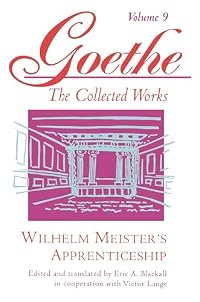
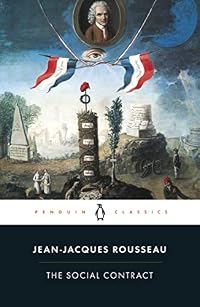
Rousseau seeks to describe a system of education that would enable the natural man he identifies in The Social Contract to survive corrupt society. He employs the story of Emile and his tutor to illustrate how such an ideal citizen might be educated. Emile is scarcely a detailed parenting guide but it does contain some show more specific advice on raising children. It is regarded by some as the first philosophy of education in Western culture to have a serious claim to completeness, as well as being one of the first examples of a Bildungsroman, having preceded Goethe's Wilhelm Meister's Apprenticeship by more than thirty years.
This educational romance by Rousseau describes the up-bringing of the boy, Emile, according to what Rousseau calls the principles of nature. These principles are so extreme as to denigrate the value of civilization, to the detriment of Emile and all who follow Rousseau's principles. This approach does not seem appropriate for modern education. show less
Rousseau seeks to describe a system of education that would enable the natural man he identifies in The Social Contract to survive corrupt society. He employs the story of Emile and his tutor to illustrate how such an ideal citizen might be educated. Emile is scarcely a detailed parenting guide but it does contain some show more specific advice on raising children. It is regarded by some as the first philosophy of education in Western culture to have a serious claim to completeness, as well as being one of the first examples of a Bildungsroman, having preceded Goethe's Wilhelm Meister's Apprenticeship by more than thirty years.
This educational romance by Rousseau describes the up-bringing of the boy, Emile, according to what Rousseau calls the principles of nature. These principles are so extreme as to denigrate the value of civilization, to the detriment of Emile and all who follow Rousseau's principles. This approach does not seem appropriate for modern education. show less
Tough sledding but worth it. Rousseau is grandfather or even father of historicism, a true revolutionary. Now human history is us making ourselves, we think. My take is in my book Five Paradigms.
Rosseau really did think that Nature could do anything (capitalisation his not mine) up to and including showing how males and females should grow and be educated. Certainly an understandable desire considering the time he lived. The education of Sophie, Emile's wife, was only a small part of the book and I am thankful as this was my least favourite section and showed its age the most.
Members
- Recently Added By
Lists

100 Books to Read in a Lifetime (That Are Older Than 200 Years)
415 works; 175 members

Harold Bloom - The Western Canon: B. The Aristocratic Age
231 works; 13 members

Filosofía - Clásicos
217 works; 1 member

1001 Books You Must Read Before You Die
1,448 works; 1,132 members

Trinity College Booklist (1951): Class Two, Social and Psychological Scienc
60 works; 3 members

1,001 BYMRBYD Concensus
723 works; 27 members

Recommended Nature Writing
346 works; 180 members

How to Read a Book's Recommended Reading List
309 works; 10 members

Greatest Books, allegedly
484 works; 9 members

Books Referenced by Izetbegovic's Islam Between East and West
233 works; 2 members

Philosophy, Politics and Economics
61 works; 1 member

In Our Time books
4,934 works; 2 members
Author Information

Jean Jacques Rousseau was a Swiss philosopher and political theorist who lived much of his life in France. Many reference books describe him as French, but he generally added "Citizen of Geneva" whenever he signed his name. He presented his theory of education in Emile (1762), a novel, the first book to link the educational process to a scientific show more understanding of children; Rousseau is thus regarded as the precursor, if not the founder, of child psychology. "The greatest good is not authority, but liberty," he wrote, and in The Social Contract (1762) Rousseau moved from a study of the individual to an analysis of the relationship of the individual to the state: "The art of politics consists of making each citizen extremely dependent upon the polis in order to free him from dependence upon other citizens." This doctrine of sovereignty, the absolute supremacy of the state over its members, has led many to accuse Rousseau of opening the doors to despotism, collectivism, and totalitarianism. Others say that this is the opposite of Rousseau's intent, that the surrender of rights is only apparent, and that in the end individuals retain the rights that they appear to have given up. In effect, these Rousseau supporters say, the social contract is designed to secure or to restore to individuals in the state of civilization the equivalent of the rights they enjoyed in the state of nature. Rousseau was a passionate man who lived in passionate times, and he still stirs passion in those who write about him today. (Bowker Author Biography) show less
Some Editions
Awards and Honors
Series
Belongs to Publisher Series
Work Relationships
Common Knowledge
- Canonical title
- Émile; or, On Education
- Original title
- Émile, ou, De l'éducation
- Alternate titles*
- De la educación
- Original publication date
- 1762
- People/Characters*
- Emile
- First words
- God makes all things good; man meddles with them and they become evil.
- Quotations
- La lecture est le fléau de l'enfance.
L'homme qui a le plus vécu n'est pas celui qui a compté le plus d'années, mais celui qui a le plus senti la vie.
Respectez l'enfance, et ne vous pressez point de la juger, soit en bien, soit en mal. - Last words*
- (Click to show. Warning: May contain spoilers.)Vous avez rempli les vôtres; guidez-moi pour vous imiter; et reposez-vous, il en est temps.
- Original language
- French
*Some information comes from Common Knowledge in other languages. Click "Edit" for more information.
Classifications
Statistics
- Members
- 2,114
- Popularity
- 9,663
- Reviews
- 24
- Rating
- (3.49)
- Languages
- 17 — Catalan, Chinese, Danish, Dutch, English, Estonian, Finnish, French, German, Hungarian, Italian, Japanese, Korean, Norwegian (Bokmål), Portuguese, Spanish, Swedish
- Media
- Paper, Audiobook, Ebook
- ISBNs
- 166
- UPCs
- 1
- ASINs
- 52