On This Page
Description
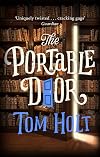
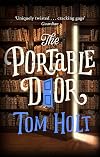
Starting a new job is always stressful, but when Paul Carpenter arrives at the office of H.W. Wells he has no idea what trouble lies in store. Because he is about to discover that the apparently respectable establishment now paying his salary is in fact a front for a deeply sinister organization that has a mighty peculiar agenda. It seems that half the time his bosses are away with the fairies. But they're not, of course. They're away with the goblins.Tags
Recommendations











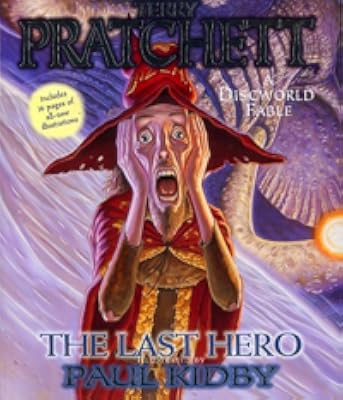
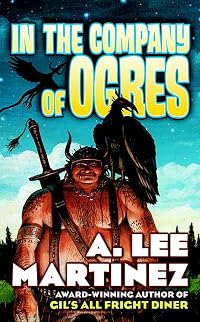

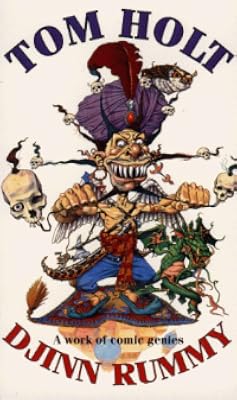
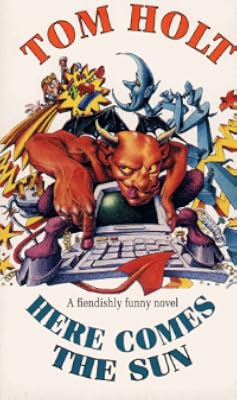
Member Recommendations
by anonymous user

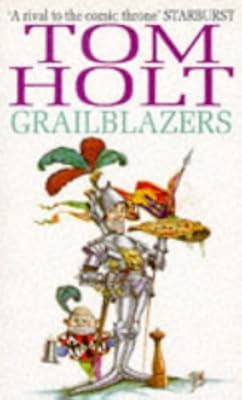
ed.pendragon More shenanigans in the same vein involving changing dimensions and a sword in a stone.
Member Reviews
After thirty years in emergency response and nursing, and a lifetime of being associated with law enforcement people, I like to think I'm somewhat of an expert on snark. What I've learned is that snark has a time and a place, and that too much of it distances us from meaningful interaction, and the people we are trying to convince to care. Its value is in the remark waking others up to possibilities and interpretations: like deconstructionism, it should come with an entrée of a solution. Otherwise, it's just unrelenting peanut gallery commentary throwing up straw barriers to caring.
Tom Holt/K.J. Parker seems to be at the advanced level of snark. If you love his books, I'm happy for you. But you should move along. I'm not show more kidding.
"Furthermore, he suspected that if Mr. Wurmtoter knew a tenth as much about people as he presumably did about dragons, he'd have taken a look at the cold glare in her eye and jumped out of the window. Paul let her go first, and took care to stay several paces behind her all the way back to the office.
Paul had believed in the existence of six a.m. for many years, just as he'd always believed in the yeti and the Loch Ness monster; in the same way, he'd always devoutly hoped that he'd never have to confront any of them face to face. But, somehow or other, he made it to the office door on time, to find Sophie already waiting. She was wearing a suit that had probably belonged to her grandmother, who had kept it for funerals."
The fundamental problem with unrelenting snark is the distancing--verbal social-distancing, if you will. Sure, it's funny, but as a character quips and sarcastically notes his way through his life (and they are usually 'hims'), they are forgoing the possibility of real connection, both to the character and the setting. Used wisely, it can create the aura of world-weary disillusionment in the situation and institutions that surround him. Used poorly, it mostly just seems like an immature character who would rather be funny than thoughtful. It pokes fun rather than illuminates.
I tried The Portable Door because it was first in Holt's urban fantasy-type series, about an everyday man who discovers a talent for magic and gets co-opted into the office managing the surreal. It wasn't available at my library (always a sign), but I thought it a good idea to start the series at the beginning. And oh, what a beginning. So much exposition. Holt has certainly learned his lesson since, as [b:Sixteen Ways to Defend a Walled City|37946419|Sixteen Ways to Defend a Walled City (The Siege, #1)|K.J. Parker|https://i.gr-assets.com/images/S/compressed.photo.goodreads.com/books/1553885082l/37946419._SY75_.jpg|59674245] jumps right into the skirmishes. But reading Door made me feel like I was literally accompanying a young, disillusioned man on his introduction into the magical. Daily. Lots of repetition with very little curiosity, a critical impediment in an urban fantasy which should be introducing the reader to a magical world. "Poor me!" is the refrain through the book, an attitude I have little tolerance for. His rare moments of curiosity and interest are usually about women. It's honestly boring. It's male chick-lit, because I get very little about why I should care about him.
"Paul nodded. 'You bet. I don't like all this weird stuff. On the other hand, I need the job.'
'Same here. If I went home and told them I'd jacked it in, they'd go mad. You know, scenes and melodrama. Give me the weirdness any day.'
Quietly, Paul blessed the thin girl's parents for their attitude; because if she threw in her job, that'd be that, he'd probably never see her again. Mysterious swords and things with claws didn't exactly appeal to him as integral parts of the working environment, but he was damned if he was going to let them come between him and a girl who'd actually smiled at him, twice."
I read in a couple of fits, and finally got solidly distracted at 88%, per my kindle. Had it been a paper book, I would have done a solid skim to the end, but I find that much harder to do with kindle. Yep, that's the kind of tension it had, that one could just be annoyed enough to walk away, even almost to the ending.
So: a main character that is both uninteresting and uninterested; a paucity of magical details and a plethora of needless inner monologue ones; and 'magic' that is basically about a sword in a stone and weirdness in the office means a solid 'meh' read. For those that read in the genre, it's kind of a junior, less well-written, less action-oriented Laundry Files. Good luck. show less
Tom Holt/K.J. Parker seems to be at the advanced level of snark. If you love his books, I'm happy for you. But you should move along. I'm not show more kidding.
"Furthermore, he suspected that if Mr. Wurmtoter knew a tenth as much about people as he presumably did about dragons, he'd have taken a look at the cold glare in her eye and jumped out of the window. Paul let her go first, and took care to stay several paces behind her all the way back to the office.
Paul had believed in the existence of six a.m. for many years, just as he'd always believed in the yeti and the Loch Ness monster; in the same way, he'd always devoutly hoped that he'd never have to confront any of them face to face. But, somehow or other, he made it to the office door on time, to find Sophie already waiting. She was wearing a suit that had probably belonged to her grandmother, who had kept it for funerals."
The fundamental problem with unrelenting snark is the distancing--verbal social-distancing, if you will. Sure, it's funny, but as a character quips and sarcastically notes his way through his life (and they are usually 'hims'), they are forgoing the possibility of real connection, both to the character and the setting. Used wisely, it can create the aura of world-weary disillusionment in the situation and institutions that surround him. Used poorly, it mostly just seems like an immature character who would rather be funny than thoughtful. It pokes fun rather than illuminates.
I tried The Portable Door because it was first in Holt's urban fantasy-type series, about an everyday man who discovers a talent for magic and gets co-opted into the office managing the surreal. It wasn't available at my library (always a sign), but I thought it a good idea to start the series at the beginning. And oh, what a beginning. So much exposition. Holt has certainly learned his lesson since, as [b:Sixteen Ways to Defend a Walled City|37946419|Sixteen Ways to Defend a Walled City (The Siege, #1)|K.J. Parker|https://i.gr-assets.com/images/S/compressed.photo.goodreads.com/books/1553885082l/37946419._SY75_.jpg|59674245] jumps right into the skirmishes. But reading Door made me feel like I was literally accompanying a young, disillusioned man on his introduction into the magical. Daily. Lots of repetition with very little curiosity, a critical impediment in an urban fantasy which should be introducing the reader to a magical world. "Poor me!" is the refrain through the book, an attitude I have little tolerance for. His rare moments of curiosity and interest are usually about women. It's honestly boring. It's male chick-lit, because I get very little about why I should care about him.
"Paul nodded. 'You bet. I don't like all this weird stuff. On the other hand, I need the job.'
'Same here. If I went home and told them I'd jacked it in, they'd go mad. You know, scenes and melodrama. Give me the weirdness any day.'
Quietly, Paul blessed the thin girl's parents for their attitude; because if she threw in her job, that'd be that, he'd probably never see her again. Mysterious swords and things with claws didn't exactly appeal to him as integral parts of the working environment, but he was damned if he was going to let them come between him and a girl who'd actually smiled at him, twice."
I read in a couple of fits, and finally got solidly distracted at 88%, per my kindle. Had it been a paper book, I would have done a solid skim to the end, but I find that much harder to do with kindle. Yep, that's the kind of tension it had, that one could just be annoyed enough to walk away, even almost to the ending.
So: a main character that is both uninteresting and uninterested; a paucity of magical details and a plethora of needless inner monologue ones; and 'magic' that is basically about a sword in a stone and weirdness in the office means a solid 'meh' read. For those that read in the genre, it's kind of a junior, less well-written, less action-oriented Laundry Files. Good luck. show less
Tom Holt has a great talent for writing little witticisms interspersed throughout the story ("Paul wouldn't have been able to tell a Vermeer from an optician's chart") and insightful philosophies that he shares as pithy little vignettes (In contemplation of chucking unsatisfactory employment ~ "it had taken him a very long time to find anybody who was prepared to trade him money for a part of his lifespan").
It is a Good Thing there are these light-hearted interludes because the story is glacial with next to no engaging characters or a discernible plot until well-near the end. The portable door concept was brilliant fun, however, for my tastes, Holt can't hold a candle to Terry Pratchett.
It is a Good Thing there are these light-hearted interludes because the story is glacial with next to no engaging characters or a discernible plot until well-near the end. The portable door concept was brilliant fun, however, for my tastes, Holt can't hold a candle to Terry Pratchett.
I should have like this book, the book was well written, and in the style I like, but I found the characters to be a bit too whiny and unlikeable for my taste. I really liked the goblins though - absolutely wonderful characters!
Paul Carpenter is a hapless loser very much in the tradition of Arthur Dent, the type of man who, when confronted with a sword in a stone, doesn't even consider for an instant trying to pull it out. For the first few chapters his haplessness is less sympathetic than Dent's; after all, Arthur Dent did have the world blown up out from under him, which tends to be a bit disorienting, while Paul initially has no such excuse; his main challenge is dealing with a new job at J.W. Wells & Co.
Before long, of course, Paul realizes that the mind-numbing tedium of his spreadsheet-sorting junior clerk's job is only a facade, and that the real business of J.W. Wells is very odd indeed, and that there's a reason why the receptionist seems to be show more somebody different every day. Meanwhile, he's falling in love with his prickly co-worker Sophie, who seems to have no interest in him whatsoever.
The book is a bit slow getting started. Give it at least three chapters if you're dubious; that's when the weirdness starts. While it's billed as humorous, it's more in the "amusing absurd" vein than laugh-out-loud; it was certainly entertaining. show less
Before long, of course, Paul realizes that the mind-numbing tedium of his spreadsheet-sorting junior clerk's job is only a facade, and that the real business of J.W. Wells is very odd indeed, and that there's a reason why the receptionist seems to be show more somebody different every day. Meanwhile, he's falling in love with his prickly co-worker Sophie, who seems to have no interest in him whatsoever.
The book is a bit slow getting started. Give it at least three chapters if you're dubious; that's when the weirdness starts. While it's billed as humorous, it's more in the "amusing absurd" vein than laugh-out-loud; it was certainly entertaining. show less
I've come late to the Tom Holt party, but I'm glad I finally made it. This is the first book of his that I have read and I definitely intend to try more.
It is the story of Paul Carpenter, and how he takes a mysterious job in a mysterious firm where mysterious goings-on occur. I found it always interesting, a nice quick read and lightly humourous. I wouldn't say there were many laugh out loud moments, but I chuckled more than once or twice!
I think one of my favourite passages can best sum up the wit and wryly weird writing that Tom Holt employs: "There's this to be said for being hungover; if you've got a job to do that involves substantial levels of ambient weirdness, it helps, because you can't be bothered to notice stuff that under show more other circumstances would come close to frying your synapses. Treasure maps; Czarist bonds; a case of stuffed dodos; Scarlett O'Hara's birth certificate; two flattened and deformed silver bullet heads in an old matchbox; Baedeker's guide to Atlantis (seventeenth edition, 1902); the autograph score of Schubert's Unfinished Symphony with Das Ende written neatly at the foot of the last page; three boxes of moon rocks...." and so it continues in this vein.
I enjoyed the fact that Tom Holt is clever in his writing and assumes that you, too, must be clever because the vocabulary used is superb and had me scratching my head a few times.
The characterisation is brief but effective - through simple repetition we know that Paul is a bit of a loser, but with a good heart, while Sophie is a prickly but ultimately likeable character. The various partners of the firm they join are wildly entertaining.
My main criticism is with the pacing of the book. The first half of it went fairly slowly, as befits the unfolding of a mystery, but the last third was breathlessly fast and tied up very neatly.
Other than that, this was a fine book and I look forward to more of Holt's work. show less
It is the story of Paul Carpenter, and how he takes a mysterious job in a mysterious firm where mysterious goings-on occur. I found it always interesting, a nice quick read and lightly humourous. I wouldn't say there were many laugh out loud moments, but I chuckled more than once or twice!
I think one of my favourite passages can best sum up the wit and wryly weird writing that Tom Holt employs: "There's this to be said for being hungover; if you've got a job to do that involves substantial levels of ambient weirdness, it helps, because you can't be bothered to notice stuff that under show more other circumstances would come close to frying your synapses. Treasure maps; Czarist bonds; a case of stuffed dodos; Scarlett O'Hara's birth certificate; two flattened and deformed silver bullet heads in an old matchbox; Baedeker's guide to Atlantis (seventeenth edition, 1902); the autograph score of Schubert's Unfinished Symphony with Das Ende written neatly at the foot of the last page; three boxes of moon rocks...." and so it continues in this vein.
I enjoyed the fact that Tom Holt is clever in his writing and assumes that you, too, must be clever because the vocabulary used is superb and had me scratching my head a few times.
The characterisation is brief but effective - through simple repetition we know that Paul is a bit of a loser, but with a good heart, while Sophie is a prickly but ultimately likeable character. The various partners of the firm they join are wildly entertaining.
My main criticism is with the pacing of the book. The first half of it went fairly slowly, as befits the unfolding of a mystery, but the last third was breathlessly fast and tied up very neatly.
Other than that, this was a fine book and I look forward to more of Holt's work. show less
Tom Holt is a respected comic fantasy writer, whose only other work I was previously aware of was Who’s Afraid of Beowulf? So I was pleased to have this novel recommended to me, if only to see if Holt’s inventiveness extends just to witty parodic titles like Faust Among Equals, Paint Your Dragon and Grailblazers.
The answer is, it doesn’t. This is a rich smorgasbord of a book, amusing and thoughtful at the same time. The hero, Paul Carpenter, goes for interview at the distinctly dodgy firm of J W Wells & Co where he meets the apparently mind-reading Sophie, and their world is turned on its head by what they uncover there. You know that something is not quite right when Paul goes home one night and can’t help noticing “the very show more large block of stone resting halfway between the washbasin and the bed, and the very large, shiny double-handed sword that was stuck in it”. There are other Arthurian echoes too in the very Tristan und Isolde love philtre, though Gilbert & Sullivan operetta rather than Wagnerian music-drama is the relevant influence here: the firm of J W Wells & Co and the love-potion theme are apparently both borrowed from the duo’s 1877 collaboration The Sorcerer.
The door of the title is a neat conceit (as well as linguistic pun: the Latin for ‘gate’ is porta) though on occasion it seems to lead to logical non-sequiturs, even for a comic fantasy novel. Still, while both plotting and characterisation are lively I’m less certain whether I’d now be tempted by the sequel In Your Dreams and its successors and the prospect of yet more sustained whimsy. Maybe in due course.
http://calmgrove.wordpress.com/2012/12/13/portable/ show less
The answer is, it doesn’t. This is a rich smorgasbord of a book, amusing and thoughtful at the same time. The hero, Paul Carpenter, goes for interview at the distinctly dodgy firm of J W Wells & Co where he meets the apparently mind-reading Sophie, and their world is turned on its head by what they uncover there. You know that something is not quite right when Paul goes home one night and can’t help noticing “the very show more large block of stone resting halfway between the washbasin and the bed, and the very large, shiny double-handed sword that was stuck in it”. There are other Arthurian echoes too in the very Tristan und Isolde love philtre, though Gilbert & Sullivan operetta rather than Wagnerian music-drama is the relevant influence here: the firm of J W Wells & Co and the love-potion theme are apparently both borrowed from the duo’s 1877 collaboration The Sorcerer.
The door of the title is a neat conceit (as well as linguistic pun: the Latin for ‘gate’ is porta) though on occasion it seems to lead to logical non-sequiturs, even for a comic fantasy novel. Still, while both plotting and characterisation are lively I’m less certain whether I’d now be tempted by the sequel In Your Dreams and its successors and the prospect of yet more sustained whimsy. Maybe in due course.
http://calmgrove.wordpress.com/2012/12/13/portable/ show less
The best comic fantasy novel that I've read recently. It works well as a fantasy rather than just being a series of jokes strung together.
Our hero Paul and the spiky Sophie somehow land jobs as junior clerks at J. W. Wells & Co, despite the world's worst job interviews. They have no idea what the company does, but soon become aware of an atmosphere of ambient weirdness.
Our hero Paul and the spiky Sophie somehow land jobs as junior clerks at J. W. Wells & Co, despite the world's worst job interviews. They have no idea what the company does, but soon become aware of an atmosphere of ambient weirdness.
Members
- Recently Added By
Author Information

67+ Works 15,179 Members
Some Editions
Series

Work Relationships
Is contained in
Has the adaptation
Common Knowledge
- Canonical title
- The Portable Door
- Original publication date
- 2003
- People/Characters
- Paul Carpenter; John W. Wells; Humphrey Wells; Professor Theodorus Van Spee; The Contessa Judith di Castel'Bianco; Lt. Col. Dietrich Wurmtoter (show all 9); Dennis Tanner; Sophie Pettingell; Rosie Catherwood-Tanner (Goblin)
- Important places
- London, England, UK; England, UK
- Related movies
- The Portable Door (2023 | IMDb)
- Dedication
- For Kim, Natalie and Melanie Anne: with love
- First words
- After a very long time, the door opened, and the tall, Aryan-looking bloke came out.
- Quotations
- Not for the first time in his life, Paul cursed heaven for not letting him in on the secret, the secret that everybody else was in on except him. If he only knew, he was sure, he'd be able to cope, it's all be so easy. (p.3... (show all)5)
Practically anything in the world becomes suddenly credible if you tag the magic words doing it for tax reasons on the end. (p.163) - Last words
- (Click to show. Warning: May contain spoilers.)'Wouldn't that be something?' he said, taking the top off the cardboard tube that contained the portable door.
Classifications
Statistics
- Members
- 954
- Popularity
- 27,744
- Reviews
- 24
- Rating
- (3.60)
- Languages
- English, Polish
- Media
- Paper, Audiobook, Ebook
- ISBNs
- 11
- ASINs
- 8