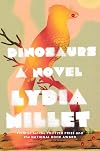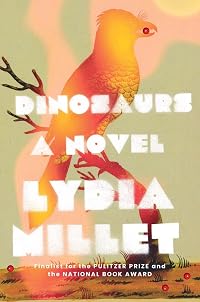
Dinosaurs
by Lydia Millet
On This Page
Description
"A stunning new novel from the author of A Children's Bible, a National Book Award finalist and one of the New York Times 10 Best Books of 2020. Over twelve novels and two collections Lydia Millet has emerged as a major American novelist. Hailed as "a writer without limits" (Karen Russell) and "a stone-cold genius" (Jenny Offill), Millet makes fiction that vividly evokes the ties between people and other animals and the crisis of extinction. Her exquisite new novel is the story of a man show more named Gil who walks from New York to Arizona to recover from a failed love. After he arrives, new neighbors move into the glass-walled house next door and his life begins to mesh with theirs. In this warmly textured, drily funny, and philosophical account of Gil's unexpected devotion to the family, Millet explores the uncanny territory where the self ends and community begins-what one person can do in a world beset by emergencies. Dinosaurs is both sharp-edged and tender, an emotionally moving, intellectually resonant novel that asks: In the shadow of existential threat, where does hope live?"-- show lessTags
Recommendations



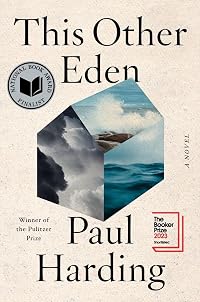
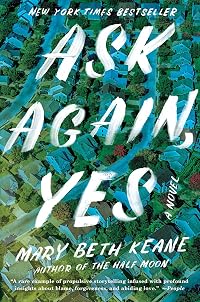





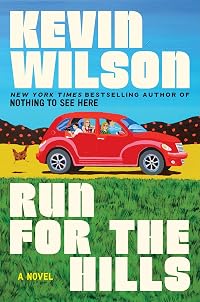
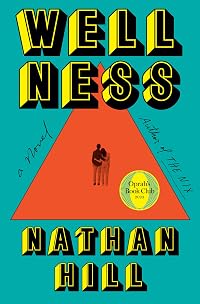






Member Reviews
This novel asks us to consider how we should live in the world, in relation to each other and to the world itself, at this moment when it feels as though humanity is winding down. But this isn't a tiresome or self-righteous sermon, but a genuine question filtered through the life of one man. Gil was born into wealth, but raised in both material and emotional austerity. As an adult, he struggles with how to behave toward others and what his purpose is, given that he will never have to earn a living. At the start of the story, he has sold his Manhattan apartment and walked to Phoenix, Arizona, where he has bought a house. The novel describes the work he has found for himself and the close relationship his forms with the family next door. show more
This is a quiet novel and a departure from Millet's last few novels, being without the Biblical allusions and drama. It's also beautifully written and a huge enjoyment to read. show less
This is a quiet novel and a departure from Millet's last few novels, being without the Biblical allusions and drama. It's also beautifully written and a huge enjoyment to read. show less
DINOSAURS
One of the most pointless books I have ever read.
Gil is an obscenely wealthy trust-fund baby who has too much money, too much time on his hands, and too much self-pity. Unfortunately, he doesn’t have a lot of brains. Bored and disillusioned with his life, he walks all the way from New York to Arizona to build a new life. While in Arizona, he makes friends with some neighbors, enemies with some others, watches some birds, gets rejected by a trove of volunteer organizations to which he has heavily contributed, and—along the way—also gets saddled with a pushy girlfriend. And that’s about it. Wuthering Heights this is not.
Aside from having nothing of interest going on, this book has absolutely nothing to say—lest it be show more that rich people have problems, too. Though, quite frankly, having to unwillingly host a catered party or deal with the retirement of one’s longtime financial advisor hardly classify as legitimate problems.
Gil does frequently get taken advantage of and used by people who are out to get his money; however, Gil willingly allows these people to take advantage of him, so it’s pretty much impossible to feel any sympathy for him on that account.
Really, it’s impossible to like or empathize with (or even be interested in) the protagonist at all. Gil is nothing more than a bored & whiny, middle-aged one-percenter with no clear direction in life. However, to cancel out that obnoxious fact, the author repeatedly takes great pains to point out that Gil is a fiercely liberal progressive & Hillary Clinton enthusiast; therefore—the author clearly assumes— the reader is morally obligated to pretend to like him.
In his progressive righteousness, Gil even takes down a Nazi! Well, not really. He sees what appears to be a swastika tattoo on the arm of a karate instructor, & lodges a complaint with the dojo secretary—from behind the safety of a glass partition, of course. Gil is nothing if not a stalwart, albeit rather cowardly, epitome of moral rectitude. I mean what could be more inspirational than some rich twat going out of his way to get some poor slob fired from a job simply because the rich twat catches a glimpse of a tattoo he believes represents something he doesn’t like. Our hero!
I just can’t imagine why anyone thought that writing such a time-waster of a book was a good idea. The protagonist is ridiculously unlikable and unsympathetic. The action, if one can call it that, is negligible—if not completely nonexistent. And the author takes over 200 pages to say absolutely nothing.
‘Books’ like this make me wonder why I even bother reading anymore. show less
One of the most pointless books I have ever read.
Gil is an obscenely wealthy trust-fund baby who has too much money, too much time on his hands, and too much self-pity. Unfortunately, he doesn’t have a lot of brains. Bored and disillusioned with his life, he walks all the way from New York to Arizona to build a new life. While in Arizona, he makes friends with some neighbors, enemies with some others, watches some birds, gets rejected by a trove of volunteer organizations to which he has heavily contributed, and—along the way—also gets saddled with a pushy girlfriend. And that’s about it. Wuthering Heights this is not.
Aside from having nothing of interest going on, this book has absolutely nothing to say—lest it be show more that rich people have problems, too. Though, quite frankly, having to unwillingly host a catered party or deal with the retirement of one’s longtime financial advisor hardly classify as legitimate problems.
Gil does frequently get taken advantage of and used by people who are out to get his money; however, Gil willingly allows these people to take advantage of him, so it’s pretty much impossible to feel any sympathy for him on that account.
Really, it’s impossible to like or empathize with (or even be interested in) the protagonist at all. Gil is nothing more than a bored & whiny, middle-aged one-percenter with no clear direction in life. However, to cancel out that obnoxious fact, the author repeatedly takes great pains to point out that Gil is a fiercely liberal progressive & Hillary Clinton enthusiast; therefore—the author clearly assumes— the reader is morally obligated to pretend to like him.
In his progressive righteousness, Gil even takes down a Nazi! Well, not really. He sees what appears to be a swastika tattoo on the arm of a karate instructor, & lodges a complaint with the dojo secretary—from behind the safety of a glass partition, of course. Gil is nothing if not a stalwart, albeit rather cowardly, epitome of moral rectitude. I mean what could be more inspirational than some rich twat going out of his way to get some poor slob fired from a job simply because the rich twat catches a glimpse of a tattoo he believes represents something he doesn’t like. Our hero!
I just can’t imagine why anyone thought that writing such a time-waster of a book was a good idea. The protagonist is ridiculously unlikable and unsympathetic. The action, if one can call it that, is negligible—if not completely nonexistent. And the author takes over 200 pages to say absolutely nothing.
‘Books’ like this make me wonder why I even bother reading anymore. show less
I've read 4-5 of Lydia Millet's 12 novels, and she is a sometimes hit sometimes miss author for me. I've loved some of her books, and disliked others. But she is always an author whose work I am willing to try. Her plots and themes are varied and interesting, and she almost always writes very well indeed. I had an initial inclination not to pick up this book because reviews often described it as a book in which a man walks from N. Y. City to Phoenix, making it sound somewhat like a picaresque novel which I am not particularly interested in. But on the recommendations of several LTers, I finally picked it up, and I'm glad I did.
As the novel opens, the main character Gil is living in NYC. He is extremely wealthy but doesn't want anyone to show more know. For a while, he works a normal job, until he decides that by working he might be taking a job away from someone who really needs it. Thereafter, he limits his "work" to volunteer activities. He has a long-term girlfriend, who one day without warning leaves him. She "ghosts" him, won't speak to him, won't even tell him why she walked out. That's when Gil decides to leave NYC. He buys a house in Phoenix, sight unseen, and leave NYC.
That's where the walk to Phoenix comes in, but it occupies only a small portion of the book. The majority of the book is about Gil's new life in Phoenix--how he interacts with the people he meets, and his developing relationships, It's especially about the good things Gil does (sounds corny, but it's not), and how he changes things (for the better) for many people. He especially engages with the family next door, but he also helps a young neighborhood bully who may himself be suffering abuse at the hands of his father. And he is on the look-out for whoever may be shooting birds in the wilderness landscape behind his house.
This is a "feel-good" book, well-written, not trite or hackneyed or Pollyanna-ish. It considers the real good and the real difference one person can make in the world, and what constitutes moral actions we can take for both animals and humans. And I'm not prejudiced in favor of the book just because my husband is also named Gil.
Recommended. show less
As the novel opens, the main character Gil is living in NYC. He is extremely wealthy but doesn't want anyone to show more know. For a while, he works a normal job, until he decides that by working he might be taking a job away from someone who really needs it. Thereafter, he limits his "work" to volunteer activities. He has a long-term girlfriend, who one day without warning leaves him. She "ghosts" him, won't speak to him, won't even tell him why she walked out. That's when Gil decides to leave NYC. He buys a house in Phoenix, sight unseen, and leave NYC.
That's where the walk to Phoenix comes in, but it occupies only a small portion of the book. The majority of the book is about Gil's new life in Phoenix--how he interacts with the people he meets, and his developing relationships, It's especially about the good things Gil does (sounds corny, but it's not), and how he changes things (for the better) for many people. He especially engages with the family next door, but he also helps a young neighborhood bully who may himself be suffering abuse at the hands of his father. And he is on the look-out for whoever may be shooting birds in the wilderness landscape behind his house.
This is a "feel-good" book, well-written, not trite or hackneyed or Pollyanna-ish. It considers the real good and the real difference one person can make in the world, and what constitutes moral actions we can take for both animals and humans. And I'm not prejudiced in favor of the book just because my husband is also named Gil.
Recommended. show less
In DINOSAURS, Lydia Millet asks how best to avoid extinction. She points out that the dinosaurs survived by evolving into birds, but environmental ruin seems to be in Man’s future as well. She wonders if we possess the wherewithal to survive. To her, we seem paralyzed and too accepting. Thus, her portrait of an everyman serves as an apt metaphor for the kind of grace we may need to survive.
Gil is a handsome middle-aged man, who is recovering from a 15-year intimate relationship that ended abruptly with a three word note: “I met someone.” (Not unlike the meteor that abruptly ended things for the dinosaurs.) He decides a change of scene is in order, so he moves from Manhattan to Phoenix. He buys a place, sight-unseen, and sets off show more for 5 months walking there. One might expect this unusual road trip to be a central plot element. Not so. “It went like this:” says Gil, “the same, the same, the same. Then, for a few miles, slightly different. The same, the same, the same, the same … then slightly different.” Truckers. Road kills. Birds. Why Phoenix? Pretty much the same nebulous thinking. “Some drone footage I’d seen.” And the possibility for “alien beauty.”
This guy seems passive to an extreme and almost totally lacking in introspection. He has never needed to work due to an inherited oil fortune. Yet he feels an intense need to repent for his good fortune. He considers philanthropy, but instead settles on community service. “When you have a lot of money, you never pay for anything…so you live like everything is free…Never a choice or a sacrifice, unless you give up your time.” His volunteering turns out to be a central plot point in the novel.
With action and suspense in short supply, Millet maintains interest with pacing, understatement, and juxtaposition. Events do not occur linearly. Instead, we come to know Gil through random recollections and dialogue. Nothing is ever explicit. Millet’s writing also is marked by the deft use of counterpoint. The narrative is both hopeful and melancholic; meditative and talkative; raunchy and absurd. Gil’s friendship with Van Alsten is a case in point. Both men are good-hearted dinosaurs, but in different ways. Gil is an introvert and Van is a larger-than-life extrovert. The setting, furthermore, juxtaposes opposites. Gil’s place is a closed “castle’ while his neighbors live on an open “glass-walled stage.” It turns out that the neighbors are as welcoming as their house. Ardis and Ted befriend Gil, encouraging him to volunteer as the companion of Tom, their shy son. Also, they introduce him to Sarah, a divorced surgeon, who becomes his love interest.
Gil muddles through a series of unrelated incidents in this meandering plot. Tom is bullied on his school bus; a mysterious poacher is killing birds for sport at night; the women’s shelter removes all of its male volunteers as a response to the “me too” movement; Jason, his shy colleague at the shelter, introduces him to bird watching (Birds are a key motif in the novel.); and a pathetic man emerges, who admits responsibility for the accident that killed Gil’s parents. The plot culminates in one unifying message: connection is vital to survival and surrender to it can be a satisfying experience. show less
Gil is a handsome middle-aged man, who is recovering from a 15-year intimate relationship that ended abruptly with a three word note: “I met someone.” (Not unlike the meteor that abruptly ended things for the dinosaurs.) He decides a change of scene is in order, so he moves from Manhattan to Phoenix. He buys a place, sight-unseen, and sets off show more for 5 months walking there. One might expect this unusual road trip to be a central plot element. Not so. “It went like this:” says Gil, “the same, the same, the same. Then, for a few miles, slightly different. The same, the same, the same, the same … then slightly different.” Truckers. Road kills. Birds. Why Phoenix? Pretty much the same nebulous thinking. “Some drone footage I’d seen.” And the possibility for “alien beauty.”
This guy seems passive to an extreme and almost totally lacking in introspection. He has never needed to work due to an inherited oil fortune. Yet he feels an intense need to repent for his good fortune. He considers philanthropy, but instead settles on community service. “When you have a lot of money, you never pay for anything…so you live like everything is free…Never a choice or a sacrifice, unless you give up your time.” His volunteering turns out to be a central plot point in the novel.
With action and suspense in short supply, Millet maintains interest with pacing, understatement, and juxtaposition. Events do not occur linearly. Instead, we come to know Gil through random recollections and dialogue. Nothing is ever explicit. Millet’s writing also is marked by the deft use of counterpoint. The narrative is both hopeful and melancholic; meditative and talkative; raunchy and absurd. Gil’s friendship with Van Alsten is a case in point. Both men are good-hearted dinosaurs, but in different ways. Gil is an introvert and Van is a larger-than-life extrovert. The setting, furthermore, juxtaposes opposites. Gil’s place is a closed “castle’ while his neighbors live on an open “glass-walled stage.” It turns out that the neighbors are as welcoming as their house. Ardis and Ted befriend Gil, encouraging him to volunteer as the companion of Tom, their shy son. Also, they introduce him to Sarah, a divorced surgeon, who becomes his love interest.
Gil muddles through a series of unrelated incidents in this meandering plot. Tom is bullied on his school bus; a mysterious poacher is killing birds for sport at night; the women’s shelter removes all of its male volunteers as a response to the “me too” movement; Jason, his shy colleague at the shelter, introduces him to bird watching (Birds are a key motif in the novel.); and a pathetic man emerges, who admits responsibility for the accident that killed Gil’s parents. The plot culminates in one unifying message: connection is vital to survival and surrender to it can be a satisfying experience. show less
This book gradually forms into a compelling character-driven narrative about a relatively naïve man in his forties and the friendship he forms with the family next door. It is set in Arizona and the region plays a key role. The titular “dinosaurs” are birds and may also refer to altruistic people. Various species of birds appear throughout the narrative. Facts about birds and their diminishing numbers are inserted into the story in a subtle way.
Protagonist Gil is wealthy due to inheritances, but these came at the cost of the death of his parents in an accident when he was a child and, later, his grandparents. He feels undeserving and tries to make up for it by volunteering at an abused women’s shelter and other charitable show more organizations.
It is easy to root for the protagonist. He has had many difficulties and tries to “do good” and to “be a better person.” He can be somewhat easily manipulated by others due to his feelings of guilt and unworthiness. The relationships are so well drawn. I am impressed by the author’s ability to depict a small community of believable people in such a way that it seemed like a movie running in my mind’s eye. If you have ever visited the American Southwestern deserts, it will be easy to recognize the landscape and vegetation.
The prose is sparse but elegant. Themes include human interactions with nature, political strife we have seen in recent years, and the uses (and abuses) we experience at the hands of selfish individuals. I found it different and refreshing. It will appeal to those who enjoy character studies, reflective stories, and realistic writing. show less
Protagonist Gil is wealthy due to inheritances, but these came at the cost of the death of his parents in an accident when he was a child and, later, his grandparents. He feels undeserving and tries to make up for it by volunteering at an abused women’s shelter and other charitable show more organizations.
It is easy to root for the protagonist. He has had many difficulties and tries to “do good” and to “be a better person.” He can be somewhat easily manipulated by others due to his feelings of guilt and unworthiness. The relationships are so well drawn. I am impressed by the author’s ability to depict a small community of believable people in such a way that it seemed like a movie running in my mind’s eye. If you have ever visited the American Southwestern deserts, it will be easy to recognize the landscape and vegetation.
The prose is sparse but elegant. Themes include human interactions with nature, political strife we have seen in recent years, and the uses (and abuses) we experience at the hands of selfish individuals. I found it different and refreshing. It will appeal to those who enjoy character studies, reflective stories, and realistic writing. show less
Lydia Millet’s distinctive, sparse style is on full display in her newest novel, Dinosaurs, where she explores broad themes of nature and family through the small focus of her main character, Gil. He represents the classic poor little rich man — wealthy but unloved throughout childhood causing him to question his self-worth. Needing a change, Gil moves from New York City to Arizona where he embraces the neighboring family and the wildlife of his new home to find himself. I enjoyed this book — spare in size and style but large in ideas. Millet knows how to drill down into the nature of people and relationships, and Dinosaurs does an excellent job of exploring marriage, family, and friendships.
Gil is a 45-year-old white guy whose long-time lover has left him for the second time. He decides he must escape from NYC, where they lived, and buys a house online. In Phoenix. And walks there, taking about four months for the trip. Gil is independently wealthy, which Millet does not explain, but it seems easy to guess that it's from his parents' life insurance.
Gil settles into his new home and looks around for volunteer opportunities. He is eager to do good. He ends up volunteering in a women's shelter, as a Friendly Man, accompanying the women on errands and other outings. Gil also befriends the family that moves in next door, playing with their two kids while getting to know the parents. He intercedes on behalf of the son, who is show more being bullied.
Overall, Gil seems good at taking care of everyone but himself. Millet's narration is deceptively simple and comfortable; it would be easy to read the story and not reflect on what she's up to. But she has plenty to say about relationships, between humans and between humans and the world, and how to do the right thing when it's not always easy to see. show less
Gil settles into his new home and looks around for volunteer opportunities. He is eager to do good. He ends up volunteering in a women's shelter, as a Friendly Man, accompanying the women on errands and other outings. Gil also befriends the family that moves in next door, playing with their two kids while getting to know the parents. He intercedes on behalf of the son, who is show more being bullied.
Overall, Gil seems good at taking care of everyone but himself. Millet's narration is deceptively simple and comfortable; it would be easy to read the story and not reflect on what she's up to. But she has plenty to say about relationships, between humans and between humans and the world, and how to do the right thing when it's not always easy to see. show less
Members
- Recently Added By
Lists

2023 Tournament of Books
18 works; 13 members

Books Read in 2023
5,547 works; 145 members

The American West
18 works; 2 members

Books Set in Arizona
8 works; 3 members

Top Five Books of 2023
767 works; 317 members

At the Library
217 works; 1 member

Books Read in 2024
4,623 works; 126 members

Fiction Published in 2022
21 works; 1 member
Author Information

27+ Works 4,434 Members
Lydia Millet is the author of Omnivores and George Bush, Dark Prince of Love. She lives in Tucson, Arizona and New York City. (Bowker Author Biography)
Awards and Honors
Awards
Common Knowledge
- Canonical title
- Dinosaurs
- First words
- When he decided to leave New York, he chose Arizona because of some drone footage he'd seen.
- Last words
- (Click to show. Warning: May contain spoilers.)And you would never end.
Classifications
Statistics
- Members
- 453
- Popularity
- 67,499
- Reviews
- 37
- Rating
- (3.87)
- Languages
- Dutch, English
- Media
- Paper, Audiobook, Ebook
- ISBNs
- 9
- ASINs
- 2