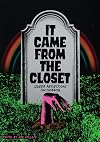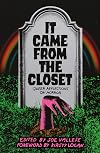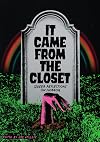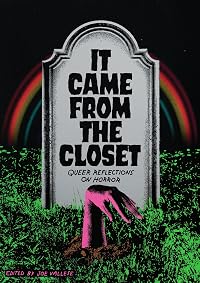
It Came from the Closet: Queer Reflections on Horror
by Joe Vallese (Editor)
On This Page
Description
Through the lens of horror-from Halloween to Hereditary-queer and trans writers consider the films that deepened, amplified, and illuminated their own experiences. Horror movies hold a complicated space in the hearts of the queer community: historically misogynist, and often homo-and transphobic, the genre has also been inadvertently feminist and open to subversive readings. Common tropes-such as the circumspect and resilient "final girl," body possession, costumed villains, secret show more identities, and things that lurk in the closet-spark moments of eerie familiarity and affective connection. Still, viewers often remain tasked with reading themselves into beloved films, seeking out characters and set pieces that speak to, mirror, and parallel the unique ways queerness encounters the world. It Came from the Closet features twenty-five original essays by writers speaking to this relationship, through connections both empowering and oppressive. From Carmen Maria Machado on Jennifer's Body, Jude Ellison S. Doyle on In My Skin, Addie Tsai on Dead Ringers, and many more, these conversations convey the rich reciprocity between queerness and horror. show lessTags
Recommendations


Member Reviews
Rating: 4* of five
The Publisher Says: Through the lens of horror—from Halloween to Hereditary—queer and trans writers consider the films that deepened, amplified, and illuminated their own experiences.
Horror movies hold a complicated space in the hearts of the queer community: historically misogynist, and often homo- and transphobic, the genre has also been inadvertently feminist and open to subversive readings. Common tropes—such as the circumspect and resilient “final girl,” body possession, costumed villains, secret identities, and things that lurk in the closet—spark moments of eerie familiarity and affective connection. Still, viewers often remain tasked with reading themselves into beloved films, seeking out characters show more and set pieces that speak to, mirror, and parallel the unique ways queerness encounters the world.
It Came from the Closet features twenty-five original essays by writers speaking to this relationship, through connections both empowering and oppressive. From Carmen Maria Machado on "Jennifer’s Body", Jude Ellison S. Doyle on "In My Skin", Addie Tsai on "Dead Ringers", and many more, these conversations convey the rich reciprocity between queerness and horror.
I RECEIVED A DRC FROM THE PUBLISHER VIA EDELWESS+. THANK YOU.
My Review: I'll put it this way: It seemed to me, when I began reading, that queer people are really barkin' up the wrong tree to look to horror, homophobic, transphobic, misogynistic medium it is, for representation. Anti-models, maybe...but representation carries (to me, anyone else?) positive or at the minimum neutral connotations for the represented.
I do not see this in horror stories, where the evil queer has survived long past its rejection in most mainstream media.
"All of us together are smarter than any one of us" has never been more amply and aptly demonstrated than in this collection of essays. It is true that some are hits and others misses; it's in the nature of collections for this to be the case. My miss could easily be your hit. It's the reason that essays are so very valuable collected together, to maximize the reader's exposure to new, different ideas that might resonate...or clang dissonantly. Both, and all the shades of experience between, are valuable for pointing out and pointing up one's blind spots.
I'd never once, when watching Jaws in 1975, considered the homoerotic subtext in the film. (I've never read the novel.) I only watched it the once because, fifty years later, I still won't go into the ocean above my ankles because I'm *still* scared by that buoy scene. (IYKYK) Jen Corrigan saw it. I didn't think she was right at first; then I kept thinking about the points being raised and came to think she was correct. Fifty years later, I'm thinking about a film I saw once, and can't forget for bad reasons, reassessing it in light of a stranger's thoughts and appreciating it more positively for doing that.
Recontextualizing an object of fear, fifty years later, actually reduces the terror I've always felt due to Spielberg's genius-level indirect threat building, not making it grimly obvious therefore dismissable, reducible to whether we think the effect was "good enough" or not. What strikes unseen is always more frightening, look at Alien, look at ICEstapo's masked raids, look at the fear of the unknown everywhere in our culture.
So essays by queer people about the films that scare all of use make the scares, even the ones at our expense like Tucker Lieberman's essay on childhood trauma and A Nightmare on Elm Street, are the best use of our mental energy around these cultural products designed to elicit fear in the viewer. When we, the queers of the world, are targets of evil everywhere in our quotidian lives it pays to forearm yourself with context to battle the inner demons "They" want to feed, to convince you are REAL and YOUR FAULT...which they aren't.
A book to be savored in sips, not down-in-one belted into your eyeholes. Well worth gifting to your horror-obsessed friend of any sexuality, or your queer media-studies nibling/grand, or just some guy who was traumatized by Jaws as a teen.
You never know where healing will come from. show less
The Publisher Says: Through the lens of horror—from Halloween to Hereditary—queer and trans writers consider the films that deepened, amplified, and illuminated their own experiences.
Horror movies hold a complicated space in the hearts of the queer community: historically misogynist, and often homo- and transphobic, the genre has also been inadvertently feminist and open to subversive readings. Common tropes—such as the circumspect and resilient “final girl,” body possession, costumed villains, secret identities, and things that lurk in the closet—spark moments of eerie familiarity and affective connection. Still, viewers often remain tasked with reading themselves into beloved films, seeking out characters show more and set pieces that speak to, mirror, and parallel the unique ways queerness encounters the world.
It Came from the Closet features twenty-five original essays by writers speaking to this relationship, through connections both empowering and oppressive. From Carmen Maria Machado on "Jennifer’s Body", Jude Ellison S. Doyle on "In My Skin", Addie Tsai on "Dead Ringers", and many more, these conversations convey the rich reciprocity between queerness and horror.
I RECEIVED A DRC FROM THE PUBLISHER VIA EDELWESS+. THANK YOU.
My Review: I'll put it this way: It seemed to me, when I began reading, that queer people are really barkin' up the wrong tree to look to horror, homophobic, transphobic, misogynistic medium it is, for representation. Anti-models, maybe...but representation carries (to me, anyone else?) positive or at the minimum neutral connotations for the represented.
I do not see this in horror stories, where the evil queer has survived long past its rejection in most mainstream media.
"All of us together are smarter than any one of us" has never been more amply and aptly demonstrated than in this collection of essays. It is true that some are hits and others misses; it's in the nature of collections for this to be the case. My miss could easily be your hit. It's the reason that essays are so very valuable collected together, to maximize the reader's exposure to new, different ideas that might resonate...or clang dissonantly. Both, and all the shades of experience between, are valuable for pointing out and pointing up one's blind spots.
I'd never once, when watching Jaws in 1975, considered the homoerotic subtext in the film. (I've never read the novel.) I only watched it the once because, fifty years later, I still won't go into the ocean above my ankles because I'm *still* scared by that buoy scene. (IYKYK) Jen Corrigan saw it. I didn't think she was right at first; then I kept thinking about the points being raised and came to think she was correct. Fifty years later, I'm thinking about a film I saw once, and can't forget for bad reasons, reassessing it in light of a stranger's thoughts and appreciating it more positively for doing that.
Recontextualizing an object of fear, fifty years later, actually reduces the terror I've always felt due to Spielberg's genius-level indirect threat building, not making it grimly obvious therefore dismissable, reducible to whether we think the effect was "good enough" or not. What strikes unseen is always more frightening, look at Alien, look at ICEstapo's masked raids, look at the fear of the unknown everywhere in our culture.
So essays by queer people about the films that scare all of use make the scares, even the ones at our expense like Tucker Lieberman's essay on childhood trauma and A Nightmare on Elm Street, are the best use of our mental energy around these cultural products designed to elicit fear in the viewer. When we, the queers of the world, are targets of evil everywhere in our quotidian lives it pays to forearm yourself with context to battle the inner demons "They" want to feed, to convince you are REAL and YOUR FAULT...which they aren't.
A book to be savored in sips, not down-in-one belted into your eyeholes. Well worth gifting to your horror-obsessed friend of any sexuality, or your queer media-studies nibling/grand, or just some guy who was traumatized by Jaws as a teen.
You never know where healing will come from. show less
I was really excited for this book when I saw the announcement in 2021 (?). I couldn’t get a hold of it because it had only been published in America but I picked a copy up last week and started it yesterday.
I’m tired. I think we need a massive re-think on which queer stories we tell and how we tell them. I read a lot of queer books and so maybe the problem is me, but there was nothing in this that I haven’t heard before or even experienced myself. I’m tired of feeling seen and validated and whatever else — where are the actions? This isn’t a work of theory or anything so maybe I’m asking too much but every essay in this collection reads so similarly.
There are so many ways to think about visual culture and monstrosity and show more how these things intersect with queerness, and moreover how these intersections might be actioned in order to foster change. But, no. It’s more of the same “I see myself on screen and isn’t that nice”. Which, it *is* nice! I’m happy that these writers found themselves in these films. But, what now? What next? Why does the buck always seem to stop after the queer person has their big self-actualisation moment (at which point, in several of these essays, they slink off into the imperial apparatus of gay marriage and child-rearing)? Is there really No Future? Just faces on screens re-enacting the same scenes over and over and over and over? show less
I’m tired. I think we need a massive re-think on which queer stories we tell and how we tell them. I read a lot of queer books and so maybe the problem is me, but there was nothing in this that I haven’t heard before or even experienced myself. I’m tired of feeling seen and validated and whatever else — where are the actions? This isn’t a work of theory or anything so maybe I’m asking too much but every essay in this collection reads so similarly.
There are so many ways to think about visual culture and monstrosity and show more how these things intersect with queerness, and moreover how these intersections might be actioned in order to foster change. But, no. It’s more of the same “I see myself on screen and isn’t that nice”. Which, it *is* nice! I’m happy that these writers found themselves in these films. But, what now? What next? Why does the buck always seem to stop after the queer person has their big self-actualisation moment (at which point, in several of these essays, they slink off into the imperial apparatus of gay marriage and child-rearing)? Is there really No Future? Just faces on screens re-enacting the same scenes over and over and over and over? show less
I haven't watched a ton of horror (not great for watching in the background with young kids), nor am I queer, but this still has a lot to offer to someone like me (read: average straight guy).
It's an anthology, so essays that have appeared here and there by a wide variety of queer authors, all likening their experience with different horror movies. There's a lot to chew on here, and it's very gripping even for someone on the outside.
It's an anthology, so essays that have appeared here and there by a wide variety of queer authors, all likening their experience with different horror movies. There's a lot to chew on here, and it's very gripping even for someone on the outside.
It is hard to explain why, but this book did not work for me. I think it's more me than the book though. I was looking for something that I probably can't find in books, an understanding that resonates with me for why horror appeals so much to some people. I actually do believe this was answered in many ways, but I did not feel I understood any better after reading it.
As with any book that brings together different authors, some essays were better written than others, but none of them were bad.
I did find the essays based on movies and stories that I was familiar with were more effective and easier for me to read, which is rather obvious and just makes sense. And in the end I found myself skipping or barely skimming the ones that were show more based around horror movies or characters I didn't recognize at all.
For fans of horror, that have a greater depth of experience than I do would probably find a lot to take away from this book, but in the end I found it more frustrating than meaningful for me. show less
As with any book that brings together different authors, some essays were better written than others, but none of them were bad.
I did find the essays based on movies and stories that I was familiar with were more effective and easier for me to read, which is rather obvious and just makes sense. And in the end I found myself skipping or barely skimming the ones that were show more based around horror movies or characters I didn't recognize at all.
For fans of horror, that have a greater depth of experience than I do would probably find a lot to take away from this book, but in the end I found it more frustrating than meaningful for me. show less
A great collection of essays, this book shows how queer people see themselves in horror movies. I thought the cover was hilarious.
I'm really glad I got to read this. It wasn't what I expected, but is still valuable for social commentary.
Members
- Recently Added By
Lists

Sexuality & Gender
160 works; 3 members

Books Mentioned in the A+ Autostraddle Pop Up Discords Nov 2022 & Dec 2022
223 works; 3 members

Nightmares Not Included
175 works; 3 members

Sapph-Lit
78 works; 4 members

The Best LGBTQ Nonfiction
218 works; 70 members
Author Information
All Editions
Some Editions
Awards and Honors
Awards
Common Knowledge
- Original publication date
- 2022-10
- Last words
- (Click to show. Warning: May contain spoilers.)We are still alive.
- Blurbers
- Lisicky, Paul; Marzano-Lesnevich, Alex
- Original language
- English
- Canonical DDC/MDS
- 791.436164
- Canonical LCC
- PN1995.9.H6
Classifications
- Genres
- Sexuality and Gender Studies, LGBTQ+, General Nonfiction
- DDC/MDS
- 791.436164 — Arts & recreation Recreation, sports, and performing arts Public performances Motion pictures, radio, television, podcasting Motion pictures Special aspects of films; film adaptations, film genres {class specific films in 791.437} Films displaying specific qualities Tragedy and horror Horror
- LCC
- PN1995.9 .H6 — Language and Literature Literature (General) Literature (General) Drama Motion pictures
- BISAC
Statistics
- Members
- 403
- Popularity
- 77,338
- Reviews
- 11
- Rating
- (3.96)
- Languages
- English
- Media
- Paper, Audiobook, Ebook
- ISBNs
- 7
- ASINs
- 4