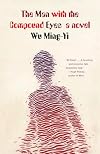
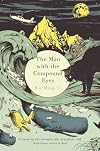
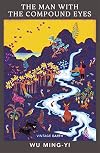
The Man with the Compound Eyes
by Ming-Yi Wu
On This Page
Description
"The English-language debut of an exciting new award-winning voice from Taiwan--a stunning novel that is at once fantasy, reality, and dystopian environmental saga, in which the lives of two people from very different worlds intertwine under the shadow of a man-made catastrophe. On the mythical island of Wayo-Wayo, young Atile'i has just seen his 180th full moon and, following the tradition of his people, is sent out alone into the vast Pacific as a sacrifice to the Sea God. Just when it show more seems that all hope is lost, he happens upon a new home--a vast island made of trash. Meanwhile, in Taiwan, Alice, a professor of literature, is preparing to commit suicide following the disappearance of her husband and son. But her plans are put on hold when the trash island collides with the Taiwan coast where Alice lives. Her home is destroyed, but meeting Atile'i gives her life new meaning as they set out to solve the mystery of her lost family. Drawing in the narratives of others impacted by the disaster--Alice's friends and neighbors, environmentalists from abroad, the mysterious man with compound eyes--the novel tells an enthralling, surreal story of the known--and unknown--world around us"-- show lessTags
Recommendations

















Member Reviews
Igazából minden adott ahhoz, hogy ez a könyv bukó legyen. Hisz annyi minden van belezsúfolva, annyi minden akar lenni egyszerre: 1.) családi dráma Alice-szal a középpontban, aki egyszerre veszítette el fiát és férjét 2.) kis tajvani mindentudó – a sziget geográfiájának, történelmének, törzseinek, törzsi hiedelmeinek és állatvilágának röpke bemutatása 3.) és még egy szemétsziget is száguld Tajvan felé apokaliptikus ökológiai katasztrófát ígérve – ez ugye már tudományos fantasztikum 4.) a szemétszigettel együtt pedig érkezik Atile'i is, aki egy anakronisztikus törzsi társadalom képviselője, és még sosem látott fehér embert 5.) meg ugye a macska. És mégis jó – sőt, pofátlanul show more jó. Wu Ming-Yi képes úgy elmondani egy tanmesét az emberi felelőtlenségről, arról, hogy – ami az általunk okozott környezeti ártalmakat illeti – a nulladik órában vagyunk, hogy mégsem érezzük propagandaízűnek az egészet – talán mert közben a cselekmény marad hangsúlyos, a szereplők egyéni tragédiái vannak középpontban, maguk a szereplők pedig pazarul vannak beledolgozva a szövegbe. Ami különösen annak fényében bravúros, hogy – mint fentebb említettem – zsúfolt könyv ez, és ez a szereplők számát illetően is igaz. Mégsem éreztem egy percig sem, hogy Wu Ming-Yi valamelyik figuráját csak úgy odakente volna: mindegyik elevenre van formázva, és mindegyiknek megvan a maga nélkülözhetetlen feladata a regénytérben. De ami engem leginkább megragadott (és erre csak jó órával azután jöttem rá, hogy becsuktam a könyvet), az az, hogy a szerző úgy tud végtelenül szomorú és végtelenül keserű szöveget írni, hogy közben az összes szereplője szerethető és szimpatikus marad. Talán azt akarja ezzel mondani, hogy nem az egyes ember a hibás: az egyes ember szerethető*. De az emberek sokasága, az emberek tömege már felelőtlen és veszélyes. Vagy talán nem ezt. De akárhogy is, jól mondja.
* Kivéve persze azt a fullasztó aurájú nénit, akivel tegnap összevesztem a facebook-on, mert azt állította, hogy a fasizmus nem rasszista ideológia. A wikipédia pedig liberálbolsevik izé, ha mást mond. Őt nem tudom szeretni, bocsánat Ezt meghagyom másnak. show less
* Kivéve persze azt a fullasztó aurájú nénit, akivel tegnap összevesztem a facebook-on, mert azt állította, hogy a fasizmus nem rasszista ideológia. A wikipédia pedig liberálbolsevik izé, ha mást mond. Őt nem tudom szeretni, bocsánat Ezt meghagyom másnak. show less
The Man with the Compound Eyes by Wu Ming-Yi is a recommended novel that weaves magic realism into a novel with an environmental message.
Originally published in Taiwan, the narrative of The Man with the Compound Eyes by Wu Ming-Yi follows two very different people, Atile’i and Alice. Atile’i, is an exiled teen from the Wayo Wayoan tribe, who "thought the whole world was but a single island."Atile'i shared the fate of every Wayo Wayoan second son - he is exiled and sent off into the ocean in a canoe and expected to die. Instead he finds himself living on an island made of garbage. Alice Shih is a grieving mother in Taiwan who "got up early one morning and decided to kill herself." When a massive earthquake hits, she goes back to show more sleep with the thought that she was planning to die anyway. Rather than dying "She got up, looked out the window, and found herself standing on a remote island in the midst of an immense ocean, as frothy waves rolled relentlessly across the distance toward the shore."
The narration of the story switches between Atile’i and Alice. The two find themselves together when a tsunami causes the garbage island to collide with Taiwan. The two form a family-like bond and go on to meet a cast of others. Included is a dose of magic realism, surrealism, share cultural stories and myths, and a very pro-environmentalism message. It is very much concerned with the relationship people have with each other and especially with the earth. The progression of the narrative is not in a linear fashion, but instead has memories and stories intertwined with the plot development.
While The Man with the Compound Eyes is well written and the translation seems to capture some of the lyricism that must be present in the original version, it is also not an easy, quick read as it will take some time and dedication to start to understand the rhythm of the book and the flow of the plot. Those who enjoy hearing stories and folk lore from other cultures and magic realism will likely appreciate this book. The overwhelming arching theme, however, is that we are destroying our environment, so if that will upset you, pass this one up.
Disclosure: My Kindle edition was courtesy of Knopf Doubleday for review purposes. show less
Originally published in Taiwan, the narrative of The Man with the Compound Eyes by Wu Ming-Yi follows two very different people, Atile’i and Alice. Atile’i, is an exiled teen from the Wayo Wayoan tribe, who "thought the whole world was but a single island."Atile'i shared the fate of every Wayo Wayoan second son - he is exiled and sent off into the ocean in a canoe and expected to die. Instead he finds himself living on an island made of garbage. Alice Shih is a grieving mother in Taiwan who "got up early one morning and decided to kill herself." When a massive earthquake hits, she goes back to show more sleep with the thought that she was planning to die anyway. Rather than dying "She got up, looked out the window, and found herself standing on a remote island in the midst of an immense ocean, as frothy waves rolled relentlessly across the distance toward the shore."
The narration of the story switches between Atile’i and Alice. The two find themselves together when a tsunami causes the garbage island to collide with Taiwan. The two form a family-like bond and go on to meet a cast of others. Included is a dose of magic realism, surrealism, share cultural stories and myths, and a very pro-environmentalism message. It is very much concerned with the relationship people have with each other and especially with the earth. The progression of the narrative is not in a linear fashion, but instead has memories and stories intertwined with the plot development.
While The Man with the Compound Eyes is well written and the translation seems to capture some of the lyricism that must be present in the original version, it is also not an easy, quick read as it will take some time and dedication to start to understand the rhythm of the book and the flow of the plot. Those who enjoy hearing stories and folk lore from other cultures and magic realism will likely appreciate this book. The overwhelming arching theme, however, is that we are destroying our environment, so if that will upset you, pass this one up.
Disclosure: My Kindle edition was courtesy of Knopf Doubleday for review purposes. show less
Filled with fascinating ideas, engaging characters, and a framework of magic realism and Taiwanese mythology, the story nevertheless maintains a striking sense of plausibility concerning the unfolding ecological disaster at the core of the novel. Unfortunately, the novel begins to fall apart in the second half, taking on an increasingly soapbox tone and introduces characters and a long sub-plot that don't add a whole lot to the story. Meanwhile, the lecturing about the evils of climate change ramps up. The annoying thing is that all of the lectures are completely unnecessary. the urgency of the issues, the willful ignorance of most of the population, and the unwillingness of world governments to take action, are all effectively and show more subtly conveyed by the narrative early on. It is almost as if the writer stopped trusting their craft about halfway through the novel.
However, there may be another issue which is contributing to the appearance of the hamfisted narrative approach. This feels to me like a clunky translation. Now I don't speak the original language, so I would love someone who has read the book in the original and then read this translation to weigh in. But I've read an awful lot of literature in translation from a variety of languages, and you can just feel when a translation is working to fully realize the original style. Its a combination of rhythm, the seeming appropriateness of word choice (or rather, avoiding jarring word choices, of which there are quite a few here), the way a translation handles idiomatic phrases, etc.
That said, while a clunky translation probably isn't helping the author's cause here, a better translation wouldn't fix the structural narrative and characterization issues. show less
However, there may be another issue which is contributing to the appearance of the hamfisted narrative approach. This feels to me like a clunky translation. Now I don't speak the original language, so I would love someone who has read the book in the original and then read this translation to weigh in. But I've read an awful lot of literature in translation from a variety of languages, and you can just feel when a translation is working to fully realize the original style. Its a combination of rhythm, the seeming appropriateness of word choice (or rather, avoiding jarring word choices, of which there are quite a few here), the way a translation handles idiomatic phrases, etc.
That said, while a clunky translation probably isn't helping the author's cause here, a better translation wouldn't fix the structural narrative and characterization issues. show less
Beautiful and strange. I get the impression that the book was let down a bit by its translation, since the phrasing was occasionally kind of stilted. However it was still quite enjoyable and had some moments that really moved me. Nonlinear magical realism done with a deft touch.
"At first she couldn't understand anything i said, but gradually we have come to recognize the scales and tails of speech, to realise the fish eyes of what the other is saying."
"At first she couldn't understand anything i said, but gradually we have come to recognize the scales and tails of speech, to realise the fish eyes of what the other is saying."
Not quite surreal.
Ratings
Members
- Recently Added By
Lists

SF & Fantasy in Translation
95 works; 18 members

Must read
30 works; 2 members
Author Information

13+ Works 454 Members
Awards and Honors
Awards
Distinctions
Series
Belongs to Publisher Series
Common Knowledge
- Canonical title
- The Man with the Compound Eyes
- Original title
- 複眼人
- People/Characters
- Lasu Kiyadimanu Atile'i; Alice Shih; Hafay; Dahu; Detlef Boldt; Sara Amundsen (show all 8); Rasula; Umav
- Important places
- Taiwan; Wayo Wayo
- Epigraph
- Wing above wing,
flame above flame.
W. B. Yeats - First words
- The trickling of water through the fissures in the subterranean rock was suddenly drowned out when the mountain made an immense but also somehow distant sound. -Chapter 1, The Cave
- Last words
- (Click to show. Warning: May contain spoilers.)The cat raises her amazing little head, opens her eyes, one blue and the other brown, and, responding to Alice's call, looks right back at her.
- Blurbers
- Le Guin, Ursula K.; Howey, Hugh
- Canonical DDC/MDS
- 895.13
- Canonical LCC
- PL2966.U825
Classifications
- Genres
- Fiction and Literature, General Fiction, Science Fiction
- DDC/MDS
- 895.13 — Literature & rhetoric Asian Literature Literatures of East and Southeast Asia Chinese Chinese fiction
- LCC
- PL2966 .U825 — Language and Literature Languages and literatures of Eastern Asia, Africa, Oceania Languages of Eastern Asia, Africa, Oceania Chinese language and literature Chinese literature Individual authors and works
- BISAC
Statistics
- Members
- 268
- Popularity
- 120,188
- Reviews
- 5
- Rating
- (3.89)
- Languages
- 8 — Catalan, Chinese, English, French, German, Hungarian, Polish, Swedish
- Media
- Paper, Ebook
- ISBNs
- 20
- ASINs
- 8