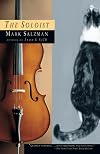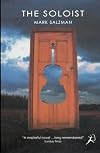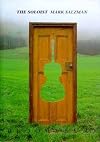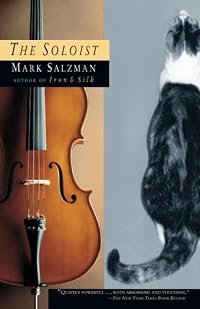
The Soloist
by Mark Salzman
On This Page
Description
As a child, Renne showed promise of becoming one of the world's greatest cellists. Now, years later, his life suddenly is altered by two events: he becomes a juror in a murder trial for the brutal killing of a Buddhist monk, and he takes on as a pupil a Korean boy whose brilliant musicianship reminds him of his own past.Tags
Recommendations












Member Reviews
Renne Sundheimer is a child of German refugees who live in the United States. As a small child, he displays an exceedingly rich talent for music and is offered the opportunity to study cello. Renne's life, rigidly controlled by his mother, is one of social isolation as he is forced to devote most of his free time to practicing his music. As an adult, he becomes a performer until his talent with pitch deteriorates so that he can no longer perform and has to turn to teaching music as a profession. One day Renne is issued a summons to court where he is selected as a juror for a murder trial, a startling situation completely out of this musician's realm and familiarity.
I found this novel to be extremely moving and believable. The mood of show more melancholy throughout the book, especially the part about Renne’s relationship with fellow juror Maria Teresa, touched me deeply. Although music was this man’s companion, it didn’t seem if that were enough. There were times, in reading Renne’s story, that I wished I could have reached through the pages of this novel and offered a hand of friendship.
Some readers have criticized this novel for moving too slowly. I didn’t feel that way. To me, it simmered. By being kept on a low flame, its flavor was made all the richer. The story worked perfectly for me in a way which now has me wanting to seek out further works by its talented author. show less
I found this novel to be extremely moving and believable. The mood of show more melancholy throughout the book, especially the part about Renne’s relationship with fellow juror Maria Teresa, touched me deeply. Although music was this man’s companion, it didn’t seem if that were enough. There were times, in reading Renne’s story, that I wished I could have reached through the pages of this novel and offered a hand of friendship.
Some readers have criticized this novel for moving too slowly. I didn’t feel that way. To me, it simmered. By being kept on a low flame, its flavor was made all the richer. The story worked perfectly for me in a way which now has me wanting to seek out further works by its talented author. show less
The Soloist is the story of Renne Sundheimer, a gifted Cellist who, after a childhood of performance and incredible expectations for a career on the stage, is now teaching at a university. Two occurrences change his life: a young boy, an apparent prodigy, is sent to him for Cello lessons, and he is summoned to serve on the jury for the murder trial of an apparently insane young man. The narrative moves back and forth in time, with the feel of stories within stories, which is consistent with Salzman's affinity for Japanese culture.
This is an interesting and enjoyable novel, but great literature it's not. The prose is pedestrian; Salzman isn't interested in language. He's interested in the boundaries between sanity and insanity, between show more spiritual experience and psychosis (shades of his far more finely crafted novel, Lying Awake), and in the possibility that transcendence through music has a place in this philosophical landscape. He suggests that there is a kind of musical "fugue state" experienced by exquisitely gifted musicians, that teeters between spiritual awakening and psychotic process. The intersection between music, spirituality, and psychosis is engaging. But his description of human experience is too literal. I wanted him to show me what characters were feeling (most notably, the first-person narrator) rather than telling me in 8th-grade reading level language. Also, Salzman too frequently succumbs to his desire to share information with his audience (I fully agree that it's better to adopt a cat from the pound than from a pet store, but the narrator's description of the reasons for this, and how he learned about those reasons, creates a flat literary voice).
Renne's story is engaging. It's really a vehicle for Salzman to meditate "out loud" about the questions that interest him and he succeeds in making those questions surprisingly interesting to me. I did find myself wishing he would focus more. Salzman tried to cover too much without the literary gift to accomplish it in this novel. The result is a teach-y style with occasional moments of subtlety that kept me reading. For example, as the judge questions Renne and his fellow jurors over their inability to reach a verdict, Renne states "The disagreement between me and the other eleven jurors is fundamental, not a disagreement over details." Well, yes.
In sum, I recommend this novel with some reservations. It has much to offer in the way of thought-provoking musings and an unusual and worthwhile story, but it does too much of the work for the reader. show less
This is an interesting and enjoyable novel, but great literature it's not. The prose is pedestrian; Salzman isn't interested in language. He's interested in the boundaries between sanity and insanity, between show more spiritual experience and psychosis (shades of his far more finely crafted novel, Lying Awake), and in the possibility that transcendence through music has a place in this philosophical landscape. He suggests that there is a kind of musical "fugue state" experienced by exquisitely gifted musicians, that teeters between spiritual awakening and psychotic process. The intersection between music, spirituality, and psychosis is engaging. But his description of human experience is too literal. I wanted him to show me what characters were feeling (most notably, the first-person narrator) rather than telling me in 8th-grade reading level language. Also, Salzman too frequently succumbs to his desire to share information with his audience (I fully agree that it's better to adopt a cat from the pound than from a pet store, but the narrator's description of the reasons for this, and how he learned about those reasons, creates a flat literary voice).
Renne's story is engaging. It's really a vehicle for Salzman to meditate "out loud" about the questions that interest him and he succeeds in making those questions surprisingly interesting to me. I did find myself wishing he would focus more. Salzman tried to cover too much without the literary gift to accomplish it in this novel. The result is a teach-y style with occasional moments of subtlety that kept me reading. For example, as the judge questions Renne and his fellow jurors over their inability to reach a verdict, Renne states "The disagreement between me and the other eleven jurors is fundamental, not a disagreement over details." Well, yes.
In sum, I recommend this novel with some reservations. It has much to offer in the way of thought-provoking musings and an unusual and worthwhile story, but it does too much of the work for the reader. show less
I don't know what Salzman set out to do but whatever it was, I think he failed. The main character is unsympathetic in the way a person might be when he's always been told he's brilliant and special and he turns out not to be. In that way, Salzman succeeds in creating him. Then again, it's hard to care about his feelings and experiences because he's so self-centered. Not an easy book to like and, with a slapped-on ending, an unsatisfying read.
Petrea Burchard
Camelot & Vine
Petrea Burchard
Camelot & Vine
Salzman's novel is no doubt a well crafted one, balancing a simple slice-of-life style story with a bit of philosophy and a liberal dose of music. The book is incredibly well-paced, and makes for a nice, leisurely read.
Unfortunately, the protagonist was, to put it gently, terribly dull. I had a hard time immersing myself in the story when the narrator was so flat and lifeless. I could chalk this up to his history as a failed child prodigy, but most of the novel's characters were equally as plain. The most interesting in the story, Kynug-hee, is given the least amount of attention.
In short, The Soloist is a fine piece of writing with a lot to offer (musicians and music aficionados will find it particularly interesting), but its Achilles show more heel lies in its mediocre characters. show less
Unfortunately, the protagonist was, to put it gently, terribly dull. I had a hard time immersing myself in the story when the narrator was so flat and lifeless. I could chalk this up to his history as a failed child prodigy, but most of the novel's characters were equally as plain. The most interesting in the story, Kynug-hee, is given the least amount of attention.
In short, The Soloist is a fine piece of writing with a lot to offer (musicians and music aficionados will find it particularly interesting), but its Achilles show more heel lies in its mediocre characters. show less
A tortured cellist, who lost his gift as a teenager, lives an insular life; mainly waiting for his gift to return. Suddenly, his life begins to changes in a startling way as he takes on a new student, sits on a jury for a murder trial and begins his first steps toward romance. Redemptive and insightful.
This is a novel (not to be confused withh the true story that has been made into a movie starring Jamie Foxx and Robert Downey Jr).
It is an incandescent work about personal growth. Renne is a former musical child prodigy now teaching music at a university - too young to be a retired concert soloist, too old to still be a virgin.
It is an incandescent work about personal growth. Renne is a former musical child prodigy now teaching music at a university - too young to be a retired concert soloist, too old to still be a virgin.
This is one I ran across while shelving books at the library. I opened a page at random and found myself reading about the trial of a young man accused of murdering a monk at a Zen retreat. I read a couple of pages with interest, then put the book on the shelf, determined to remember to check it out later. (I do this a lot. Most of the time, I immediately forget which book it is and never find it again. This time, I managed to fix the author in my mind.)
The trial turns out to be only one of a number of threads running through the book, which is the story of a man who was a famous child prodigy on the cello, but who found himself by the age of 18 unable to play any more. Now a music professor, he continues to practice his cello six hours show more a day, determined to regain his former ability. The story weaves seamlessly between his childhood as a concert cellist and his present life, including his experience as a juror on a murder trial, and as the private teacher of a young Korean boy whose musical gift reminds the narrator of his own past. It was engaging, gentle and thoughtful, and I'm glad I remembered to go back and pick it up! show less
The trial turns out to be only one of a number of threads running through the book, which is the story of a man who was a famous child prodigy on the cello, but who found himself by the age of 18 unable to play any more. Now a music professor, he continues to practice his cello six hours show more a day, determined to regain his former ability. The story weaves seamlessly between his childhood as a concert cellist and his present life, including his experience as a juror on a murder trial, and as the private teacher of a young Korean boy whose musical gift reminds the narrator of his own past. It was engaging, gentle and thoughtful, and I'm glad I remembered to go back and pick it up! show less
Members
- Recently Added By
Author Information

13+ Works 4,624 Members
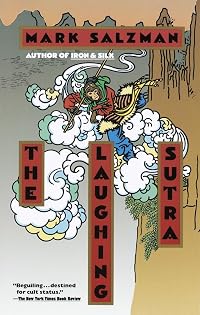
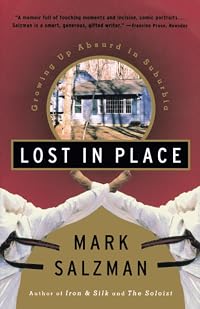
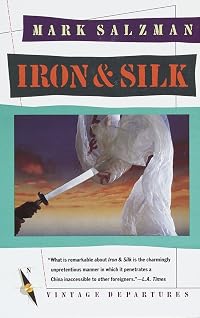
Mark Salzman is the author of Iron & Silk, an account of his two years in China; Lost in Place, a memoir; and the novels The Laughing Sutra, The Soloist, and Lying Awake. He lives in Los Angeles with his wife and their daughter
Awards and Honors
Awards
Common Knowledge
- Original publication date
- 1994
- People/Characters
- Renne Sundheimer (Reinhart); Maria-Teresa Reiter (fellow juror); Mrs. Ruth Friedman (fellow juror); Judge Davis (judge); Kyung-hee Kim (cello student); Mrs. Kim (Kyung-hee's mother) (show all 7); Philip Weber (the defendant)
- Important places
- Los Angeles, California, USA
- Dedication
- For Martha L. Salzman
- First words
- This morning I read an article suggesting that Saint Theresa of Avila, a sixteenth-century Spanish mystic noted for her ecstatic visions, suffered from a neurological disorder known to cause hallucinations.
- Quotations
- This…makes me wonder how nature could have designed human beings to be so eager to make children, yet so uncertain how to raise them. When do you let children follow their own instincts, and when do you push them to do what... (show all) you wish you had done yourself?
When you are playing music, you have a clear goal: to organize and produce sounds in such a way that they express shades of emotion. By practicing, you struggle throughout your life to make your communications more direct and... (show all) copncise, so that a person hearing you play receives emotional impressions in as pure a form as possible.
I take after my father in this regard: he treated Judaism as a form of culture rather than as a religion. He believed that by observing the holidays, learning Jewish history and studying the Talmud, one gained an intellectual... (show all) understanding of the tradition that helped give one a good starting point, but not an end point, for the development of personal morality. - Last words
- (Click to show. Warning: May contain spoilers.)I'm starting to think that the larger picture is overrated.
Classifications
Statistics
- Members
- 775
- Popularity
- 36,361
- Reviews
- 20
- Rating
- (3.72)
- Languages
- English, German
- Media
- Paper, Audiobook, Ebook
- ISBNs
- 15
- ASINs
- 5