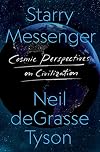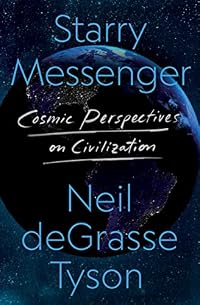
Starry Messenger: Cosmic Perspectives on Civilization
by Neil deGrasse Tyson
On This Page
Description
This program is read by the author, world-renowned astrophysicist Neil deGrasse Tyson.Bringing his cosmic perspective to civilization on Earth, Neil deGrasse Tyson shines new light on the crucial fault lines of our time—war, politics, religion, truth, beauty, gender, and race—in a way that stimulates a deeper sense of unity for us all.
In a time when our political and cultural views feel more polarized than ever, Tyson provides a much-needed antidote to so much of what divides us, while show more making a passionate case for the twin chariots of enlightenment—a cosmic perspective and the rationality of science.
After thinking deeply about how science sees the world and about Earth as a planet, the human brain has the capacity to reset and recalibrates life's priorities, shaping the actions we might take in response. No outlook on culture, society, or civilization remains untouched.
With crystalline prose, Starry Messenger walks us through the scientific palette that sees and paints the world differently. From insights on resolving global conflict to reminders of how precious it is to be alive, Tyson reveals, with warmth and eloquence, an array of brilliant and beautiful truths that apply to us all, informed and enlightened by knowledge of our place in the universe.
A Macmillan Audio production from Henry Holt and Company.
. show less
Tags
Recommendations

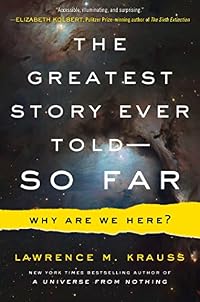
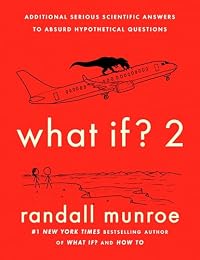
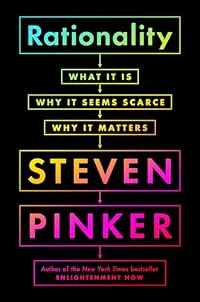

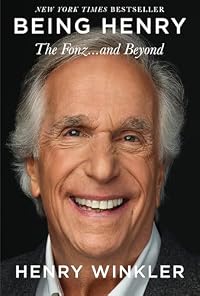
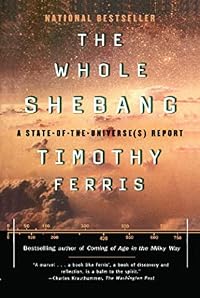
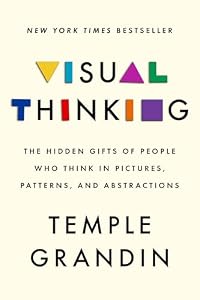
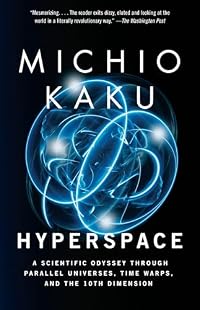

Member Recommendations
yarmando Both books explore how a scientific mindset reframes one's perspective on a variety of political and social topics.
Member Reviews
If this book accomplishes anything, it will make you long for the day when scientists become politicians, or at least that politicians become scientifically literate. Yes, I’m aware that adopting a rational, scientific approach to problems will not eliminate political controversy, but the debate around these heated political issues stands in need of a desperate infusion of more objective, rigorous thinking. Or do we still want a reality TV star who couldn't pass a middle-school science quiz framing the agenda?
This idea that scientists are politically naive—as if our current politicians are having sophisticated debates on policy issues—is laughable. Of course, there’s nothing special about a scientist. They’re only human like show more the rest of us. But there is something special about science itself, which is the best method humanity has yet devised to discover truths about how the world works and our place within it. Might we then want to draw some inspiration from it when debating key political, economic, and social issues?
This book will show you what that alternate, saner reality might look like. By adopting a “cosmic perspective”—by viewing Earth from afar and without the artificial borders and boundaries we tend to impose on everyone and everything—we can gain some clarity surrounding issues relating to religion, race, gender, tribalism, polarization, and equality. The idea of aliens visiting Earth and noting how trivially divisive we are is a recurrent theme throughout the book.
I’ve always admired Tyson’s perspective on these topics. In a particularly entertaining chapter, he shows us how easy it is to be racist by cherry-picking traits in white people that more closely resemble, compared to black people, the traits of chimpanzees. Of course, this is all absurd, but that’s exactly the point; there is so much individual variation among a plethora of traits that it never makes sense to judge any single individual by group averages. The only thing that this will ever accomplish is the suppression of intelligence and potential.
Here’s how Tyson puts it:
“When I imagine what I’m capable of, I don’t reference the professions of ancestors reported to me in a genealogy kit. Instead, I look to all humans who have ever lived. We are one family. We are one race. The human race. Although I rather think we’re all just next of kin.”
A few paragraphs later, Tyson continues:
“Do we recognize, highlight, and embrace diversity? Or do we aspire not to notice it at all? Imagine if race, gender expression, and ethnicity were as irrelevant to our judgment of people as whether they wear glasses, what brand of toothpaste they use, or whether they prefer waffles over pancakes.”
This perspective, the cosmic perspective, is that to which we should all aspire. Of course there will always be disagreements—would we want it any other way in a functioning democracy—but the degree to which we can frame our opinions based on facts and reason rather than emotion and bias is the degree to which we can build a better, more peaceful, more tolerant, and more equal society.
The ultimate message of the book is this: Regardless of race, gender, religion, or socioeconomic status, when viewed from a cosmic perspective, we’re all essentially indistinguishable, part of a single race—the human race. Additionally, we’ve all been endowed with reason to discover this fact, and to cast aside the anti-intellectual bigotry that seeks to keep us divided. show less
This idea that scientists are politically naive—as if our current politicians are having sophisticated debates on policy issues—is laughable. Of course, there’s nothing special about a scientist. They’re only human like show more the rest of us. But there is something special about science itself, which is the best method humanity has yet devised to discover truths about how the world works and our place within it. Might we then want to draw some inspiration from it when debating key political, economic, and social issues?
This book will show you what that alternate, saner reality might look like. By adopting a “cosmic perspective”—by viewing Earth from afar and without the artificial borders and boundaries we tend to impose on everyone and everything—we can gain some clarity surrounding issues relating to religion, race, gender, tribalism, polarization, and equality. The idea of aliens visiting Earth and noting how trivially divisive we are is a recurrent theme throughout the book.
I’ve always admired Tyson’s perspective on these topics. In a particularly entertaining chapter, he shows us how easy it is to be racist by cherry-picking traits in white people that more closely resemble, compared to black people, the traits of chimpanzees. Of course, this is all absurd, but that’s exactly the point; there is so much individual variation among a plethora of traits that it never makes sense to judge any single individual by group averages. The only thing that this will ever accomplish is the suppression of intelligence and potential.
Here’s how Tyson puts it:
“When I imagine what I’m capable of, I don’t reference the professions of ancestors reported to me in a genealogy kit. Instead, I look to all humans who have ever lived. We are one family. We are one race. The human race. Although I rather think we’re all just next of kin.”
A few paragraphs later, Tyson continues:
“Do we recognize, highlight, and embrace diversity? Or do we aspire not to notice it at all? Imagine if race, gender expression, and ethnicity were as irrelevant to our judgment of people as whether they wear glasses, what brand of toothpaste they use, or whether they prefer waffles over pancakes.”
This perspective, the cosmic perspective, is that to which we should all aspire. Of course there will always be disagreements—would we want it any other way in a functioning democracy—but the degree to which we can frame our opinions based on facts and reason rather than emotion and bias is the degree to which we can build a better, more peaceful, more tolerant, and more equal society.
The ultimate message of the book is this: Regardless of race, gender, religion, or socioeconomic status, when viewed from a cosmic perspective, we’re all essentially indistinguishable, part of a single race—the human race. Additionally, we’ve all been endowed with reason to discover this fact, and to cast aside the anti-intellectual bigotry that seeks to keep us divided. show less
Dr. Tyson ruminates on how a scientific mindset and cosmic perspective recasts the political and social concerns of today.
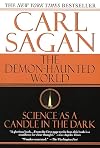
Why I picked it up: Carl Sagan's "Demon-Haunted World" remains one of the most important books I think I've ever read. This seemed to offer more of the same.
Why I finished it: I don't think there's anyone as skilled at helping the layperson understand vast, astronomical distances, geological spans of time, or the infinitesimal as Neil deGrasse Tyson. Those bits kept me going. He is by turns smug and self-deprecating, and there's enough of the latter to keep the former from being insufferable. Occasionally he will use logic to pierce a misconception (the section on how searing meat can increase cancer risk) and then show more immediately invoke the same fallacy—perhaps that was the point though, to make us even question his own declarative utterances.
I'd give it to: Anyone despairing over the proliferation of misinformation. show less
Why I picked it up: Carl Sagan's "Demon-Haunted World" remains one of the most important books I think I've ever read. This seemed to offer more of the same.
Why I finished it: I don't think there's anyone as skilled at helping the layperson understand vast, astronomical distances, geological spans of time, or the infinitesimal as Neil deGrasse Tyson. Those bits kept me going. He is by turns smug and self-deprecating, and there's enough of the latter to keep the former from being insufferable. Occasionally he will use logic to pierce a misconception (the section on how searing meat can increase cancer risk) and then show more immediately invoke the same fallacy—perhaps that was the point though, to make us even question his own declarative utterances.
I'd give it to: Anyone despairing over the proliferation of misinformation. show less
Neil deGrasse Tyson's "cosmic" perspective in this book is far more down to Earth than you might think. And that's not a bad thing. Starry Messenger takes the long view and applies scientific thinking to the everyday issues we as a modern species struggle with. His reasoning makes perfect sense to me, but if our disagreements were easily resolved by thinking like scientists, then I doubt a book like this would even exist. The truth is people often don't think like scientists at all, far from it, and that causes us a lot of social grief. The personal feelings part of being human tends to get in the way.
I obtained this book unexpectedly. After an LTER book that I won was delayed, the publisher sent me this book to "hold me over." I was intrigued given the author is Neil deGrasse Tyson.
I don't dislike the premise of this book, but there's something patronizing about scientists saying that they know better than everyone else because science is objective. While, as a member of the STEM community, I happen to tend to agree with the objectivity of science and the scientific method, I think that viewpoint can be very polarizing for others.
The book was a fast read, and I guess felt kind of like "inspiration-lit" than anything else. The only chapter I completely hate-read was the one about vegetarianism and veganism, which was ill-researched show more and quite mean. I'm vegan, and I'm the last one to tell other people to change their diet, yet I hear other people making fun of what I eat all. the. time. It's exhausting. And frankly, if you are really 100% all-in to fighting climate change, maybe do some research on the environmental impact of eating red meat. And stop policing other people's dietary choices. I don't need to justify to anyone why I'm vegan, just as you don't need to justify to anyone else why you eat what you do. For a book nominally about bringing people together, this chapter did the complete opposite. show less
I don't dislike the premise of this book, but there's something patronizing about scientists saying that they know better than everyone else because science is objective. While, as a member of the STEM community, I happen to tend to agree with the objectivity of science and the scientific method, I think that viewpoint can be very polarizing for others.
The book was a fast read, and I guess felt kind of like "inspiration-lit" than anything else. The only chapter I completely hate-read was the one about vegetarianism and veganism, which was ill-researched show more and quite mean. I'm vegan, and I'm the last one to tell other people to change their diet, yet I hear other people making fun of what I eat all. the. time. It's exhausting. And frankly, if you are really 100% all-in to fighting climate change, maybe do some research on the environmental impact of eating red meat. And stop policing other people's dietary choices. I don't need to justify to anyone why I'm vegan, just as you don't need to justify to anyone else why you eat what you do. For a book nominally about bringing people together, this chapter did the complete opposite. show less
“Differences in opinion enrich the diversity of a nation, and ought to be cherished and respected in a free society, provided everyone remains free to disagree with one another, and, most importantly, everyone remains open to rational arguments that could change your mind. Sadly, the conduct of many in social media has devolved to the opposite of this. Their recipe? Find an opinion they disagree with and unleash waves of anger and outrage because your views do not agree with theirs. Social, political, or legislative attempts to require that everybody agree with your personal truths are ultimately dictatorships.”
Neil deGrasse Tyson addresses how science, rational thought, and evidence-based decision making can improve our show more civilization in significant ways. He tackles this topic in ten chapters: Truth and Beauty, Exploration and Discovery, Earth and Moon, Conflict and Resolution, Risk and Reward, “Meatarians” and Vegetarians, Gender and Identity, Color and Race, Law and Order, and Body and Mind.
He addresses both sides of the existing political divide, trying to find common ground. Rather than try to summarize this book, I offer the quotes below. Tyson backs everything up with evidence. If any of these passages sound interesting, you will likely enjoy this book. I applaud him for attempting to heal our large gaps in critical thinking, which have become increasingly evident in recent times.
4.5
Memorable passages:
“People no longer know who or what to trust. We sow hatred of others fueled by what we think is true, or what we want to be true, without regard to what is true…We’ve lost all sight of what distinguishes facts from opinions. We’re quick with acts of aggression and slow with acts of kindness.”
“Scientists may be the exclusive discoverers of what is objectively true in the universe. Objective truths apply to all people, places, and things, as well as all animals, vegetables, and minerals….they are true even when you don’t believe in them.”
“Objective truths exist independent of that five-sense perception of reality. With proper tools, they can be verified by anybody at any time at any place.”
“Objective truths of science are not founded in belief systems. They are not established by the authority of leaders or the power of persuasion, nor are they learned from repetition, or gleaned from magical thinking.”
“To deny objective truths is to be scientifically illiterate, not to be ideologically principled.”
“One of the great features of a working democracy is that we get to disagree without killing one another. What happens when democracy fails? What happens when we hold no tolerance for views that differ from our own? Do we, instead, desire a dictatorship in which all views in the land agree with the dictator? Do we pine for a system where dissenting views are suppressed, buried, or burned?”
“People are more the same than different.”
“Cosmic perspectives wield the power to humble our human hubris with full justification for doing so.” show less
Neil deGrasse Tyson addresses how science, rational thought, and evidence-based decision making can improve our show more civilization in significant ways. He tackles this topic in ten chapters: Truth and Beauty, Exploration and Discovery, Earth and Moon, Conflict and Resolution, Risk and Reward, “Meatarians” and Vegetarians, Gender and Identity, Color and Race, Law and Order, and Body and Mind.
He addresses both sides of the existing political divide, trying to find common ground. Rather than try to summarize this book, I offer the quotes below. Tyson backs everything up with evidence. If any of these passages sound interesting, you will likely enjoy this book. I applaud him for attempting to heal our large gaps in critical thinking, which have become increasingly evident in recent times.
4.5
Memorable passages:
“People no longer know who or what to trust. We sow hatred of others fueled by what we think is true, or what we want to be true, without regard to what is true…We’ve lost all sight of what distinguishes facts from opinions. We’re quick with acts of aggression and slow with acts of kindness.”
“Scientists may be the exclusive discoverers of what is objectively true in the universe. Objective truths apply to all people, places, and things, as well as all animals, vegetables, and minerals….they are true even when you don’t believe in them.”
“Objective truths exist independent of that five-sense perception of reality. With proper tools, they can be verified by anybody at any time at any place.”
“Objective truths of science are not founded in belief systems. They are not established by the authority of leaders or the power of persuasion, nor are they learned from repetition, or gleaned from magical thinking.”
“To deny objective truths is to be scientifically illiterate, not to be ideologically principled.”
“One of the great features of a working democracy is that we get to disagree without killing one another. What happens when democracy fails? What happens when we hold no tolerance for views that differ from our own? Do we, instead, desire a dictatorship in which all views in the land agree with the dictator? Do we pine for a system where dissenting views are suppressed, buried, or burned?”
“People are more the same than different.”
“Cosmic perspectives wield the power to humble our human hubris with full justification for doing so.” show less
Our involvement with the real world has always been coloured by our genetic, social, and financial circumstances, and this collection of essays is interesting, reflecting the mind of an early twentyfirst century science populariser. tyson is a good researcher, and performs well on the media, and i am happy to find many points of agreement in our approaches to life on this singular planet. He discussed legal frameworks, some genetic research, and is rather hopeful about the survival of the human species on the planet, as well as some points of friction and achievement. A slim book, but full of useful insights.
Lots of people like this book, but for me Tyson should have stuck to astrophysics. Awe is great, but should we pretend to be astronauts so we can affect to feel awestruck? Tyson rambles over much fascinating material, but little that's new. His tone is that of a self-satisfied motormouth geek lecturing the whole world with only a partially disguised superior sneer on his face.
Members
- Recently Added By
Lists

Science: Astronomy
62 works; 2 members

Macmillan Publishers
129 works; 3 members
Author Information

60+ Works 15,503 Members
Astrophysicist Neil deGrasse Tyson was born in New York City on October 5, 1958. Interested in astronomy since he was a child, Tyson gave lectures on the topic at the age of 15. He attended the Bronx High School of Science and was the editor-in-chief for its Physical Science Journal. After earning a B.A. in Physics from Harvard in 1980, Tyson show more received an M.A. in Astronomy from the University of Texas at Austin in 1983. He earned his Ph.D. in Astrophysics from Columbia in 1991. Since 1996, Tyson has held the position of Frederick P. Rose Director of the Hayden Planetarium at Manhattan's American Museum of Natural History. In 2001, he was appointed by President George W. Bush to serve on the Commission on the Future of the United States Aerospace Industry. In 2004, Tyson joined the President's Commission on Implementation of United States Space Exploration Policy. He has hosted PBS's television show NOVA scienceNOW since 2006. Tyson can also be seen frequently as a guest on The Daily Show with Jon Stewart, The Colbert Report, and Late Night with Conan O'Brien. Tyson has written many popular books on astronomy, and he began his "Universe" column for Natural History magazine in 1995. In 2009, he published the bestselling book The Pluto Files: The Rise and Fall of America's Favorite Planet to describe the controversy over Pluto's demotion to dwarf planet. His other books include Accessory to War: The Unspoken alliance between astrophysics and the military. Tyson was recognized in 2004 with the NASA Distinguished Public Service Medal, and Time named him one of the 100 Most Influential People of 2007. (Bowker Author Biography) show less
Awards and Honors
Awards
Distinctions
Notable Lists
Common Knowledge
- Original publication date
- 2022
- Epigraph
- From out there on the Moon, international politics look so petty. You want to grab a politician by the scruff of the neck and drag him a quarter of a million miles out and say,"Look at that, you son of a bitch." --Edgar D. Mi... (show all)tchell, Apollo 14 astronaut...
- First words
- When people disagree in our complex world of politics, religion, and culture, the causes are simple, even if the resolutions are not.
- Last words
- (Click to show. Warning: May contain spoilers.)We get to live, and ultimately die, in this glorious universe.
Classifications
Statistics
- Members
- 724
- Popularity
- 38,894
- Reviews
- 22
- Rating
- (3.89)
- Languages
- Dutch, English, Portuguese, Spanish
- Media
- Paper, Audiobook, Ebook
- ISBNs
- 18
- ASINs
- 5