On This Page
Description
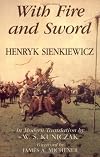
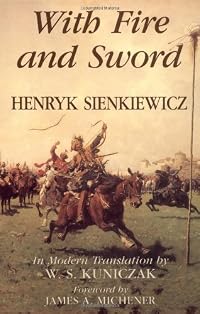
With Fire and Sword is a historical fiction novel, set in the 17th century in the Polish-Lithuanian Commonwealth during the Khmelnytsky Uprising. It gained enormous popularity in Poland, and by the turn of the 20th century had become one of the most popular Polish books ever. Despite some deviations, the book's historical framework is genuine and the fictional story is woven into real events. Many characters are historical figures, including Jeremi Wisniowiecki and Bohdan Khmelnytsky.Tags
Recommendations




















Member Reviews
With Fire and Sword must be one of the greatest historical epics you've never heard of. Set in the 17th century, and told from the Polish point of view, it recounts a Cossack uprising against the Polish-Lithuanian Commonwealth. The historical backdrop serves as a grand canvas for the portraits of courage, love, and spiritual devotion that form the heart of the story.
In print, With Fire and Sword is over 1000 pages, but it rarely lags, and never gets bogged down in historical exposition. Published in 1884, its depictions of battle between the Cossacks and the Poles are some of the most harrowing, tense, and vivid scenes I've ever read in a historical novel.
The novel was written by Henryk Sienkiewicz, author of Quo Vadis?, and the same show more spiritual depth of that work can be found in With Fire and Sword. I don't know anything about the history behind the events of the novel, so I can't comment on the accuracy or bias of the plot. However, if you're looking for a sweeping epic to huddle down with over the long winter months, I highly recommend it. In many ways, it reminds me of The Lord of the Rings: courageous characters in desperate straits, epic journeys, a living landscape, the potential for tragedy at almost every moment, and even a bit of romance.
I read the free Kindle edition and was very pleased to find it formatted beautifully. There were even a few footnotes. Unfortunately, the pictures and maps were not included, but for a price of $0 I'm not going to complain.
Some of my favorite lines from the book:
the steppe sounded like a lyre touched by the hand of the Lord.
It might have been said at that time that two vampires were careering along both banks of the Dnieper,--one, Hmelnitski, devouring nobles; the other, Prince Yeremi, destroying the uprisen people. It was whispered among the peasants that when these two met the sun would be darkened and the water in all rivers run red.
"...long ago I was reconciled to the will of God. I do not beg, I do not groan, I do not curse. I do not beat my head against the wall; I merely desire to accomplish that which pertains to me while strength and life remain." show less
In print, With Fire and Sword is over 1000 pages, but it rarely lags, and never gets bogged down in historical exposition. Published in 1884, its depictions of battle between the Cossacks and the Poles are some of the most harrowing, tense, and vivid scenes I've ever read in a historical novel.
The novel was written by Henryk Sienkiewicz, author of Quo Vadis?, and the same show more spiritual depth of that work can be found in With Fire and Sword. I don't know anything about the history behind the events of the novel, so I can't comment on the accuracy or bias of the plot. However, if you're looking for a sweeping epic to huddle down with over the long winter months, I highly recommend it. In many ways, it reminds me of The Lord of the Rings: courageous characters in desperate straits, epic journeys, a living landscape, the potential for tragedy at almost every moment, and even a bit of romance.
I read the free Kindle edition and was very pleased to find it formatted beautifully. There were even a few footnotes. Unfortunately, the pictures and maps were not included, but for a price of $0 I'm not going to complain.
Some of my favorite lines from the book:
the steppe sounded like a lyre touched by the hand of the Lord.
It might have been said at that time that two vampires were careering along both banks of the Dnieper,--one, Hmelnitski, devouring nobles; the other, Prince Yeremi, destroying the uprisen people. It was whispered among the peasants that when these two met the sun would be darkened and the water in all rivers run red.
"...long ago I was reconciled to the will of God. I do not beg, I do not groan, I do not curse. I do not beat my head against the wall; I merely desire to accomplish that which pertains to me while strength and life remain." show less
This book, and all this authors books (I've read about 4000 pages of this guy so far, but I still can't spell his name) are terrific reads. This one is the first of a set that it probably unique in the worlds' literature, i.e. a four volume trilogy! (Hint, volume 2 has two volumes). I wish it was in more volumes because the books would be easier to handle, they are huge. Anyway, now that the important stuff is out of the way, I find a guilty pleasure in reading these books. Tremendous scope, epic painterly depictions of huge scenes, an impressive list of recognizable, unique and colorful characters. Plus he has a great sense of humour and I laughed out loud at the jokes many time. On the other hand, corny plot lines, one dimensional show more women of only two tppes: saint and sinner. And one can never quite get a grip on what the authors attitude is towards the values of the period he is depicting: brutal ignorance ruled by superstition chivalry, vicious nationalism, hatred of the "lower classes". Can't help thinking he actually likes this stuff. It's easy to see why his work was not promoted during Poland's communist leadership period. I think that someone reading these books should read Twain's Connecticut Yankee in King Arthur's Court immediately after to get a healthier view of the reality of feudalism. But I can't stop reading. Forward Husaria! show less
With Fire and Sword takes place in 17th Century Poland, and it chronicles the war between the Cossacks and the Polish gentry, from the perspective of the people involved. Once again, I'm reminded that this is an immeasurably more interesting way to view history than rote memorization of names and dates, and I wish I could go thump all my history teachers over the head with this big fat book.
It's mostly about Pan Yan something-or-other (the names gave me fits), a distinguished young lieutenant in the service of Prince Yeremi (or Yarema--I never did figure out the difference--I'm guessing one is the familiar form?). He's returning from a mission, when he sees a man who's been attacked and nearly killed, so he rescues him. The man turns show more out to be Hmyel...whatsis, whose feud with his neighbor is what starts the Cossack rebellion.
Pan Yan meets a young woman and falls in love, but her family has promised her to Bohun, of whom she's afraid. Much of the book concerns Pan Yan and his friends' attempts to rescue her and get her back together with Pan Yan, with an extremely brutal war in the way. Pan Yan is a romantic hero, a knight in shining armor, full of honor, devotion to duty, and devotion to his lady.
His friends are fascinating and entertaining characters. There's his squire, Zjendjan, who's a tricky young man, always out to make a profit, but nonetheless absolutely loyal. There's the giant Podbipyenta, who's vowed to remain celibate until he can best his ancestor's record and chop off three heads with one stroke. There's the diminutive Michal who's a master swordsman. And there's Zagloba, fat, older, prone to extreme exaggeration, a drama queen, who's a reluctant hero.
The Prince, Bohun, the rebel leader, and the government officials are more minor characters, but like the main characters, they're made real, and their motivations and doubts and emotions are all clearly drawn.
The story goes from one hair-raising situation to the next, and just when it looks as if things will be okay after all, something even worse happens. I think I read, either in the foreword, or in my research when choosing this book, that it was initially serialized in a newspaper. If it wasn't, it should have been, because that's how it reads. I could easily imagine reading one of the segments and then anxiously waiting for the next edition so I could find out what happened next.
I was quite pleasantly surprised by how entertaining and readable it was, by how engrossed I became in the story, and by the fact that I wasn't tempted to put it down and read something else, even though it took me the better part of a week to read it.
So, why only 4 stars? It's purely for the enjoyment factor. I did enjoy it, but it's not something I'll ever read again, and not even something I feel enriched by. I didn't finish it thinking "what a great book!" I'm not a student of history, or of eastern Europe, so the fact that it's written from apparently the wrong side of that conflict completely escaped me (until I read the reviews that pointed it out, of course).
I'm glad I read it, and I'll remember the characters, but I doubt I'll look for the other two books in the trilogy, or by Sienkiewicz's other works. show less
It's mostly about Pan Yan something-or-other (the names gave me fits), a distinguished young lieutenant in the service of Prince Yeremi (or Yarema--I never did figure out the difference--I'm guessing one is the familiar form?). He's returning from a mission, when he sees a man who's been attacked and nearly killed, so he rescues him. The man turns show more out to be Hmyel...whatsis, whose feud with his neighbor is what starts the Cossack rebellion.
Pan Yan meets a young woman and falls in love, but her family has promised her to Bohun, of whom she's afraid. Much of the book concerns Pan Yan and his friends' attempts to rescue her and get her back together with Pan Yan, with an extremely brutal war in the way. Pan Yan is a romantic hero, a knight in shining armor, full of honor, devotion to duty, and devotion to his lady.
His friends are fascinating and entertaining characters. There's his squire, Zjendjan, who's a tricky young man, always out to make a profit, but nonetheless absolutely loyal. There's the giant Podbipyenta, who's vowed to remain celibate until he can best his ancestor's record and chop off three heads with one stroke. There's the diminutive Michal who's a master swordsman. And there's Zagloba, fat, older, prone to extreme exaggeration, a drama queen, who's a reluctant hero.
The Prince, Bohun, the rebel leader, and the government officials are more minor characters, but like the main characters, they're made real, and their motivations and doubts and emotions are all clearly drawn.
The story goes from one hair-raising situation to the next, and just when it looks as if things will be okay after all, something even worse happens. I think I read, either in the foreword, or in my research when choosing this book, that it was initially serialized in a newspaper. If it wasn't, it should have been, because that's how it reads. I could easily imagine reading one of the segments and then anxiously waiting for the next edition so I could find out what happened next.
I was quite pleasantly surprised by how entertaining and readable it was, by how engrossed I became in the story, and by the fact that I wasn't tempted to put it down and read something else, even though it took me the better part of a week to read it.
So, why only 4 stars? It's purely for the enjoyment factor. I did enjoy it, but it's not something I'll ever read again, and not even something I feel enriched by. I didn't finish it thinking "what a great book!" I'm not a student of history, or of eastern Europe, so the fact that it's written from apparently the wrong side of that conflict completely escaped me (until I read the reviews that pointed it out, of course).
I'm glad I read it, and I'll remember the characters, but I doubt I'll look for the other two books in the trilogy, or by Sienkiewicz's other works. show less
So I saw the movie to this a few years ago with some of you folks out there. Its like the Polish version of the Three Musketeers (except of course, there are four of them. Three Poles and a Lithuianian. It is a BIG book. About 1200 pages, of small print, so it took a while to read...and then there was having to learn Polish....
Ok, so I didn't read it in Polish. This is so far the best book I have read this year, I doubt I'll read it again anytime soon, because its quite a commitment (and there are two sequels).
The characters themselves are not especially deep, and the author seems to believe that all military action is solved by the cavalry (rather than the infantry, as it actually is). Despite this, it was a wonderful look into a bit show more of Polish history that I knew very little about (how many of you people knew there was a Polish Civil War?). They don't merely hang malefactors, they impale them. There just isn't enough impalement in modern literature. And the savage desolation that he writes on the country and the ghastly (consider the source here...I'm essentially immune to human suffering, so when I say ghastly, I mean ghastly) things that occur during the sieges, is stunning. The orchard of fruit trees heavy with the corpses of hanged Jewish children made me read it over a few times to make sure he'd written people that were actually capable of that. That scene didn't make it into the movie, and I think I'm ok with that. show less
Ok, so I didn't read it in Polish. This is so far the best book I have read this year, I doubt I'll read it again anytime soon, because its quite a commitment (and there are two sequels).
The characters themselves are not especially deep, and the author seems to believe that all military action is solved by the cavalry (rather than the infantry, as it actually is). Despite this, it was a wonderful look into a bit show more of Polish history that I knew very little about (how many of you people knew there was a Polish Civil War?). They don't merely hang malefactors, they impale them. There just isn't enough impalement in modern literature. And the savage desolation that he writes on the country and the ghastly (consider the source here...I'm essentially immune to human suffering, so when I say ghastly, I mean ghastly) things that occur during the sieges, is stunning. The orchard of fruit trees heavy with the corpses of hanged Jewish children made me read it over a few times to make sure he'd written people that were actually capable of that. That scene didn't make it into the movie, and I think I'm ok with that. show less
Tremendously entertaining and memorable historical novel about the struggle the Polish-Lithuanian Commonwealth undertook to maintain its integrity in the face of Tartar and Cossack rampage!
So ... erm ... in the war of recommendations, this book was added because I'm friends with Richard but it was Jacob's review that added the final clinch. See thread below.
$50 on ABE
Members
- Recently Added By
Lists

1001 Books You Must Read Before You Die
1,448 works; 1,131 members

Best Historical Fiction
620 works; 261 members

Historical Fiction
889 works; 91 members

Fifty Representative Historical Novels
50 works; 2 members

CCE 1000 Good Books List
1,033 works; 12 members
Author Information

330+ Works 7,115 Members
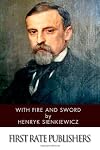
Far more celebrated than any of his positivist contemporaries, Henryk Sienkiewicz began as a journalist and achieved considerable renown with his account of a two-year journey to the United States. Between 1882 and 1888 he wrote three historical novels dealing with political and military events in seventeenth-century Poland: With Fire and Sword, show more The Deluge (1886), and Fire in the Steppe (1888, also translated as Pan Michael). Although superficial in its analysis of historical events, the trilogy gained enormous popularity both in Poland and in other Slavic countries thanks to Sienkiewicz's masterful use of epic techniques and of the seventeenth-century colloquial idiom. Even more popular, if artistically far weaker, was his Quo Vadis? (1896), a novel about Rome in the age of Nero (Sienkiewicz's fame in the West is chiefly based on this work). Another historical novel, The Teutonic Knights (1900), deals with the fifteenth-century struggle between Poland-Lithuania and the Teutonic Order. Henryk Sienkiewicz was awarded The Nobel prize in Literature for 1905 "because of his outstanding merits as an epic writer". (Bowker Author Biography) show less
Some Editions
Awards and Honors
Series

Belongs to Publisher Series
Work Relationships
Is contained in
Contains
Has the adaptation
Common Knowledge
- Canonical title
- With Fire and Sword
- Original title
- Ogniem i mieczem
- Original publication date
- 1884
- People/Characters
- Jan Skrzetuski; Jan Onufry Zagłoba; Michał Wołodyjowski; Helena Kurcewiczówna; Iwan Bohun; Longinus Podbipięta (show all 9); Jeremi Wiśniowiecki; Bohdan Chmielnicki; Horpyna
- Important places
- Poland; Ukraine
- Important events
- Cossack Rebellion
- Related movies*
- Ogniem i mieczem (1999 | IMDb); Col ferro e col fuoco (1963 | IMDb)
- First words
- The year 1647 abounded with omens.
- Quotations*
- "Hej, hej!
Tuhaj-bej
Rozserdywsia duże!
Hej, hej!
Tuhaj-bej
Ne serdysia, druże!"
Chamie, pójdź no tu tylko. Nos i uszy ci obetnę, gardła nie wezmę, bo to kata własność. A co, tchórz cię obleciał? boisz się, parobku? Związać mi tego szelmę, a łaskę znajdziecie. Cóż, wisielcze, cóż k... (show all)ukło żydowski? Sam tu! Wychyl jeno łba na strop! Chodź, chodź, będę ci rad, poczęstuję tak, żeć się przypomni i twój ojciec diabeł, i twoja mać garmatka! - Zagłoba
Bóg wynagrodził męstwo...
Naprzód, z przeproszeniem jegomości, nie jestem ja żaden chłop, jeno szlachcic, choć ubogi, ale herbowy...
- A czemu to nie strzelacie?
- Prochy nam wyszły - posłaliśmy na zamek po nowe.
- Tam macie bliżej! - rzekł książę, ukazując na szańce nieprzyjaciela.
- Trzech rzeczy potrzebuje moja odwaga, a to: jeść dobrze, pić dobrze i wyspać się.
- Komu wozy milsze od ojczyzny i majestatu, to niech zostanie. - Last words*
- (Click to show. Warning: May contain spoilers.)(Ostatni rozdział)"W taką noc wychodził niegdyś Skrzetuski ze Zbaraża i w taką noc teraz czuł bicie serca Kurcewiczówny przy swoim."
(Click to show. Warning: May contain spoilers.)(Epilog) Przyszła potem zaraza i Szwedzi. tatarzy stale prawie gościli na Ukrainie, zagarniając tłumy ludu w niewolę. Opustoszała Rzeczpospolita, opustoszała Ukraina. Wlicy wyli na zgliszczach dawnych miast i kwitnące niegdyś kraje były jakby wielki grobowiec. Nienawiść wzrosła w serca i zatruła krew pobratymczą i żadne usta długo nie mówiły: "Chwała na wysokościach Bodu, a na ziemi pokój ludziom dobrej woli". - Original language
- Polish
- Disambiguation notice
- This is the complete Book 1 of Henryk Sienkiewicz's "Trilogy," entitled With Fire and Sword (in the Polish original, Ogniem i mieczem). Please do not combine it with any LT work for a partial volume of t... (show all)his Book 1. Thank you.
*Some information comes from Common Knowledge in other languages. Click "Edit" for more information.
Classifications
- Genres
- Fiction and Literature, General Fiction, Historical Fiction
- DDC/MDS
- 891.8536 — Literature & rhetoric Asian Literature East Indo-European and Celtic literatures West and South Slavic languages (Bulgarian, Slovene, Polish, Czech, Slovak, Serbo-Croatian, and Macedonian) Polish Polish fiction 1795–1919
- LCC
- PG7158 .S4 .O413 — Language and Literature Slavic languages and literatures. Baltic languages. Albanian language Slavic. Baltic. Albanian Slavic Polish
- BISAC
Statistics
- Members
- 544
- Popularity
- 54,412
- Reviews
- 9
- Rating
- (3.97)
- Languages
- 11 — Czech, Dutch, English, French, German, Hungarian, Italian, Polish, Spanish, Swedish, Turkish
- Media
- Paper, Audiobook, Ebook
- ISBNs
- 66
- ASINs
- 20