The Aran Islands
by John Millington Synge
On This Page
Description
J.M. Synge, one of the greatest English language playwrites of the 20th century, immortalized the Aran Islands and its people with vivid written portraits that are among the greatest in modern literature. Synge's vibrant language and earthy themes breathtakingly capture the folklore and way of life that has since perished on these remote northern islands. As an aspiring writer in 1897, Synge was commanded by William Butler Yeats to, "Go to the Aran Islands. Live there as one of the people show more themselves; express a life that has never found expression." Synge captures his first four visits to the islands in this magical book. However, their influence continued to permeate his work, including The Playboy of the Western World. Filled with the exuberant energy of an artist coming into his own, The Aran Islands provides an unforgettable look at a land that holds Ireland's ancestral language, culture and uncorrupted heart. Synge's lyrical glimpses into the past, coupled with Donal Donnelly's rich, lilting voice transports listeners to these tiny Emerald Islands. show lessTags
Recommendations






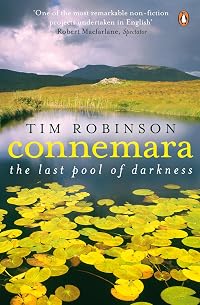

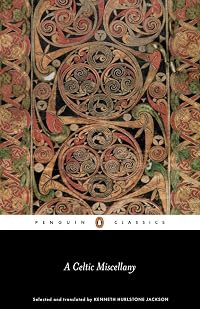
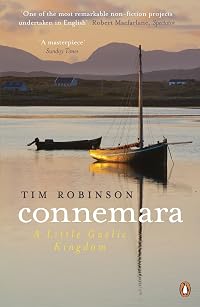



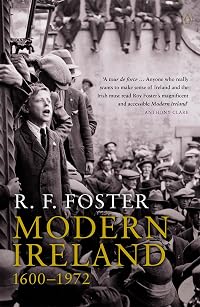







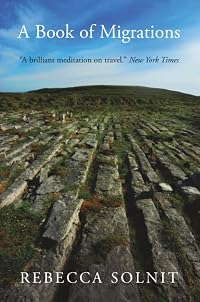

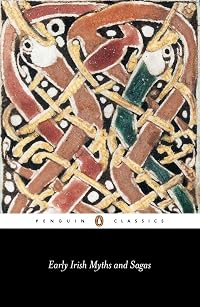


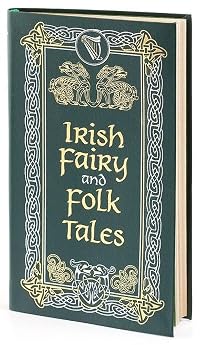
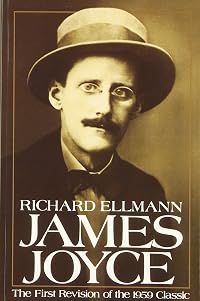

Member Recommendations
Member Reviews
The Aran Islands by J.M Synge is a remarkable and insightful read of life on the Aran Islands From 1898 to 1903.
Having just returned from an amazing 2 day trip to the Islands I was eager to read this remarkable little book that had been recommended to me by one of the Islanders. .
Synge, in his relatively short life helped revolutionize Irish Threater, was a poet, prose writer, musician,playwright and collector of folklore. He spent part of his summers for 5 years on the Aran Islands collecting and documenting stories and customs and traditions of the Islanders and the end product ( this little book) is a remarkable and important collection of information and folklore.
This is not a story but rather a series of journal accounts as the show more author says in his introduction
" In the pages that follow I have given a direct account of my life on the Islands and of what I met with amoung them, Inventing nothing , and changing nothing this is essential"
There is so much that I found intriguing and insightful in this account, the way of life and the hardship of the Islanders, the bleak and harsh and yet stunning landscape, the tradition, stories, food, clothing and the religion and beliefs are so interesting and I came away with a better understanding of their life and struggles at this time.
While everything has changed on the Islands with modernization , nothing has changed like, landscape, remoteness, beauty, quiet and those rugged and stunning stone walls and ruins. I loved the fact that after stepping foot on the island you can hire a bike and within 5 minutes be utterly by yourself and step back in time.
I loved this book and can't stop thinking about it, I would recommend it to those who have an interest in folklore and history of Ireland. It's not for everyone but I can see many enjoying this and at 208 pages is not very taxing. show less
Having just returned from an amazing 2 day trip to the Islands I was eager to read this remarkable little book that had been recommended to me by one of the Islanders. .
Synge, in his relatively short life helped revolutionize Irish Threater, was a poet, prose writer, musician,playwright and collector of folklore. He spent part of his summers for 5 years on the Aran Islands collecting and documenting stories and customs and traditions of the Islanders and the end product ( this little book) is a remarkable and important collection of information and folklore.
This is not a story but rather a series of journal accounts as the show more author says in his introduction
" In the pages that follow I have given a direct account of my life on the Islands and of what I met with amoung them, Inventing nothing , and changing nothing this is essential"
There is so much that I found intriguing and insightful in this account, the way of life and the hardship of the Islanders, the bleak and harsh and yet stunning landscape, the tradition, stories, food, clothing and the religion and beliefs are so interesting and I came away with a better understanding of their life and struggles at this time.
While everything has changed on the Islands with modernization , nothing has changed like, landscape, remoteness, beauty, quiet and those rugged and stunning stone walls and ruins. I loved the fact that after stepping foot on the island you can hire a bike and within 5 minutes be utterly by yourself and step back in time.
I loved this book and can't stop thinking about it, I would recommend it to those who have an interest in folklore and history of Ireland. It's not for everyone but I can see many enjoying this and at 208 pages is not very taxing. show less
Between 1898 and 1901, John Millington Synge to traveled to the Aran Islands off the coast of Galway four times. He stayed with local hosts to learn more about the culture of these islands and to also learn Gaelic from them. There are three islands: Aranmor, which is long and narrow, but only 9 miles long; Inishmaan, round and about 3 ½ miles in diameter; and Inishere, which is also round, but even smaller than Inishmaan. His life on these islands, especially Inishmaan, was the catalyst for his plays, such as “Riders to the Sea” and “Playboy of the Western World.”
The text is episodic and anecdotal in nature, with four parts that each describe one of Synge’s visits. Synge describes what he experiences and retells the stories show more that he hears; he rarely analyzes. His relationship to the islanders is complex, especially in his early visits:
"In some ways these men and women seem strangely far away from me. The have
the same emotions that I have, and the animals have, yet I cannot talk to them when
there is much to say, more than to the dog that whines beside me in a mountain fog.
There is hardly an hour I am with them that I do not feel the shock of some
inconceivable idea, and then again the shock of some vague emotion that is familiar
to them and me. On some days I feel this island [Inishmaan] as a perfect home and
resting place; on other days I feel that I am a waif among the people."
Synge’s main themes are recounting the islanders’ way of life and repeating the stories he hears. He does not hold himself aloof like an anthropologist; therefore, he can speak about their fishing and sea-faring culture from a wealth of first-hand experiences. He describes their unique clothing, including the reasons that the island-made shoes, called pampooties, are necessary to moving around the islands. Removals by the mainland officials, the process of collecting kelp to sell for iodine content, and the yearly labor of re-thatching the cottages receive special attention.
Synge is surprised by the way that the islanders will talk matter-of-factly about daughters being stolen by the fairies and meeting fairies on the roadway while many of their folktales seem to be devoid of Irish myth or folklore references. (In part 4, there are some poems that Synge translates from the Gaelic that are more informed by Irish fairy stories.) In part 1, after hearing a particular story, he comments: “It gave me a strange feeling of wonder to hear this illiterate native […] telling a story that is so full of European associations.” He traces this story back to elements of Cymbeline, the Decameron, German fabliaux, Grimm’s tales and more. I will confess that I too was surprised to read mash-ups of all sorts of myths and folktales that I don’t associate with Ireland. My biases are showing along with Synge’s. I was expecting the islanders’ stories to have the same purity of culture that their way of life showed.
By the end, I was growing weary of his tendency to string together series of short events without providing more context or connections. I felt that I had learned as much as I could and was glad the book was ending. show less
The text is episodic and anecdotal in nature, with four parts that each describe one of Synge’s visits. Synge describes what he experiences and retells the stories show more that he hears; he rarely analyzes. His relationship to the islanders is complex, especially in his early visits:
"In some ways these men and women seem strangely far away from me. The have
the same emotions that I have, and the animals have, yet I cannot talk to them when
there is much to say, more than to the dog that whines beside me in a mountain fog.
There is hardly an hour I am with them that I do not feel the shock of some
inconceivable idea, and then again the shock of some vague emotion that is familiar
to them and me. On some days I feel this island [Inishmaan] as a perfect home and
resting place; on other days I feel that I am a waif among the people."
Synge’s main themes are recounting the islanders’ way of life and repeating the stories he hears. He does not hold himself aloof like an anthropologist; therefore, he can speak about their fishing and sea-faring culture from a wealth of first-hand experiences. He describes their unique clothing, including the reasons that the island-made shoes, called pampooties, are necessary to moving around the islands. Removals by the mainland officials, the process of collecting kelp to sell for iodine content, and the yearly labor of re-thatching the cottages receive special attention.
Synge is surprised by the way that the islanders will talk matter-of-factly about daughters being stolen by the fairies and meeting fairies on the roadway while many of their folktales seem to be devoid of Irish myth or folklore references. (In part 4, there are some poems that Synge translates from the Gaelic that are more informed by Irish fairy stories.) In part 1, after hearing a particular story, he comments: “It gave me a strange feeling of wonder to hear this illiterate native […] telling a story that is so full of European associations.” He traces this story back to elements of Cymbeline, the Decameron, German fabliaux, Grimm’s tales and more. I will confess that I too was surprised to read mash-ups of all sorts of myths and folktales that I don’t associate with Ireland. My biases are showing along with Synge’s. I was expecting the islanders’ stories to have the same purity of culture that their way of life showed.
By the end, I was growing weary of his tendency to string together series of short events without providing more context or connections. I felt that I had learned as much as I could and was glad the book was ending. show less
In the late 1890s, the Irish playwright John Millington Synge spent several summers on the Aran Islands, a group of three islands off the west coast of Ireland. He later compiled his experiences into sort of a journal, which was published in 1907. The book depicts each of Synge's four visits to the islands, as he wanders around, gather local stories and songs, learns the history, and participates in island life. The Aran Islands are depicted as something of a backwater place-- but usually all the better for it. It's a rudimentary ethnography, sometimes a tedious and dull ramble, but occasionally a fascinating glimpse at a disappearing culture, even if it is somewhat over-idealized.
Unclassifiable is “The Aran IslandsâÂ? (1907) by J.M. Synge. William Butler Yeats persuaded Synge to live for a time in the Aran Islands (off the west coast of Ireland) in the hopes that it would focus his writing and help his creative work, such as play-writing. âÂÂThe Aran IslandsâÂ? is a short journal of Synge's conversations with the local people, but it is also a travelogue, diary of his learning Irish, and collection of local stories. The book documents of a way of life and the way of thinking of a people that are gone from the world now. Admittedly, this book has a couple of long spots, but overall itâÂÂs a magical thing.
One of the more seminal works of early sociology, Singhe's generally nonjudgemental portrayal of Aran provides a glimpse into traditional Irish lives and ways. An excellent read for a hibernophile, or anyone interested in sociology or anthropology.
Ratings
Members
- Recently Added By
Author Information

108+ Works 3,285 Members
After graduating from Trinity College, Dublin, Synge left for Europe to write poetry. If W. B. Yeats had not discovered him in Paris and persuaded him to return to Ireland and absorb its native traditions, the Irish renaissance might have lost its best playwright. As it was, Synge's poetry of Celtic romanticism was rather more tempered with a show more European realism than Yeats and his renaissance had anticipated. Yeats sent Synge to the West of Ireland to get to know the peasants there. The result was, in addition to the journal The Aran Islands (1907), two short plays for the Abbey: The Shadow of the Glen (1903), in which a comic resurrection interrupts a widow's marriage bargaining, and Riders to the Sea (1904), about a mother's loss of her last son, a perfect condensed tragedy and probably the finest one-act play. The poorly received The Well of the Saints (1905), whose characters vehemently reject reality for comfortable illusion, offered the Abbey audience a warning of what was to come. This was Synge's masterpiece, The Playboy of the Western World (1907), which touched off rioting at the theater. The playboy is Christy Mahon, a lout who becomes a hero among the Mayo peasantry when he boasts he has murdered his father. Satire on Irish romanticism conceals a parable of the poet's development and estrangement from his public. But Dublin nationalists heard only the people slandered, and Dublin prudery heard only the forbidden word "shifts" on Christy's lips. Playboy was the last play Synge saw staged. He died of cancer at age 37, never having completed Deirdre of the Sorrows (1910), his only work in the Celtic legendary mode. (Bowker Author Biography) show less
Some Editions
Series
Belongs to Publisher Series
Work Relationships
Contains
Is abridged in
Common Knowledge
- Original title
- The Aran Islands
- Original publication date
- 1907
- Important places
- Aran Islands, County Galway, Ireland; Ireland
- First words
- I am in Aranmor, sitting over a turf fire, listening to a murmur of Gaelic that is rising from a little public-house under my room.
- Last words
- (Click to show. Warning: May contain spoilers.)The next day I left with the steamer.
- Original language*
- Englisch
*Some information comes from Common Knowledge in other languages. Click "Edit" for more information.
Classifications
- Genres
- Travel, Nonfiction
- DDC/MDS
- 828.91203 — Literature & rhetoric English & Old English literatures English miscellaneous writings English miscellaneous writings 1900- English miscellaneous writings 1900-1999 English miscellaneous writings 1900-1945 Diaries,journals, notebooks, reminiscences
- LCC
- PR5533 .A417 — Language and Literature English English Literature 19th century , 1770/1800-1890/1900
- BISAC
Statistics
- Members
- 523
- Popularity
- 57,018
- Reviews
- 5
- Rating
- (3.89)
- Languages
- 10 — Catalan, Dutch, English, Finnish, French, German, Italian, Japanese, Spanish, Swedish
- Media
- Paper, Audiobook, Ebook
- ISBNs
- 60
- UPCs
- 1
- ASINs
- 21