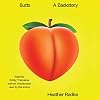
Butts: A Backstory
by Heather Radke
On This Page
Description
*ONE OF THE MOST ANTICIPATED BOOKS OF FALL: Esquire, Time, LitHub, The Every Girl, BookPage*"Lively and thorough, Butts is the best kind of nonfiction—the kind that forces you to see something ordinary through completely new eyes." —Esquire, Best Books of 2022 So Far
"One of the year's most ingenious and eye-opening cultural studies." —Publishers Weekly, Best Books of 2022
Whether we love them or hate them, think they're sexy, think they're strange, consider them too big, too small, show more or anywhere in between, humans have a complicated relationship with butts. It is a body part unique to humans, critical to our evolution and survival, and yet it has come to signify so much more: sex, desire, comedy, shame. A woman's butt, in particular, is forever being assessed, criticized, and objectified, from anxious self-examinations trying on jeans in department store dressing rooms to enduring crass remarks while walking down a street or high school hallways. But why? In Butts: A Backstory, reporter, essayist, and RadioLab contributing editor Heather Radke is determined to find out.
Spanning nearly two centuries, this "whip-smart" (Publishers Weekly, starred review) cultural history takes us from the performance halls of 19th-century London to the aerobics studios of the 1980s, the music video set of Sir Mix-a-Lot's "Baby Got Back" and the mountains of Arizona, where every year humans and horses race in a feat of gluteal endurance. Along the way, she meets evolutionary biologists who study how butts first developed; models whose measurements have defined jean sizing for millions of women; and the fitness gurus who created fads like "Buns of Steel." She also examines the central importance of race through figures like Sarah Bartmann, once known as the "Venus Hottentot," Josephine Baker, Jennifer Lopez, and other women of color whose butts have been idolized, envied, and despised.
Part deep dive reportage, part personal journey, part cabinet of curiosities, Butts is an entertaining, illuminating, and thoughtful examination of why certain silhouettes come in and out of fashion—and how larger ideas about race, control, liberation, and power affect our most private feelings about ourselves and others. show less
Tags
Recommendations

























Member Recommendations

Member Reviews
This book immediately went onto The List after I ordered it for work: the combination of title, cover, and blurb being impossible to resist. And the book did not disappoint. In a series of essays, Heather Radke, explores the (feminine) butt. She starts with physiology and talks about how the butt is vital in being able to run (who knew?). She looks at the butt in fashion - exploring both the bustle in Victorian clothing and the pains of ready-made fashion which means no one's butt every truly fits well in a pair of pants. She also repeatedly engages with the intertwining of race and the perception of the female backside in multiple essays that are illuminating, enraging, and occasionally heartbreaking. There's also plenty of engagement show more with the butt in pop culture from J-Lo's butt to Baby's Got Back. I have been pushing this book at everyone I know since I finished it and if I'd borrowed it from my work library it would have gone back with a Staff Picks sticker. Highly recommended. show less
Butts - A Backstory by Heather Radke is just that; a history of butts, bottoms, bums and backsides. Heather Radke is an essayist and journalist and makes it clear early on that this exploration will focus on her own individual interest in the topic.
Published last year, the fact this wasn't going to be a - presumably dry - dull academic offering on the topic with the occasional interesting factoid was the primary appeal.
Don't take my word for it, let's hear it from the author in her own words:
"Ultimately though, this book is an idiosyncratic one. It stems from the questions that most interest me about the butt. Questions of race, gender, control, fitness, fashion and science." Introduction
I enjoyed setting expectations aside and show more following Radke as she covered various changes in fashion and the perception of women's butt size across history. A large derriere was once a sign of sexual deviance or sexual appetite which ironically led to the women's fashion for bustles. (See my review of Pockets - An Intimate History of How We Keep Things Close by Hannah Carlson for more on bustles.)
All that aside, I was very shocked to discover:
"In the early nineteenth century, there was a new mania for butts spreading through the British capital. Londoners were obsessed with butts. There were fart clubs where people gathered and drank different juices to see what sounds and odours they would produce." Chapter Life
Really? I wonder how prevalent this was. Black female bodies and sexuality were discussed and those who know their history won't be surprised to learn this included the case of Sarah Baartman. In the past, the butt had become a proxy for female genitalia, but like all fashion, the tides eventually turned.
After WWI, the art deco movement emerged which accompanied a significant change in women's beauty. After the lean war years of food rationing, women with curves were no longer desired and instead the flapper trend was born. Corsets and foundation garments were out and flappers were all about lean lines, straight sleeveless dresses with minimal bust or backside.
In France at around the same time was the dancing sensation Josephine Baker. Unfamiliar with her stardom and infamous banana dance - and putting this audiobook aside to watch it - I was struck by how similar the banana dance is to the provocative dance styles, hip shaking and twerking we saw emerging in the 1980s and 1990s and still today. Don't believe me? Check it out.
In the 1930s, women had difficulty buying clothing that fit off the rack due to a lack of a regulated and uniform sizing system. A study sent government employed measurers in multiple US states to measure the girth, length and height of the American woman. Later a statue of a man and a woman was created that were said to represent the average American - despite only white women being measured - and were named Norma and Normman. Radke takes the time to point out that the Norma statue doesn't have a thigh gap and how ridiculous the ideal of having a thigh gap is.
Moving on, in the 1980s Jane Fonda kicked off the aerobics craze and the infamous Buns of Steel movement. Prior to this, women didn't often work out as athletic bodies weren't considered attractive. Then Jane Fonda arrived and the rest is history. Just as Jane Fonda changed how women - and men - saw their bodies, more recent changes and influences were also included.
I greatly enjoyed learning about the influence Jennifer Lopez, Beyonce and Kim Kardashian had in popularising the return of bootylicious curves, which were a response to the 'heroin chic' look of Kate Moss. Entire chapters were devoted to Jane Fonda, Beyonce, Kate Moss, Jennifer Lopez, Kim Kardashian and Miley Cyrus and an entire chapter dedicated to the Twerk. My favourite chapter focussed on the work and opinions of Sir Mix-a-Lot and 'that' song Baby Got Back. ("Look at that butt Becky").
Those looking for commentary on butt lifts, butt implants and the BBL won't find any plastic surgery content here. Knowing in advance Radke was going to be following her interests, I can only assume this aspect of butt enhancement wasn't as engaging as the other topics.
Butts - A Backstory by Heather Radke primarily focusses on the female butt while covering a range of interesting topics: science, eugenics, fashion, history, music, celebrity culture, race, sexuality and female empowerment.
Highly recommended. show less
Published last year, the fact this wasn't going to be a - presumably dry - dull academic offering on the topic with the occasional interesting factoid was the primary appeal.
Don't take my word for it, let's hear it from the author in her own words:
"Ultimately though, this book is an idiosyncratic one. It stems from the questions that most interest me about the butt. Questions of race, gender, control, fitness, fashion and science." Introduction
I enjoyed setting expectations aside and show more following Radke as she covered various changes in fashion and the perception of women's butt size across history. A large derriere was once a sign of sexual deviance or sexual appetite which ironically led to the women's fashion for bustles. (See my review of Pockets - An Intimate History of How We Keep Things Close by Hannah Carlson for more on bustles.)
All that aside, I was very shocked to discover:
"In the early nineteenth century, there was a new mania for butts spreading through the British capital. Londoners were obsessed with butts. There were fart clubs where people gathered and drank different juices to see what sounds and odours they would produce." Chapter Life
Really? I wonder how prevalent this was. Black female bodies and sexuality were discussed and those who know their history won't be surprised to learn this included the case of Sarah Baartman. In the past, the butt had become a proxy for female genitalia, but like all fashion, the tides eventually turned.
After WWI, the art deco movement emerged which accompanied a significant change in women's beauty. After the lean war years of food rationing, women with curves were no longer desired and instead the flapper trend was born. Corsets and foundation garments were out and flappers were all about lean lines, straight sleeveless dresses with minimal bust or backside.
In France at around the same time was the dancing sensation Josephine Baker. Unfamiliar with her stardom and infamous banana dance - and putting this audiobook aside to watch it - I was struck by how similar the banana dance is to the provocative dance styles, hip shaking and twerking we saw emerging in the 1980s and 1990s and still today. Don't believe me? Check it out.
In the 1930s, women had difficulty buying clothing that fit off the rack due to a lack of a regulated and uniform sizing system. A study sent government employed measurers in multiple US states to measure the girth, length and height of the American woman. Later a statue of a man and a woman was created that were said to represent the average American - despite only white women being measured - and were named Norma and Normman. Radke takes the time to point out that the Norma statue doesn't have a thigh gap and how ridiculous the ideal of having a thigh gap is.
Moving on, in the 1980s Jane Fonda kicked off the aerobics craze and the infamous Buns of Steel movement. Prior to this, women didn't often work out as athletic bodies weren't considered attractive. Then Jane Fonda arrived and the rest is history. Just as Jane Fonda changed how women - and men - saw their bodies, more recent changes and influences were also included.
I greatly enjoyed learning about the influence Jennifer Lopez, Beyonce and Kim Kardashian had in popularising the return of bootylicious curves, which were a response to the 'heroin chic' look of Kate Moss. Entire chapters were devoted to Jane Fonda, Beyonce, Kate Moss, Jennifer Lopez, Kim Kardashian and Miley Cyrus and an entire chapter dedicated to the Twerk. My favourite chapter focussed on the work and opinions of Sir Mix-a-Lot and 'that' song Baby Got Back. ("Look at that butt Becky").
Those looking for commentary on butt lifts, butt implants and the BBL won't find any plastic surgery content here. Knowing in advance Radke was going to be following her interests, I can only assume this aspect of butt enhancement wasn't as engaging as the other topics.
Butts - A Backstory by Heather Radke primarily focusses on the female butt while covering a range of interesting topics: science, eugenics, fashion, history, music, celebrity culture, race, sexuality and female empowerment.
Highly recommended. show less
Early on, Radke sets out the case for a book about butts:
They are not like elbows or knees, functional body parts that carry few associations beyond their physiological function. Instead, butts, silly as they may often seem, are tremendously complex symbols, fraught with significance and nuance, laden with humor and sex, shame and history.
For much of the book, she makes a good case for this. We covered physiology (eg the importance of the butt for running upright), new thinking in evolutionary psychology (including the idea that animals might look for something in a mate not purely for reasons of evolutionary fitness), and the shifting waves of fashion. I was particularly fascinated to learn that garment manufacturers don't actually show more expect their clothes to fit women's bodies, because a few measurements can't possibly tell you what the overall body shape will be.
It isn’t that they don’t want to make clothes that fit a variety of bodies, it’s just that, even with advanced technology and manufacturing, it is simply impossible. Fit, after all, is determined by the distribution of flesh around a body, Glaum-Lathbury explains, and flesh cannot be standardized. Even if two women have the exact same height and circumference measurements, they don’t necessarily share the same flesh distribution over their bones.
One early standard, based on measurements of thousands of US women, came up with 27 different sizes - far too many for a clothing manufacturer to deal with.
I was also interested in the sections on Sarah Baartman and Josephine Baker. The book lost its way though in the final third, covering the last 30 years or so. It went into far too much detail about Kate Moss, J-Lo, Beyoncé, Kim Kardashian, Miley Cyrus, etc - and even worse, rather than making one consistent argument, Radke largely repeated all the twists and turns of the manufactured "controversies" in the media at the time - these were repetitive, and really, who cares? It would have been much better to give one chapter only to these sections and to make a consistent critical argument covering the whole period. show less
They are not like elbows or knees, functional body parts that carry few associations beyond their physiological function. Instead, butts, silly as they may often seem, are tremendously complex symbols, fraught with significance and nuance, laden with humor and sex, shame and history.
For much of the book, she makes a good case for this. We covered physiology (eg the importance of the butt for running upright), new thinking in evolutionary psychology (including the idea that animals might look for something in a mate not purely for reasons of evolutionary fitness), and the shifting waves of fashion. I was particularly fascinated to learn that garment manufacturers don't actually show more expect their clothes to fit women's bodies, because a few measurements can't possibly tell you what the overall body shape will be.
It isn’t that they don’t want to make clothes that fit a variety of bodies, it’s just that, even with advanced technology and manufacturing, it is simply impossible. Fit, after all, is determined by the distribution of flesh around a body, Glaum-Lathbury explains, and flesh cannot be standardized. Even if two women have the exact same height and circumference measurements, they don’t necessarily share the same flesh distribution over their bones.
One early standard, based on measurements of thousands of US women, came up with 27 different sizes - far too many for a clothing manufacturer to deal with.
I was also interested in the sections on Sarah Baartman and Josephine Baker. The book lost its way though in the final third, covering the last 30 years or so. It went into far too much detail about Kate Moss, J-Lo, Beyoncé, Kim Kardashian, Miley Cyrus, etc - and even worse, rather than making one consistent argument, Radke largely repeated all the twists and turns of the manufactured "controversies" in the media at the time - these were repetitive, and really, who cares? It would have been much better to give one chapter only to these sections and to make a consistent critical argument covering the whole period. show less
Road-trip audiobook!
Based on the cover, I came into this expecting a fun look at butts in pop culture, but instead it is a serious and heavy look at body image, sexism, racism, and cultural appropriation that stretches back to the dawn of mankind with the evolutionary reasons that butts exist. There's still plenty of modern pop culture, but it is all deeply analyzed for its usually negative impact on women and/or Black people.
Despite my misconception, I quickly found myself fascinated by the subject matter, and it kept me engaged for the entirety of my long drive. Good stuff.
FOR REFERENCE:
Contents:
Introduction
Origins
• Muscle
• Fat
• Feathers
Sarah
• Life
• Legacy
Shape
• Bigness
• Smallness
Norma
• Creation
• show more Proliferation
• Resistance
Fit
• Steel
• Joy
Bootylicious
• Kate
• Mix
• Jennifer
• Kim
Motion
• Twerk
• Miley
• The Year of the Butt
• Reclamation
Conclusion
Acknowledgments
Notes
Index show less
Based on the cover, I came into this expecting a fun look at butts in pop culture, but instead it is a serious and heavy look at body image, sexism, racism, and cultural appropriation that stretches back to the dawn of mankind with the evolutionary reasons that butts exist. There's still plenty of modern pop culture, but it is all deeply analyzed for its usually negative impact on women and/or Black people.
Despite my misconception, I quickly found myself fascinated by the subject matter, and it kept me engaged for the entirety of my long drive. Good stuff.
FOR REFERENCE:
Contents:
Introduction
Origins
• Muscle
• Fat
• Feathers
Sarah
• Life
• Legacy
Shape
• Bigness
• Smallness
Norma
• Creation
• show more Proliferation
• Resistance
Fit
• Steel
• Joy
Bootylicious
• Kate
• Mix
• Jennifer
• Kim
Motion
• Twerk
• Miley
• The Year of the Butt
• Reclamation
Conclusion
Acknowledgments
Notes
Index show less
This book wasn’t sure what it wanted to be. It certainly was not all about butts and it certainly wasn’t any sort of history of butts. It started good and on point, but a little less than halfway through it went off on personal stories that had nothing to do with butts, it took a turn to look at the exercise industry in general (she mentioned butts once in a whole section on Jane Fonda), and it seemed to focus a lot on modern stories like Miley Cyrus, Kim Kardashian, and Jennifer Lopez - which if you haven’t lived under a rock, you already knew about. I generally would call myself a feminist, but when she tried to assert that aerobics classes are trying to teach women to be submissive because you are supposed to do all the moves show more the instructor does, it went a little too far even for me. I think the author has a lot of self image issues and has dealt with a lot of difficulties due to her gender and identity, which I can empathize with, so a lot of that comes out in the book, which is fine if I’m reading a memoir, but it’s just not what I was expecting in a history of butts. I was expecting an entertaining history of butts, this was not that. show less
The author takes what could be an amusing and educational topic and used it to promote the ideas of queerness and racism. She begins by saying that all non-Africans appropriated the “ideal butt” from the exploitation of Sarah Baartman, a Black South African woman who was displayed in 19th-century Europe because of her body. Baartman becomes a key example of how Black bodies were objectified and turned into spectacles for white audiences, who later appropriated the idea or style. Radke also brings into some of her essays her queerness and her discomfort when somebody commented on her butt when she was younger. I’m not sure what the point was, that idea surfaced several times but was not fully developed. I feel her sexual show more orientation interrupted the narrative rather than augmented it. I’m going to step out here and say something that I know nothing about, that I think she was hinting, very weakly, that gender identification shapes ideas of beauty. There was a modicum of history about the obsession with the butt, from the 19th century to the pop icons of today such as Jennifer Lopez, Kim Kardashian, and Beyonce, just to name a few. Her point in this essay was to show how the “ideal” body—particularly the butt—moves from stigmatized to widely accepted once it becomes profitable. It was difficult for me to focus. Just when I thought I was settling in on a topic, a new one appeared, leading me to think the topics were in general superficial. Fun factoid: without the gluteal muscles, humans would not be able to run, and that the shape of the butt can influence speed—a detail that stands out more clearly than many of the book’s other arguments. 307 pages show less
I had heard this was good, but didn't have expectations beyond a funny and informative book. This reminded me of a much more digestible version of Fearing the Black Body. Its focus is definitely more on female bodies as a whole rather than butts specifically. And given everything that white cultures have ever enjoyed seems to be appropriated from Black culture, that plays heavily into the narrative of this book.
Members
- Recently Added By
Lists

Weirdo Nonfiction
138 works; 3 members
Author Information

Some Editions
Awards and Honors
Awards
Distinctions
Common Knowledge
- Original publication date
- 2022-11
- People/Characters
- Nicholas About; Ben Affleck; Elizabeth Alexander; Sarah Baartman (Venus Hottentot); Jean-Claude Baker; Josephine Baker (show all 199); Tyra Banks; Ron Barrett; Drew Barrymore; Alex Bartlett; Jamie Bartlett; Simone de Beauvoir; Abram Belskie; Adam Bernstein; Beyoncé Knowles; Big Freedia; Bruce Bliven; Usain Bolt; Dennis Bramble; Christie Brinkley; Mika Brzezinski; Deb Burgard; Judith Butler; Peter Caesars; Heyworth Campbell; Rosezella Canty-Letsome; Coco Chanel; Dan Charnas; Ciara; Kelly Clarkson; Bill Clinton; George Clooney; Chris Connelly; Gordon Conway; Tommie Conway; James Corden; Nick Coury; Arthur Crudup; Vinnie Cuccia; Georges Cuvier; Billy Ray Cyrus; Miley Cyrus; Charles Darwin [Charles Robert: 1809-1882]; Allison P. Davis; Abele de Blasio; Ellen DeGeneres; Destiny's Child (musical group); Robert Latou Dickinson; Brenda Dixon Gottschild; Amylia Dorsey-Rivas; Alexander Dunlop; Aisha Durham; Edwina Ehrman; Havelock Ellis; Jenny Ellison; Ralph Waldo Emerson; Dennis Farina; Ronald Fisher; Jane Fonda; Patti Galluzzi; Francis Galton; Henry Louis Gates, Jr.; Kyra D. Gaunt; Théophile Gautier; Bruno Gebhard; Charles Gibson; Sander Gilman; Abigail Glaum-Lathbury; Tipper Gore; Jean-Paul Goude; Stephen Jay Gould; Asa Gray; Sarah Hale; Chris Haufe; Tom Hayden; John Held Jr.; Anita Hill; Paris Hilton; Janell Hobson; Morgan Hoke; Anne Hollander; Whitney Houston; Michael Jackson; Caitlyn Jenner; Kris Jenner; Grace Jones; Lisa Jones; Lydia Jones; Kim Kardashian; Robert Kardashian; Stuart Karl; John Keats; Merline Kimble; Calvin Klein; Lucy Lawless; Tina Lawson; Richard Leakey; Jay Leno; André Levinson; Richard Lewontin; Daniel Lieberman; Carl Linnaeus; LL Cool J; Jennifer Lopez; Eric Lott; Ed Lover; Pat Lyons; Zachary Macaulay; Howard Maier; Nomusa Makhubu; Nelson Mandela; Wynton Marsalis; Gilda Marx; Thabo Mbeki; Pippa Middleton; Nicki Minaj; Judi Missett; Sir Mix-A-Lot; Claude Monet; Wesley Morris; Toni Morrison; Kate Moss; Napoleon Bonaparte; Gregory Nava; Bernard Ngeneo; Ruth O'Brien; Kelechi Okafor; Sarah Palin; Suzan-Lori Parks; Dolly Parton; Kate Partridge; Elizabeth Pérez; Natalia Petrzela; Pharrell Williams; Paul Poiret; Elvis Presley; Prince; Marcel Proust; Jules Prown; Richard Prum; Selena; Selena Quintanilla-Pérez; Selena Quintanilla; Ray J; S. Reaux; Katey Red; Cecil Rhodes; Nicole Richie; Teddy Riley; Arthur Rimbaud; William Z. Ripley; Josephine Robertson; Tricia Rose; Peter Paul Rubens; Run-DMC; RuPaul; Jen Selter; Harry L. Shapiro; Sherri Shepherd; Brooke Shields; Alicia Silverstone; O. J. Simpson; Sisqo; Martha Skidmore; Ken Smikle; Christopher Smith; Greg Smithey; Snoop Dogg; Steven Soderbergh; Suzanne Somers; Jacki Sorensen; Lee Spieker; Valerie Steele; Sharon Stone; Sabrina Strings; Devjanee Swain-Lenz; Greg Tate; Henry Taylor; Robin Thicke; Phillip Tobias; Meghan Trainor; Sharon Turner; 2 Live Crew; Mansell Upham; Kim Marie Vaz; Natasha Wagner; Mark Wahlberg; Tamilee Webb; Cornel West; James McNeill Whistler; Oscar Wilde; Teresa Wiltz; Oprah Winfrey; John Winthrop; Susan Wojcicki; Wreckx-n-Effect; Huican Zhu; Zig Ziglar; Heather Radke
- Dedication
- For my mother
- First words
- The first butt I remember isn't my own. It's my mother's. [Introduction]
If you happened to happened to find yourself near the arid shores of Kenya's Lake Turkana 1.9 million years ago, you might have encountered the first know hominid with a butt. [Muscle] - Last words
- (Click to show. Warning: May contain spoilers.)And sometimes, when I'm standing there in my underwear, before I've pulled on pants or stepped into the world, my butt doesn't feel like a problem or a blessing. It's just a fact.
- Blurbers
- Jamison, Leslie; Als, Hilton; Miller, Lulu; Febos, Melissa; Kisner, Jordan
- Original language
- English
- Canonical DDC/MDS
- 391.6
Classifications
Statistics
- Members
- 341
- Popularity
- 92,905
- Reviews
- 15
- Rating
- (3.70)
- Languages
- English
- Media
- Paper, Audiobook, Ebook
- ISBNs
- 6
- ASINs
- 4