On This Page
Description
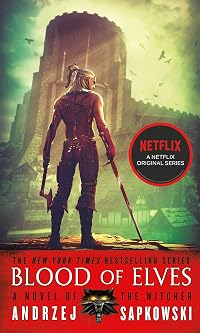
Into a tumultuous time is born a child for whom the witches of the world have been waiting. Ciri, the granddaughter of Queen Calanthe, the Lioness of Cintra, has strange powers and a strange destiny, for prophecy names her the Flame, one with the power to change the world: for good, or for evil.Tags
Recommendations

Member Recommendations
Member Reviews
This was such an enjoyable dip into a richly imagined fantasy world. My partner’s interest in the games got us watching the Netflix adaptation, and reading the books felt like the logical next step. This mass-market paperback sold me completely. I’m ready for the full boxed set. The storyline shares some beats with the show, but there’s enough distinction to keep it feeling fresh. Ciri is young, impulsive, and incredibly relatable. Geralt is dark and brooding but also caring. I love their interactions with each other and beyond. The world-building is immersive, brimming with the detail that fuels endless exploration and adaptation. It’s easy to see why this universe has inspired games, shows, and surely an abundance of show more fanfiction. The writing has a unique voice, balancing humour and heart. It’s hard to tell how much credit belongs to Sapkowski versus the translator, but the result is fantastic. I’ll be getting into the earlier short story collections and continuing the series as soon as I get my hands on them. So far, the books are absolutely worth the read. show less
The child is hunted because of her lineage and the power in her blood, yet she is under the protection of a man mutated to protect people from monster beasts. Blood of Elves by Andrzej Sapkowski is the first novel of The Witcher series as the titular character Geralt of Rivia looks after Ciri, the child of destiny and heir of Cintra.
Set in the aftermath of a war of conquest a few years before, the story sees Geralt and Ciri—a politically neutral witcher and the fugitive princess of conquered Cintra—navigate the new political order was one looks to find those looking for his ward and eliminate them while learns not only to fight but her magical potential. The novel feels like a string of Sapkowski’s short stories that at first show more seemed to be linked towards a narrative climax, but suddenly in the middle of the book things just get fractured into different storylines and timeframes with no narrative cohesion nor a satisfying stopping point in the arcs begun in the book. Overall Sapkowski’s action scenes and world building are very good, but the biggest fault is the randomization of narratives that are just introduced haphazardly chronologically in the flow of the book.
Blood of Elves is an okay start of The Witcher series by Andrzej Sapkowski as it has good action scenes and background worldbuilding, but its overall structure especially in the second half of the book muddies things. show less
Set in the aftermath of a war of conquest a few years before, the story sees Geralt and Ciri—a politically neutral witcher and the fugitive princess of conquered Cintra—navigate the new political order was one looks to find those looking for his ward and eliminate them while learns not only to fight but her magical potential. The novel feels like a string of Sapkowski’s short stories that at first show more seemed to be linked towards a narrative climax, but suddenly in the middle of the book things just get fractured into different storylines and timeframes with no narrative cohesion nor a satisfying stopping point in the arcs begun in the book. Overall Sapkowski’s action scenes and world building are very good, but the biggest fault is the randomization of narratives that are just introduced haphazardly chronologically in the flow of the book.
Blood of Elves is an okay start of The Witcher series by Andrzej Sapkowski as it has good action scenes and background worldbuilding, but its overall structure especially in the second half of the book muddies things. show less
Everyone is after Ciri, an adolescent runaway with royal heritage. She is lucky enough to be taken in by Geralt, a grizzly witcher, meaning a chemically enhanced monster killer with lightning reflexes, and heightened skills and senses. When Ciri's powerful, potentially prescient dreams get out of control, Geralt first seeks the help of one female magician, Triss Merigold, before reluctantly asking a more powerful magician, Yennefer - a former lover, to step in and guide the girl. But what exactly is she? Part elf? Part magician? The source of the planet's destruction, or its saviour?
The novel is told via a series of episodes that loosely link together. Although the fantasy element, with magic, dwarfs, monsters and so on, is laid on show more thick, it is written with a clear maturity, where relationships and characters are complex, and the plot is involved and highly political. It is engrossing to read, and you do feel drawn into this world.
However, there were a few niggles that detracted from this. First, this is very much the middle of the story, and it really felt to me like a book section, or even an extended chapter inside a larger story, rather than a novel in its own right. Also, I struggled a little to find the world believable given how incredibly knowledgeable many characters are about medicine, illness, and so on - they at times seem to have very modern understanding, despite the medieval setting.
Nevertheless this is one of the best fantasy novels I've read, and I'm looking forward to getting my hands on the other volumes. show less
The novel is told via a series of episodes that loosely link together. Although the fantasy element, with magic, dwarfs, monsters and so on, is laid on show more thick, it is written with a clear maturity, where relationships and characters are complex, and the plot is involved and highly political. It is engrossing to read, and you do feel drawn into this world.
However, there were a few niggles that detracted from this. First, this is very much the middle of the story, and it really felt to me like a book section, or even an extended chapter inside a larger story, rather than a novel in its own right. Also, I struggled a little to find the world believable given how incredibly knowledgeable many characters are about medicine, illness, and so on - they at times seem to have very modern understanding, despite the medieval setting.
Nevertheless this is one of the best fantasy novels I've read, and I'm looking forward to getting my hands on the other volumes. show less
It's funny, halfway through I would've given this a solid three stars, but it ended on such a high note that it colored my opinion of the rest of the book.
More than anything, Blood of Elves is chock full: of characters, of plots, of setup. At times it can feel like you're running behind Andrzej Sapkowski, trying frantically to grab hold of his coat, while he sprints ahead of you tossing exposition over his shoulder. And yet, despite the abundance of new characters and crucial mysteries, there is remarkably little movement. Not much actually... changes? It is a novel's worth of setup--getting the pieces into place so that they can start to move, hopefully, in the later installments.
And you can definitely tell that this is Sapkowski's show more first Witcher novel, because his instinct for the first half is still to chop the action up into temporally, spacially, even tonally distinct episodes (Triss and the witchers raising Ciri at Kaer Morhen, Geralt patrolling the delta on a barge). He has a propensity to introduce fascinating, seemingly very important characters--Philippa Eilhart, Djikstra, Vilgefortz of Roggeveen--give them one scene and then drop them from the narrative entirely, something which feels like a holdover from the short story format.
My last gripe is that this book really should have come with a map. I'm frankly baffled that it didn't. Maybe Sapkowski hadn't finalized the geography yet, but it certainly seems final here... At the opening of Chapter 6, several monarchs have a very consequential discussion in which they formulate a plan to break their armistice with Nilfgaard and there is so much geopolitical detail that I had to cross-reference fanmade maps with maps from the various games to figure out where Redania was in relation to the Yoruga or whatever. Crazy-making. A lot of this book's plot has to do with the formation of and tension between alliances so please, give a girl a map.
To end this review on a high note as well, I was a huge fan of Blood of Elves' final section, in which Ciri meets Yennefer and begins an education in magic. Yennefer is my favorite character of these books so far and this chapter displays all the best parts of her: honesty, pride, razor-sharp wit, unwavering strength, a surprising tenderness and depth of feeling. Geralt's absence here is absolutely crucial--they both love him and are deeply important to him but here they're able to bond without his influence. I hope for more scenes between the two of them, and I hope the next book has some of the momentum this one lacked! show less
More than anything, Blood of Elves is chock full: of characters, of plots, of setup. At times it can feel like you're running behind Andrzej Sapkowski, trying frantically to grab hold of his coat, while he sprints ahead of you tossing exposition over his shoulder. And yet, despite the abundance of new characters and crucial mysteries, there is remarkably little movement. Not much actually... changes? It is a novel's worth of setup--getting the pieces into place so that they can start to move, hopefully, in the later installments.
And you can definitely tell that this is Sapkowski's show more first Witcher novel, because his instinct for the first half is still to chop the action up into temporally, spacially, even tonally distinct episodes (Triss and the witchers raising Ciri at Kaer Morhen, Geralt patrolling the delta on a barge). He has a propensity to introduce fascinating, seemingly very important characters--Philippa Eilhart, Djikstra, Vilgefortz of Roggeveen--give them one scene and then drop them from the narrative entirely, something which feels like a holdover from the short story format.
My last gripe is that this book really should have come with a map. I'm frankly baffled that it didn't. Maybe Sapkowski hadn't finalized the geography yet, but it certainly seems final here... At the opening of Chapter 6, several monarchs have a very consequential discussion in which they formulate a plan to break their armistice with Nilfgaard and there is so much geopolitical detail that I had to cross-reference fanmade maps with maps from the various games to figure out where Redania was in relation to the Yoruga or whatever. Crazy-making. A lot of this book's plot has to do with the formation of and tension between alliances so please, give a girl a map.
To end this review on a high note as well, I was a huge fan of Blood of Elves' final section, in which Ciri meets Yennefer and begins an education in magic. Yennefer is my favorite character of these books so far and this chapter displays all the best parts of her: honesty, pride, razor-sharp wit, unwavering strength, a surprising tenderness and depth of feeling. Geralt's absence here is absolutely crucial--they both love him and are deeply important to him but here they're able to bond without his influence. I hope for more scenes between the two of them, and I hope the next book has some of the momentum this one lacked! show less
I enjoyed the first two Witcher story collections and was eager to dive into the full novels. While interesting, this first book is really just a first act introduction. The threads of an overarching plot are introduced via a prophecy of doom (is there any other kind?) that centers on Ciri.
The story opens with Ciri living and training in the Witcher stronghold with Geralt. She shows untapped power, and they invite the sorceress Triss Merigold to come assess/help. Ciri is beyond her skill and recommends Geralt contact Yennefer. Come Spring, Ciri travels to Nenneke's temple and the rest of the book takes place there as she is trained by Yennefer.
The expanded world-building kept me turning the pages, and Ciri is more engaging and show more developed here than the tv show. However, without Geralt, the book has very little action and the plot doesn't go beyond a general tesse.
Nevertheless, I enjoyed getting to know Ciri and Yennefer and look forward to seeing where the prphecy leads. Hopefully back to Geralt. show less
The story opens with Ciri living and training in the Witcher stronghold with Geralt. She shows untapped power, and they invite the sorceress Triss Merigold to come assess/help. Ciri is beyond her skill and recommends Geralt contact Yennefer. Come Spring, Ciri travels to Nenneke's temple and the rest of the book takes place there as she is trained by Yennefer.
The expanded world-building kept me turning the pages, and Ciri is more engaging and show more developed here than the tv show. However, without Geralt, the book has very little action and the plot doesn't go beyond a general tesse.
Nevertheless, I enjoyed getting to know Ciri and Yennefer and look forward to seeing where the prphecy leads. Hopefully back to Geralt. show less
The thing I was most struck by in Blood of Elves -- aside from the character work, which remains my favorite aspect of this series -- is its structure. Despite being a novel in every sense of the word, Sapkowski's chapters are segmented in such a way that they feel like short stories. The timelines aren't as bifurcated as they are in the prior two entries, but they also don't flow together in the way you expect.
The Kaer Morhen and Ciri/Yen chapters were my favorite. I especially loved watching Ciri and Yen's relationship blossom.
This was a lot slower paced than I was expecting. There is plenty of blood and magic involved, but the book's general tenor feels more like set-up than bombast. But I liked that. The characters are what drew me show more in, and as long as that focus remains, I'll be a happy reader. show less
The Kaer Morhen and Ciri/Yen chapters were my favorite. I especially loved watching Ciri and Yen's relationship blossom.
This was a lot slower paced than I was expecting. There is plenty of blood and magic involved, but the book's general tenor feels more like set-up than bombast. But I liked that. The characters are what drew me show more in, and as long as that focus remains, I'll be a happy reader. show less
4.5 stelle.
"La magia ti tende la mano, Ciri. A te, strana bambina, Sorpresa, Figlia del sangue Antico, il Sangue degli elfi. Strana bambina intessuta di Movimento e Cambiamento, Distruzione e Rinascita. Destinata e tu stessa destino. La magia ti tende la mano da dietro la porta chiusa. A te, granellino di sabbia begli ingranaggi dell'orologio della Sorte. Tende le sue grinfie verso di te il Caos, che non sa ancora se diventerai uno strumento o un ostacolo ai suoi piani. Ciò che ti mostra in sogno è appunto questa incertezza. Il Caos ha paura di te, Bambina Sorpresa. E vuole fa sì che sia tu ad averne."
Dopo il precedente volume che non era altro che la seconda raccolta di racconti e che non mi aveva convinto molto, non sapevo cosa show more aspettarmi da questo primo romanzo.
Partendo dal presupposto che questo libro non ha una fine, come ha scritto Lys nella sua recensione, e gli eventi vengono messi in pausa, un po' come nei libri di ASOIAF di Martin, il Sangue degli Elfi è riuscito comunque a conquistarmi.
In questo primo romanzo vengono poste le basi per una buona trama, dei personaggi ben caratterrizzati e un worldbuilding che, seppur sia pennellato a tratti e risulta di tanto in tanto vago, trovo sia originale ed efficace.
Cerco di esaminare ogni punto un po' più approfonditamente.
Personaggi: più che Geralt, che abbiamo conosciuto tramite dei flash nelle raccolte di racconti, qui la protagonista è Ciri che sta iniziando il suo addestramento come stringa/maga.
Solitamente sui personaggi femminili ho sempre delle riserve, non riesco ad entrare in empatia..questa volta invece ho amato questo personaggio dall'inizio alla fine.
Tenera e tenace, trasparente e curiosa, Ciri ha un rapporto speciale con lo strigo e profondo con la maga Yennefer.
Come personaggi secondari ritroviamo di nuovo il nostro Ranuncolo (Dandelion, in inglese) e la maga Triss.
Per quanto riguarda i cattivi, mi riesce difficile tirare una riga di confine, perché ognuno fa i suoi interessi e tira acqua al proprio mulino per ottenere sempre più potere. Dovrei leggere i seguiti per capire se ci sono particolari evoluzioni.
Trama:
Sullo sfondo dell'addestramento di Ciri ci sono intrighi, spie, una imminente guerra e gente che la vuole morta o addirittura vuole vedere morti tutti. Risultato: forse lo vedremo nel seguito. Per ora ci sono le premesse.
Worldbuilding:
Gli strighi, o meglio i Witchers, sono unici, non sono propriamente stregoni, né maghi, né guerrieri, ma sono mutanti che hanno in sé più caratteristiche.
L'ambientazione è un po' vaga. Non c'è una mappa per ora, ma vengono nominate città, un Nord e un Sud, secondo me quel che basta ai fini della narrazione. Siamo in un mondo medievaleggiante, ma non rientra nei canoni della nostra storia e vi sono svariate razze, alcune conosciute, come umani, nani ed elfi ed altre inventate oppure risalenti al folklore slavo (non ne ho idea) come le driadi e svariati "bestie/animali" umanoidi o meno.
Consigliato a tutti. Dovete conoscere Sapkowski, o meglio quel figo di Geralt, l'adorabile Cori, quello strampalato di Ranuncolo e la potente maga Yennefer. show less
"La magia ti tende la mano, Ciri. A te, strana bambina, Sorpresa, Figlia del sangue Antico, il Sangue degli elfi. Strana bambina intessuta di Movimento e Cambiamento, Distruzione e Rinascita. Destinata e tu stessa destino. La magia ti tende la mano da dietro la porta chiusa. A te, granellino di sabbia begli ingranaggi dell'orologio della Sorte. Tende le sue grinfie verso di te il Caos, che non sa ancora se diventerai uno strumento o un ostacolo ai suoi piani. Ciò che ti mostra in sogno è appunto questa incertezza. Il Caos ha paura di te, Bambina Sorpresa. E vuole fa sì che sia tu ad averne."
Dopo il precedente volume che non era altro che la seconda raccolta di racconti e che non mi aveva convinto molto, non sapevo cosa show more aspettarmi da questo primo romanzo.
Partendo dal presupposto che questo libro non ha una fine, come ha scritto Lys nella sua recensione, e gli eventi vengono messi in pausa, un po' come nei libri di ASOIAF di Martin, il Sangue degli Elfi è riuscito comunque a conquistarmi.
In questo primo romanzo vengono poste le basi per una buona trama, dei personaggi ben caratterrizzati e un worldbuilding che, seppur sia pennellato a tratti e risulta di tanto in tanto vago, trovo sia originale ed efficace.
Cerco di esaminare ogni punto un po' più approfonditamente.
Personaggi: più che Geralt, che abbiamo conosciuto tramite dei flash nelle raccolte di racconti, qui la protagonista è Ciri che sta iniziando il suo addestramento come stringa/maga.
Solitamente sui personaggi femminili ho sempre delle riserve, non riesco ad entrare in empatia..questa volta invece ho amato questo personaggio dall'inizio alla fine.
Tenera e tenace, trasparente e curiosa, Ciri ha un rapporto speciale con lo strigo e profondo con la maga Yennefer.
Come personaggi secondari ritroviamo di nuovo il nostro Ranuncolo (Dandelion, in inglese) e la maga Triss.
Per quanto riguarda i cattivi, mi riesce difficile tirare una riga di confine, perché ognuno fa i suoi interessi e tira acqua al proprio mulino per ottenere sempre più potere. Dovrei leggere i seguiti per capire se ci sono particolari evoluzioni.
Trama:
Sullo sfondo dell'addestramento di Ciri ci sono intrighi, spie, una imminente guerra e gente che la vuole morta o addirittura vuole vedere morti tutti. Risultato: forse lo vedremo nel seguito. Per ora ci sono le premesse.
Worldbuilding:
Gli strighi, o meglio i Witchers, sono unici, non sono propriamente stregoni, né maghi, né guerrieri, ma sono mutanti che hanno in sé più caratteristiche.
L'ambientazione è un po' vaga. Non c'è una mappa per ora, ma vengono nominate città, un Nord e un Sud, secondo me quel che basta ai fini della narrazione. Siamo in un mondo medievaleggiante, ma non rientra nei canoni della nostra storia e vi sono svariate razze, alcune conosciute, come umani, nani ed elfi ed altre inventate oppure risalenti al folklore slavo (non ne ho idea) come le driadi e svariati "bestie/animali" umanoidi o meno.
Consigliato a tutti. Dovete conoscere Sapkowski, o meglio quel figo di Geralt, l'adorabile Cori, quello strampalato di Ranuncolo e la potente maga Yennefer. show less
Members
- Recently Added By
Published Reviews
ThingScore 75
A breath of fresh air in a well-worn genre. Don’t miss it!
added by snurp
Lists

Best Fantasy Originally Published in a Language Other Than English
84 works; 26 members

Favorite Books from the 2000s
35 works; 3 members

Favorite Books from the 1990s
32 works; 3 members

Books Read in 2023
5,638 works; 147 members

SF & Fantasy in Translation
95 works; 18 members

Julie's Read in 2020
18 works; 1 member

Witchy Fiction
253 works; 126 members

Books We Resisted Reading
178 works; 113 members

Read in 2020
33 works; 1 member

Books Read in 2020
4,379 works; 124 members

Five star books
1,767 works; 110 members

aborted books in 2023
11 works; 1 member

Ranking
66 works; 1 member

Mind Expanding Books by hackerkid
581 works; 8 members

KayStJ's to-read list
1,616 works; 11 members

Books Read in 2019
4,052 works; 110 members

Speculative Fiction from around the World
610 works; 18 members

Books Read in 2022
5,226 works; 112 members
Author Information

132+ Works 43,899 Members
Andrzej Sapkowski is a fantasy writer, economist, and translator, he wrote the best-selling book series The Witcher and recently wrote the best-selling book, Lady of the Lake. In 2018 his title, Season of Storms, made the bestseller list. (Bowker Author Biography)
Some Editions
Awards and Honors
Series

Work Relationships
Is contained in
Has the adaptation
Common Knowledge
- Canonical title
- Blood of Elves
- Original title
- Krew elfów
- Alternate titles*
- Tündevér
- Original publication date
- 1993
- People/Characters
- Geralt of Rivia; Yennefer of Vengerberg; Ciri; Rience; Nenneke; Triss Merigold (show all 8); Shani; Jaskier
- Important places
- Kaer Morhen; Oxenfurt; Tempel der Melitele
- Related movies
- Wiedzmin (2001 | IMDb)
- Epigraph
- Verily I say unto you, the era of the sword and axe is nigh, the era of the wolf's blizzard. The Time of the White Chill and the White Light is nigh, the Time of Madness and the Time of Contempt: Tedd Deireadh, the Time of En... (show all)d. The world will die admist frost and be reborn with the new sun. It will be reborn of the Elder blood, of Hen Ichaer, of the seed that has been sown. A seed which will not sprout but will burst into flame.
Ess'tuatha esse! Thus it shall be! Watch for the signs! What signs these shall be, I say unto you: first the earth will flow with the blood of Aen Seidhe, the Blood of Elves...
Aen Ithlinnespeath,
Ithlinne Aegli eap Aevenien's prophecy - First words
- The town was in flames.
- Quotations
- There's no such thing as a fair fight. You have to make use of every advantage and every opportunity that you get.
- Last words
- (Click to show. Warning: May contain spoilers.)She did not know how very wrong she was.
- Original language
- Polish
- Disambiguation notice
- The Witcher series of books was published in English in a different order to its original Polish publication. In internal chronology, it consists of two books of short stories (published in Poland in inverse chronological ord... (show all)er), followed by 5 novels following a linked arc. The final book written then takes place during the time of the first short story collection.
*Some information comes from Common Knowledge in other languages. Click "Edit" for more information.
Classifications
- Genres
- Fantasy, Fiction and Literature
- DDC/MDS
- 891.8538 — Literature & rhetoric Literatures of other languages East Indo-European and Celtic literatures West and South Slavic languages (Bulgarian, Slovene, Polish, Czech, Slovak, Serbo-Croatian, and Macedonian) Polish Polish fiction 1989–
- LCC
- PG7178 .A65 .K7413 — Language and Literature Slavic languages and literatures. Baltic languages. Albanian language Slavic. Baltic. Albanian Slavic Polish
- BISAC
Statistics
- Members
- 7,110
- Popularity
- 1,667
- Reviews
- 113
- Rating
- (3.88)
- Languages
- 32 — Belarusian, Bulgarian, Czech, Danish, Dutch, English, Estonian, Finnish, French, Georgian, German, Greek, Hungarian, Italian, Japanese, Latvian, Lithuanian, Norwegian, Farsi/Persian, Polish, Romanian, Russian, Serbian, Croatian, Slovak, Spanish, Swedish, Turkish, Ukrainian, Portuguese (Brazil), Chinese, traditional, Chinese, simplified
- Media
- Paper, Audiobook, Ebook
- ISBNs
- 100
- ASINs
- 33