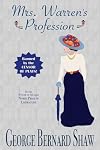
Mrs. Warren's Profession
by George Bernard Shaw
On This Page
Description
Read the controversial play that caused an international sensation when it was first performed. George Bernard Shaw's Mrs. Warren's Profession takes a frank and matter-of-fact look at the world's oldest profession and makes an explicit link between the second-class citizenship that has been foisted upon women for thousands of years and the persistence of prostitution as an occupation..
Tags
Recommendations

















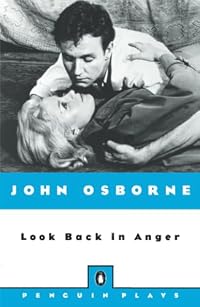


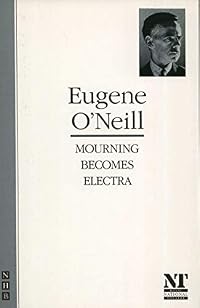

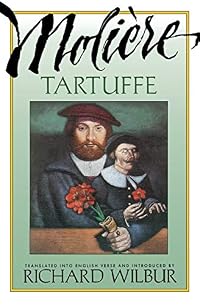
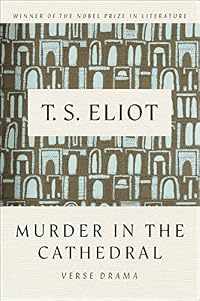


Member Recommendations
mambo_taxi Both plays are complex critiques of moral and social hypocrisy brought about by "the sins of the father." Prostitution provides the troubled background for each play as well, though it's considered under different lights. Very interesting as complementary reads.
Member Reviews
George Bernard Shaw was ahead of his time, and this play was banned when it was written (1893).
It exposes the hypocrisy of a society that condemns those who are not chaste, but does little to assuage the poverty that leaves some women few alternatives to survive (similar territory to JB Priestly's "The Inspector Calls", set less than 20 years later). Equally controversially, it makes a strident case for women's emancipation in general, whilst retaining Shaw's peppering of acerbic wit (Wilde with a social conscience, perhaps?). It also has a very modern ending, i.e. ambiguous and probably not happy.
Intellectual, highly educated and fiercely independent twenty-something Vivie is an only child who was farmed out to families and tutors, show more and barely knows her enigmatic but apparently respectable mother.
She learns that her mother used to be a prostitute and then made more serious money from running several profitable brothels in mainland Europe. Most of the play is concerned with Vivie trying to come to terms with this and how it affects her feelings towards the mother who wants to be loved unconditionally.
Vivie wants to be sympathetic, but struggles, "People are always blaming their circumstances for what they are. I don’t believe in circumstances. The people who get on in this world are the people who get up and look for the circumstances they want, and, if they cant find them, make them".
The main relationships are between parents and children, rather than lovers. The troubled mother and daughter relationship is contrasted in a minor way with a slightly awkward but mildly comical father and son relationship (Frank Gardener, and his father, the vicar). Less comfortably, there are dubious undertones of quasi-incestuous attraction and I'm puzzled at Shaw's motives for that.
Nevertheless, Shaw pushes a powerful message in an entertaining way. The fact that Vivie is not a warm character toys with readers'/audience's sympathies in a way that only enhances his case. show less
It exposes the hypocrisy of a society that condemns those who are not chaste, but does little to assuage the poverty that leaves some women few alternatives to survive (similar territory to JB Priestly's "The Inspector Calls", set less than 20 years later). Equally controversially, it makes a strident case for women's emancipation in general, whilst retaining Shaw's peppering of acerbic wit (Wilde with a social conscience, perhaps?). It also has a very modern ending, i.e. ambiguous and probably not happy.
Intellectual, highly educated and fiercely independent twenty-something Vivie is an only child who was farmed out to families and tutors, show more and barely knows her enigmatic but apparently respectable mother.
She learns that her mother used to be a prostitute and then made more serious money from running several profitable brothels in mainland Europe. Most of the play is concerned with Vivie trying to come to terms with this and how it affects her feelings towards the mother who wants to be loved unconditionally.
Vivie wants to be sympathetic, but struggles, "People are always blaming their circumstances for what they are. I don’t believe in circumstances. The people who get on in this world are the people who get up and look for the circumstances they want, and, if they cant find them, make them".
The main relationships are between parents and children, rather than lovers. The troubled mother and daughter relationship is contrasted in a minor way with a slightly awkward but mildly comical father and son relationship (Frank Gardener, and his father, the vicar). Less comfortably, there are dubious undertones of quasi-incestuous attraction and I'm puzzled at Shaw's motives for that.
Nevertheless, Shaw pushes a powerful message in an entertaining way. The fact that Vivie is not a warm character toys with readers'/audience's sympathies in a way that only enhances his case. show less
Getting Biblical about this, should the sins of the fathers be visited upon the children unto the tenth generation? Does this apply to mothers too? Or shall we be a bit more modern and forgiving about it? The daughter in this play took the hard Biblical line and applied it to her mother too, cutting her off from all contact when she found out that her extremely privileged youth and expensive education as a lawyer had been paid for by her mother's hard work first on her back and secondly running houses full of girls who also laid down to work.
She didn't, however, offer to pay her mother back.
Hypocrite.
Tremendously entertaining read featuring lots of good-natured people and one or two who weren't. It puts the pros of prostitution - show more self-employment, self-determination and high earnings mostly - against the cons - social suicide if you are found out and paternity of a child might be difficult to identify, chief among them.
At the time of writing, 1898, this was a shocking, distasteful story. Now whether or not its shocking depends on who the prostitute is and her exact position in the world of whoredom.
A friend's daughter who had been working in a secretarial position in Hong Kong, turned up on the internet in the missionary position and whether or not she took private clients was kind of irrelevant after that. The family was shocked, horrified and ashamed but did not in any way cut their daughter off, but she attempted suicide anyway.
If we hear of a woman being a street prostitute to support her drug habit, we feel differently than if she had been doing it to support her children. And for women a little further up the scale, the call girls, escorts, part-time whores, there is a sort of good-luck-to-her attitude mixed with a bit of disgust as to why she couldn't find herself a more conventional job. For those at the top of the whoredom tree, the girlfriend possees of Hugh Hefner and his like, there is often fame! Look at The Girls Next Door - Holly, Kendra and the rest, moved on from their $1,000 a week 'pocket money' and sexual obligations twice a week! (See Bunny Tales for details of their job descriptions!)
Mind, this disparity in reaction to prostitution has always existed at the top of society. The working-class girls were socially-unacceptable whores, but the aristocratic ones, working at the very pinnacle of society, were called 'courtesans' and the King's 'favourite' and other such euphemisms and much lauded for their beauty and connections.
The main difference between those days and now is that then social opprobrium was the likely result on people discovering you were a whore, whereas now, its more likely people will sidle up to you and say 'what's it really like, do you uh, enjoy it?' and want to know the sleazy, exciting details! show less
She didn't, however, offer to pay her mother back.
Hypocrite.
Tremendously entertaining read featuring lots of good-natured people and one or two who weren't. It puts the pros of prostitution - show more self-employment, self-determination and high earnings mostly - against the cons - social suicide if you are found out and paternity of a child might be difficult to identify, chief among them.
At the time of writing, 1898, this was a shocking, distasteful story. Now whether or not its shocking depends on who the prostitute is and her exact position in the world of whoredom.
A friend's daughter who had been working in a secretarial position in Hong Kong, turned up on the internet in the missionary position and whether or not she took private clients was kind of irrelevant after that. The family was shocked, horrified and ashamed but did not in any way cut their daughter off, but she attempted suicide anyway.
If we hear of a woman being a street prostitute to support her drug habit, we feel differently than if she had been doing it to support her children. And for women a little further up the scale, the call girls, escorts, part-time whores, there is a sort of good-luck-to-her attitude mixed with a bit of disgust as to why she couldn't find herself a more conventional job. For those at the top of the whoredom tree, the girlfriend possees of Hugh Hefner and his like, there is often fame! Look at The Girls Next Door - Holly, Kendra and the rest, moved on from their $1,000 a week 'pocket money' and sexual obligations twice a week! (See Bunny Tales for details of their job descriptions!)
Mind, this disparity in reaction to prostitution has always existed at the top of society. The working-class girls were socially-unacceptable whores, but the aristocratic ones, working at the very pinnacle of society, were called 'courtesans' and the King's 'favourite' and other such euphemisms and much lauded for their beauty and connections.
The main difference between those days and now is that then social opprobrium was the likely result on people discovering you were a whore, whereas now, its more likely people will sidle up to you and say 'what's it really like, do you uh, enjoy it?' and want to know the sleazy, exciting details! show less
This play first performed in 1902 deals with bold themes for the time, with the title character a former prostitute and now owner of a brothel which is a successful business; none of this is explicitly stated , but the inferences are clear. The key relationship is between her and her daughter Vivie, and there are some sharp dramatic scenes, after a slow start in what comes across as a rather inconsequential Act I. A good read.
A young professional man wishes to marry a young lady, or so she seems. But she has been raised as an upper middle class girl and does not know that she is the unacknowledged bastard of a businessman, and his mistress who is a madam with an extensive clientelle. All the parents get involved in the young couple's plans, and fireworks result. Sadly there are resonances with today's world still. the play was written in 1894, when it was censored and some uproar ensued.
The play works well as a diatribe against the injustices faced by working women, the inequality of job opportunities, and a debate on 'sin' and honest living. However, the characters are unlikeable, the dialogue forced and the outcome ridiculous. As a piece of writing, Shaw's writing will never fail - as a play, however, it does not suit its genre.
February 1, 2014:
I read this play for the Modern British Drama class I'm taking at the university I attend. I found this one to be pretty interesting and I'm looking forward to reading more if Shaw's work.
January 14, 2017:
Re-reading this play 3 years later, to help my boyfriend get happily through a class where this is required reading. Found it strikingly similar to Widower's Houses in terms of the overall takeaway, despite the main characters of each having different stances at the end of each play. I found that I had forgotten how this play ends, so it was nice to refresh myself on it.
I read this play for the Modern British Drama class I'm taking at the university I attend. I found this one to be pretty interesting and I'm looking forward to reading more if Shaw's work.
January 14, 2017:
Re-reading this play 3 years later, to help my boyfriend get happily through a class where this is required reading. Found it strikingly similar to Widower's Houses in terms of the overall takeaway, despite the main characters of each having different stances at the end of each play. I found that I had forgotten how this play ends, so it was nice to refresh myself on it.
I didn't enjoy this much, and also Frank is a creep.
Members
- Recently Added By
Lists

AP Lit
363 works; 6 members

Next Plays / 2025
352 works; 1 member
Author Information

754+ Works 32,061 Members
Renowned literary genius George Bernard Shaw was born on July 26, 1856 in Dublin, Ireland. He later moved to London and educated himself at the British Museum while several of his novels were published in small socialist magazines. Shaw later became a music critic for the Star and for the World. He was a drama critic for the Saturday Review and show more later began to have some of his early plays produced. Shaw wrote the plays Man and Superman, Major Barbara, and Pygmalion, which was later adapted as My Fair Lady in both the musical and film form. He also transformed his works into screenplays for Saint Joan, How He Lied to Her Husband, Arms and the Man, Pygmalion, and Major Barbara. Shaw won the Nobel Prize for Literature in 1925. George Bernard Shaw died on November 2, 1950 at Ayot St. Lawrence, Hertfordshire, England. (Bowker Author Biography) show less
Some Editions
Series
Belongs to Publisher Series
Reclam Fremdsprachentexte (9166)
Reclams Universal-Bibliothek (9166)
Work Relationships
Is contained in
Has the (non-series) sequel
Has the adaptation
Has as a supplement
Has as a student's study guide
Common Knowledge
- Original publication date
- 1902 (performed) (performed); 1898 (printed) (printed)
- People/Characters
- Kitty Warren; Vivie Warren; Frank Gardner; Sir George Crofts; Mr. Praed; Reverend Samuel Gardner
- Important places
- London, England, UK
- First words
- I beg your pardon. Can you
direct me to Hindhead View--Mrs Alison's? - Quotations
- People are always blaming their circumstances for what they are. I don't believe in circumstances. The people who get on in this world are the people who get up and look for the circumstances they want, and, if they can't fin... (show all)d them, make them.
There are no secrets better kept than the secrets that everybody guesses. - Last words
- (Click to show. Warning: May contain spoilers.)Goodbye. And goodbye, Frank.
- Original language
- English
Classifications
Statistics
- Members
- 368
- Popularity
- 84,358
- Reviews
- 11
- Rating
- (3.75)
- Languages
- English, French, Italian, Portuguese (Portugal)
- Media
- Paper, Audiobook, Ebook
- ISBNs
- 70
- UPCs
- 1
- ASINs
- 16