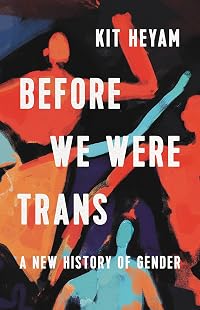
Before We Were Trans: A New History of Gender
by Kit Heyam
On This Page
Description
Explores the history of transgender and gender nonconforming people, with a focus on those who identified in other than a straightforward binary fashion; on communities in West Africa, Asia, and among Native Americans; and on cross-dressing in World War I prison camps and in entertainment--Publisher's description. "Today's narratives about trans people tend to feature individuals with stable gender identities that fit neatly into the categories of male or female. Those stories, while show more important, fail to account for the complex realities of many trans people's lives. Before We Were Trans illuminates the stories of people across the globe, from antiquity to the present, whose experiences of gender have defied binary categories. Blending historical analysis with sharp cultural criticism, trans historian and activist Kit Heyam offers a new, radically inclusive trans history, chronicling expressions of trans experience that are often overlooked, like gender-nonconforming fashion and wartime stage performance. Before We Were Trans transports us from Renaissance Venice to seventeenth-century Angola, from Edo Japan to early America, and looks to the past to uncover new horizons for possible trans futures"--Provided by publisher. show lessTags
Recommendations
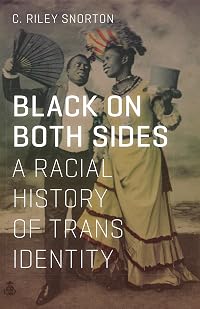
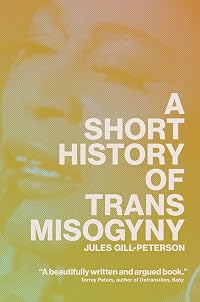
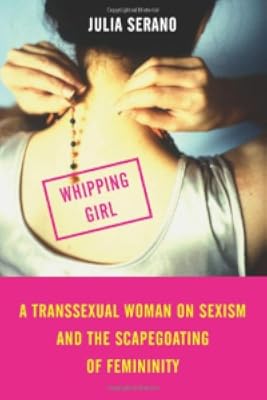

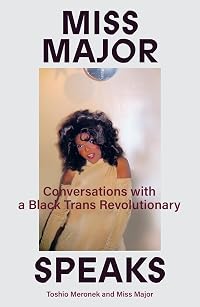






Member Reviews
An eye-opening study of the history of gender nonconformity.
In this highly informative text, Heyam, a U.K.–based queer history activist and trans awareness trainer, tells a wide variety of pertinent stories that are often left out of the trans narrative. Many of the ideas that the author explores don’t fit cleanly inside our contemporary notions of trans identity, which is usually able to be verbally confirmed and often includes medical, social, and cultural transitions. Heyam makes the compelling argument that just because people in the past may not have had access to medical transition procedures or modern vocabulary to adequately discuss gender doesn’t mean their experiences outside the gender binary should be ignored. “To show more say sex and gender are both socially constructed,” writes the author, “isn’t to say they’re not real—like other social constructs, including race, money and crime, they have material and life-changing consequences for all of us—but it is to say there’s no innate reason we have to think about them in the way we do.” The author draws from a remarkable array of historical examples, expanding the definition of what we should consider trans history along the way. Among other eras and locales, Heyam takes us to ancient Egypt, the Edo period in Japan, and a World War II prisoner camp on the British Isles. With great sensitivity and care, they discuss the deleterious effects of European colonization over hundreds of years, the modern Western desire to separate gender and sexuality, and the intersex community. While clearly the work of a diligent historian, the text avoids feeling too dry and is a relatively accessible read. The author’s historical and topical range is impressive, and only a few of the sections are disjointed. Overall, the book will fascinate anyone interested in a subject that many readers likely misunderstand.
A capable, worthy demonstration of how the history of disrupting the gender binary is as long as human history itself.
-Kirkus Review show less
In this highly informative text, Heyam, a U.K.–based queer history activist and trans awareness trainer, tells a wide variety of pertinent stories that are often left out of the trans narrative. Many of the ideas that the author explores don’t fit cleanly inside our contemporary notions of trans identity, which is usually able to be verbally confirmed and often includes medical, social, and cultural transitions. Heyam makes the compelling argument that just because people in the past may not have had access to medical transition procedures or modern vocabulary to adequately discuss gender doesn’t mean their experiences outside the gender binary should be ignored. “To show more say sex and gender are both socially constructed,” writes the author, “isn’t to say they’re not real—like other social constructs, including race, money and crime, they have material and life-changing consequences for all of us—but it is to say there’s no innate reason we have to think about them in the way we do.” The author draws from a remarkable array of historical examples, expanding the definition of what we should consider trans history along the way. Among other eras and locales, Heyam takes us to ancient Egypt, the Edo period in Japan, and a World War II prisoner camp on the British Isles. With great sensitivity and care, they discuss the deleterious effects of European colonization over hundreds of years, the modern Western desire to separate gender and sexuality, and the intersex community. While clearly the work of a diligent historian, the text avoids feeling too dry and is a relatively accessible read. The author’s historical and topical range is impressive, and only a few of the sections are disjointed. Overall, the book will fascinate anyone interested in a subject that many readers likely misunderstand.
A capable, worthy demonstration of how the history of disrupting the gender binary is as long as human history itself.
-Kirkus Review show less
A revealing and illuminating history of gender and the ways it has been understood and experienced throughout history. The author takes case studies from all over the world and throughout recorded history to discover nuance in what is often an oversimplified issue.
Many of these stories and examples I had never heard of before, leaving me with many tantalizing areas for further study and exploration. Beyond the history itself, the author examines the prevailing cis bias of many historians and the pressure placed on trans historians to be "objective" and not let their own experiences color their research. The obvious double standard is identified and possible solutions are discussed.
This is a truly unique history that will reward any reader.
Many of these stories and examples I had never heard of before, leaving me with many tantalizing areas for further study and exploration. Beyond the history itself, the author examines the prevailing cis bias of many historians and the pressure placed on trans historians to be "objective" and not let their own experiences color their research. The obvious double standard is identified and possible solutions are discussed.
This is a truly unique history that will reward any reader.
Heyam does an incredible job of acknowledging the problematic lens in which we view history. Most often, historians claim to be unbiased, but will not allow the possibility of queer interpretation. By viewing history with a queer lens, we not only have the opportunity to interrogate our own bias, but to explore how gender was viewed and understood in times and cultures unlike our own. Heyam also accentuates how misogyny, transphobia, and racism are inherently intertwined. To unravel one means to unravel it all.
Overall an interesting exploration of the diversity of gender and gender expression throughout history. It was written very respectfully in regards to telling the stories of the individuals featured without ascribing them identities or defining their experiences outside of what they’d explicitly claimed, which I appreciated. However, the amount of space spent on disclaimers on how we can’t assume, can’t know, shouldn’t define one way or another became frustrating as the book went on. While I understand the necessity of making this point, with a few exceptions (such as the chapter discussing spirituality’s relationships with gender) these disclaimers were all the same, repeated ad nauseam. It felt like the author did not trust show more the reader to ever understand that point. By the end, it seemed like more time was spent on cautioning and hedging than on the history itself. show less
Interesting. While calling itself 'a new history of gender', it seems to me that the point is not to be a history of gender, but to use historical stories to illustrate the liquidity of gender and the impossibility of fitting it into a limited number of categories.
If you find the many disclaimers difficult, I suggest skipping to the epilogue, which is where they are bought together and discussed at greater length.
If you find the many disclaimers difficult, I suggest skipping to the epilogue, which is where they are bought together and discussed at greater length.
Returned my overdue copy to the library yesterday evening, bought myself a copy this afternoon, and finished it over lunch. Highly, highly, highly recommend. Very accessible and yet very broad and deep history. Does that fabulous thing where we as westerners think we understand what the European morals around gender roles are from studying our history in school but wait! the past is a different country, and it's actually way more strange and different than you assumed.
This book is accessible and interesting. A deep dive without feeling overwhelming. Beneficial for scholars or interested laypersons alike. A look into trans history with a new perspective.
Members
- Recently Added By
Published Reviews
ThingScore 75
Though some readers may disagree with Heyam’s radically inclusive approach, their desire for more gender nonconforming people to see themselves reflected in history is appealing and persuasive. This is an essential addition to trans history.
added by karenb
“Before We Were Trans” is a book that moves far beyond mere representation by managing to be both intellectually rigorous and exciting to read. It makes for a vital contribution to our understanding of gender variance and its place in social and political history, all around the world.
added by karenb
A capable, worthy demonstration of how the history of disrupting the gender binary is as long as human history itself.
added by karenb
Lists

Sapph-Lit
78 works; 4 members

LQW Research Reading List
75 works; 1 member

Books in the Bibliography of Humans: A Monstrous History by Surekha Davies
346 works; 1 member

Queer History - Specialized
37 works; 1 member

The Best LGBTQ Nonfiction
210 works; 70 members
Author Information
3 Works 408 Members
Some Editions
Awards and Honors
Common Knowledge
- Original publication date
- 2022-09-13
- Dedication
- Love and solidarity to everyone who's ever felt alone in their experience of their gender
- First words
- Introduction
'I had a gown on in a lark': what is trans history? - Last words
- (Click to show. Warning: May contain spoilers.)I want a way of doing history that approaches both people in the past and people in the present with what August would call respect; what Malatino would call care; what Le Guin, and I with her, would call love.
- Publisher's editor
- Craigie, Kate
- Blurbers
- Stryker, Susan; Serano, Julia; Ryan, Hugh; Akpan, Paula
Classifications
- Genres
- Sexuality and Gender Studies, LGBTQ+, Sociology, General Nonfiction, History, Nonfiction
- DDC/MDS
- 306.76 — Society, government, & culture Social sciences, sociology & anthropology Social Behavior - Dating, Marriage, Divorce Sexual relations Sexual orientation, transgender identity, intersexuality
- LCC
- HQ18.55 .H49 — Social sciences The family. Marriage, Women and Sexuality The Family. Marriage. Women Sexual life
- BISAC
Statistics
- Members
- 406
- Popularity
- 76,692
- Reviews
- 10
- Rating
- (4.39)
- Languages
- English
- Media
- Paper, Audiobook, Ebook
- ISBNs
- 9
- ASINs
- 3