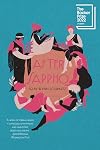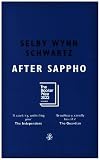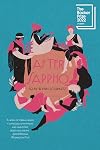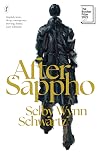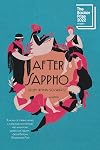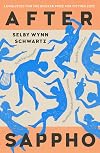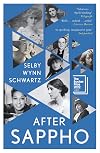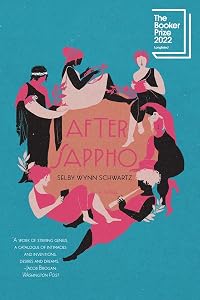
After Sappho
by Selby Wynn Schwartz
On This Page
Description
"An exhilarating debut from a radiant new voice, After Sappho reimagines the intertwined lives of feminists at the turn of the twentieth century. "The first thing we did was change our names. We were going to be Sappho," so begins this intrepid debut novel, centuries after the Greek poet penned her lyric verse. Ignited by the same muse, a myriad of women break from their small, predetermined lives for seemingly disparate paths: in 1892, Rina Faccio trades her needlepoint for a pen; in 1902, show more Romaine Brooks sails for Capri with nothing but her clotted paintbrushes; and in 1923, Virginia Woolf writes: "I want to make life fuller and fuller." Writing in cascading vignettes, Selby Wynn Schwartz spins an invigorating tale of women whose narratives converge and splinter as they forge queer identities and claim the right to their own lives. A luminous meditation on creativity, education, and identity, After Sappho announces a writer as ingenious as the trailblazers of our past"-- show lessTags
Recommendations








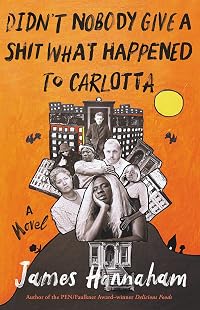
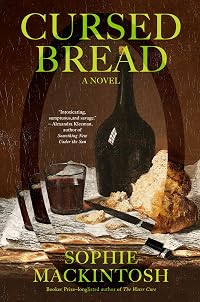
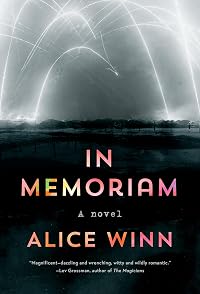
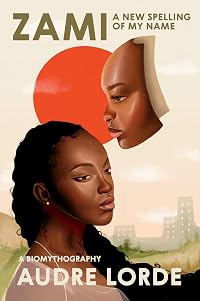

Member Recommendations
allthegoodbooks Similar themes - looking for a place where they can love who they want
Member Reviews
19. After Sappho by Selby Wynn Schwartz
OPD: 2022
format: 267-page hardcover
acquired: January read: Mar 15-25 time reading: 8:02, 1.8 mpp
rating: 4
genre/style: Contemporary Fiction theme: Booker 2022
locations: mainly fin de siècle Naples & pre-and-post WWI Paris
about the author: teaches writing at Stanford
Initially I was thoroughly entranced by this play on the Sappho fragments. It took me back to one lovely 3-hour Sunday morning I spent in a Houston coffee shop reading all of Sappho's fragments (in a 1958 translation by [[Mary Barnard]]). There's not much of Sappho left to us, and much is literally just tiny, isolated fragments, a few words, barely a phrase. Selby Wynn Schwartz does a really nice job of echoing this experience of reading show more these fragments and reaching out to sense all their firmly lost implications. Her novel is a look at the Lesbian world in the late 19th and early 20th century, its expression and its repression in a conservative era where money could bend social norms a little. She provides a collection of micro-biographic takes on the famous women of this world. That means the really famous women, like Sarah Bernhardt, and Colette, the sometime lovers Vita Sackville-West and Virginia Woolf. But also many lesser known but important names from Italy, France, England, the United States, Greece and elsewhere. Women like Rina Faccio, Lina Poletti, Romaine Brookes, Jean-Claude Baker, Eileen Gray, Nancy Cunard, Isadora Duncan, Ada "Bricktop" Smith. They all have Wikipedia entries and important accomplishments and influences. All were famous in their time, although all these names are new to me, personally. She also captures some of the disapproving contemporary male experts on lesbianism.
The book maybe goes on a little too long. It's a lot of names to keep track of, and I got little tired of it, and I felt it became a little repetitive. The silence of those who don't have Wikipedia entries gets somehow louder, and more wanting. But that, of course, is part of the point.
My take is that this was a really nice experiment, but not a masterpiece and not quite something you all need to read. (but I can't recommend Barnard's Sappho enough)
2023
https://www.librarything.com/topic/348551#8113099 show less
OPD: 2022
format: 267-page hardcover
acquired: January read: Mar 15-25 time reading: 8:02, 1.8 mpp
rating: 4
genre/style: Contemporary Fiction theme: Booker 2022
locations: mainly fin de siècle Naples & pre-and-post WWI Paris
about the author: teaches writing at Stanford
Initially I was thoroughly entranced by this play on the Sappho fragments. It took me back to one lovely 3-hour Sunday morning I spent in a Houston coffee shop reading all of Sappho's fragments (in a 1958 translation by [[Mary Barnard]]). There's not much of Sappho left to us, and much is literally just tiny, isolated fragments, a few words, barely a phrase. Selby Wynn Schwartz does a really nice job of echoing this experience of reading show more these fragments and reaching out to sense all their firmly lost implications. Her novel is a look at the Lesbian world in the late 19th and early 20th century, its expression and its repression in a conservative era where money could bend social norms a little. She provides a collection of micro-biographic takes on the famous women of this world. That means the really famous women, like Sarah Bernhardt, and Colette, the sometime lovers Vita Sackville-West and Virginia Woolf. But also many lesser known but important names from Italy, France, England, the United States, Greece and elsewhere. Women like Rina Faccio, Lina Poletti, Romaine Brookes, Jean-Claude Baker, Eileen Gray, Nancy Cunard, Isadora Duncan, Ada "Bricktop" Smith. They all have Wikipedia entries and important accomplishments and influences. All were famous in their time, although all these names are new to me, personally. She also captures some of the disapproving contemporary male experts on lesbianism.
The book maybe goes on a little too long. It's a lot of names to keep track of, and I got little tired of it, and I felt it became a little repetitive. The silence of those who don't have Wikipedia entries gets somehow louder, and more wanting. But that, of course, is part of the point.
My take is that this was a really nice experiment, but not a masterpiece and not quite something you all need to read. (but I can't recommend Barnard's Sappho enough)
2023
https://www.librarything.com/topic/348551#8113099 show less
2022. Wow. This overwhelmingly beautiful, lyrical book is the best thing I’ve read in a while. It consists of vignettes about a bunch of real lesbians throughout history. They are mostly centered around Natalie Barney and the lesbians in Paris in the 1920s, but there are also some amazing Italian lesbians that I hadn’t heard of before. Schwartz blends fact and fiction so artfully that it’s hard to tell what was true and what she made up, but it feel like doesn’t matter. It’s more about what one wants to be true: that the lesbians live in a continuous lineage back to Sappho and Cassandra through to Virginia Woolf. They are sort of trying to get back to Lesbos. Like where is the island where we can be free to love and make art show more without men interfering in our lives? It is very feminist. It talks about the laws in Italy, France and England that oppressed women. These women are all writers, poets, artists, playwrights, and actresses. The characters involved are Natalie Barney, Renee Vivien, Romaine Brooks, Colette, Gertrude Stein, Isadora Duncan, Sarah Bernhardt, Eleanora Duse, Lina Poletti, Radclyffe Hall, Lady Una Troubridge, Virginia Woolf, and Vita Sackville-West. I’m sure I forgot a few. It interweaves the fragments of Sappho in a wonderful way. It mostly chronicles some incidents in their lives between the 1890s and the 1920s, ending in 1928 with the publication of Orlando. It duns Radclyffe Hall more than I thought was necessary, but I guess most people hate The Well of Loneliness. I love it. Ms. Schwartz is obviously an accomplished classicist and probably speaks Italian and French. It’s written in English, but there are a lot of quotes in other languages but they are mostly translated for you on the page. It strikes me as a book I will dip into in an ongoing way. You can just pick it up and read a little bit from anywhere, and it will all be sublime. show less
This is the fourth and final book that I needed to read for the Future Learn course How to Read a Novel. In this last week we are focusing on setting and After Sappho is the book chosen from the shortlist that most fits with this building block of literature.
I need to say, before I even start, that the writing is sublime. I can't think of a book that I have read over the last year that has been as beautifully written as this one - the word choice, the weaving of ideas and women and the threads that pull them altogether are gorgeous - and it needs to be because there are other elements that made this book quite hard to read. I am not really even sure if this is a novel. As the books says:
p228
Written in short, fragmented pieces it tells of the lives of Sapphists who have wanted more. From Lina Poletti to Virginia Woolf and many women inbetween (too many to list) we listen to a crescendo of voices who are restricted to marriage, running a household and ruled by men but who have broken free and are looking for that island where they can be themselves, have a room of their own and create and love as they wish.
Running throughout the braiding of these stories are the fragments of Sappho's poetry or lyrics, used to show us the relevance it still has today through the direct influence on the characters in the novel. As we move from the late 1800s to the early 1900s we encounter war and this inverts everything. Women can work, drive a bus or ambulance, nurse soldiers even become spies and so now they are Sappho with Woolf being the 'modern Sappho'.
Things I loved about this book are many. I loved the fact that men were written out of the story just as women have been throughout history. This is a great book to read after [Trust] by Hernan Diaz for that reason. I loved the way that Greek grammar is woven in to describe the moods and spirals round and round through the book right up until the end.
p16
There were the optative moods the characters felt and the aithussomenon that forewarned with the trembling of leaves - 'the weather of afterwords'.
I loved the use of colour to describe. When Natalie met Eva Palmer 'whose long red hair was like a poem', they ended up living in a vermilion cloud. Or Romaine Brooks who dressed in black, furnished and decorated her house in black and paints faces with shadows 'like a black cap'.
p125
I also loved the way settings dissolved into characters or feelings with the continuation of vocabulary.
p51
Or, how about
p171
There were two things that challenged me. The first was the fragmentary style the book is written in. For some reason, the chunks of writing made me read faster and faster, gathering speed until I didn't really know what I was reading. I had to force myself to slow down and linger, to catch the ideas and words and how they trailed after each other.
The second challenge is that this is a book written about middle-class, white women who had the luxury of travel, building their own homes and finding the life they wanted when it went against society. The book is written in the first person plural with the pronoun 'we', a Greek chorus if you like, but the we, rather than being inclusive, excludes those who are not European or American or those of colour. Josephine Baker does warrant a line or two but not enough to really count. I haven't read anywhere about the author's choice of women but it would be interesting to know why she chose who she did. It might also mean that there is a gap here for someone else to round out the 'we'.
This is a book about the right to an identity that you choose, creativity and education. Schwartz has bound us to a winding road from the past to the present, paving the way for those who identify as creatives or artists. Towards the end Woolf describes what a biography is.
A genre telling people as if they were stories also tells people how to read them. It is a book that slyly goes both ways. A biography attending to the subject herself is also, with a slight bow, turning to face her readers, like a quadrille in a dance.
p240
Whilst you might not call this book a biography, it dances with the subject and the reader. Remarkable for a debut. show less
I need to say, before I even start, that the writing is sublime. I can't think of a book that I have read over the last year that has been as beautifully written as this one - the word choice, the weaving of ideas and women and the threads that pull them altogether are gorgeous - and it needs to be because there are other elements that made this book quite hard to read. I am not really even sure if this is a novel. As the books says:
You may have sensed in this novel that the novelshow more
does not exist?
p228
Written in short, fragmented pieces it tells of the lives of Sapphists who have wanted more. From Lina Poletti to Virginia Woolf and many women inbetween (too many to list) we listen to a crescendo of voices who are restricted to marriage, running a household and ruled by men but who have broken free and are looking for that island where they can be themselves, have a room of their own and create and love as they wish.
Running throughout the braiding of these stories are the fragments of Sappho's poetry or lyrics, used to show us the relevance it still has today through the direct influence on the characters in the novel. As we move from the late 1800s to the early 1900s we encounter war and this inverts everything. Women can work, drive a bus or ambulance, nurse soldiers even become spies and so now they are Sappho with Woolf being the 'modern Sappho'.
Things I loved about this book are many. I loved the fact that men were written out of the story just as women have been throughout history. This is a great book to read after [Trust] by Hernan Diaz for that reason. I loved the way that Greek grammar is woven in to describe the moods and spirals round and round through the book right up until the end.
The genitive is a case of relations between nouns. Often the genitive is defined as possession, as if the only way one noun could be with another were to own it, greedily. But in fact there is also the genitive of remembering, where one noun is always thinking of another, refusing to forget her.
p16
There were the optative moods the characters felt and the aithussomenon that forewarned with the trembling of leaves - 'the weather of afterwords'.
I loved the use of colour to describe. When Natalie met Eva Palmer 'whose long red hair was like a poem', they ended up living in a vermilion cloud. Or Romaine Brooks who dressed in black, furnished and decorated her house in black and paints faces with shadows 'like a black cap'.
If grey encompassed many feelings, then black was where they were buried.
p125
I also loved the way settings dissolved into characters or feelings with the continuation of vocabulary.
Leslie Stephen's study was at the top of the house, over all of the rooms of women and children. One floor down in the night nursery, a fire burnt through long winter evenings; Virginia watched the nervous, flighty shadows flung on the walls. As the firelight came in flickers and glimpses, her thoughts flared and fell into a charred confusion. Voices were coming and going like shadows, muttering at her, leering, crackling, casting themselves at the windows. She could hear them mouthing burnt words at her.
p51
Or, how about
After the war we were left with ash in our eyes, in our mouths. We set about clearing the rubble and dust from our vision; we were free to buy butter and petrol, we could walk the streets without fear.
p171
There were two things that challenged me. The first was the fragmentary style the book is written in. For some reason, the chunks of writing made me read faster and faster, gathering speed until I didn't really know what I was reading. I had to force myself to slow down and linger, to catch the ideas and words and how they trailed after each other.
The second challenge is that this is a book written about middle-class, white women who had the luxury of travel, building their own homes and finding the life they wanted when it went against society. The book is written in the first person plural with the pronoun 'we', a Greek chorus if you like, but the we, rather than being inclusive, excludes those who are not European or American or those of colour. Josephine Baker does warrant a line or two but not enough to really count. I haven't read anywhere about the author's choice of women but it would be interesting to know why she chose who she did. It might also mean that there is a gap here for someone else to round out the 'we'.
This is a book about the right to an identity that you choose, creativity and education. Schwartz has bound us to a winding road from the past to the present, paving the way for those who identify as creatives or artists. Towards the end Woolf describes what a biography is.
A genre telling people as if they were stories also tells people how to read them. It is a book that slyly goes both ways. A biography attending to the subject herself is also, with a slight bow, turning to face her readers, like a quadrille in a dance.
p240
Whilst you might not call this book a biography, it dances with the subject and the reader. Remarkable for a debut. show less
It took me until around halfway through the book, but I finally came around to this novel of fragmented fragments. I was at last settled into its choppy but regular rhythm and familiar enough with the surroundings, perhaps. The title may lead one to expect a wider lens but in fact it is focused on a very specific group of women, mostly upper class, mostly wealthy, in Italy and France in the decades preceding and following World War I who were active in the arts - literature, painting, dance, design - who could be imagined, who saw themselves, to be continuing in the artistic vein of Sappho. Who are individually lightly fictionally drawn, who are collectively the Sapphic chorus observing and commenting on each individual’s actions.
I show more read this due to its appearance on the Booker longlist and like some others on that list it addresses a topic that has already had plenty written about it, which can appear as a criticism, but for me there’s usually always room for someone new’s personal and well-written approach to the subject. This telling is cut up into chapters of short entries, usually 2-3 paragraphs long, increasingly it seemed to me as the book went on following a regularly progressing timeline (whereas the earlier chapters moved back and forth among years more often; I’d have to go back and check to see to what extent this impression is accurate).
In retrospect I see that I particularly enjoyed the entries for Virginia Woolf, so, here’s one such with which to end my impressions, which suggests both the struggle of these women against a restrictive society and within themselves:
I show more read this due to its appearance on the Booker longlist and like some others on that list it addresses a topic that has already had plenty written about it, which can appear as a criticism, but for me there’s usually always room for someone new’s personal and well-written approach to the subject. This telling is cut up into chapters of short entries, usually 2-3 paragraphs long, increasingly it seemed to me as the book went on following a regularly progressing timeline (whereas the earlier chapters moved back and forth among years more often; I’d have to go back and check to see to what extent this impression is accurate).
In retrospect I see that I particularly enjoyed the entries for Virginia Woolf, so, here’s one such with which to end my impressions, which suggests both the struggle of these women against a restrictive society and within themselves:
VIRGINIA WOOLF, CASSANDRA, 1914show less
In the autumn of 1914 Virginia Woolf opened the newspaper. On the third page she was instructed that there had been no female of first-rate literary ability since Sappho; on the fourth she was assured that the war was utterly necessary and right. She sighed. She closed her eyes and pressed her hands to her temples. Then she opened her eyes, threw the newspaper onto the andirons, and began to write about Cassandra.
In those years Virginia Woolf published her first novel, but she also began to try to kill herself. Like us, she was desperate for someone to light the way to a future where we might see our lives unlatched before us like windows. Virginia Woolf knew that the newspapers would always insist that there were no more Sappho, only more wars. She invented a Cassandra for 1914. Cassandra was the one who saw everything and instead of sighing, screamed.
Booker long-listed a couple of years back, this is an interesting piece of...historical fiction? The author has created a fictionalised account of the interactions between prominent Sapphists and feminists from the late 19th century through to the early 20th century, post WWI. They're an eclectic mix of artists, writers, actresses, playwrights, poets and activists, some very well known (Virginia Woolf, Vita Sackville-West, Sarah Bernhard), others less known (at least to me anyway) such as the Irish architect Eileen Gray, Lina Poletti, Natalie Barney, etc.
Weaving some fragments remaining from Sappho's writing, heralded as the first literary crusader of feminism and lesbianism, the book is a series of vignettes set in Greece, Italy, show more France and England as the lives of the different key players intertwine, either in real life or through their works.
I found the first third of this book absolutely fascinating, as I learnt about everything from the horrendous laws in Italy forcing a rape victim to marry their rapist to early attempts in the House of Lords to make lesbianism illegal. Whilst there is quite a lot known about British laws against homosexuality, I knew very little about how the hardships of lesbian women during this era, and it was fascinating to learn more about this from some incredibly interesting characters. I was slow at reading it, as I kept stopping on nearly every page to Google more about the characters I was being introduced to.
By the second third of the book, my interest waned a little. There were so many characters it became difficult to keep up with who was who, who knew who and how, and I felt the content, whilst fascinating to begin with, became a little repetitive. The final third piqued my interest again - I knew I was in the final stretches and so settled back into figuring out who each character was again.
4 stars - It's a book I was glad to finish, yet at the same time I'm glad I read it. It's well written, original and I learnt a lot from it. show less
Weaving some fragments remaining from Sappho's writing, heralded as the first literary crusader of feminism and lesbianism, the book is a series of vignettes set in Greece, Italy, show more France and England as the lives of the different key players intertwine, either in real life or through their works.
I found the first third of this book absolutely fascinating, as I learnt about everything from the horrendous laws in Italy forcing a rape victim to marry their rapist to early attempts in the House of Lords to make lesbianism illegal. Whilst there is quite a lot known about British laws against homosexuality, I knew very little about how the hardships of lesbian women during this era, and it was fascinating to learn more about this from some incredibly interesting characters. I was slow at reading it, as I kept stopping on nearly every page to Google more about the characters I was being introduced to.
By the second third of the book, my interest waned a little. There were so many characters it became difficult to keep up with who was who, who knew who and how, and I felt the content, whilst fascinating to begin with, became a little repetitive. The final third piqued my interest again - I knew I was in the final stretches and so settled back into figuring out who each character was again.
4 stars - It's a book I was glad to finish, yet at the same time I'm glad I read it. It's well written, original and I learnt a lot from it. show less
An interesting novel in the early modernist form I would say. Hung on the structure of fragments by Sappho without direct quotes. To quote one of the characters ...this is an age of chapters and portraits.... The novel comprises chapters and portraits of women who were the precursors to contemporary feminism. Women who resisted being trapped by the rules of State and men. Most of those drawn were early ancestors of those now striving to be who they are in regards to gender and identity. This is a novel where these persons will find themselves seen.
It is quite horrifying to read some of the Italian statutes that shaped what women could or couldn't do (and I suspect most European nations had variations on the theme).
Long listed for the show more Man Booker 2022. It is good to see a small press on prize lists.
****
I was reading this while in Oxford to see the Pre-Raphaelite Drawings and Watercolour exhibition, and not that I hadn't thought about it before, but it made me think more about how these exquisite works were works representing women, almost exclusively, in the male gaze; and wondering how different they would be, as in this novel, if seen by the female gaze. Certainly less idealised. show less
It is quite horrifying to read some of the Italian statutes that shaped what women could or couldn't do (and I suspect most European nations had variations on the theme).
Long listed for the show more Man Booker 2022. It is good to see a small press on prize lists.
****
I was reading this while in Oxford to see the Pre-Raphaelite Drawings and Watercolour exhibition, and not that I hadn't thought about it before, but it made me think more about how these exquisite works were works representing women, almost exclusively, in the male gaze; and wondering how different they would be, as in this novel, if seen by the female gaze. Certainly less idealised. show less
I loved the overarching concept of this book, but really didn't enjoy the experience of reading it. After Sappho shares the lives of a number of women who were feminist, lesbian, and living in Europe over a span covering the late 1800's until just after WWI. Most of the women were also involved in the arts (writing, theater, painting, etc.). The book is broken into paragraphs, each with a heading, and each paragraph tells a snippet (not even a vignette) about one of the characters before moving on to the next snippet.
The idea of focusing on the intertwining lives of women striving for visibility and recognition in a man's world is such a good idea. But, [b:When We Cease to Understand the World|53972214|When We Cease to Understand the show more World|Benjamín Labatut|https://i.gr-assets.com/images/S/compressed.photo.goodreads.com/books/1596817309l/53972214._SY75_.jpg|84341168] did something similar, except with scientific discovery, and it was so much more engaging. I wanted to like this book, or at least appreciate it, but it was pretentious and overwritten and really didn't bring these women to life in any way. Plus it was nearly impossible to discern the biographical from the fictional, and I didn't really care enough to even try.
I can so see this book being taught in an English lit class somewhere, and there were some gorgeous turns of phrase . . .but at the end of the day, I want a novel to move me emotionally and engage me with some semblance of a story, and this book just didn't do that for me at all.
There was one paragraph that really encapsulated this book for me.
. . .we might open a seemingly ordinary biography, its chapters neatly partitioned, and find that it was webbed throughout with the most extraordinary filaments of a life. A life after all did not happen by itself, in discrete units. Thus this biography would be bound together with all of our lives, twined through from preface to index: curling, animate, verdant.
I think this is what the author was trying to do, intertwine the biographies of these women, and I love the concept of that! But the reality just didn't live up to the promise. show less
The idea of focusing on the intertwining lives of women striving for visibility and recognition in a man's world is such a good idea. But, [b:When We Cease to Understand the World|53972214|When We Cease to Understand the show more World|Benjamín Labatut|https://i.gr-assets.com/images/S/compressed.photo.goodreads.com/books/1596817309l/53972214._SY75_.jpg|84341168] did something similar, except with scientific discovery, and it was so much more engaging. I wanted to like this book, or at least appreciate it, but it was pretentious and overwritten and really didn't bring these women to life in any way. Plus it was nearly impossible to discern the biographical from the fictional, and I didn't really care enough to even try.
I can so see this book being taught in an English lit class somewhere, and there were some gorgeous turns of phrase . . .but at the end of the day, I want a novel to move me emotionally and engage me with some semblance of a story, and this book just didn't do that for me at all.
There was one paragraph that really encapsulated this book for me.
. . .we might open a seemingly ordinary biography, its chapters neatly partitioned, and find that it was webbed throughout with the most extraordinary filaments of a life. A life after all did not happen by itself, in discrete units. Thus this biography would be bound together with all of our lives, twined through from preface to index: curling, animate, verdant.
I think this is what the author was trying to do, intertwine the biographies of these women, and I love the concept of that! But the reality just didn't live up to the promise. show less
Members
- Recently Added By
Lists

Sapph-Lit
78 works; 4 members
Author Information

4 Works 474 Members
Selby Wynn Schwartz is Lecturer in the Program in Writing and Rhetoric, Stanford University.
Some Editions
Awards and Honors
Awards
Distinctions
Common Knowledge
- Canonical title
- After Sappho
- First words
- The first thing we did was change our name. We were going to be Sappho. -Prologue
Cordula Poletti, b. 1885 Cordula Poletti was born into a line of sisters who didn't understand her. From the earliest days, she was drawn towards the outer reaches of the house: the attic, the balcony, the back window touche... (show all)d by the branches of a pine tree. -One - Canonical DDC/MDS
- 813.6
- Canonical LCC
- PS3619.C48767
Classifications
Statistics
- Members
- 469
- Popularity
- 65,089
- Reviews
- 16
- Rating
- (3.50)
- Languages
- 7 — English, French, German, Italian, Polish, Spanish, Swedish
- Media
- Paper, Audiobook, Ebook
- ISBNs
- 20
- ASINs
- 5