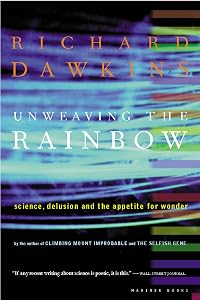
Unweaving the Rainbow: Science, Delusion and the Appetite for Wonder
by Richard Dawkins
On This Page
Description
From the New York Times–bestselling author of Science in the Soul. "If any recent writing about science is poetic, it is this" (The Wall Street Journal).Did Newton "unweave the rainbow" by reducing it to its prismatic colors, as Keats contended? Did he, in other words, diminish beauty? Far from it, says acclaimed scientist Richard Dawkins; Newton's unweaving is the key too much of modern astronomy and to the breathtaking poetry of modern cosmology. Mysteries don't lose their poetry show more because they are solved: the solution often is more beautiful than the puzzle, uncovering deeper mysteries. With the wit, insight, and spellbinding prose that have made him a bestselling author, Dawkins takes up the most important and compelling topics in modern science, from astronomy and genetics to language and virtual reality, combining them in a landmark statement of the human appetite for wonder.
This is the book Richard Dawkins was meant to write: a brilliant assessment of what science is (and isn't), a tribute to science not because it is useful but because it is uplifting.
"A love letter to science, an attempt to counter the perception that science is cold and devoid of aesthetic sensibility . . . Rich with metaphor, passionate arguments, wry humor, colorful examples, and unexpected connections, Dawkins' prose can be mesmerizing." —San Francisco Chronicle
"Brilliance and wit." —The New Yorker
. show less
Tags
Recommendations



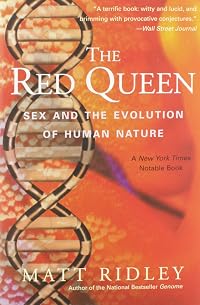
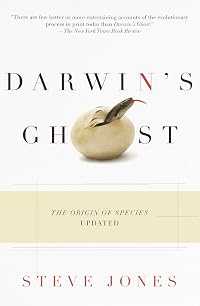
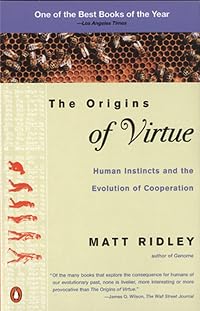
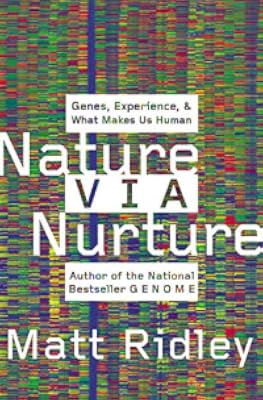

Member Reviews
Richard Dawkins preaching to the choir again. The title comes from Keats’ poem Lamia; the poet complains that the rainbow was once awe-inspiring but is now “In the dull catalogue of common things…”. Dawkins’ theme, then, is that the natural world and scientific investigation of it are more wonderful than anything poets can produce, and he goes on to explain using rainbows, spectroscopy, music, DNA, paleontology, and genetics as examples, while jumping on pseudoscience and postmodernism with both feet. By and large I’m in his camp; but now it seems sometimes like the tide has turned; you can only mock postmodernism so much before that mockery gets kind of old.
There are a couple of things that bear a little more analysis; one show more is Dawkins comments on law and lawyers. Dawkins criticizes the systematic exclusion of people who have some knowledge of probability theory and/or science from juries in cases where probability or science is relevant. On the surface, this seems reasonable; why wouldn’t you want experts on the jury? After all, a juror who had a PhD in mathematics could see through probabilistic arguments by the lawyers and presumably render a more accurate judgement. The catch here is that juries are supposed to base their judgement solely on the arguments presented by the lawyers, not on their own knowledge. If a legal case involves probability and/or science, and there is a scientist or mathematician on the jury, that juror effectively becomes an expert witness who cannot be cross-examined.
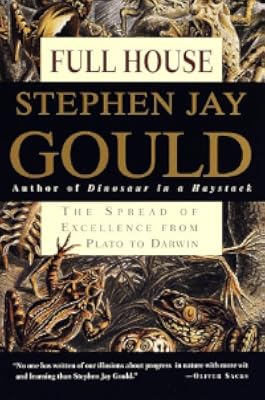
Another is Dawkins’ comments on Stephen J. Gould. Dawkins concedes that Gould is a skilled and “poetic” writer, but holds that Gould is also misleading which makes his writing skill that much more dangerous. Dawkins uses a quote by John Maynard Smith to illustrate: “Gould occupies a rather curious position, particularly on his side of the Atlantic. Because of the excellence of his essays, he has come to be seen by non-biologists as the preeminent evolutionary theorist. In contrast the evolutionary biologists with whom I have discussed his work tend to see him as a man whose ideas are so confused as to be hardly worth bothering with…”. This might be a little too harsh; Gould was certainly somewhat off the wall when it came to the “Cambrian explosion”, but his other writings are not that far off base.
I don’t want to seem too critical; this is overall an excellent book. Again bringing up Gould vs. Dawkins, Gould is a better writer than Dawkins, but Dawkins is a better explainer. No illustrations, footnotes, or endnotes, and the index is sparse; I couldn’t find some things I wanted. But there are lots of literary and poetic quotations that illustrate Dawkins theme and ideas. show less
There are a couple of things that bear a little more analysis; one show more is Dawkins comments on law and lawyers. Dawkins criticizes the systematic exclusion of people who have some knowledge of probability theory and/or science from juries in cases where probability or science is relevant. On the surface, this seems reasonable; why wouldn’t you want experts on the jury? After all, a juror who had a PhD in mathematics could see through probabilistic arguments by the lawyers and presumably render a more accurate judgement. The catch here is that juries are supposed to base their judgement solely on the arguments presented by the lawyers, not on their own knowledge. If a legal case involves probability and/or science, and there is a scientist or mathematician on the jury, that juror effectively becomes an expert witness who cannot be cross-examined.
Another is Dawkins’ comments on Stephen J. Gould. Dawkins concedes that Gould is a skilled and “poetic” writer, but holds that Gould is also misleading which makes his writing skill that much more dangerous. Dawkins uses a quote by John Maynard Smith to illustrate: “Gould occupies a rather curious position, particularly on his side of the Atlantic. Because of the excellence of his essays, he has come to be seen by non-biologists as the preeminent evolutionary theorist. In contrast the evolutionary biologists with whom I have discussed his work tend to see him as a man whose ideas are so confused as to be hardly worth bothering with…”. This might be a little too harsh; Gould was certainly somewhat off the wall when it came to the “Cambrian explosion”, but his other writings are not that far off base.
I don’t want to seem too critical; this is overall an excellent book. Again bringing up Gould vs. Dawkins, Gould is a better writer than Dawkins, but Dawkins is a better explainer. No illustrations, footnotes, or endnotes, and the index is sparse; I couldn’t find some things I wanted. But there are lots of literary and poetic quotations that illustrate Dawkins theme and ideas. show less
Dawkins sets out to convey the beauty of discovering, understanding and conveying truth in nature and mechanism, and succeeds beyond my already high expectations. The part on what he calls "good poetry" and "bad poetry" (on basis not of how strung together words flow and feel -- but on whether they help you reach correct and deeper insights, and the extent it keeps you from jumping to incorrect, misguided conclusions) about choices of metaphor, is particularly insightful: does the author's ego, writing style and pet peeves take center stage, or the reader's easy and accurate grasp on (and mastery of) the content of their topic win?
The title goes to the ethos of the book. A rainbow isn't any less beautiful because we've come to understand it, and we've gained so much through its understanding (radios, televisions, computers, etc.) Dawkins is good when he sticks to his area of expertise, but outside of it he's a dick. A soft spoken dick, but a dick nonetheless.
This should have been really insipring, but I found it slightly disappointing. Dawkins is plainly on a crusade against anyone who believes in anything that cannot be proven by science. I find blind faith in religion inexplicable, but I can admire it is some ways. However I find the determined non belief in his writing depressing in a different way.
I entirely agree that understanding how a rainbow is produced doesn't destroy the beauty of the rainbow, but I found little beauty or illumination in the rest of this book. Disappointing - an anti-recommend from me.
I entirely agree that understanding how a rainbow is produced doesn't destroy the beauty of the rainbow, but I found little beauty or illumination in the rest of this book. Disappointing - an anti-recommend from me.
Not nearly as focused or convincing as The God Delusion. Dawkins comes across in this one as a grumpy ageing man who has spent too long being the voice of atheism and needs a vacation, and maybe a habit of mindfulness meditation or similar relaxation techniques such as Sam Harris promotes. And, the genetics in this book is outdated. I remember when the DNA between protein coding sequences was called 'junk', but since then we know all sorts of cool stuff about epigenetics and alternative sequences that utilize those sections of our DNA. There are still some good ideas and points in this book, but I suspect that Dawkins has more recent and better books covering these points. Also, I listened to the audiobook of this one, and the male show more voice, which I am assuming is Dawkins, sounds like he has a sore throat for much of the book. I don't normally pick up on such details but listening to this one for a while actually gave me a sympathetic sore throat too. It's a fun demonstration of psychosomatic illness, but folks sensitive to this sort of affect might want to just read this one in print. show less
Dawkins is one of those Oxford profs who wags his finger at anyone who doesn't completely embrace empiricism and common sense. Actually, I don't mind that--he's part of that old intellectual tradition after all. I remember reading Hobbes' Leviathan in college where he says "Metaphors, and senseless and ambiguous words are like ignes fatui" or "foolish light". Dawkins quotes Hobbes but doesn't go quite that far (thank God). His thesis is that science can be as full of beauty and wonder as poetry, and that unraveling a scientific mystery does not necessarily de-mystify the "poetry" of its intricacies. He is very good in some areas (towards the end where he shares his remarkable scholarship in biology, zoology, and evolution), and show more irritating in others (where he rants against bogus ideologies that misappropriate science to validate certain "truths"). He calls that "bad poetic science." I am still not clear about what he means by "good poetic science." Anyway, Dawkins is my favorite atheist, but this isn't his best work. Whether he succeeds in proving that science evokes the same awe and wonder as art (in the traditional sense) is open to debate. But the man shows a real faith is reason--if that makes sense--and his writing, always clear and very, very smart, expresses his ever-constant devotion to the scientific cause. show less
Though at times this book can be somewhat redundant, the overall message, themes, and various explanations of complex scientific inquiries packaged for the reader into palatable paragraphs makes Dawkins' writing well worth the read.
Members
- Recently Added By
Published Reviews
ThingScore 75
So the first thing to be said about Richard Dawkins's ''Unweaving the Rainbow,'' which argues that scientific fact is both intellectually and esthetically more pleasing than pseudoscientific fantasy, is that he is to be congratulated for his courage in attempting it. Does he avoid all the pitfalls that threaten those who tilt at the windmills of antiscience? Well, no. Too often he sounds like show more Prof. Eat Your Peas, and he can't resist preaching to the choir. But he's a good enough writer to get away -- sometimes -- with ignoring the old dictum that no good deed goes unpunished. show less
added by jlelliott
Lists

Folio Society
831 works; 53 members

Atheism, humanism, freethought, &c. — Best nonfiction books in favour of
167 works; 14 members

Books referenced in Jim Holt's Why Does the World Exist?
119 works; 1 member

Reading Glasses Podcast
410 works; 3 members

In Our Time books
4,934 works; 2 members
Author Information

79+ Works 64,167 Members
Richard Dawkins was educated at Oxford University and taught zoology at the University of California and Oxford University, holding the position of the Charles Simonyi Professor of the Public Understanding of Science. He writes about such topics as DNA and genetic engineering, virtual reality, astronomy, and evolution. His books include The show more Selfish Gene, The Extended Phenotype, The Blind Watchmaker, River Out of Eden, Climbing Mount Improbable, The God Delusion, and An Appetite for Wonder: The Making of a Scientist. (Bowker Author Biography) show less
Awards and Honors
Notable Lists
Series
Belongs to Publisher Series
Common Knowledge
- Canonical title*
- L'arcobaleno della vita
- Original title
- Unweaving the Rainbow: Science, Delusion and the Appetite for Wonder
- Original publication date
- 1998
- First words
- Preface
A foreign publisher of my first book confessed that he could not sleep for three nights after reading it, so troubled was he by what he saw as its cold, bleak message.
We are going to die, and that makes us the lucky ones. - Last words
- (Click to show. Warning: May contain spoilers.)A Keats and a Newton, listening to each other, might hear the galaxies sing.
*Some information comes from Common Knowledge in other languages. Click "Edit" for more information.
Classifications
Statistics
- Members
- 2,508
- Popularity
- 7,730
- Reviews
- 29
- Rating
- (3.93)
- Languages
- 13 — Dutch, English, French, German, Greek, Hungarian, Italian, Japanese, Polish, Portuguese, Slovenian, Spanish, Turkish
- Media
- Paper, Audiobook, Ebook
- ISBNs
- 32
- UPCs
- 2
- ASINs
- 18