The Uses of Enchantment
by Heidi Julavits
On This Page
Description
In late afternoon on November 7, 1985, sixteen-year-old Mary Veal was abducted after field hockey practice at her all-girls New England prep school. Or was she?A few weeks later an unharmed Mary reappears as suddenly and mysteriously as she disappeared, claiming to have little memory of what happened to her. Her mother, concerned that Mary has somehow been sullied by the experience, sends her to therapy with a psychologist named Dr. Hammer. Mary turns out to be a cagey and difficult patient show more and Dr. Hammer begins to suspect Mary concocted her tale of abduction when he discovers its parallels with a seventeenth-century narrative of a girl who was abducted by Indians and later caused her rescuer to be hanged as a witch. Hammer, eager to further his professional reputation, decides to write a book about Mary's faked abduction, a project her mother sanctions because she'd rather her daughter be a liar than a rape victim. Fifteen years later, Mary has returned to Boston for her mother's funeral. Her abduction-real or imagined-has tainted many lives, including her own. When Mary finds a suggestive letter sent to her mother, she suspects her mother planned a reconciliation before her death. Thus begins a quest that requires Mary to revisit the people and places in her past. The Uses of Enchantment weaves a spell in which the power of a young woman's sexuality, and her desire to wield it, has a devastating effect on all involved. The riveting cat-and-mouse power games between doctor and patient, and between abductor and abductee, are gradually, dreamily revealed, along with the truth about what actually happened in 1985. Heidi Julavits is in full command of her considerable gifts, and has crafted a dazzling narrative sure to garner her further acclaim as one of the best novelists working today. show lessTags
Recommendations
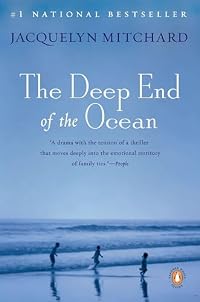
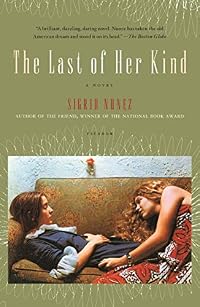

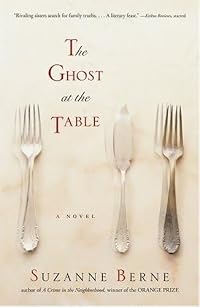
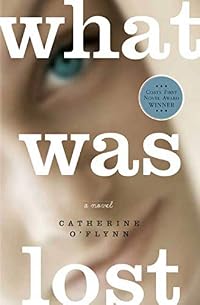

Member Recommendations
kinsey_m Julavits mentioned that this book inspired the structure of the Uses of Enchantment
Member Reviews
(Reprinted from the Chicago Center for Literature and Photography [cclapcenter.com].)
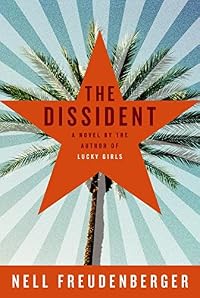
Okay, I admit it; that the subject of today's review was not scheduled to be read for another three or four books now in my queue list (i.e. the pile of library books and advanced reading copies at the foot of my bed), but was purposely moved up because of recently filing a very bad review here of Nell Freudenberger's The Dissident. And that's because, as a white male covering an industry dominated by white males, I'm sensitive to how insular such a situation can get; I'm well aware, for example, how few smart novels are published by female authors each year in the first place, leading me to only rarely reviewing female authors here, and so am even more show more sensitive than normal when one of those reviews turns out to be an intense pan, as was the case with The Dissident. I was anxious to find another novel quickly by a female author that I absolutely loved, so as to at least put a small dent in the usual sausagefest CCLaP's book reviews normally are.
And as much as I hate writing bad reviews (and seriously, I hate writing bad reviews), I have to admit that I'm glad the situation inspired me to move up the delightfully twisted and surprisingly complex The Uses of Enchantment, the third and latest book by Heidi Julavits, a founding editor of fellow "we only say nice things" lit-crit magazine "The Believer" [believermag.com], itself an imprint of indie-press king McSweeney's [mcsweeneys.net]. Almost as if exactly knowing what I was precisely looking for these days, the novel is not only a daring and thought-provoking story by a woman, but also about women, about a side of being a woman that men will never understand or experience themselves, a story that only a woman could tell in the first place. It's one of those rare finds, in fact -- a story containing almost no parallels to my own life, concerning instead subjects I rarely even think about, but which by the end turned into a gripping page-turner for me, an emotional mindf--k that will still be caught in your brain weeks after you finish.
In fact, even the setting of Enchantment couldn't be farther from my own life; it's a portrait of cultured, pill-popping, little-dog-owning, ice-cold matriarch families in New England, and of the various ways that various females within that environment interact, based on the relative ages and relationships to each other in life. Or more specifically, it's the story of Mary Vale, who in half of the story is a high-school student in the mid-1980s, the other half a woman near 30 who is looking back on those years at the turn of the millennium. And wow, what a harder, wiser girl this Mary is at the cusp of 30, because of the Jerry-Springeresque events that happened to her as a mousy teen in the mid-'80s; for Mary, you see, was abducted in the fall of that year, repeatedly sexually abused, then returned by her kidnappers six weeks later with almost no memory of what happened.
Or was she? Ah, see, that's the hook that gets you sucked into the story to begin with; that after reviewing her case in detail, Freudian therapist Karl Hammer determines that Mary has been lying about the entire thing, stealing parts of her story not only from the famous Freud case study Dora: An Analysis of a Case of Hysteria, but also an obscure book about the Salem witch trials of the 1600s. (The story, in fact, takes place in West Salem, an important fact that plays heavily into the plot later.) Hammer in fact comes up with an entirely new psychological theory based on Mary's case, something he calls "hyper radiance" -- the need for many mousy New England teenage girls to fake abduction stories, as a way to cope with their budding sexuality in this repressed environment, which manifested itself as "demonic abduction" (or witchcraft) in the 1600s but in our modern times as literal abduction. And thus does he expose Mary's lies in a bestselling book, and suddenly becomes the new Joyce Brothers of that time.
Except wait, is that what really happened? Because a year later, see, one of Hammer's colleagues steps in, the humorless feminist and anti-Freudian Roz Biedelman, and charges that Mary's abduction and rape was real after all, that she was specifically using the "Dora" story (in which a teenage girl charged that she had been abducted as well, with Freud believing her to be hysterical instead) as a desperate cry for help from a precocious overeducated nerd, and with Hammer ignoring this cry for help because of being burned by a similar situation in the early '70s, details of which Mary also referenced in her real-fake-real story. Ah, but Biedelman's got an agenda just like everyone else in this book; she's a proponent of the then-new radical-feminist activity of "reclaiming" stories, believing that for centuries men have stolen the stories of women and have twisted them in order to fit their own agenda, claiming that abused women will never psychologically get better until "taking these stories back" and telling them the way they were meant to be told.
So. Here we are then at 1999, looking back at it all as Mary does, because of the death of her estranged mother, who never did forgive Mary for what she saw as dragging the good name of their matriarchal New England family through all that mud. And what did exactly happen, anyway? Well, I'll let you read the book to find that out; but needless to say that it's neither the option Hammer suggests nor Biedelman. And this is in fact the main theme of the entire novel, which like I said I found fascinating precisely because I've never given it much thought myself -- that for many teenage girls, understanding their newfound sexuality and finding their mature voice as a new adult is one and the same activity, and that things like concocting outrageous lies just to see if adults will believe them is the same thing as "tarting it up" in front of a middle-aged man just to see if you can get a rise out of him.
The key, in fact, I think is in this small passage found near the beginning of the book, or at least was the key for me as to understanding this deeply perplexing character and all the crazy things she does throughout Enchantment:
"Mary, who was neither pretty nor its opposite, learned at an early age that what beauty she might lay claim to was directly related to the occasional moods that possessed her as a child and as an adolescent, and which now rarely did; a sense that her body did not matter and her face did not matter, that when people looked at her they were struck by a light that radiated from inside of her and was so entrancing as to make her physical self irrelevant."
That small paragraph ultimately says everything you need to know about Mary to understand her as a character; that as a teen, she was one of those people who are like biological blank slates, who pick up and reflect the traits of the people who are around her at any given moment. That's what makes her story so interesting, and why her two very public betrayals in those years (first agreeing with Hammer that she had lied, then agreeing with Biedelman that she had lied about lying) so fascinating instead of scummy, even though one of the lies leads to a psychiatrist getting unfairly disbarred from his industry; because in the teenage Mary's eyes, she is simply agreeing to whatever it is that the people around her want her to be, for the sake of their own hidden agendas, which Julavits heavily intimates is how many such women in real life eventually also form their own sense of adult sexuality as well. And not only that, but the story of what really happened supports this as well -- that it is one of the first times in Mary's life that she's gone out and had an intense experience completely on her own terms, an experience she's not willing to share for fear of it being co-opted by others.
It's really intriguing the way that Julavits has built the plot here, because in a sense she both supports and rejects all the various theories about psychology that are on display -- she seems to be saying that there's a time and place for Freudianism, for radical feminism, for "reclaiming" one's stories even though there's something kind of BS-ey about the entire thing. But at the same time, especially in the scenes set in 1999, she also seems to be acknowledging that this is a very unique story about one particular person, and shouldn't be construed as any kind of "grand" message at all; after all, even Mary near the age of 30 is forced to admit that not every teenage girl goes around faking their own six-week abduction, then lying about what happened, then lying about the lying, then lying about the lying about the lying. And that the fact that she did has caused all kinds of deep psychological problems in her adult life, problems she has never confronted in all this time because of being estranged from her family all this time.
Such deep psychological events never happen to teenage boys, or at least when it comes to their budding sexualities; boys mostly deal with such a subject by desperately trying to rub their peckers against anything that moves, then going to bed after their 537th straight day of failure. And that, like I said, is what makes Enchantment especially fascinating to me; because let's face it, very rarely in my life have I ever deliberately sat around and thought about what complex psychological problems might occur with mousy repressed New England teenage girls when it comes to their flowering sense of adult sexuality. It's just not a subject that comes up in my life very much, you know? And this is why it's always so worth occasionally taking chances on books well outside your comfort level; because you never know when you'll be completely surprised by something you find inherently fascinating, even though you thought you'd find such a thing terminally uninteresting. That's certainly the case with me; it took me three notices of it at the library, in fact, before I finally checked it out on a whim, with like I said it still getting relegated to the bottom of my queue list until this recent experience with The Dissident.
And of course there's one other element of Enchantment that I am naturally fascinated by; Julavits in fact implies several times of how such urges and tendencies can eventually be harnessed by the adult woman in question, and turned into something positive by the woman becoming a...yeah, a novelist! And reading these little hints, of course, you of course can't help but to wonder how much of this story is Julavits' own; not the actual plotline, I mean, but rather how much of a struggle Julavits herself had as a teen over the subject of storytelling, sexuality, psychiatry and objectivity. Which of course is the most brilliant thing of all about the novel -- that she has now taken her own story and let me co-opt it into my own life, to twist and shape it in my head in whatever way fits my own agenda. This is the entire point Julavits is trying to make, not only of how easy it is sometimes to do such a thing, but how willing a lot of women are to voluntarily supply such a situation, and how when all is said and done it's the professional job as well of anyone who counts themselves as a storyteller. No matter how autobiographical or fictional, Julavits seems to be saying, the mere act of finishing a story is like the author pulling off a little piece of themselves, blowing it off the edge of their fingers and saying, "Okay, now you go find a life of your own." It's one of the things I love the most about novels, after all, and I'm impressed that Julavits is able to put it so eloquently and beautifully here. The Uses of Enchantment is a great book, a great book indeed, and one I highly recommend.
Out of 10:
Story: 9.8
Characters: 9.7
Style: 9.0
Overall: 9.6 show less
Okay, I admit it; that the subject of today's review was not scheduled to be read for another three or four books now in my queue list (i.e. the pile of library books and advanced reading copies at the foot of my bed), but was purposely moved up because of recently filing a very bad review here of Nell Freudenberger's The Dissident. And that's because, as a white male covering an industry dominated by white males, I'm sensitive to how insular such a situation can get; I'm well aware, for example, how few smart novels are published by female authors each year in the first place, leading me to only rarely reviewing female authors here, and so am even more show more sensitive than normal when one of those reviews turns out to be an intense pan, as was the case with The Dissident. I was anxious to find another novel quickly by a female author that I absolutely loved, so as to at least put a small dent in the usual sausagefest CCLaP's book reviews normally are.
And as much as I hate writing bad reviews (and seriously, I hate writing bad reviews), I have to admit that I'm glad the situation inspired me to move up the delightfully twisted and surprisingly complex The Uses of Enchantment, the third and latest book by Heidi Julavits, a founding editor of fellow "we only say nice things" lit-crit magazine "The Believer" [believermag.com], itself an imprint of indie-press king McSweeney's [mcsweeneys.net]. Almost as if exactly knowing what I was precisely looking for these days, the novel is not only a daring and thought-provoking story by a woman, but also about women, about a side of being a woman that men will never understand or experience themselves, a story that only a woman could tell in the first place. It's one of those rare finds, in fact -- a story containing almost no parallels to my own life, concerning instead subjects I rarely even think about, but which by the end turned into a gripping page-turner for me, an emotional mindf--k that will still be caught in your brain weeks after you finish.
In fact, even the setting of Enchantment couldn't be farther from my own life; it's a portrait of cultured, pill-popping, little-dog-owning, ice-cold matriarch families in New England, and of the various ways that various females within that environment interact, based on the relative ages and relationships to each other in life. Or more specifically, it's the story of Mary Vale, who in half of the story is a high-school student in the mid-1980s, the other half a woman near 30 who is looking back on those years at the turn of the millennium. And wow, what a harder, wiser girl this Mary is at the cusp of 30, because of the Jerry-Springeresque events that happened to her as a mousy teen in the mid-'80s; for Mary, you see, was abducted in the fall of that year, repeatedly sexually abused, then returned by her kidnappers six weeks later with almost no memory of what happened.
Or was she? Ah, see, that's the hook that gets you sucked into the story to begin with; that after reviewing her case in detail, Freudian therapist Karl Hammer determines that Mary has been lying about the entire thing, stealing parts of her story not only from the famous Freud case study Dora: An Analysis of a Case of Hysteria, but also an obscure book about the Salem witch trials of the 1600s. (The story, in fact, takes place in West Salem, an important fact that plays heavily into the plot later.) Hammer in fact comes up with an entirely new psychological theory based on Mary's case, something he calls "hyper radiance" -- the need for many mousy New England teenage girls to fake abduction stories, as a way to cope with their budding sexuality in this repressed environment, which manifested itself as "demonic abduction" (or witchcraft) in the 1600s but in our modern times as literal abduction. And thus does he expose Mary's lies in a bestselling book, and suddenly becomes the new Joyce Brothers of that time.
Except wait, is that what really happened? Because a year later, see, one of Hammer's colleagues steps in, the humorless feminist and anti-Freudian Roz Biedelman, and charges that Mary's abduction and rape was real after all, that she was specifically using the "Dora" story (in which a teenage girl charged that she had been abducted as well, with Freud believing her to be hysterical instead) as a desperate cry for help from a precocious overeducated nerd, and with Hammer ignoring this cry for help because of being burned by a similar situation in the early '70s, details of which Mary also referenced in her real-fake-real story. Ah, but Biedelman's got an agenda just like everyone else in this book; she's a proponent of the then-new radical-feminist activity of "reclaiming" stories, believing that for centuries men have stolen the stories of women and have twisted them in order to fit their own agenda, claiming that abused women will never psychologically get better until "taking these stories back" and telling them the way they were meant to be told.
So. Here we are then at 1999, looking back at it all as Mary does, because of the death of her estranged mother, who never did forgive Mary for what she saw as dragging the good name of their matriarchal New England family through all that mud. And what did exactly happen, anyway? Well, I'll let you read the book to find that out; but needless to say that it's neither the option Hammer suggests nor Biedelman. And this is in fact the main theme of the entire novel, which like I said I found fascinating precisely because I've never given it much thought myself -- that for many teenage girls, understanding their newfound sexuality and finding their mature voice as a new adult is one and the same activity, and that things like concocting outrageous lies just to see if adults will believe them is the same thing as "tarting it up" in front of a middle-aged man just to see if you can get a rise out of him.
The key, in fact, I think is in this small passage found near the beginning of the book, or at least was the key for me as to understanding this deeply perplexing character and all the crazy things she does throughout Enchantment:
"Mary, who was neither pretty nor its opposite, learned at an early age that what beauty she might lay claim to was directly related to the occasional moods that possessed her as a child and as an adolescent, and which now rarely did; a sense that her body did not matter and her face did not matter, that when people looked at her they were struck by a light that radiated from inside of her and was so entrancing as to make her physical self irrelevant."
That small paragraph ultimately says everything you need to know about Mary to understand her as a character; that as a teen, she was one of those people who are like biological blank slates, who pick up and reflect the traits of the people who are around her at any given moment. That's what makes her story so interesting, and why her two very public betrayals in those years (first agreeing with Hammer that she had lied, then agreeing with Biedelman that she had lied about lying) so fascinating instead of scummy, even though one of the lies leads to a psychiatrist getting unfairly disbarred from his industry; because in the teenage Mary's eyes, she is simply agreeing to whatever it is that the people around her want her to be, for the sake of their own hidden agendas, which Julavits heavily intimates is how many such women in real life eventually also form their own sense of adult sexuality as well. And not only that, but the story of what really happened supports this as well -- that it is one of the first times in Mary's life that she's gone out and had an intense experience completely on her own terms, an experience she's not willing to share for fear of it being co-opted by others.
It's really intriguing the way that Julavits has built the plot here, because in a sense she both supports and rejects all the various theories about psychology that are on display -- she seems to be saying that there's a time and place for Freudianism, for radical feminism, for "reclaiming" one's stories even though there's something kind of BS-ey about the entire thing. But at the same time, especially in the scenes set in 1999, she also seems to be acknowledging that this is a very unique story about one particular person, and shouldn't be construed as any kind of "grand" message at all; after all, even Mary near the age of 30 is forced to admit that not every teenage girl goes around faking their own six-week abduction, then lying about what happened, then lying about the lying, then lying about the lying about the lying. And that the fact that she did has caused all kinds of deep psychological problems in her adult life, problems she has never confronted in all this time because of being estranged from her family all this time.
Such deep psychological events never happen to teenage boys, or at least when it comes to their budding sexualities; boys mostly deal with such a subject by desperately trying to rub their peckers against anything that moves, then going to bed after their 537th straight day of failure. And that, like I said, is what makes Enchantment especially fascinating to me; because let's face it, very rarely in my life have I ever deliberately sat around and thought about what complex psychological problems might occur with mousy repressed New England teenage girls when it comes to their flowering sense of adult sexuality. It's just not a subject that comes up in my life very much, you know? And this is why it's always so worth occasionally taking chances on books well outside your comfort level; because you never know when you'll be completely surprised by something you find inherently fascinating, even though you thought you'd find such a thing terminally uninteresting. That's certainly the case with me; it took me three notices of it at the library, in fact, before I finally checked it out on a whim, with like I said it still getting relegated to the bottom of my queue list until this recent experience with The Dissident.
And of course there's one other element of Enchantment that I am naturally fascinated by; Julavits in fact implies several times of how such urges and tendencies can eventually be harnessed by the adult woman in question, and turned into something positive by the woman becoming a...yeah, a novelist! And reading these little hints, of course, you of course can't help but to wonder how much of this story is Julavits' own; not the actual plotline, I mean, but rather how much of a struggle Julavits herself had as a teen over the subject of storytelling, sexuality, psychiatry and objectivity. Which of course is the most brilliant thing of all about the novel -- that she has now taken her own story and let me co-opt it into my own life, to twist and shape it in my head in whatever way fits my own agenda. This is the entire point Julavits is trying to make, not only of how easy it is sometimes to do such a thing, but how willing a lot of women are to voluntarily supply such a situation, and how when all is said and done it's the professional job as well of anyone who counts themselves as a storyteller. No matter how autobiographical or fictional, Julavits seems to be saying, the mere act of finishing a story is like the author pulling off a little piece of themselves, blowing it off the edge of their fingers and saying, "Okay, now you go find a life of your own." It's one of the things I love the most about novels, after all, and I'm impressed that Julavits is able to put it so eloquently and beautifully here. The Uses of Enchantment is a great book, a great book indeed, and one I highly recommend.
Out of 10:
Story: 9.8
Characters: 9.7
Style: 9.0
Overall: 9.6 show less
This is a review, a written assessment of a particular product—in this case a book—that is meant to highlight its strengths and inform others of its potential flaws. Reviews can be great: reviews can catch the attention of the consumers, they give tried and true evidence that a product is worth buying (or not buying). This is also the greatest flaw of a review. Send out a message again and again that a product is flawed and the consumers will stop buying, even if that product is truly great.
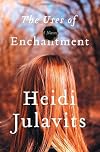
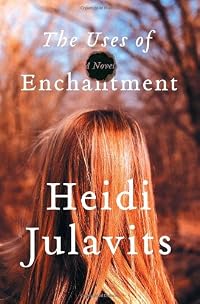
I first came across The Uses of Enchantment seven years ago while shelving books at the library. The cover enticed me immediately. The appearance of a hole burnt in the dust jacket, the colors, the beautiful hair, the font (great work on the show more cover of this one, cover designer peoples!) The novel's description completely pulled me in. Then I noticed other books by the same author on the shelf, and I read their descriptions and I knew, right then, I had found a new favorite author.
Except when I got home and added the book to my Goodreads there was a huge red flag: The Uses of Enchantment had a rating that was barely rising above 3.0. And Julavits' other books weren't doing much better. The reviews blasted the book; there were so many one to three star ratings. The reviews were peppered with phrases like “I hated this book” and “what a waste of time.” And so I did what any intelligent consumer would do—I put the book on my “I'll probably never read this, but I'll keep it on my shelf because it's so pretty” shelf. My putting aside this book had nothing to do with following the masses, it had to do with experience. When I look back at the books I have read which have the lowest overall ratings, I must say that I disliked most of them. Prior to The Uses of Enchantment, the only book with a rating less than 3.25 that I absolutely loved was Rowling's polarizing The Casual Vacancy. I had too many other “good” books to read to waste time on something I'd probably hate. Yet, that small voice of hope from seven years ago would nag at me occasionally, telling me I'd never know if I didn't give it a try. Finally, I gave in.
I'm not quite sure why I finally decided to give The Uses of Enchantment a go, but I'm glad I did. The book was phenomenal. It's possible that my super low expectations buoyed the book considerably, but I don't believe so; I think I would've liked this novel regardless of the reviews. First of all, the prose is amazing. Julavits writes with such beauty. I was reminded of two other authors whose work I enjoy but who also receive many poor reviews: Hannah Pittard and Meg Wolitzer. Perhaps there is something in the style of these authors that repulses some readers, but whatever it is, I want more of it. When I ponder the negative comments of others, and the complaints I personally disagree with, I think mostly of comments about “how boring” these works are, how “nothing happens,” or how “unresolved” they are. I would agree that not much happens in these books, and in the case of Pittard's first novel the lack of “anything” happening was the only barrier to a five-star review, but I would argue that enough happens, especially in the characters themselves. And perhaps that is the distinction here. Are these novel's largely character and language driven? I would say, yes. Apparently too much so for many readers. Personally, I find novels with absolutely no plot boring as well, but light plot is acceptable. Add some great character development and some wonderfully spun sentences and I'm hooked.
As far as the argument that The Uses of Enchantment is unresolved, I disagree. Does the reader get a clear answer as to what happened or didn't happen? No, not really. But I think it can be deduced what likely occurred, and this is good enough for me. Study the psychology of these characters, pay attention to this “wronged-woman project” the school participates in, and I think that not only does the “what might have happened” fall into place, but also the importance of it not mattering. The brilliance of the novel is in the not knowing. What about Dora? Mary is asking. What about Bettina Spencer? What about all of us women who have been wrongly accused? Does it matter if all our facts fall into line, or is it enough that we are simply hurting? That's what I walked away with anyhow. And I applaud Julavits for a well-orchestrated story.
So, take it from me, kids. Ratings can good, but they also be a tool of the devil. I mean, come on, this poignant story of a confused adolescent girl is worth only 3.04 stars, but Twilight, a story about an adolescent girl who plays baseball with vampires because she's so disturbed, wracks up 3.56 stars? Heed the advice of a book snob: Ratings are of the devil! show less
I first came across The Uses of Enchantment seven years ago while shelving books at the library. The cover enticed me immediately. The appearance of a hole burnt in the dust jacket, the colors, the beautiful hair, the font (great work on the show more cover of this one, cover designer peoples!) The novel's description completely pulled me in. Then I noticed other books by the same author on the shelf, and I read their descriptions and I knew, right then, I had found a new favorite author.
Except when I got home and added the book to my Goodreads there was a huge red flag: The Uses of Enchantment had a rating that was barely rising above 3.0. And Julavits' other books weren't doing much better. The reviews blasted the book; there were so many one to three star ratings. The reviews were peppered with phrases like “I hated this book” and “what a waste of time.” And so I did what any intelligent consumer would do—I put the book on my “I'll probably never read this, but I'll keep it on my shelf because it's so pretty” shelf. My putting aside this book had nothing to do with following the masses, it had to do with experience. When I look back at the books I have read which have the lowest overall ratings, I must say that I disliked most of them. Prior to The Uses of Enchantment, the only book with a rating less than 3.25 that I absolutely loved was Rowling's polarizing The Casual Vacancy. I had too many other “good” books to read to waste time on something I'd probably hate. Yet, that small voice of hope from seven years ago would nag at me occasionally, telling me I'd never know if I didn't give it a try. Finally, I gave in.
I'm not quite sure why I finally decided to give The Uses of Enchantment a go, but I'm glad I did. The book was phenomenal. It's possible that my super low expectations buoyed the book considerably, but I don't believe so; I think I would've liked this novel regardless of the reviews. First of all, the prose is amazing. Julavits writes with such beauty. I was reminded of two other authors whose work I enjoy but who also receive many poor reviews: Hannah Pittard and Meg Wolitzer. Perhaps there is something in the style of these authors that repulses some readers, but whatever it is, I want more of it. When I ponder the negative comments of others, and the complaints I personally disagree with, I think mostly of comments about “how boring” these works are, how “nothing happens,” or how “unresolved” they are. I would agree that not much happens in these books, and in the case of Pittard's first novel the lack of “anything” happening was the only barrier to a five-star review, but I would argue that enough happens, especially in the characters themselves. And perhaps that is the distinction here. Are these novel's largely character and language driven? I would say, yes. Apparently too much so for many readers. Personally, I find novels with absolutely no plot boring as well, but light plot is acceptable. Add some great character development and some wonderfully spun sentences and I'm hooked.
As far as the argument that The Uses of Enchantment is unresolved, I disagree. Does the reader get a clear answer as to what happened or didn't happen? No, not really. But I think it can be deduced what likely occurred, and this is good enough for me. Study the psychology of these characters, pay attention to this “wronged-woman project” the school participates in, and I think that not only does the “what might have happened” fall into place, but also the importance of it not mattering. The brilliance of the novel is in the not knowing. What about Dora? Mary is asking. What about Bettina Spencer? What about all of us women who have been wrongly accused? Does it matter if all our facts fall into line, or is it enough that we are simply hurting? That's what I walked away with anyhow. And I applaud Julavits for a well-orchestrated story.
So, take it from me, kids. Ratings can good, but they also be a tool of the devil. I mean, come on, this poignant story of a confused adolescent girl is worth only 3.04 stars, but Twilight, a story about an adolescent girl who plays baseball with vampires because she's so disturbed, wracks up 3.56 stars? Heed the advice of a book snob: Ratings are of the devil! show less
The Uses of Enchantment, Heidi Julavits
Not to be confused with Bruno Bettelheim’s with The Uses of Enchantment, which is stringently assertive in it’s psychoanalytical study of tales, fairy tales, and other folklore. There are some interesting comparisons to the two books.
Heidi Julavits has created a book in three parts, twisted and mixed together in alternating chapters. It is the story of Mary Veal who is famous for being a girl who was purportedly kidnapped, molested, and released two months later. Cast in and around Boston, the book carries literal and symbolic references to Witch Trials and the hysteria that surrounded them.
1- Initial and following segments are titled “What might have happened”.
2- The next segments are show more notes from Dr. Hammer, her psychiatrist who interviews her and attempts to help her after she returns.
3- The third are 14 years later, when Mary returns home for the funeral of her mother and tries to put all the pieces back together.
In the opening of the book, we see Mary migrate to a car outside her school where a bored man has been watching the girls smoke cigarettes on numerous days. She climbs into his car and plays on his emotions and undercurrent of desire to get him to play along with her “abduction”. She is well read but average in most every other fashion.
Following throughout are sessions with Dr. Hammer as he unravels her story and becomes obsessed with the fact that she may be lying about her abduction.
By the end of the book I was pretty enthralled. The aptly titled “What may have happened” segments leave you unsure at the end of your POV and analyzing her yourself, looking for a gleam of fact behind her fairytale. Is she telling the truth, is she lying, is she telling the truth when she says she is lying? Maybe a little of all three.
Freudian discussion spatters all of Dr. Hammers notes and make you wonder exactly how much of Freud is actually relevant today; whether his mastery was only meant to be a stepping stone in the psychoanalytical world instead of a pillar.
There is an interesting character in this book named Roz. She is an all encompassing Feminist psychiatrist who drove her points home in any (verbally violent) way possible. She really shines as an antagonizing pain in the ass. Another poitedly Feminist character, the man who “abducts” Mary has a fair amount of talk on the subject too.
All in all a well researched and very well written book.
(Review originally published 11/28/07) show less
Not to be confused with Bruno Bettelheim’s with The Uses of Enchantment, which is stringently assertive in it’s psychoanalytical study of tales, fairy tales, and other folklore. There are some interesting comparisons to the two books.
Heidi Julavits has created a book in three parts, twisted and mixed together in alternating chapters. It is the story of Mary Veal who is famous for being a girl who was purportedly kidnapped, molested, and released two months later. Cast in and around Boston, the book carries literal and symbolic references to Witch Trials and the hysteria that surrounded them.
1- Initial and following segments are titled “What might have happened”.
2- The next segments are show more notes from Dr. Hammer, her psychiatrist who interviews her and attempts to help her after she returns.
3- The third are 14 years later, when Mary returns home for the funeral of her mother and tries to put all the pieces back together.
In the opening of the book, we see Mary migrate to a car outside her school where a bored man has been watching the girls smoke cigarettes on numerous days. She climbs into his car and plays on his emotions and undercurrent of desire to get him to play along with her “abduction”. She is well read but average in most every other fashion.
Following throughout are sessions with Dr. Hammer as he unravels her story and becomes obsessed with the fact that she may be lying about her abduction.
By the end of the book I was pretty enthralled. The aptly titled “What may have happened” segments leave you unsure at the end of your POV and analyzing her yourself, looking for a gleam of fact behind her fairytale. Is she telling the truth, is she lying, is she telling the truth when she says she is lying? Maybe a little of all three.
Freudian discussion spatters all of Dr. Hammers notes and make you wonder exactly how much of Freud is actually relevant today; whether his mastery was only meant to be a stepping stone in the psychoanalytical world instead of a pillar.
There is an interesting character in this book named Roz. She is an all encompassing Feminist psychiatrist who drove her points home in any (verbally violent) way possible. She really shines as an antagonizing pain in the ass. Another poitedly Feminist character, the man who “abducts” Mary has a fair amount of talk on the subject too.
All in all a well researched and very well written book.
(Review originally published 11/28/07) show less
At the start of Heidi Julavits' intriguing novel, 16-year old Mary Veal disappears from her private school one afternoon in 1985. Three weeks later, she reappears claiming to have little memory of what happened to her. In the months that follow, numerous psychiatrists attempt to discern whether Mary is a victim of abduction and rape or a liar who engineered her own disappearance for mysterious, sixteen-year old reasons.
Julavits novel switches back and forth between a narrative entitled "What Might Have Happened" that speculates on the events of those lost weeks, notes from the analyst who treated Mary after her reappearance, and the story of 30-year old Mary's return home after the death of her estranged mother. Of these three threads, show more the first is by far the most compelling. Here Julavits masterfully teases apart the complex motivations that underlie the developing relationship between Mary and the strange man whose car she climbed into that fateful afternoon.
Unfortunately, the other two narrative threads did not hold my attention to the same degree. 30-year old Mary just wasn't as compelling a character as her younger self, and her interactions with her bitchy sisters and other parts of her past dragged at times. While the analyst notes depicting the cat-and-mouse game Mary played with the therapist who was hoping to resurrect his career off of his theories about her were somewhat more interesting, they were also obscure and Freudian to a degree that I found maddening at times.
I finished this book with a mixture of admiration and frustration. The underlying questions about identity, sexuality and repression in this story were fascinating to me, but I closed the book feeling unsatisfied. Though Mary finds resolution at the end of her tale, the author simply did not provide enough information about for me to feel the same. show less
Julavits novel switches back and forth between a narrative entitled "What Might Have Happened" that speculates on the events of those lost weeks, notes from the analyst who treated Mary after her reappearance, and the story of 30-year old Mary's return home after the death of her estranged mother. Of these three threads, show more the first is by far the most compelling. Here Julavits masterfully teases apart the complex motivations that underlie the developing relationship between Mary and the strange man whose car she climbed into that fateful afternoon.
Unfortunately, the other two narrative threads did not hold my attention to the same degree. 30-year old Mary just wasn't as compelling a character as her younger self, and her interactions with her bitchy sisters and other parts of her past dragged at times. While the analyst notes depicting the cat-and-mouse game Mary played with the therapist who was hoping to resurrect his career off of his theories about her were somewhat more interesting, they were also obscure and Freudian to a degree that I found maddening at times.
I finished this book with a mixture of admiration and frustration. The underlying questions about identity, sexuality and repression in this story were fascinating to me, but I closed the book feeling unsatisfied. Though Mary finds resolution at the end of her tale, the author simply did not provide enough information about for me to feel the same. show less
First, I have to say, reading an advance reader's copy, which is what I got as a present, is an odd experience. More typoes, less punctuation, some marks where numbers or addresses are to be entered later... it's a bit offputting, but I don't think it ruined the experience.
This book was a fast read, but a good one, for the most part. The story advances along three tracks, one on the course of an abduction of sorts when the main character is 14, one on the course of psychological treatment a few months after the abduction, and one when the character is returning home for her mother's funeral a decade and a half later. The writing style for each of them is set off, so it's easy to tell whose section you're in.
I won't give away much about show more the story, but the themes are strong: how you believe in the people around you, and the stories you tell each other and yourself. It's pretty strong in this regard, and it's an interesting take. I enjoyed a lot of it.
The dialogue, too, is good and crisp, and the characters are fairly lively. There's a lot of good continuity stuff, as well, so a close reading, even if it is fast, does pay off. There's a lot going for this book.
And yet, it just doesn't feel like it comes together enough; lots of stuff is mentioned offhand or hinted at that seems like it'd be important to hear more about, and it doesn't come in. I'm okay with leaving some stuff to happen offscreen, but I think that the book would have been better with it in. I don't want to say exactly what, but if you're curious, I can tell you individually later.
The conclusion: worth reading, sure, but I'd maybe just borrow it. show less
This book was a fast read, but a good one, for the most part. The story advances along three tracks, one on the course of an abduction of sorts when the main character is 14, one on the course of psychological treatment a few months after the abduction, and one when the character is returning home for her mother's funeral a decade and a half later. The writing style for each of them is set off, so it's easy to tell whose section you're in.
I won't give away much about show more the story, but the themes are strong: how you believe in the people around you, and the stories you tell each other and yourself. It's pretty strong in this regard, and it's an interesting take. I enjoyed a lot of it.
The dialogue, too, is good and crisp, and the characters are fairly lively. There's a lot of good continuity stuff, as well, so a close reading, even if it is fast, does pay off. There's a lot going for this book.
And yet, it just doesn't feel like it comes together enough; lots of stuff is mentioned offhand or hinted at that seems like it'd be important to hear more about, and it doesn't come in. I'm okay with leaving some stuff to happen offscreen, but I think that the book would have been better with it in. I don't want to say exactly what, but if you're curious, I can tell you individually later.
The conclusion: worth reading, sure, but I'd maybe just borrow it. show less
Much like the last book I read, I don't like the characters, or maybe even the story. But I keep reading everything this woman writes, because though it's depressing/annoying, she's really good at writing about how fucked up people are and thoroughly people can fuck each other up. It's smartly written, with some kind of brilliant descriptions.
Hmmm. Well, this one ended up being a bit of a disappointment. It had a good premise--teenage girl may or may not have been abducted, read on to find out more--but the story ended up being confusing and ultimately a bit of a bore. None of the characters drew me into the story at all. Oh well. I guess not every novel with potential pans out. And who knows, the next reader may think this is a terrific psychological study. We'll see.
Fair warning though. This is an ARC, and it doesn't look like the publishers even had time for one pass at copyediting before printing it for BEA.
Fair warning though. This is an ARC, and it doesn't look like the publishers even had time for one pass at copyediting before printing it for BEA.
Members
- Recently Added By
Author Information

109+ Works 2,894 Members
Heidi Julavits is a founding editor of The Believer magazine. Her books include The Uses of Enchantment, The Effect of Living Backwards, The Mineral Palace, and The Folded Clock: A Diary. She received the PEN New England Award for Literary Excellence in Fiction. (Bowker Author Biography)
Awards and Honors
Distinctions
Common Knowledge
- Canonical title
- The Uses of Enchantment
- Original publication date
- 2006
Classifications
Statistics
- Members
- 430
- Popularity
- 71,337
- Reviews
- 17
- Rating
- (3.03)
- Languages
- English
- Media
- Paper, Audiobook, Ebook
- ISBNs
- 9
- ASINs
- 2