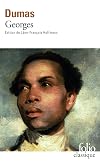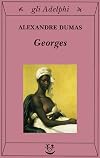
Georges
by Alexandre Dumas, Alexandre Dumas, pere
On This Page
Description
"Georges Munier is a sensitive boy growing up in the nineteenth century on the island of Mauritius. The son of a wealthy mulatto, Pierre Munier, Georges regularly sees how his father's courage is tempered by a sense of inferiority before whites and Georges vows that he will be different." "When Georges matures into a man committed to "moral superiority mixed with physical strength," the stage is set for a conflict with the island's rich and powerful plantation owner, Monsieur de Malmedie, show more and a forbidden romance with Sara, the beautiful woman engaged to Malmedie's son." "Swordplay, a slave rebellion, a harrowing escape, and a vow of vengeance - Georges is unmistakably the work of the master who wrote The Three Musketeers and The Count of Monte Cristo. Yet it stands apart as the only book Dumas ever wrote that confronts the subject of race - a potent topic, since Dumas was of African ancestry himself." "This edition also features a Foreword by Jamaica Kincaid and an Introduction and notes by Werner Sollors, who addresses key themes such as colonialism, racism, African slavery, and interracial intimacy."--BOOK JACKET. show lessTags
Recommendations





































Member Recommendations

Artymedon A novel over race relations by Alexandre Dumas who was inspired by Alex Dumas General of the French Revolution and former slave to create his fictional character Georges as narrated by Tom Reiss.
20
Member Reviews
Another good Dumas story.
First the story. This book has all of Dumas’s trademarks, plenty of characters, a semi-flawed hero, romance, an engaging setting, and a tense conclusion. I was not particularly gripped by this story but it is certainly memorable and once the action starts near the end I really was unsure as to what would happen next.
Dumas does a great job establishing a gorgeous island setting. Maybe it’s not as moving now when we can look at tropical pictures anytime we’d like, but I’m sure the setting really captured 1840s readers.
The titular Georges is a likable protagonist but is overly prideful. Some have complained that there is another character that outshines him as a hero, which I could see, but Georges is show more still a worthy hero for the novel. In fact, it is clear while reading that much of his characterization is re-used for the Count of Monte Cristo himself.
Many may be interested in reading this to see it’s perspective on race. In that regard there is some food for thought. The overarching story is one of breaking down prejudice and seeing beyond race. On the other hand, this book itself is racist, at least by modern standards. Slavery is not outright condemned, and there are several racial stereotypes in the novel. This novel is an interesting study in a work that is forward thinking/progressive but still a product of its time.
On the whole this is a solid tale and especially of note for Dumas fans. The many heroes and villains of this tale will stay in my mind for a long time to come and I will not soon forget this literary trip to the Ile de France. For Dumas fans this is a treat as this was written before his masterpieces, and Count of Monte Cristo fans should definitely read this to see Georges as a sort of proto-Edmond Dantes. Overall a classic adventure with some interesting racial elements. show less
First the story. This book has all of Dumas’s trademarks, plenty of characters, a semi-flawed hero, romance, an engaging setting, and a tense conclusion. I was not particularly gripped by this story but it is certainly memorable and once the action starts near the end I really was unsure as to what would happen next.
Dumas does a great job establishing a gorgeous island setting. Maybe it’s not as moving now when we can look at tropical pictures anytime we’d like, but I’m sure the setting really captured 1840s readers.
The titular Georges is a likable protagonist but is overly prideful. Some have complained that there is another character that outshines him as a hero, which I could see, but Georges is show more still a worthy hero for the novel. In fact, it is clear while reading that much of his characterization is re-used for the Count of Monte Cristo himself.
Many may be interested in reading this to see it’s perspective on race. In that regard there is some food for thought. The overarching story is one of breaking down prejudice and seeing beyond race. On the other hand, this book itself is racist, at least by modern standards. Slavery is not outright condemned, and there are several racial stereotypes in the novel. This novel is an interesting study in a work that is forward thinking/progressive but still a product of its time.
On the whole this is a solid tale and especially of note for Dumas fans. The many heroes and villains of this tale will stay in my mind for a long time to come and I will not soon forget this literary trip to the Ile de France. For Dumas fans this is a treat as this was written before his masterpieces, and Count of Monte Cristo fans should definitely read this to see Georges as a sort of proto-Edmond Dantes. Overall a classic adventure with some interesting racial elements. show less
Georges is the youngest son of a wealthy mulatto plantation owner on île de France (now Mauritius). Georges admires his father for his strength and character, but hates his father's sense of inferiority to white society. Georges' father, Pierre Munier, is clearly their equal, if not their better. Georges is small for his age and prefers intellectual pursuits to physical activity. When Georges and his older brother are forced leave the island for their safety, Georges determines to return one day to confront and defeat the island's racial prejudice. To that end, he methodically strengthens his mind, body, and character in preparation for his return home. Although he earns respect and admiration from all segments of society upon his show more return, his goal of revenge leads to inevitable conflict and great danger.
The first part of the story reminds me of the old Charles Atlas ads where the 90-pound weakling transforms himself into a muscular man able to defend himself. The rest of the story is bit like The Last of the Mohicans if it had been written by Dickens. The action is well-paced and the uncertainty of Georges' fate kept me turning the pages. Some of the characterizations feel weak, though. Georges keeps a mental distance from everyone, including the reader. When he does eventually fall in love, the object of his devotion is a 16-year-old girl who reminds me a little of Lydia Bennet. If she hadn't been a teenager, though, I think she might have acted differently and thus changed the outcome of the novel.
The treatment of race and prejudice is problematic in the novel. Georges despises the inferior treatment he is subjected to by the island's white society. However, Georges' family owns hundreds of slaves, and Georges and his family seem to view the African slaves as inferior in intellect and will. I'd like to find out more about Dumas to see how closely this mirrored his own attitude toward racial issues. show less
The first part of the story reminds me of the old Charles Atlas ads where the 90-pound weakling transforms himself into a muscular man able to defend himself. The rest of the story is bit like The Last of the Mohicans if it had been written by Dickens. The action is well-paced and the uncertainty of Georges' fate kept me turning the pages. Some of the characterizations feel weak, though. Georges keeps a mental distance from everyone, including the reader. When he does eventually fall in love, the object of his devotion is a 16-year-old girl who reminds me a little of Lydia Bennet. If she hadn't been a teenager, though, I think she might have acted differently and thus changed the outcome of the novel.
The treatment of race and prejudice is problematic in the novel. Georges despises the inferior treatment he is subjected to by the island's white society. However, Georges' family owns hundreds of slaves, and Georges and his family seem to view the African slaves as inferior in intellect and will. I'd like to find out more about Dumas to see how closely this mirrored his own attitude toward racial issues. show less
Alexandre Dumas, to whom I introduced myself in "Georges," is more widely known for "The Three Musketeers" and "The Count of Monte Cristo." If "Georges" isn't mentioned in the same breath as those classics, it's not for lack of swashbuckling adventure.
Georges Munier, the mixed-race man from Ile de France (today's Mauritius), leaves home with his brother in the early 19th century to be educated in France. He returns 14 years later determined to fight the racial prejudice he and his family and his fellow non-whites experience in the colony. Dumas portays his hero as extremely handsome in a non-racial way, wealthy, intrepid, and noble. Without experiencing Dumas's other work, I can't tell if he always uses this over-the-top-in-every-way show more characterization for his heroes, or if it's just Georges. (I doubt it.) But Georges does have a tragic flaw in his character: he is proud, in a rebellious way, and settles on a scheme to overthrow the now-British colonial government.
The action, which Tina Kover adroitly translates, proceeds with terrific pace, and we feel we know what will happen to Georges - it's all too inevitable given his treasonous course. We have an unexpected, thrilling turnabout, a daring daylight escape, and a truly swashbuckling chase and naval battle to finish the book.
This works really well as adventure, although Georges and the other lead characters become a little too cardboard-cutout for me. Maybe I ask for too much from a 19-century adventure story, but Dumas makes his theme a noble rebellion against racial oppression, so maybe I wanted something a little more real. Maybe I'm being unfair and unrealistic. Anyway, this is a good way to find out a lot about Dumas, and if you want to escape with a classic story from another time, try "Georges." It won't disappoint if you're looking for straight-up adventure.
http://bassoprofundo1.blogspot.com/2010/07/georges-by-alexandre-dumas.html show less
Georges Munier, the mixed-race man from Ile de France (today's Mauritius), leaves home with his brother in the early 19th century to be educated in France. He returns 14 years later determined to fight the racial prejudice he and his family and his fellow non-whites experience in the colony. Dumas portays his hero as extremely handsome in a non-racial way, wealthy, intrepid, and noble. Without experiencing Dumas's other work, I can't tell if he always uses this over-the-top-in-every-way show more characterization for his heroes, or if it's just Georges. (I doubt it.) But Georges does have a tragic flaw in his character: he is proud, in a rebellious way, and settles on a scheme to overthrow the now-British colonial government.
The action, which Tina Kover adroitly translates, proceeds with terrific pace, and we feel we know what will happen to Georges - it's all too inevitable given his treasonous course. We have an unexpected, thrilling turnabout, a daring daylight escape, and a truly swashbuckling chase and naval battle to finish the book.
This works really well as adventure, although Georges and the other lead characters become a little too cardboard-cutout for me. Maybe I ask for too much from a 19-century adventure story, but Dumas makes his theme a noble rebellion against racial oppression, so maybe I wanted something a little more real. Maybe I'm being unfair and unrealistic. Anyway, this is a good way to find out a lot about Dumas, and if you want to escape with a classic story from another time, try "Georges." It won't disappoint if you're looking for straight-up adventure.
http://bassoprofundo1.blogspot.com/2010/07/georges-by-alexandre-dumas.html show less
I really enjoyed this book. It was exciting and fast paced. His main character, Georges, was a courageous man of steel, moral and intelligent. The one and only female character, Sara, was an unsurpassed beauty with unstained virtue. All typical of Dumas. Two things surprised me: First, this story takes place on Ile de France, not in Europe. Second, Georges is a mulatto. Not typical Dumas. The story centers around Georges vow to fight prejudice on the island. He does so in a very "in your face" manner, directed at the Malmedie family. A father and son combo, both bigot jerks.
The only criticism I have is Georges's lack of development. He basically came out of the womb courageous, moral and intelligent. The only things that changed were show more his age and strength.
However, all of that is small potatoes. This is a side of Dumas I have never seen, and I wish there was more. show less
The only criticism I have is Georges's lack of development. He basically came out of the womb courageous, moral and intelligent. The only things that changed were show more his age and strength.
However, all of that is small potatoes. This is a side of Dumas I have never seen, and I wish there was more. show less
Three stars because of the translation I read. I'm very eager to read a different translation of this, as I'm sure most of the issues I had with the writing were entirely the translator's fault.
Swashbuckling, grrr. Go, Dumas, go!
Members
- Recently Added By
Author Information

1,609+ Works 98,567 Members
24+ Works 506 Members
Some Editions
Series
Belongs to Publisher Series
Gallimard, Folio (567)
Common Knowledge
- Original title
- George
- Original publication date
- 1843
- People/Characters
- Georges Munier; Pierre Munier; Jacques; M. Malmedie; Sara; Antonio Malai (show all 8); Laiza; Miko-Miko
- Important places
- Mauritius; Isle de France
- Original language
- French
Classifications
- Genres
- Fiction and Literature, General Fiction, Historical Fiction
- DDC/MDS
- 843.7 — Literature & rhetoric French Literature French fiction Constitutional monarchy 1815–48
- LCC
- PQ2227 .G4 .E5 — Language and Literature French, Italian, Spanish and Portuguese literatures French literature Modern literature 19th century
- BISAC
Statistics
- Members
- 237
- Popularity
- 137,344
- Reviews
- 9
- Rating
- (3.74)
- Languages
- 5 — English, French, German, Italian, Spanish
- Media
- Paper, Ebook
- ISBNs
- 22
- ASINs
- 5