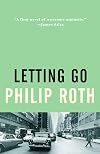
Letting Go
by Philip Roth
On This Page
Description
Letting Go is Roth's first full-length novel, published just after Goodbye, Columbus, when he was twenty-nine. Set in 1950s Chicago, New York, and Iowa City, Letting Go presents as brilliant a fictional portrait as we have of a mid-century America defined by social and ethical constraints and by moral compulsions conspicuously different from those of today.Newly discharged from the Korean War army, reeling from his mother's recent death, freed from old attachments and hungrily seeking show more others, Gabe Wallach is drawn to Paul Herz, a fellow graduate student in literature, and to Libby, Paul's moody, intense wife. Gabe's desire to be connected to the ordered "world of feeling" that he finds in books is first tested vicariously by the anarchy of the Herzes' struggles with responsible adulthood and then by his own eager love affairs. Driven by the desire to live seriously and act generously, Gabe meets an impassable test in the person of Martha Reganhart, a spirited, outspoken, divorced mother of two, a formidable woman who, according to critic James Atlas, is masterfully portrayed with "depth and resonance."The complex liason between Gabe and Martha and Gabe's moral enthusiasm for the trials of others are at the heart of this tragically comic work. show lessTags
Recommendations






















Member Reviews
I've read dimissive and backhanded reviews of this novel for years and I don't know what to think. This is one of the best novels I've ever read. There are things he talks about in this novel that have been roiling around in my head for years since I read it. I'm in this book, other people I know are in this book.It's a gut wrenching, harrowing book at times, but there are no cheap shots. Everything rings true.
This novel contributed a lot more to my life than something like "Portnoy's Complaint"
This novel contributed a lot more to my life than something like "Portnoy's Complaint"
If it lacks the bite and intensity that Roth would later perfect, it's because this novel is a foundation for it. It's size is a testament to a young writer figuring out the craft and all its capabilities. It is a good book, a great one that will stay with me for years to come. The word 'Ambition' is thrown around whenever an attempt is somewhat unsuccessful at accomplishing greatness. However, here is ambition that does accomplish something great. While a bit too Jamesian for my taste, Roth clearly cannot fully hide the passion that his work is noted for. Along with the great issues of his oeuvre, the passion shows through Gabe's attempt at deadening himself to his surroundings. By the end, he's just as wrapped up in the world of show more feelings as we are. show less
So, this is the 23rd Philip Roth book that I have read, though it is his first novel. I have found that first novels are often radically different from the rest of an author's work, though in this case I wouldn't say that it was all that different from some of Roth's other novels. One obvious thing that sets "Letting Go" apart is it's length; it is much longer than his other books. I haven't actually compared page numbers, but even if it weren't actually longer it (though it was) it would still seem longer. There also seemed to be a lot of name dropping going on - several references to Proust, Henry James, and others: Proust is fast becoming one of my favorite authors (though my prose sadly does not reflect that) and I am going to give show more James another chance. I think the author referencing may be a way to add legitimacy or to show off, but that is forgivable certainly.
I can't give the book a negative review - though I did find it to be tedious. I didn't really like any of the characters, though that doesn't really matter all that much. It did seem that the reader had to endure the same scenes repeatedly: Paul and Libby arguing over the same thing repeatedly, Gabe and Martha arguing over the same thing repeatedly, Gabe and Bigoness arguing over the same thing repeatedly, etc. I suppose the repetition drills in the fact that people often repeat themselves and do not often change or give in. I especially found the scenes with Bigoness to be difficult to get through; the character himself was annoying, and the confrontation with Gabe was frustrating.
A lot of the territory staked out in this novel Roth explores again (and again) later on, and I enjoyed those books a great deal more. I generally prefer Roth's work more from the mid-70's onward. If I were ranking, I'd say that this is probably my 3rd or 4th least favorite Roth book (1st has to be "The Great American Novel" and 2nd has to be "Our Gang").
Still though, it was an interesting book, and there is a lot of good stuff in it. In reply to arthurfrayn, the other reviewer of "Letting Go" here, I agree with you on all points. The characters all ring true more or less ; though there are things that today seem rather racist, sexist, and classist, I don't really fault Roth for them. I think this is a very good book - maybe as good or better than "Portnoy's Complaint," but not as good as most of his other work. show less
I can't give the book a negative review - though I did find it to be tedious. I didn't really like any of the characters, though that doesn't really matter all that much. It did seem that the reader had to endure the same scenes repeatedly: Paul and Libby arguing over the same thing repeatedly, Gabe and Martha arguing over the same thing repeatedly, Gabe and Bigoness arguing over the same thing repeatedly, etc. I suppose the repetition drills in the fact that people often repeat themselves and do not often change or give in. I especially found the scenes with Bigoness to be difficult to get through; the character himself was annoying, and the confrontation with Gabe was frustrating.
A lot of the territory staked out in this novel Roth explores again (and again) later on, and I enjoyed those books a great deal more. I generally prefer Roth's work more from the mid-70's onward. If I were ranking, I'd say that this is probably my 3rd or 4th least favorite Roth book (1st has to be "The Great American Novel" and 2nd has to be "Our Gang").
Still though, it was an interesting book, and there is a lot of good stuff in it. In reply to arthurfrayn, the other reviewer of "Letting Go" here, I agree with you on all points. The characters all ring true more or less ; though there are things that today seem rather racist, sexist, and classist, I don't really fault Roth for them. I think this is a very good book - maybe as good or better than "Portnoy's Complaint," but not as good as most of his other work. show less
The psychological tension builds in this novel, Roth's first, until it reaches a crescendo towards the end. Powerful stuff. Letting Go revolves around academics Gabe Wallach and Paul Herz. It explores religion, social class, relationships and social constraints in 1950s America.
A novel that examines the unintended consequences of...well, just living a life that, in the main is not vindictive, or violent, but....difficulties arise. This is not a deliberately shocking novel, but one that was a sign of more entertaining works to come.
So far as I can see I am the only one who thinks that this is the best book by Roth. I read it at least four times and I will read it ar least four times more.
You can sure tell this was early Roth.
Members
- Recently Added By
Author Information

123+ Works 74,950 Members
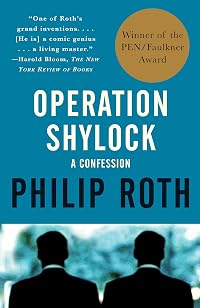
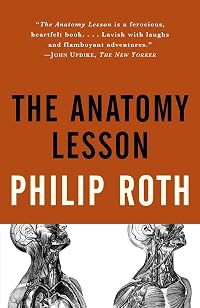
Philip Milton Roth was born in Newark, New Jersey on March 19, 1933. He attended Rutgers University for one year before transferring to Bucknell University where he completed a B.A. in English with highest honors in 1954. He received an M.A. from the University of Chicago in 1955. His first book, Goodbye, Columbus, received the National Book Award show more in 1960. His other books include Letting Go, When She Was Good, Portnoy's Complaint, My Life as a Man, The Ghostwriter, Zuckerman Unbound, I Married a Communist, The Plot Against America, The Facts, The Anatomy Lesson, Exit Ghost, Deception, Nemesis, Everyman, Indignation, and The Humbling. He won the National Book Critic Circle Awards in 1987 for his novel The Counterlife and in 1992 for his memoir Patrimony: A True Story. He won the PEN/Faulkner Award for Fiction in 1993 for Operation Shylock: A Confession and in 2001 for The Human Stain, the National Book Award in 1995 for Sabbath's Theater, and the Pulitzer Prize in 1998 for American Pastoral. He stopped writing in 2010. He died from congestive heart failure on May 22, 2018 at the age of 85. (Bowker Author Biography) show less
Some Editions
Awards and Honors
Distinctions
Series
Belongs to Publisher Series
Meulenhoff editie (256)
Gallimard, Folio (6374)
Work Relationships
Is contained in
Contains
Has as a student's study guide
Common Knowledge
- Canonical title*
- Laat maar gaan
- Original title
- Letting go
- Original publication date
- 1962
- People/Characters
- Gabe Wallach; Paul Herz; Libby Herz; Martha Raganhart
- Epigraph*
- Tutta la realtà è terribilmente seria; ed è la stessa moralità che, unitamente alla vita, ci proibisce di restar fedeli al candido irrealismo della nostra giovinezza, (Thomas Mann, Saggio autobiografico)
Gli uomini ci devono ciò che noi immaginiamo che ci daranno. Dobbiamo condonar loro questo debito. (Simone Weil, L'ombra e la grazia) - Dedication*
- a Maggie
- First words*
- Caro Gabe,
Le droghe mi aiutano a piegare le dita intorno a una penna. - Quotations*
- Ma non ne sono sfuggito, non posso e neanche lo voglio... finché non avrò capito un po' meglio la trappola più grande di cui sono prigioniero. Tuo Gabe
- Original language*
- Engels
*Some information comes from Common Knowledge in other languages. Click "Edit" for more information.
Classifications
Statistics
- Members
- 645
- Popularity
- 45,158
- Reviews
- 11
- Rating
- (3.63)
- Languages
- 5 — Dutch, English, French, Italian, Spanish
- Media
- Paper, Audiobook, Ebook
- ISBNs
- 30
- ASINs
- 20