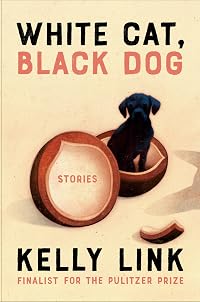
White Cat, Black Dog: Stories
by Kelly Link
On This Page
Description
"Finding seeds of inspiration in the Brothers Grimm, seventeenth-century French lore, and Scottish ballads, Kelly Link spins classic fairy tales into utterly original stories of seekers-characters on the hunt for love, connection, revenge, or their own sense of purpose. In "The White Cat's Divorce," an aging billionaire sends his three sons on a series of absurd goose chases to decide which will become his heir. In "The Girl Who Did Not Know Fear," a professor with a delicate health show more condition becomes stranded for days in an airport hotel after a conference, desperate to get home to her wife and young daughter, and in acute danger of being late for an appointment that cannot be missed. In "Skinder's Veil," a young man agrees to take over a remote house-sitting gig for a friend. But what should be a chance to focus on his long-avoided dissertation instead becomes a wildly unexpected journey, as the house seems to be a portal for otherworldly travelers-or perhaps a door into his own mysterious psyche"-- show lessTags
Recommendations







Member Reviews
Short stories based on, inspired by or in tribute to fairy tales, transmuted by the unique sensibility and style of Kelly Link into sharp, acerbic, eerie, beautiful, elliptical and thoroughly modern stories, each one a strange and sometimes terrible and always amazing world unto itself.
The final story, Skandar's Veil was in the Shirley Jackson trbute Anthology, Things Get Dark. Halfway through the story, when the bear begins to tell its story, I started to cry. I don't know why. Perhaps it was the sheer accumulation of subtle enchantments in the story, in the series of stories, that reached some kind of peak at that single ineffable moment. It's weird, I can still feel the state persist as I type, the state of having read a Kelly Link show more story and started crying when a bear speaks. Was it grief, or happiness, or memory, or loss, or envy, or longing? I think it was mostly the good things, with maybe one of the bad things. Or it was something else entirely, unrelated to a Kelly Link story, unrelated even to myself, something that passed through me on its way to somewhere or someone else. It happened, though, and I am recording it here so that even though I might forget, I will at least have written it down before moving on and getting on with my life. show less
The final story, Skandar's Veil was in the Shirley Jackson trbute Anthology, Things Get Dark. Halfway through the story, when the bear begins to tell its story, I started to cry. I don't know why. Perhaps it was the sheer accumulation of subtle enchantments in the story, in the series of stories, that reached some kind of peak at that single ineffable moment. It's weird, I can still feel the state persist as I type, the state of having read a Kelly Link show more story and started crying when a bear speaks. Was it grief, or happiness, or memory, or loss, or envy, or longing? I think it was mostly the good things, with maybe one of the bad things. Or it was something else entirely, unrelated to a Kelly Link story, unrelated even to myself, something that passed through me on its way to somewhere or someone else. It happened, though, and I am recording it here so that even though I might forget, I will at least have written it down before moving on and getting on with my life. show less
Kelly Link's short stories often have an otherworldly feel, with odd and unaccountable things happening all the time. So a collection of reimagined fairy tales sounds like it might be something special. Black Dog, White Cat: Stories is exactly this and it is even more marvelous than I had hoped. Link sticks mostly with slightly less well-known stories, like The Musicians of Bremen and Snow White and Rose Red. Each story is wildly inventive and solidly based in its origin story. My favorite was a take on Tam Lin that had an otherworldly, magical atmosphere, even before introducing the supernatural aspect. The best story, in a collection where all the stories were good, was a take on East of the Sun, West of the Moon called Prince Hat show more Underground, in which a man sets out to find and rescue his husband, who was taken away by a mysterious woman, a journey that leads him to Iceland and an ever increasingly odd set of adventures.
Link knows how to create an atmosphere in her writing, which is a skill that shines in these fairy tales. They are set ostensibly in this world, but each has such a different feeling and air about it, even before the tale gets to the fairies, or the talking animals, or the 300 year old man. Link also knows how to create a story that is hard to put down, even if that story is spent within the walls of a single house or even sitting in the middle seat of a crowded flight. If you have any interest in fairy tale retellings or even a well-told short story, this is the collection to pick up. show less
Link knows how to create an atmosphere in her writing, which is a skill that shines in these fairy tales. They are set ostensibly in this world, but each has such a different feeling and air about it, even before the tale gets to the fairies, or the talking animals, or the 300 year old man. Link also knows how to create a story that is hard to put down, even if that story is spent within the walls of a single house or even sitting in the middle seat of a crowded flight. If you have any interest in fairy tale retellings or even a well-told short story, this is the collection to pick up. show less
One thing I like about her writing is that it keeps surprising me while also making me think Of course! These lean more into the speculative than some of her other more slipstreamy stories. I love how she takes the fairy tale as a frame/inspiration and then makes it a story, not a tale. The relationship between the son and the cat, and the harm the father does; the absolute love of Gary and Prince Hat; the nature of story and of grief in The White Road; the loss of innocence in Smash and Retrieve (possibly the story that hews closest to the theme in the original fairy tale? Or is that just because I'm familiar with it?); etc. I love how "Skinder's" takes the limbo of grad school and the ordinariness of Andy into a story about death and show more the bargains we make in life. How "Fox" creates a whole world and characters with depth so that the climactic scene is so powerful.
It's one of those books I love deeply and feel like was written for me and when anyone finds it less than perfect or an ordinary book or a causal read (!!) I am amazed and want to go on the attack. She makes a scene of a woman swimming in an airport hotel pool to one of transformation and transportation! She weaves the White Cat tale from something bulky into something that can fit through a ring! She takes East of the Sun with its original harsh anti-semitism trolls and makes it a story of inclusive love (though with a haunting ending)!
Beautiful and compelling and readable and entertaining and surprising and satisfying. show less
It's one of those books I love deeply and feel like was written for me and when anyone finds it less than perfect or an ordinary book or a causal read (!!) I am amazed and want to go on the attack. She makes a scene of a woman swimming in an airport hotel pool to one of transformation and transportation! She weaves the White Cat tale from something bulky into something that can fit through a ring! She takes East of the Sun with its original harsh anti-semitism trolls and makes it a story of inclusive love (though with a haunting ending)!
Beautiful and compelling and readable and entertaining and surprising and satisfying. show less
In White Cat, Black Dog, Kelly Link has crafted a literally wonder-ful collection of stories for the delectation of lovers of folklore and fairy tales, replete with wit, imagination, and humanity.
Beneath the title of each of the seven stories, Link kindly tells us the name of the fairy tale which each is… Associated with? Inspired by? Linked to? She mostly sticks by the outlines of the traditional versions: a tyrannical king sending his sons out on absurd journeys; lovers separated by a vengeful witch or fairy; a troop of clever creatures outwitting evil ones, and so on. She adroitly adopts the soothing, almost incantatory voice of the storyteller… and then reshapes the story to drop it into a new context. The tyrannical king show more becomes a greedy and obscenely wealthy businessman and his youngest son finds his aid in a highly-advanced marijuana farm and production facility run by cats. The separated lovers are a gay couple hailing Uber to hit trendy bars, until one disappears; his loyal lover is led on the quest to find him by talking rats and an Icelandic snake (in an island country that has no snakes). The enchanted bride unexpectedly abandons her lover for the oligarch… but dispatches him in a final astutely manipulative stroke. Who could resist the forlorn and beautiful young man in gorgeous coat embroidered with the image of a tragically trapped fox, seeking only a young woman skillful enough to set the fox free and brave enough to hold onto him, no matter what? What seems to be a 19th-century troupe of itinerant actors are actually traversing a post-apocalyptic Tennessee landscape peopled by frightened survivors fending off murderous souls… Bremen town musicians? Really? Just when you think you know where you’re going, there is a disorienting turn, and you smile to yourself and think, Oh! Wait! That’s not what I thought… where is this going now?
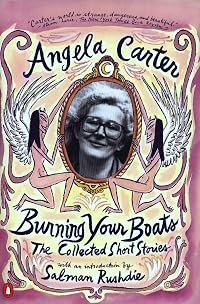
It’s a lot of fun to see the spice Link adds to these old recipes, stirring in absurdities, modern ennui, danger, heartbreak, fear, and affection. But then, that’s how these stories work, isn’t it? They are to be borrowed, stolen from, embellished, twisted and tweaked, and passed along from hand to hand to be savored. Angela Carter is a noted practitioner of this art. But Carter can be so lush, so lurid, so overripe as to seep into a surfeit of blood and detail.
Link does not do this. Even in the less successful, overelaborate story “The Game of Smash and Recovery,” the Handmaid servant-creatures who “briskly” (what a perfect adverb here!) tear a vampire to shreds are also tender, clever, and protective. The scavenging cloaked vampires with “jellied skin” and “armies of teeth” also bow their long necks, dance, and “sing propitiatory songs.” They never tip over into sheer blood-and-guts horror grossness.
Link is wry, she is often funny; her characters patronize massage therapists who charge extra for removal of malevolent spirits, struggle over an unfinished dissertation and sexual awkwardness, curse copiously, use a cellphone light to navigate a haunted cavern. And she can turn a beautiful sentence: “[she] watches them go swooping, sail-winged, away and over the horizon beneath Home’s scatter of mismatched moons.” At the end of “The Bremen Town Musicians,” the narrator has escaped a violent death at a terrible cost, to himself and someone he loved dearly. He muses: “Perhaps someone who should not read this letter will read it as I once read Meredith’s letters and the letters of other men and women. But I do not hope. I do not hope but still I hope and do not know what I am hoping for.”
I’m hoping for yet more visiting bears, devoted lovers, embroidered foxes, honorable sons, and evil fairies doing Jazzercise in Hell, under a scatter of mismatched moons.
* Thanks to NetGalley for an ARC in exchange for an honest review. * show less
Beneath the title of each of the seven stories, Link kindly tells us the name of the fairy tale which each is… Associated with? Inspired by? Linked to? She mostly sticks by the outlines of the traditional versions: a tyrannical king sending his sons out on absurd journeys; lovers separated by a vengeful witch or fairy; a troop of clever creatures outwitting evil ones, and so on. She adroitly adopts the soothing, almost incantatory voice of the storyteller… and then reshapes the story to drop it into a new context. The tyrannical king show more becomes a greedy and obscenely wealthy businessman and his youngest son finds his aid in a highly-advanced marijuana farm and production facility run by cats. The separated lovers are a gay couple hailing Uber to hit trendy bars, until one disappears; his loyal lover is led on the quest to find him by talking rats and an Icelandic snake (in an island country that has no snakes). The enchanted bride unexpectedly abandons her lover for the oligarch… but dispatches him in a final astutely manipulative stroke. Who could resist the forlorn and beautiful young man in gorgeous coat embroidered with the image of a tragically trapped fox, seeking only a young woman skillful enough to set the fox free and brave enough to hold onto him, no matter what? What seems to be a 19th-century troupe of itinerant actors are actually traversing a post-apocalyptic Tennessee landscape peopled by frightened survivors fending off murderous souls… Bremen town musicians? Really? Just when you think you know where you’re going, there is a disorienting turn, and you smile to yourself and think, Oh! Wait! That’s not what I thought… where is this going now?
It’s a lot of fun to see the spice Link adds to these old recipes, stirring in absurdities, modern ennui, danger, heartbreak, fear, and affection. But then, that’s how these stories work, isn’t it? They are to be borrowed, stolen from, embellished, twisted and tweaked, and passed along from hand to hand to be savored. Angela Carter is a noted practitioner of this art. But Carter can be so lush, so lurid, so overripe as to seep into a surfeit of blood and detail.
Link does not do this. Even in the less successful, overelaborate story “The Game of Smash and Recovery,” the Handmaid servant-creatures who “briskly” (what a perfect adverb here!) tear a vampire to shreds are also tender, clever, and protective. The scavenging cloaked vampires with “jellied skin” and “armies of teeth” also bow their long necks, dance, and “sing propitiatory songs.” They never tip over into sheer blood-and-guts horror grossness.
Link is wry, she is often funny; her characters patronize massage therapists who charge extra for removal of malevolent spirits, struggle over an unfinished dissertation and sexual awkwardness, curse copiously, use a cellphone light to navigate a haunted cavern. And she can turn a beautiful sentence: “[she] watches them go swooping, sail-winged, away and over the horizon beneath Home’s scatter of mismatched moons.” At the end of “The Bremen Town Musicians,” the narrator has escaped a violent death at a terrible cost, to himself and someone he loved dearly. He muses: “Perhaps someone who should not read this letter will read it as I once read Meredith’s letters and the letters of other men and women. But I do not hope. I do not hope but still I hope and do not know what I am hoping for.”
I’m hoping for yet more visiting bears, devoted lovers, embroidered foxes, honorable sons, and evil fairies doing Jazzercise in Hell, under a scatter of mismatched moons.
* Thanks to NetGalley for an ARC in exchange for an honest review. * show less
Kelly Link's collection of short stories draws on the inspiration of classic fairy tales such as "The Musicians of Bremen," "Hansel and Gretel," "Tam Lin," and "Snow-White and Rose-Red." "Inspiration" is the keyword here because these stories are far from retellings of the older tales. Instead they are short stories set in the modern day (or a dystopian near future). Fantastical elements such as talking animals and magical beings appear in these stories without explanation lending the stories an element of magical realism. Like fairy tales of old, these stories reflect our contemporary anxieties and inner darkness
Strange and wonderful and compelling stories. I'm kind of over fairy tales, I think, but then a collection like this comes along and is impossible to put down. Makes my brain itch in the good ways.
Advanced reader's copy provided by edelweiss.
Advanced reader's copy provided by edelweiss.
In a Nutshell: Too bizarre for my liking. For a collection of fairy tale retellings, there isn’t enough fairy tale content in any story. Might work for those who enjoy speculative fiction that’s on the weirder side of the logical spectrum.
This collection contains seven stories, though most of them are way too long to be considered ‘short’ stories. They touch the bottom range of novella-length fiction.
The seven tales are all retellings of classic fairy tales or lore, the name of the original being mentioned under the title of each story herein. Most of the retellings are set in the contemporary world, and have characters that could have been memorable had they been written differently. That said, the characters are diverse, and show more their personality ranges from vulnerable to manipulative, one plus point of the book.
For a change, I knew every single one of the original tales, and this increased my excitement at first. After all, the fun of reading a retelling comes from recognising how the author has twisted the original work and given it a fresh spin. Alas! Most of these retellings are as different from the base story as Salem (Tamil Nadu, India) is from Salem (Massachusetts, USA). The only one that comes close to retaining the essence of the original is the first story, ‘The White Cat’s Divorce’ (based on the French fairy tale named ‘The White Cat’), which is, not surprisingly, the best story of the book.
Honestly, this collection left me feeling as if I was not clever enough to understand it. The stories were either too outlandish or too weird. The endings were too abrupt in most cases, leaving me with a strange kind of restlessness. More importantly, the stories felt quite random in their flow, almost as if they were meandering for the sake of it. There’s no rhyme or reason to the events being narrated, nor is every question answered.
The only story I read with unbroken interest from start to end was the first one. The last story, ‘Skinder's Veil’ (based on the German fairy tale ‘Snow-White and Rose-Red’) was another decent story. The rest were mostly duds for me.
I have heard a lot about this author, but this makes me wonder if I will ever read her works again. I guess we aren’t exactly a match made in book heaven – I love logic too much and her stories defy logic.
As always, I rated each story individually, but except for the above two stories (4.5 and 3.5 respectively), none touched even the 3 star mark.
The logical side of me rebelled against this collection. The emotional side of me didn’t understand the point of this collection. The whole of me felt depressed at how badly this went. However, if you are fond of bizarre stories that are more about the writing than the ending, you might still like this. After all, this was a finalist for the Pulitzer Prize, so what do I know!
Better if you aren’t reading this as a retelling collection but as a speculative fiction anthology.
2.4 stars, based on the average of my rating for each story.
My thanks to Random House Publishing Group - Random House and NetGalley for the DRC of “White Cat, Black Dog”. This review is voluntary and contains my honest opinion about the book. Sorry this worked out so badly.
———————————————
Connect with me through:
My Blog | The StoryGraph | Instagram | Facebook | Twitter show less
This collection contains seven stories, though most of them are way too long to be considered ‘short’ stories. They touch the bottom range of novella-length fiction.
The seven tales are all retellings of classic fairy tales or lore, the name of the original being mentioned under the title of each story herein. Most of the retellings are set in the contemporary world, and have characters that could have been memorable had they been written differently. That said, the characters are diverse, and show more their personality ranges from vulnerable to manipulative, one plus point of the book.
For a change, I knew every single one of the original tales, and this increased my excitement at first. After all, the fun of reading a retelling comes from recognising how the author has twisted the original work and given it a fresh spin. Alas! Most of these retellings are as different from the base story as Salem (Tamil Nadu, India) is from Salem (Massachusetts, USA). The only one that comes close to retaining the essence of the original is the first story, ‘The White Cat’s Divorce’ (based on the French fairy tale named ‘The White Cat’), which is, not surprisingly, the best story of the book.
Honestly, this collection left me feeling as if I was not clever enough to understand it. The stories were either too outlandish or too weird. The endings were too abrupt in most cases, leaving me with a strange kind of restlessness. More importantly, the stories felt quite random in their flow, almost as if they were meandering for the sake of it. There’s no rhyme or reason to the events being narrated, nor is every question answered.
The only story I read with unbroken interest from start to end was the first one. The last story, ‘Skinder's Veil’ (based on the German fairy tale ‘Snow-White and Rose-Red’) was another decent story. The rest were mostly duds for me.
I have heard a lot about this author, but this makes me wonder if I will ever read her works again. I guess we aren’t exactly a match made in book heaven – I love logic too much and her stories defy logic.
As always, I rated each story individually, but except for the above two stories (4.5 and 3.5 respectively), none touched even the 3 star mark.
The logical side of me rebelled against this collection. The emotional side of me didn’t understand the point of this collection. The whole of me felt depressed at how badly this went. However, if you are fond of bizarre stories that are more about the writing than the ending, you might still like this. After all, this was a finalist for the Pulitzer Prize, so what do I know!
Better if you aren’t reading this as a retelling collection but as a speculative fiction anthology.
2.4 stars, based on the average of my rating for each story.
My thanks to Random House Publishing Group - Random House and NetGalley for the DRC of “White Cat, Black Dog”. This review is voluntary and contains my honest opinion about the book. Sorry this worked out so badly.
———————————————
Connect with me through:
My Blog | The StoryGraph | Instagram | Facebook | Twitter show less
Members
- Recently Added By
Published Reviews
ThingScore 100
Each story in White Cat, Black Dog is explicitly linked to a specific fairy tale. Link’s affinity for fairy tales is partly thematic—her work is full of such magical motifs as talking animals and bizarre quests—but also stylistic. She does not explain herself. She writes about impossible things with serene, declarative sentences that brook no argument.
added by elenchus
Lists

Top Five Books of 2024
795 works; 264 members
Author Information

111+ Works 12,986 Members
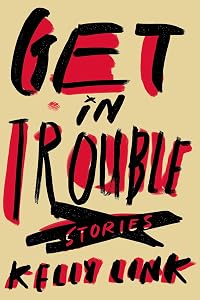
Kelly Link is the author of the collections Get in Trouble, Stranger Things Happen, Magic for Beginners, and Pretty Monsters. She is the co-founder of Small Beer Press. She and Gavin J. Grant have co-edited a number of anthologies. (Bowker Author Biography)
Some Editions
Awards and Honors
Awards
Distinctions
Common Knowledge
- Original publication date
- 2023
- Dedication
- To Ellen Datlow and Terri Windling, who held the door open
- First words
- All stories about divorce must begin some other place, and so let us begin with a man so very rich, he might reach out and have almost any thing he desired, as well as any things that he did not. -The White Cat's Divorce (The... (show all) White Cat)
- Canonical DDC/MDS
- 813.6
- Canonical LCC
- PS3612.I553
Classifications
Statistics
- Members
- 544
- Popularity
- 54,619
- Reviews
- 22
- Rating
- (3.96)
- Languages
- English
- Media
- Paper, Audiobook, Ebook
- ISBNs
- 11
- ASINs
- 3