On This Page
Description
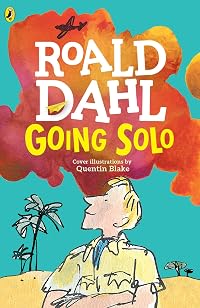
As a young man working in East Africa for the Shell Company, Roald Dahl recounts his adventures living in the jungle and later flying a fighter plane in World War II.Tags
Recommendations
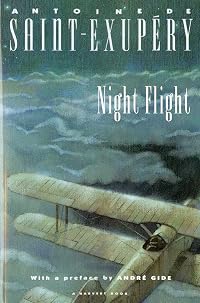
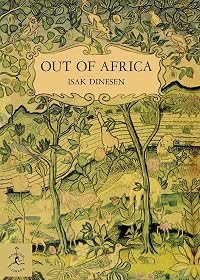
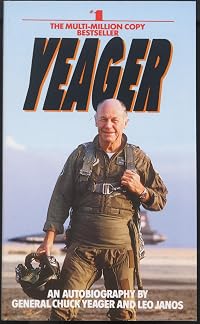
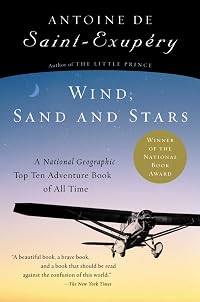












Member Recommendations
by anonymous user
Member Reviews
In 1980 Dahl said that life is made up of a great number of small incidents and a small number of great ones. The first half of this book, which is set in East Africa, he wrote only about moments he considered memorable. In the second part dealing with the time he was flying with the RAF, he considered every moment "totally enthralling".
The book begins in 1938 when at age 22, he went to work for Shell in East Africa He relates a few anecdotes from that time, of which a favourite has to be Simba, the story about how a lion took the cook's wife. Fortunately, the lion carried the woman gently like one of her cubs, and she was uninjured. Dahl sent an eye witness account to a Nairobi newspaper, for which he was paid five pounds - his first show more published work.
His experience as an RAF pilot in Africa, Greece and Palestine is "totally enthralling" to the reader too. He writes with good humour and a lightheartedness even when facing the utmost danger. He, like others, were frustrated by the lack of organization in the RAF command in the area. On one occasion he was sent in the wrong direction in the desert, misdirection that almost cost him his life. Of the original 16 pilots in his group, thirteen were killed.
I loved this book! It's a smashing adventure story that can be enjoyed by young and old, fans and neophytes alike. Dahl's writing style is straightforward and crystal clear. He has a talent for description that can conjure up a picture in the mind like magic. show less
The book begins in 1938 when at age 22, he went to work for Shell in East Africa He relates a few anecdotes from that time, of which a favourite has to be Simba, the story about how a lion took the cook's wife. Fortunately, the lion carried the woman gently like one of her cubs, and she was uninjured. Dahl sent an eye witness account to a Nairobi newspaper, for which he was paid five pounds - his first show more published work.
His experience as an RAF pilot in Africa, Greece and Palestine is "totally enthralling" to the reader too. He writes with good humour and a lightheartedness even when facing the utmost danger. He, like others, were frustrated by the lack of organization in the RAF command in the area. On one occasion he was sent in the wrong direction in the desert, misdirection that almost cost him his life. Of the original 16 pilots in his group, thirteen were killed.
I loved this book! It's a smashing adventure story that can be enjoyed by young and old, fans and neophytes alike. Dahl's writing style is straightforward and crystal clear. He has a talent for description that can conjure up a picture in the mind like magic. show less
Another writer once told me that one of the most important elements to be found in a memoir is a "likeable" narrator. Roald Dahl is perhaps one of the MOST likeable of narrators. Modest to a fault and blessed with a very sly and subtle sense of humor, the story Dahl tells in GOING SOLO, his sequel to BOY, is perhaps one of the most readable memoirs of modern times. His story of the quick and almost informal training he received at a flying school in Africa shortly after Great Britain entered WWII, is hair-raising and nearly impossible to believe, except you do believe, because you trust this man. At six foot six inches tall, Dahl was physically quite unsuited to be a fighter pilot, noting that when seated in the various planes he flew, show more his knees were nearly under his chin and he had to hunch over to fit beneath the plane's canopy. But fly he did, even after surviving one horrific crash in the desert early on in his career as an RAF pilot. He sustained a very bad concussion (which was to come back to haunt him and finally "invalid" him out of service nearly two years later) and had his face bashed in. As he explained to his mother in a letter: "My nose was bashed in ... and the ear nose and throat man pulled my nose out of the back of my head and shaped it and now it looks just as before except that it's a little bent about ..." Dahl went on to fly many combat missions in North Africa and Greece, usually against vastly superior odds, but somehow he managed to survive until the middle of 1941, when the migraine headaches caused by the aforementioned crash made him unfit for further flying. Dahl's nearly laconic and completely unself-conscious manner of writing about the things he did - absolutely heroic things - made me think of Sam Hynes's WWII memoir of his missions in the Pacific theater. Both writers downplay the importance of their roles. They never speak of heroics or derring-do, only about the importance of their comrades, doing the jobs they were trained to do and trying their best to simply stay alive. This was an enormously satisfying, moving and often hilarious tale. After reading these two slim volumes of memoirs by Dahl, I do wish he had written another. I have ordered his slim collection of stories about WWII already. What a wonderful writer - and gentleman - Roald Dahl was. show less
"Going Solo" picks up the narrative thread where "Boy" comes to a close, and yes, I can immediately say that the two books were rightly published as separate volumes, as the narratorial voice between the two is different just as the subject matter is. While the first was relatively idyllic - the surgery and bullying aside - the second concentrates on more adult subjects, such as Dahl's experiences as a pilot in WW2. Frankly, I'm surprised that this book should have been included in a collection for younger readers - there are certainly darker moments in the likes of "Fantastic Mister Fox" but nothing to what you find here. All in all, though, this is a terrific read, and when I reached the last page I was sad that the story had so soon show more come to an end. show less
Great memoir from Roald Dahl that begins where Boy ended. The tone of this book is different from Boy. Dahl's anecdotes are more serious - they should be when they have to do with poisonous snakes, lions, murder, crashing one's plane, losing friends, and WWII in general. His stories didn't make me laugh but they were riveting. I kept trying to imagine being that young with so much responsibility. And his injuries! So severe and yet, he wanted to keep flying. Finally, flying a combat mission and being shot at would be terrifying! This quote stuck with me, "In retrospect, one gasps at the waste of life." (Referring to the loss of young fighter pilots.) I would use this with older students studying biographies or WWII.
Going Solo is the second volume of Dahl’s autobiographical writings, but if you haven’t read the first don’t worry, you can jump straight in: where Boy largely concerned Dahl’s schooldays, Going Solo takes off with Dahl as a young man setting out from home for his first job, a posting to East Africa. When the Second World War breaks out Dahl joins the RAF, and we follow his adventures as a fighter pilot. Action, danger, eccentric characters and some of the most thrilling descriptions of aerial dogfighting I’ve ever come across – this book has got the lot, and all told with all the panache, pace and lightness of touch for which Dahl remains famous today.
In fact it was writing about his RAF experiences – specifically, a show more crash in Libya which almost cost him his life – that first got Dahl into print (a piece in The Saturday Evening Post on Aug 1st 1942 – edited, incidentally, by C. S. Forrester). In a sense you can read Going Solo to find out where Dahl’s writing started. You can also read Going Solo if (like me, btw) his stories for younger readers passed you by when you were the age for which (say) George’s Marvellous Medicine or the Charlies were intended. You can even reread Going Solo if you’ve read it already: it’s always a treat to come back to. Hell: just read it! It’s absolutely brilliant. :D show less
In fact it was writing about his RAF experiences – specifically, a show more crash in Libya which almost cost him his life – that first got Dahl into print (a piece in The Saturday Evening Post on Aug 1st 1942 – edited, incidentally, by C. S. Forrester). In a sense you can read Going Solo to find out where Dahl’s writing started. You can also read Going Solo if (like me, btw) his stories for younger readers passed you by when you were the age for which (say) George’s Marvellous Medicine or the Charlies were intended. You can even reread Going Solo if you’ve read it already: it’s always a treat to come back to. Hell: just read it! It’s absolutely brilliant. :D show less
It's not news that Roald Dahl knows how to tell tales, and memoir can be more satisfying than fiction. This is a delightful record of his early adulthood, exuding all the freshness and directness of youth. It's not so long ago but the sensibilities are long distant of the British colonials who dressed every evening for dinner, "and to hell with the climate". So too of the young RAF pilots, Dahl among them, who, after breezy speed-training, flew up in light planes to buzz the powerful German war machine on the fringes of 1940s Europe. All told with a light and engaging efficiency, and an eye for the memorable detail.
Dahl is a master storyteller, and this memoir of his young adult years is well done. The stories are funny and interesting, and those who know Dahl's writing will likely find
Members
- Recently Added By
Lists

Sonlight Books
1,487 works; 25 members

Puffin Books 70th anniversary handbook recommendations
537 works; 10 members

el
1,139 works; 1 member
Author Information

668+ Works 271,917 Members
Roald (pronounced "Roo-aal") was born in Llandaff, South Wales. He had a relatively uneventful childhood and was educated at Repton School. During World War II he served as a fighter pilot and for a time was stationed in Washington, D.C.. Prompted by an interviewer, he turned an account of one of his war experiences into a short story that was show more accepted by the Saturday Evening Post, which were eventually collected in Over to You (1946). Dahl's stories are often described as horror tales or fantasies, but neither description does them justice. He has the ability to treat the horrible and ghastly with a light touch, sometimes even with a humorous one. His tales never become merely shocking or gruesome. His purpose is not to shock but to entertain, and much of the entertainment comes from the unusual twists in his plots, rather than from grizzly details. Dahl has also become famous as a writer of children's stories. In some circles, these works have cased great controversy. Critics have charged that Dahl's work is anti-Semitic and degrades women. Nevertheless, his work continues to be read: Charlie and Chocolate Factory (1964) was made into a successful movie, The BFG was made into a movie in July 2017, and his books of rhymes for children continue to be very popular. (Bowker Author Biography) show less
Some Editions
Awards and Honors
Distinctions
Notable Lists
Series

Belongs to Publisher Series
Work Relationships
Common Knowledge
- Canonical title
- Going Solo
- Original title
- Going Solo
- Original publication date
- 1986
- People/Characters
- Roald Dahl
- Important places
- North Africa; Mediterranean Region; Dar es Salaam, Tanzania; Nairobi, Kenya; Habbaniya, Iraq; Ismailia, Egypt (show all 10); Abu Suweir Air Base, Egypt; Mersah Matruh, Libya; Alexandria, Egypt; Athens, Greece
- Important events
- World War II (1939 | 1945); World War II, Africa Campaign
- Dedication
- For
Sofie Magdalene Dahl
1885-1967 - First words
- A life is made up of a great number of small incidents and a small number of great ones.
- Quotations
- A life is made up of a great number of small incidents and a small number of great ones. An autobiography must therefore, unless it is to become tedious, be extremely selective, discarding all the inconsequential incidents in... (show all) one's life and concentrating upon those that have remained vivid in the memory.
I have tried to be as selective as possible and have written only about those moments that I consider memorable. - Last words
- (Click to show. Warning: May contain spoilers.)I signalled the bus-driver and he stopped the bus for me right outside the cottage, and I flew down the steps of the bus straight into the arms of the waiting mother.
Classifications
Statistics
- Members
- 6,117
- Popularity
- 2,060
- Reviews
- 62
- Rating
- (3.99)
- Languages
- 13 — Catalan, Chinese, Dutch, English, French, German, Italian, Norwegian (Bokmål), Russian, Spanish, Swedish, Thai, Turkish
- Media
- Paper, Audiobook, Ebook
- ISBNs
- 93
- ASINs
- 30