On This Page
Description
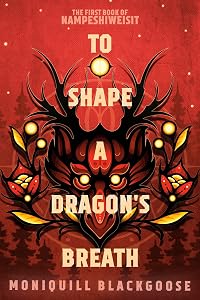
A young Indigenous woman enters a colonizer-run dragon academy--and quickly finds herself at odds with the "approved" way of doing things--in the first book of this brilliant new fantasy series.The remote island of Masquapaug has not seen a dragon in many generations--until fifteen-year-old Anequs finds a dragon's egg and bonds with its hatchling. Her people are delighted, for all remember the tales of the days when dragons lived among them and danced away the storms of autumn, enabling the show more people to thrive. To them, Anequs is revered as Nampeshiweisit--a person in a unique relationship with a dragon. Unfortunately for Anequs, the Anglish conquerors of her land have different opinions. They have a very specific idea of how a dragon should be raised, and who should be doing the raising--and Anequs does not meet any of their requirements. Only with great reluctance do they allow Anequs to enroll in a proper Anglish dragon school on the mainland. If she cannot succeed there, her dragon will be killed. For a girl with no formal schooling, a non-Anglish upbringing, and a very different understanding of the history of her land, challenges abound--both socially and academically. But Anequs is smart, determined, and resolved to learn what she needs to help her dragon, even if it means teaching herself. The one thing she refuses to do, however, is become the meek Anglish miss that everyone expects. Anequs and her dragon may be coming of age, but they're also coming to power, and that brings an important realization: the world needs changing--and they might just be the ones to do it. show lessTags
Recommendations









Member Recommendations

Member Reviews
One of the things I love about genre fiction is that sense of dialogue, the idea that later books are in conversation with earlier books. I don't know what author Moniquill Blackgoose was actually thinking, but it very much seemed to me that this book was in dialogue with Temeraire and Harry Potter, among others. The main character is a native American woman who finds a dragon egg, in a world where dragons are fairly common, but native dragons largely died out from a plague when European settlers came to America. Temeraire shows us dragons all around the world, of course, but from Laurence's perspective; here, we get a sense of how native culture would deal with them differently. The protagonist must enroll in a white dragon school in show more order to be allowed to keep her dragon, and here the book feels like a very interesting take on Harry Potter and its ilk, with Blackgoose exploring the dynamics of class and race that underlie privilege, but which authors like Rowling do not meaningfully engage with. It's a slow burn, no big action sequences or anything, but that's exactly what I wanted out of this. I often say (borrowing from, I think, Jo Walton) that sf stories are mystery stories where the world itself is the mystery, and I loved that aspect of this book, as we slowly figure out how this alternate world functions the exploring our protagonist's place in it. Exactly what I want out of my YA fantasy, and I would gladly read the sequel whenever it is published; I had to stop myself from evangelizing about this book to everyone I interacted with. show less
Anequs is fifteen and lives with her family on Masquapaug Island. Because the island is remote and doesn't have resources like coal to attract notice, the Anglish conquerors have left them pretty much alone. But when Anequs finds a dragon egg, and the dragon chooses her - and while being Nampeshiweisit to a dragon is revered by her people, no one has seen one in 200 years - she determines that the best way to learn what she needs to help her people is to go to the Anglish school to learn dragoneering and how to shape the breath of a dragon.
This steampunk-y fantasy by enrolled Seaconke Wampanoag member Moniquill Blackgoose should have wide appeal. Anequs is a great character, I loved her narration and no-nonsense approach to life even as show more she struggles to understand the often nonsensical rules of Anglish life and "civility". There is depth in the history of the world, which is not quite like our own but has certain parallels. You can tell the author knows the tropes of fantasy and also what she wants to do with them - going to a school is common but subversively going to the conquerors' school, not so much. I also loved the clear importance of story in multiple cultures and how it's used to create both what we would call mythology and history in Anequs's world. There's also a satisfying, cliff-hanger free ending, but you can bet I'll be looking up the next book as soon as it comes out. show less
This steampunk-y fantasy by enrolled Seaconke Wampanoag member Moniquill Blackgoose should have wide appeal. Anequs is a great character, I loved her narration and no-nonsense approach to life even as show more she struggles to understand the often nonsensical rules of Anglish life and "civility". There is depth in the history of the world, which is not quite like our own but has certain parallels. You can tell the author knows the tropes of fantasy and also what she wants to do with them - going to a school is common but subversively going to the conquerors' school, not so much. I also loved the clear importance of story in multiple cultures and how it's used to create both what we would call mythology and history in Anequs's world. There's also a satisfying, cliff-hanger free ending, but you can bet I'll be looking up the next book as soon as it comes out. show less
Monumentally good. Beyond any expectations I've had for young adult fantasy; just phenomenal.
Just a few generations after a "great dying", indigenous natives of North America must deal with the effects of their vastly disease-reduced population and with their great outnumbering by invading settlers, in an alternate history/Earth in which Vikings, a dominant European civilization, have established cities on the continent, in part with the might of their dragons. Anequs, a teenage woman of Masquapaug, witnesses an extremely rare native dragon—a Nampeshiwei—lay its egg, and becomes that egg's Nampeshiweisit—an emotionally, spiritually, and psychically connected partner to a dragon; a guardian, companion, and trainer. But because show more Nampeshiwei have not been on Masquapaug since the dying, and because of the island's constrained relationship with the colonizing Anglish, Anequs must venture into an Anglish school on the mainland, to try to glean from members of a society that denigrates and subjugates hers, all that she needs to know about shaping a dragon's breath—a powerful, dangerous substance which can be used for a kind of atomic chemical breakdown or alchemy.
Full of incredibly detailed and believable, firmly grounded world-building, and just excellent lore—the stories from different cultures about the different connections societies have made with dragons were absolutely fascinating. Perfect for fans of Jonathan Strange and Mr. Norrell and other detailed, deliciously realized fantastical historical fiction. An absolutely remarkable tome for huge nerds!! I would camp out for a sequel. show less
Just a few generations after a "great dying", indigenous natives of North America must deal with the effects of their vastly disease-reduced population and with their great outnumbering by invading settlers, in an alternate history/Earth in which Vikings, a dominant European civilization, have established cities on the continent, in part with the might of their dragons. Anequs, a teenage woman of Masquapaug, witnesses an extremely rare native dragon—a Nampeshiwei—lay its egg, and becomes that egg's Nampeshiweisit—an emotionally, spiritually, and psychically connected partner to a dragon; a guardian, companion, and trainer. But because show more Nampeshiwei have not been on Masquapaug since the dying, and because of the island's constrained relationship with the colonizing Anglish, Anequs must venture into an Anglish school on the mainland, to try to glean from members of a society that denigrates and subjugates hers, all that she needs to know about shaping a dragon's breath—a powerful, dangerous substance which can be used for a kind of atomic chemical breakdown or alchemy.
Full of incredibly detailed and believable, firmly grounded world-building, and just excellent lore—the stories from different cultures about the different connections societies have made with dragons were absolutely fascinating. Perfect for fans of Jonathan Strange and Mr. Norrell and other detailed, deliciously realized fantastical historical fiction. An absolutely remarkable tome for huge nerds!! I would camp out for a sequel. show less
This girl and her dragon/magical boarding school story is an excellent addition to the genre.
There haven’t been dragons on Masquapaug for generations, so when fifteen-year-old Anequs discovers a dragon egg and the hatchling bonds with her, Anequs has to leave the island to attend an Anglish academy in order to learn what she needs to -- and to avoid getting into trouble with Anglish laws.
It would be understandable if Anequs were daunted, venturing into a culture she’s only ever encountered in pennik novels or in the stories her people tell about the Anglish. Especially as she encounters so much prejudice and discrimination -- some people are deliberately hostile to “nackies”, while others just don’t (or won’t) recognise show more that their assumptions are biassed. (Blackgoose is so thoughtful and pointed about how indigenous people are treated by colonial societies.)
Speaking of which, Anequs’ bond with Kasaqua is delightful -- very much what I wanted from a girl and her a dragon story! Despite Kasaqua’s seemingly-magical abilities and the telepathic way she and Anequs share their emotions, her behaviour makes her seem like a real animal. And I liked how, at the academy, dragons are described and discussed in scientific ways. (That’s what I wanted from a magical boarding school story.)
But instead it is the character who does not feel such pressure to confirm to the conventions of Anglish society who takes centre stage, the character who does not worry about the consequences of not assimilating, because that’s not somewhere she wants to live long-term.
While Anequs would like to make friends (and does so, including with an indentured maid and with a fellow student who is neurodivergent), she’s not about to compromise her integrity to make allies. She hasn't come here to do that. She’s here to learn what she needs to, so she can take that learning home to Masquapaug.
There haven’t been dragons on Masquapaug for generations, so when fifteen-year-old Anequs discovers a dragon egg and the hatchling bonds with her, Anequs has to leave the island to attend an Anglish academy in order to learn what she needs to -- and to avoid getting into trouble with Anglish laws.
It would be understandable if Anequs were daunted, venturing into a culture she’s only ever encountered in pennik novels or in the stories her people tell about the Anglish. Especially as she encounters so much prejudice and discrimination -- some people are deliberately hostile to “nackies”, while others just don’t (or won’t) recognise show more that their assumptions are biassed. (Blackgoose is so thoughtful and pointed about how indigenous people are treated by colonial societies.)
In spite of this, Anequs retains an unshakeable sense of herself, her goals and her values. I found this refreshing, but also convincing. It’s clear that Anequs’ identity and her ideas about how people should treat one another come from knowing how she belongs -- to her family, to her community, to her island, and to her dragon.
“I’m sorry, I’m not very well versed in the subtle intricacies of Anglish conversation, so I’ve probably misunderstood you entirely,” I said, trying very hard to keep my voice clear and even. “Did you intend to imply that I’m incapable of reading?”
Speaking of which, Anequs’ bond with Kasaqua is delightful -- very much what I wanted from a girl and her a dragon story! Despite Kasaqua’s seemingly-magical abilities and the telepathic way she and Anequs share their emotions, her behaviour makes her seem like a real animal. And I liked how, at the academy, dragons are described and discussed in scientific ways. (That’s what I wanted from a magical boarding school story.)
I also thought it was interesting that Anequs meets several characters who would perhaps, in a more conventional dragon story, be a candidate for protagonist. There’s the academy’s founder, Frau Karina Kuiper, who became a dragoneer before girls were allowed by disguising herself as a boy, and went on to have a decorated war career. Anequs’ romantic roommate, Marta, wants to be a dragoneer but still cares about the social world of proper young ladies -- dresses and balls and making the right sort of friends. Anequs’ classmate and fellow “nackie”, Theod, is an orphan who grew up being a servant in Anglish household before he accidentally bonded the dragon hatchling purchased for one of his master’s sons.
Kasaqua proceeded to devour the remains of the turkey, including all the bones, and a plateful of steamed mussels including the shells, and three ears of corn with cobs and husks. It was a wonder to watch, because that much food really shouldn’t have fit inside her, and a good deal of it wasn’t precisely food. Dragons in stories ate things like trees and stones sometimes, but lots of things happened in stories that didn’t often happen outside of them. It was different to see it.
But instead it is the character who does not feel such pressure to confirm to the conventions of Anglish society who takes centre stage, the character who does not worry about the consequences of not assimilating, because that’s not somewhere she wants to live long-term.
While Anequs would like to make friends (and does so, including with an indentured maid and with a fellow student who is neurodivergent), she’s not about to compromise her integrity to make allies. She hasn't come here to do that. She’s here to learn what she needs to, so she can take that learning home to Masquapaug.
All I could do was breathe, and wish that the dragons of Masquapaug hadn’t all died two hundred years ago, because then there’d have been someone to explain this to me -- what this feeling was, and what I was supposed to do with it.show less
But they had. So I’d just have to work it out for myself.
DNF @ 60% on May 13 2025
I'm stuck at 60% and I have no desire to continue reading.
This is a book about a girl called Anequs from a small colonized island whose culture very closely resembles that of Native Americans, (un)willingly going to a dragon training academy in the colonizer empire that closely resembles a mix of western and northern European countries. The first few chapters seemed so promising, with a rich indigenous culture being described and a dragon egg found. It all goes downhill once Anequs goes to the dragon academy though.
From that point on, the book focused more on the differences between the two cultures and the criticizing of colonial culture and mentality than it did on dragons, despite the title. While I don't show more disagree with the points made, they were so very heavy handed.
Anequs seemed too perfect in her every thought and reaction so much so that I completely lost interest in her. There was no flaw or inner strife, other than what was externally caused by existing in an inherently unjust society bent on putting her in a neat little box labeled "savage". In fact, the only plot seemed to be Anequs bravely existing in a colonizer society while dragons were rendered to big house cats that breathe fire.
TL;DR Perfect heroes are boring. No plot to speak of. But I didn't finish the whole thing so don't take my word for it. show less
I'm stuck at 60% and I have no desire to continue reading.
This is a book about a girl called Anequs from a small colonized island whose culture very closely resembles that of Native Americans, (un)willingly going to a dragon training academy in the colonizer empire that closely resembles a mix of western and northern European countries. The first few chapters seemed so promising, with a rich indigenous culture being described and a dragon egg found. It all goes downhill once Anequs goes to the dragon academy though.
From that point on, the book focused more on the differences between the two cultures and the criticizing of colonial culture and mentality than it did on dragons, despite the title. While I don't show more disagree with the points made, they were so very heavy handed.
Anequs seemed too perfect in her every thought and reaction so much so that I completely lost interest in her. There was no flaw or inner strife, other than what was externally caused by existing in an inherently unjust society bent on putting her in a neat little box labeled "savage". In fact, the only plot seemed to be Anequs bravely existing in a colonizer society while dragons were rendered to big house cats that breathe fire.
TL;DR Perfect heroes are boring. No plot to speak of. But I didn't finish the whole thing so don't take my word for it. show less
In an alternate universe, indigenous people not unlike the Algonquian-speaking people of New England live at the margins of the settler-colonial "Anglish" society in the early 19th century. On the island community of the Masquisit, 15-year-old Anequs finds a dragon egg and the dragon, Kasaqua, bonds with her after hatching. Since the Masquisit have lost their own dragon-training traditions, Anequs and Masquisit must travel to the industrialized mainland to attend Kuiper’s Academy of Natural Philosophy
Anequs encounters prejudice at Kuiper's Academy and even the most benevolent adults at the school are intent on "civilizing" Anequs and having her behave like a "lady." Nevertheless, Anequs makes several friends. Her roommate, Marta show more Hagen, is the only other girl at the school and kind of snobbish, but offers a window into the expectations of Anglish society. Theod Knecht is the only other indigenous student at the school, but raised as servant for a white family, he is isolated from his peoples' culture. Sander is a boy from a wealth family but appears to be neurodivergent and thus treated as an outsider. And Liberty is a Black laundry maid who Anequs befriends and meets with routinely under the guise of needing a seamstress. It's also established that Anequs is romantically attracted to both Theod and Liberty (bisexuality and polyamory are accepted among her people), but that aspect of the relationships is left to be developed in future installments of the series.
This is a wonderfully imaginative book that draws upon historical details for creating a fantasy/steampunk alternate universe of 19th-century New England. Blackgoose obviously studied languages in depth as she creates entire vocabularies of Masquisit and European terms used throughout the novel (which I admit I found a bit confusing) Anequs is a remarkable protagonist and I enjoyed exploring her world with her. I look forward to future installments in the Nampeshiweisit series. show less
Anequs encounters prejudice at Kuiper's Academy and even the most benevolent adults at the school are intent on "civilizing" Anequs and having her behave like a "lady." Nevertheless, Anequs makes several friends. Her roommate, Marta show more Hagen, is the only other girl at the school and kind of snobbish, but offers a window into the expectations of Anglish society. Theod Knecht is the only other indigenous student at the school, but raised as servant for a white family, he is isolated from his peoples' culture. Sander is a boy from a wealth family but appears to be neurodivergent and thus treated as an outsider. And Liberty is a Black laundry maid who Anequs befriends and meets with routinely under the guise of needing a seamstress. It's also established that Anequs is romantically attracted to both Theod and Liberty (bisexuality and polyamory are accepted among her people), but that aspect of the relationships is left to be developed in future installments of the series.
This is a wonderfully imaginative book that draws upon historical details for creating a fantasy/steampunk alternate universe of 19th-century New England. Blackgoose obviously studied languages in depth as she creates entire vocabularies of Masquisit and European terms used throughout the novel (which I admit I found a bit confusing) Anequs is a remarkable protagonist and I enjoyed exploring her world with her. I look forward to future installments in the Nampeshiweisit series. show less
In this fantasy world, the Anglish have overtaken the lands of an indigenous people, and are bent on either exterminating or civilizing them (depending on political party). Anequs is an indigenous girl who lives peacefully on her island – isolated from the Anglish. Then she sees a dragon lay, and abandon, an egg. She brings the egg back to her village, where it hatches. The hatchling chooses Anequs as its person.
Anequs is pressured into going to a school for dragoneers run by the Anglish. There, she learns to shape her dragon’s breath, but has to deal with racism and culture shock.
This was a fantastic first book. The story was typical of the school-for-magic sub-genre, but is really impactful in its depiction of how indigenous show more peoples were/are treated when entering “civilized” culture. Instead of being a super special someone, Anequs is just an average indigenous girl, struggling to find her way amid the politics of a foreign culture.
I felt that there were some improvements that could have been made – things that will likely correct themselves as the author becomes more seasoned. For one, she spends too many words describing the intricacies of the science/magic she has developed. It is beautifully organized and inventive, but uses a lot of words that are not English, and therefore make some heavy reading.
However, I really loved this book despite that shortfalling. It was creative, fun, and culturally sensitive / informative. I appreciated the characterization. It is also an LGBTQ+-friendly book on top of all that. I am certainly going to watch out for the next book in the series. show less
Anequs is pressured into going to a school for dragoneers run by the Anglish. There, she learns to shape her dragon’s breath, but has to deal with racism and culture shock.
This was a fantastic first book. The story was typical of the school-for-magic sub-genre, but is really impactful in its depiction of how indigenous show more peoples were/are treated when entering “civilized” culture. Instead of being a super special someone, Anequs is just an average indigenous girl, struggling to find her way amid the politics of a foreign culture.
I felt that there were some improvements that could have been made – things that will likely correct themselves as the author becomes more seasoned. For one, she spends too many words describing the intricacies of the science/magic she has developed. It is beautifully organized and inventive, but uses a lot of words that are not English, and therefore make some heavy reading.
However, I really loved this book despite that shortfalling. It was creative, fun, and culturally sensitive / informative. I appreciated the characterization. It is also an LGBTQ+-friendly book on top of all that. I am certainly going to watch out for the next book in the series. show less
Members
- Recently Added By
Lists

Diversity in Fantasy and Science Fiction
219 works; 33 members

Recommend the 20 best books you've read in the last five years
2,168 works; 602 members

LGBTQ+ Speculative Fiction
820 works; 51 members
Recommended Speculative Fiction by Women and People of Color
298 works; 45 members

2024 Lodestar Award -- Eligible Works -- Young Adult Books (not a Hugo)
6 works; 2 members

2024 Hugo Awards -- Eligible Works -- Novels
44 works; 6 members

2023 Update: The Best Twenty Books You've Read in the Past Five Years
40 works; 3 members

Top Five Books of 2023
767 works; 317 members

hypatian_kat to-read
429 works; 3 members

Book Club: There aren’t any [Blank] authors in Sci Fi/Fantasy!
12 works; 1 member

Top Five Books of 2024
795 works; 264 members

Queer Fiction (Owned TBR)
142 works; 1 member
Author Information

4+ Works 964 Members
Some Editions
Awards and Honors
Awards
Distinctions
Series

Common Knowledge
- Canonical title
- To Shape a Dragon's Breath
- Original publication date
- 2023-05-09
- People/Characters
- Anequs; Kasaqua; Theod Knecht; Liberty
- Important places
- Masquapaug; Vastergot
- First words
- I was gathering mussels on Slipstone Island when I saw the dragon.
- Last words
- (Click to show. Warning: May contain spoilers.)Together.
Classifications
Statistics
- Members
- 850
- Popularity
- 32,147
- Reviews
- 24
- Rating
- (4.15)
- Languages
- English
- Media
- Paper, Audiobook, Ebook
- ISBNs
- 4
- ASINs
- 3