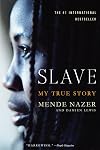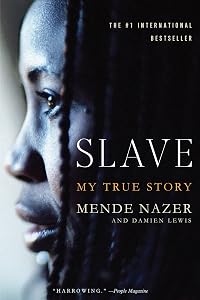
Slave: My True Story
by Mende Nazer
On This Page
Description
HTML:Mende Nazer lost her childhood at age twelve, when she was sold into slavery. It all began one horrific night in 1993, when Arab raiders swept through her Nuba village, murdering the adults and rounding up thirty-one children, including Mende.Mende was sold to a wealthy Arab family who lived in Sudan's capital city, Khartoum. So began her dark years of enslavement. Her Arab owners called her "Yebit," or "black slave." She called them "master." She was subjected to appalling physical, show more sexual, and mental abuse. She slept in a shed and ate the family leftovers like a dog. She had no rights, no freedom, and no life of her own.
Normally, Mende's story never would have come to light. But seven years after she was seized and sold into slavery, she was sent to work for another master—a diplomat working in the United Kingdom. In London, she managed to make contact with other Sudanese, who took pity on her. In September 2000, she made a dramatic break for freedom.
Slave is a story almost beyond belief. It depicts the strength and dignity of the Nuba tribe. It recounts the savage way in which the Nuba and their ancient culture are being destroyed by a secret modern-day trade in slaves. Most of all, it is a remarkable testimony to one young woman's unbreakable spirit and tremendous courage. Biography & Autobiography. Young Adult Nonfiction. Sociology. History. show less
Tags
Recommendations


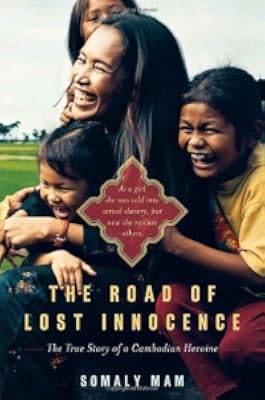
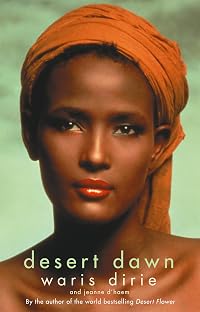
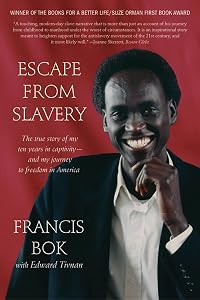
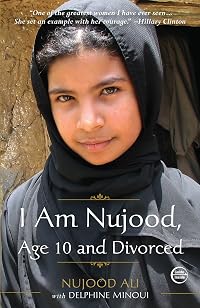











Member Recommendations
Member Reviews
In 1994, when Mende Nazer was roughly 12 years old, Mujahideen raided her village. They raped women, cut the throats of many people, and set the huts on fire. Mende and other children in her tribe were carried away from their home in the Nuba Mountains of Sudan. They were sexually violated, transported north, and taken into slavery in Khartoum.
This autobiography/memoir written with British journalist Damien Lewis tells Nazer’s story. It is informative about the culture of the Nuba people and often compelling. My chief quibble with the book is that the first person voice in which it is written—Mende’s—doesn’t sound like her, or at least what I’d expect her to sound like. The sophisticated vocabulary is definitely that of the show more journalist.
I can imagine that it took some work for Lewis to turn Mende’s hazy, impressionistic memories of early childhood into novelistic scenes. However, the reconstruction of events and dialogue—the authorial embellishments—sometimes detracted from, rather than enhanced, attempts at verisimilitude. They made the narrative seem less true than a more simple telling might have done.
Having said all this, I’m not at all sorry to have read the book. I learned a great deal, and a number of gaps in my knowledge of the Second Sudanese Civil War were filled in. show less
This autobiography/memoir written with British journalist Damien Lewis tells Nazer’s story. It is informative about the culture of the Nuba people and often compelling. My chief quibble with the book is that the first person voice in which it is written—Mende’s—doesn’t sound like her, or at least what I’d expect her to sound like. The sophisticated vocabulary is definitely that of the show more journalist.
I can imagine that it took some work for Lewis to turn Mende’s hazy, impressionistic memories of early childhood into novelistic scenes. However, the reconstruction of events and dialogue—the authorial embellishments—sometimes detracted from, rather than enhanced, attempts at verisimilitude. They made the narrative seem less true than a more simple telling might have done.
Having said all this, I’m not at all sorry to have read the book. I learned a great deal, and a number of gaps in my knowledge of the Second Sudanese Civil War were filled in. show less
Mende Nazer's absorbing account of her abduction and her many years as a slave for rich Arabs is as harrowing to read today as when it was written more than 10 years ago. I expect little has changed in the situation she describes with such horror. The first part of the book, about her childhood in Southern Sudan is equally an eye opener, but for a very different reason: She describes a warm and including close-knit and well-developed society with strong family values, and a great sense of humour and joy. Still, one of the most horrific scenes takes place before her abduction, as she is circumcised the traditional way as a young girl. This vile practice is as abhorrent as the slave trade. The book is co-written by film maker and show more journalist Damien Lewis, a true story teller. show less
Slavery is, unfortunately, alive and well in today's world. Arab mujahedin conduct regular raids the Nuba mountains of Sudan, and Mende Nazer was about 12 years old when she was captured in one such raid, in 1994. To the shouts of "Allahu Ahkhbar! Allahu Ahkhbar!" ("God is great!") Arab raiders swept through her pastoral and peaceful village, burning, raping, and slaughtering as they sought to capture as many village children as they could.
These children, often raped by their captors, are taken to larger towns and cities and sold as abeed, the Arabic word for slaves. Mende Nazer's story is the account of one abda's (slave) life in captivity.
Mende was a slave for two well-off Arab families; both Muslims, as she is. She points out the show more irony that both her captors and her "masters" considered themselves devout Muslims at the same time that they beat her, treated her worse than a dog or a cat, and constantly told her she was nothing but a stinking black savage.
Her book paints a picture of a culture that seems based on racial discrimination and hatred -- a culture that does not even give lip service to the notion of equality and fairness. Her very humanity was denied by her mistresses -- her childhood subsumed in an endless round of drudgery. She ate her masters' leftover food, and had to scrape their leftovers into her own special dishes, as she was not allowed to drink or eat from the family's kitchenware -- lest her dirty blackness rub off on it.
Her story, unfortunately, is not unique. What makes Mende's story stand out is that eventually she got up the courage to ask for help, and was fortunate enough to find people willing to help her escape slavery and find asylum in England.
What made this story stand out for me was Mende's account of the several times she passed up opportunities to escape her captivity -- not just because of fear, but because by then she had internalized and accepted her unworthiness to be free. Her account of how she came to believe that it was her destiny to be a slave, of how she came to accept her masters' valuation of her, was not only shocking, but revelatory. From the story of the Israelite slave generation in the Old Testament, who were deliberately condemned to die in the desert because they would always be slaves in their hearts, to the young Mormon girl who was kidnapped by a fanatic couple in Utah a few years ago and seemed to cooperate in her captivity -- the devastating and dehumanizing effects of slavery span eras and cultures.
This is a must-read book for those who naively think that all cultures share a basic belief in fairness, equity, and compassion towards others. show less
These children, often raped by their captors, are taken to larger towns and cities and sold as abeed, the Arabic word for slaves. Mende Nazer's story is the account of one abda's (slave) life in captivity.
Mende was a slave for two well-off Arab families; both Muslims, as she is. She points out the show more irony that both her captors and her "masters" considered themselves devout Muslims at the same time that they beat her, treated her worse than a dog or a cat, and constantly told her she was nothing but a stinking black savage.
Her book paints a picture of a culture that seems based on racial discrimination and hatred -- a culture that does not even give lip service to the notion of equality and fairness. Her very humanity was denied by her mistresses -- her childhood subsumed in an endless round of drudgery. She ate her masters' leftover food, and had to scrape their leftovers into her own special dishes, as she was not allowed to drink or eat from the family's kitchenware -- lest her dirty blackness rub off on it.
Her story, unfortunately, is not unique. What makes Mende's story stand out is that eventually she got up the courage to ask for help, and was fortunate enough to find people willing to help her escape slavery and find asylum in England.
What made this story stand out for me was Mende's account of the several times she passed up opportunities to escape her captivity -- not just because of fear, but because by then she had internalized and accepted her unworthiness to be free. Her account of how she came to believe that it was her destiny to be a slave, of how she came to accept her masters' valuation of her, was not only shocking, but revelatory. From the story of the Israelite slave generation in the Old Testament, who were deliberately condemned to die in the desert because they would always be slaves in their hearts, to the young Mormon girl who was kidnapped by a fanatic couple in Utah a few years ago and seemed to cooperate in her captivity -- the devastating and dehumanizing effects of slavery span eras and cultures.
This is a must-read book for those who naively think that all cultures share a basic belief in fairness, equity, and compassion towards others. show less
When I first took a class called "The Literature of American Slavery", I couldn't believe that slavery existed in America only 140 years ago. After reading a number of narratives describing the horrors of slavery, I was relieved that those horrors no longer existed. ...Boy, did this book prove me WRONG!
No - slavery did not end with the Emancipation Proclamation and the 13th Amendment to the U.S. Constitution! As Mende Nazer has shown, it is very much alive in the Sudan and elsewhere. Her story about her capture and subsequent enslavement is certainly an eye-opener!
In addition to an extremely powerful anti-slavery statement, this book also teaches us so much on an antrhropological, sociological & historical level! The first section of show more the book, for instance, is a fascinating account of the traditional lifestyle in the Nuba Mountains. Included here are descriptions of the close-knit family/community ties, recreational activities such as inter-village wrestling matches, and finally,rituals such as female circumcision.
Next, it provides reader with a highly readable history lesson. It teaches us about the political and social turmoil in the Sudan. It delves into the subjugation of the black Africans by certain Arab communities and reminds us of the genocide inflicted throughout the country.
I highly recommend this book to anyone who really wants to open their eyes to the injustices of the world! Thank you, Ms. Nazer, for telling your story! show less
No - slavery did not end with the Emancipation Proclamation and the 13th Amendment to the U.S. Constitution! As Mende Nazer has shown, it is very much alive in the Sudan and elsewhere. Her story about her capture and subsequent enslavement is certainly an eye-opener!
In addition to an extremely powerful anti-slavery statement, this book also teaches us so much on an antrhropological, sociological & historical level! The first section of show more the book, for instance, is a fascinating account of the traditional lifestyle in the Nuba Mountains. Included here are descriptions of the close-knit family/community ties, recreational activities such as inter-village wrestling matches, and finally,rituals such as female circumcision.
Next, it provides reader with a highly readable history lesson. It teaches us about the political and social turmoil in the Sudan. It delves into the subjugation of the black Africans by certain Arab communities and reminds us of the genocide inflicted throughout the country.
I highly recommend this book to anyone who really wants to open their eyes to the injustices of the world! Thank you, Ms. Nazer, for telling your story! show less
Slave tells a life story that I would encourage everyone read about.
Slave was difficult to read in some parts. It was difficult knowing t hat the events happened to someone real, and happened recently.
The book draws you into Nazer's story and you almost instantly want to know more about her and the outcome of the ordeals she faced.
It is difficult knowing that this is a modern tale. We often like to pretend that slavery only took place in the past. However here is one story (among many untold stories) that reminds us that it is not only a problem in the past.
Read this book.
Slave was difficult to read in some parts. It was difficult knowing t hat the events happened to someone real, and happened recently.
The book draws you into Nazer's story and you almost instantly want to know more about her and the outcome of the ordeals she faced.
It is difficult knowing that this is a modern tale. We often like to pretend that slavery only took place in the past. However here is one story (among many untold stories) that reminds us that it is not only a problem in the past.
Read this book.
What an amazing human story of hardship, endurance and survival. Eye opening! How can such 'slave trade' still be happening today? Lean about tribal customs, village life and the actions of the Mujahidin and slave traders in Sudan. The story told here is one that we may accept in a fiction book which we can put down and know that it did not really happen. The fact that this is an autobiography makes this book painfully sad and cruel. Still, even if you don't feel like this kind story right now, worried that it might depress you, I strongly recommend this as a 'must read'. It makes one realise how lucky we are ('we' being people who have time and resources to read books and post reviews on library thing - we live in such luxury), and how show more living free and 'without fear' should be savoured by us all. show less
The extraordinary story of a young Sudanese girl sold into slavery and how she survived a lost childhood and finally escaped to freedom. Mende Nazer grew up in the remote Nuba Mountains of Sudan. Her happy childhood was cruelly cut short when raiders on horseback swept into her village. The Mujahidin hacked down terrified villagers, raped the women and abducted the children. Twelve-year-old Mende was one of them. Sold to an Arab lady in Khartoum, she was stripped of her name and her freedom. Called 'abid' or 'black slave', Mende was kept prisoner in the house where she had to carry out domestic duties without pay or any days off. Her bed was the floor of the garden shed and family leftovers provided her meals. For seven years she show more endured this harsh and lonely life without knowing whether her family was alive or dead. In the spring of 2000 Mende was passed on to a relative in London and eventually managed to make contact with other Nuba exiles. British journalist and filmmaker Damien Lewis, helped her escape to freedom. Slave is a fascinating memoir of an African childhood and a moving testimony to a young girl's indomitable spirit in the face of adversity and shattered dreams. show less
Members
- Recently Added By
Author Information

3 Works 599 Members
All Editions
Awards and Honors
Common Knowledge
- Canonical title
- Slave: My True Story
- Alternate titles
- Slave: The True Story of a Girl's Lost Childhood and Her Fight for Survival
- Original publication date
- 2002
- Important places*
- Soedan
- Dedication
- This book is dedicated to my Umi and Ba. I miss you so very much.
-Mende
For Tean, my beautiful daughter and my best friend, and for my mother, for being there in times of need.
-Damien - First words
- The day that changed my life forever started with a beautiful dawn.
- Last words
- (Click to show. Warning: May contain spoilers.)Maybe my story will have a happy ending, after all. Inshallah - God willing.
*Some information comes from Common Knowledge in other languages. Click "Edit" for more information.
Classifications
- Genres
- Biography & Memoir, Nonfiction, General Nonfiction
- DDC/MDS
- 306.362092 — Society, government, & culture Social sciences, sociology & anthropology Social Behavior - Dating, Marriage, Divorce Economic institutions Systems of labor Slavery Biography And History Biography And History Biography
- LCC
- HT1384 .K48 .N39 — Social sciences Communities. Classes. Races Communities. Classes. Races Classes Slavery
- BISAC
Statistics
- Members
- 572
- Popularity
- 51,864
- Reviews
- 14
- Rating
- (4.22)
- Languages
- 11 — Danish, Dutch, English, Estonian, Finnish, French, German, Italian, Norwegian (Bokmål), Spanish, Swedish
- Media
- Paper, Audiobook, Ebook
- ISBNs
- 41
- ASINs
- 4