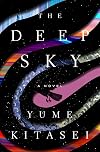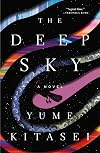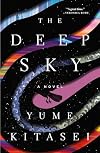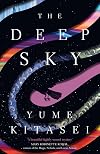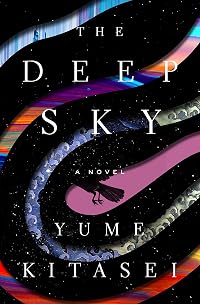
The Deep Sky
by Yume Kitasei
On This Page
Description
"Yume Kitasei's The Deep Sky is an enthralling sci fi thriller debut about a mission into deep space that begins with a lethal explosion that leaves the survivors questioning the loyalty of the crew. To save humanity, they left everything behind-except their differences. It is the eve of Earth's environmental collapse. A single ship carries humanity's last hope: eighty elite graduates of a competitive program, who will give birth to a generation of children in deep space. But halfway to a show more distant but livable planet, a lethal bomb kills three of the crew and knocks The Phoenix off course. Asuka, the only surviving witness, is an immediate suspect. Asuka already felt like an impostor before the explosion. She was the last picked for the mission, she struggled during training back on Earth, and she was chosen to represent Japan, a country she only partly knows as a half-Japanese girl raised in America. But estranged from her mother back home, The Phoenix is all she has left. With the crew turning on each other, Asuka is determined to find the culprit before they all lose faith in the mission-or worse, the bomber strikes again. Now, in order to survive, she must burn brighter than the stars that surround her"--. show lessTags
Recommendations
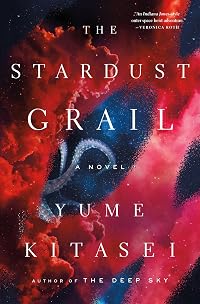


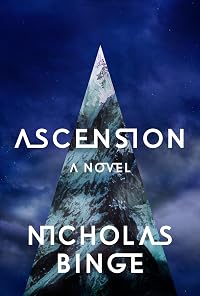
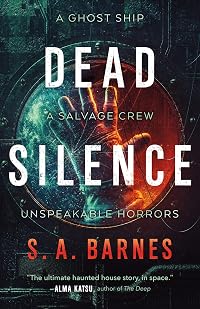



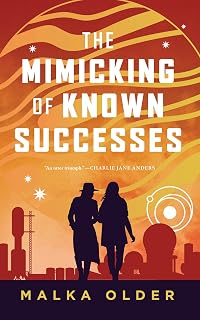
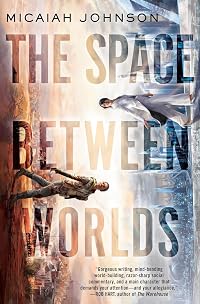

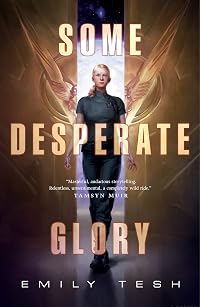
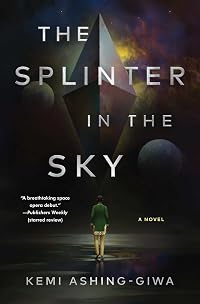
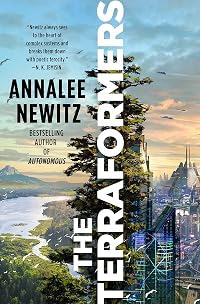























Member Recommendations
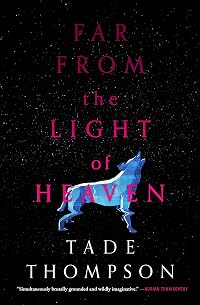
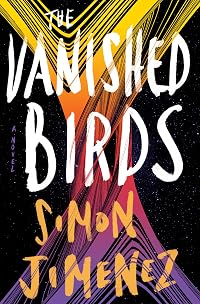
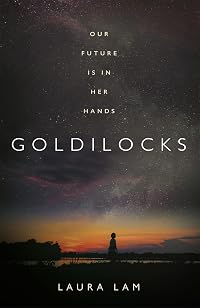
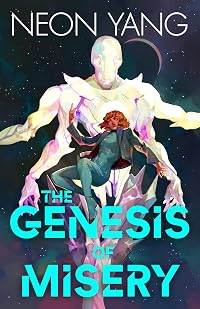
xenoglossy Queer space thrillers prominently featuring tension between opposing world powers grudgingly cooperating on an interstellar mission
xenoglossy Space thriller in which the protagonist is trying to figure out which member of her crew is trying to sabotage their mission
Member Reviews
I picked up this book because it was on Charlie Jane Anders's list of best science fiction / fantasy books of 2023. And wow, I'm glad I did! I loved everything about this book: the protagonist's unique position in her world, the gender dynamics of who gets to be on the mission, the fact that there are actually multiple trans characters, the slow reveal of exactly what Asuka left behind on Earth, the intense friendships between the characters, the interaction with real-world political tensions, the supporting cast who all have very distinct personalities, and the way DAR is used to tell us more about characters and how they see the world. There's some messed up stuff baked into the space trip they're on -- and the characters actually show more engage with how messed up it is! If you have any opinions about generation ships or "humanity's last hope" spaceship plots, you should read this book. show less
A book club pick ;)
I’ve been struggling with myself how to rate this. Four stars was way too generous… Three stars was way too harsh – but maybe not entirely unfair.
The premise is great: a space mission that is humanity’s last hope; a near future Earth full of environmental disasters and global conflict; cool future technology; things go badly wrong and there is a traitor onboard; the crew has to investigate and save the mission.
I liked the latter half of the book, because of all the danger, drama, excitement and whodunit. The pages flew by, rapidly and satisfyingly. Alpha the ship AI was cool.
Are you sensing a “but”? Yes, I do have quite a few of those:
I couldn’t connect to any of the characters. They felt flat and show more uninteresting. Asuka, I am sorry, but I want more from my main characters than an inferiority complex the size of the known universe and memories of past traumas.
The whole crew selection process? All right, you take a bunch of talented twelve-year-olds, put them into a boarding school and train them for many years. If they (some of them, at least) are to be a spaceship crew, should not cooperation skills be one of the priorities? Not an one-on-one academic battle royale, with rankings? This was possibly the reason so many of the spaceship crew were crumbling so nicely under pressure. Also, there was no difference, personality- and maturity-wise, between the characters at twelve etc and the characters as adults. Annoying!
The mystery was too easy! I guessed the villain (villainness ;) ) about halfway through the book (not all the details, though).
The author said in the acknowledgments that some of the mistakes in physics were intentional. Nice save, but it doesn’t mean that this reader can’t be annoyed. There is suspension of disbelief in sci-fi and suspension of disbelief in near future sci-fi ;) Hmmm, they are supposed to reach Planet X in 20 years. So, I am assuming something like light speed, unless they are using fusion rockets (speculative future technology) and are going to Proxima Centauri, our nearest star. It’s not mentioned where the heck Planet X is, so let’s say it’s not Proxima Centauri. Anyway, the crew has been hibernating for 10 years, they wake up, and lo and behold, ten years have passed on Earth. Isn’t that convenient? There is also lovely instantaneous communication with Earth, using quantum computers (just add quantum – well, at least it was done better here than in Spaceman of Bohemia). For some reason, they only have one onboard and no backup plan for communication when more shit hits the fan. Who planned this mission???
My other “buts” are mostly spoiler territory, so I think I’ll save them for the book club meeting.
There were flashes of promise in this debut novel, however. I might try this author’s other books in the future. show less
I’ve been struggling with myself how to rate this. Four stars was way too generous… Three stars was way too harsh – but maybe not entirely unfair.
The premise is great: a space mission that is humanity’s last hope; a near future Earth full of environmental disasters and global conflict; cool future technology; things go badly wrong and there is a traitor onboard; the crew has to investigate and save the mission.
I liked the latter half of the book, because of all the danger, drama, excitement and whodunit. The pages flew by, rapidly and satisfyingly. Alpha the ship AI was cool.
Are you sensing a “but”? Yes, I do have quite a few of those:
I couldn’t connect to any of the characters. They felt flat and show more uninteresting. Asuka, I am sorry, but I want more from my main characters than an inferiority complex the size of the known universe and memories of past traumas.
The whole crew selection process? All right, you take a bunch of talented twelve-year-olds, put them into a boarding school and train them for many years. If they (some of them, at least) are to be a spaceship crew, should not cooperation skills be one of the priorities? Not an one-on-one academic battle royale, with rankings? This was possibly the reason so many of the spaceship crew were crumbling so nicely under pressure. Also, there was no difference, personality- and maturity-wise, between the characters at twelve etc and the characters as adults. Annoying!
The mystery was too easy! I guessed the villain (villainness ;) ) about halfway through the book (not all the details, though).
The author said in the acknowledgments that some of the mistakes in physics were intentional. Nice save, but it doesn’t mean that this reader can’t be annoyed. There is suspension of disbelief in sci-fi and suspension of disbelief in near future sci-fi ;) Hmmm, they are supposed to reach Planet X in 20 years. So, I am assuming something like light speed, unless they are using fusion rockets (speculative future technology) and are going to Proxima Centauri, our nearest star. It’s not mentioned where the heck Planet X is, so let’s say it’s not Proxima Centauri. Anyway, the crew has been hibernating for 10 years, they wake up, and lo and behold, ten years have passed on Earth. Isn’t that convenient? There is also lovely instantaneous communication with Earth, using quantum computers (just add quantum – well, at least it was done better here than in Spaceman of Bohemia). For some reason, they only have one onboard and no backup plan for communication when more shit hits the fan. Who planned this mission???
My other “buts” are mostly spoiler territory, so I think I’ll save them for the book club meeting.
There were flashes of promise in this debut novel, however. I might try this author’s other books in the future. show less
Yume Kitasei's debut novel, The Deep Sky, gives the well-worn generation starship story some original twists. The 80-person crew is all women. Ten years into the trip, one-third of the women are unfrozen to be artificially inseminated so that some of the heavy-duty child-rearing will be done by the time they land in 20 years. The ship has no decorative frills because the awake crew is always plugged into a VR experience of their own devising. The story follows Asuka, the lowest-ranking crewmember, who substitutes where needed. When an explosion on the hull takes out her spacewalk teammate and the ship’s captain, she becomes the default investigator. From there, things get complicated with sabotage, political intrigue, and a glitchy show more AI. The plot, broken up by lots of pre-launch backstory, is not as tidy as one wishes, but Kitasei is a writer with a promising future. show less
I don't know that I've ever read another book quite like this one - a mystery set on a spaceship. Asuka spent years studying for a chance to leave earth on the Phoenix, a ship on a mission to start a new human colony entirely staffed by people who will bear children as part of their mission. It's a startlingly different vision of space travel - a ship populated by women and nonbinary people with female anatomy, plenty of whom are actively pregnant. Things are going well enough until a bomb explodes, killing the captain and others - leaving Asuka with the task of unraveling who would take such drastic actions and potentially doom the entire mission. An interesting read, with plenty of imagination and connections to contemporary culture.
imposter syndrome. questioning a reality always being distorted. benchmarks and baselines and what's good in a person being determined by those with motives outside of the truth. going over simulation after simulation in our head or otherwise over wood we can only knock when it's there.
outside of all that how much do we really know our friends and who we trust ? how much do we tell our friends and who we trust ?
what does it take and mean to leave behind a mess after making it ?
_
the interweaving of long storied relationships mixed with geopolitics outside their walls, competition, and a fast tracked planet to doom.
it strikes me how quiet Asuka was. we don't really know what others thought and we don't really see her reveal much to show more others. we feel the inadequacy she feels but only because it's through her lens. show less
outside of all that how much do we really know our friends and who we trust ? how much do we tell our friends and who we trust ?
what does it take and mean to leave behind a mess after making it ?
_
the interweaving of long storied relationships mixed with geopolitics outside their walls, competition, and a fast tracked planet to doom.
it strikes me how quiet Asuka was. we don't really know what others thought and we don't really see her reveal much to show more others. we feel the inadequacy she feels but only because it's through her lens. show less
**.5
Starts off as an exciting sci-fi story aboard the first colony ship headed to another planet. But then gets bogged down in unnecessary excessively lengthy flashbacks revolving around cliquish teenage interpersonal drama, laden with heavy-handed identity politics, tortured use of pronouns, and various other types of virtue signaling. All of which intrude into the main story just when things start to get interesting again, interrupting the pacing and dispelling any lingering whiff of enjoyment.
The sci-fi elements are a bit all over the place. The spaceship is equipped with hibernation technology, and has a FTL ansible for constant and instant communications with Earth. But it doesn't have any directional thrusters to make course show more corrections, and barely enough "sleep juice" for a single cycle. There's a ship AI and an everpresent AR overlay via brain implant that obscures the physical environment. But somehow the AI is unable to keep track of the locations of the 80 crew members, and many areas seem to have no sensors and must be manually inspected. A telling example of the lack of regard for scientific integrity is that the ship's designation is only ever referred to as "Planet X". No mention of the star system, the distance, the type of planet, how the colonists expect to survive there, just a vague notion of a distant destination.
The focus on a racially diverse all trans and female crew, with their petty feuds and emotional states taking center stage regardless of what emergency is currently underway, will best be appreciated by fans of writers like Ann Leckie and Charlie Jane Anders. The potentially deeper themes of US-China relations, men's rights movements, armed right-wing militias, eco-terrorists, the implications of living in permanent virtual environments are all dealt with so superficially that they have the depth of a bumper sticker or campaign slogan. They end up primarily serving as the backdrop to mother-daughter grievances, the main character's petty grudges against perceived wrongs, and uninspired group power dynamics between the nondescript crew members, only a couple of which have any sort of personality beyond their identity as a [currently/future] pregnant [race/country of origin] [gender] woman.
Ultimately I think that the author tried to cram too much into this book, and as a result none of it really worked. The potentially intriguing Murder Mystery is overwhelmed by the emotional and personal dynamics. The potentially thrilling Emergency In Space is mostly used as a literary device to motivate boring flashbacks. The threat/benefits of AI and virtual worlds are limited to how they impact the immediate plot. And the rest is just noise. Which is too bad, because this could have been a really interesting book. show less
Starts off as an exciting sci-fi story aboard the first colony ship headed to another planet. But then gets bogged down in unnecessary excessively lengthy flashbacks revolving around cliquish teenage interpersonal drama, laden with heavy-handed identity politics, tortured use of pronouns, and various other types of virtue signaling. All of which intrude into the main story just when things start to get interesting again, interrupting the pacing and dispelling any lingering whiff of enjoyment.
The sci-fi elements are a bit all over the place. The spaceship is equipped with hibernation technology, and has a FTL ansible for constant and instant communications with Earth. But it doesn't have any directional thrusters to make course show more corrections, and barely enough "sleep juice" for a single cycle. There's a ship AI and an everpresent AR overlay via brain implant that obscures the physical environment. But somehow the AI is unable to keep track of the locations of the 80 crew members, and many areas seem to have no sensors and must be manually inspected. A telling example of the lack of regard for scientific integrity is that the ship's designation is only ever referred to as "Planet X". No mention of the star system, the distance, the type of planet, how the colonists expect to survive there, just a vague notion of a distant destination.
The focus on a racially diverse all trans and female crew, with their petty feuds and emotional states taking center stage regardless of what emergency is currently underway, will best be appreciated by fans of writers like Ann Leckie and Charlie Jane Anders. The potentially deeper themes of US-China relations, men's rights movements, armed right-wing militias, eco-terrorists, the implications of living in permanent virtual environments are all dealt with so superficially that they have the depth of a bumper sticker or campaign slogan. They end up primarily serving as the backdrop to mother-daughter grievances, the main character's petty grudges against perceived wrongs, and uninspired group power dynamics between the nondescript crew members, only a couple of which have any sort of personality beyond their identity as a [currently/future] pregnant [race/country of origin] [gender] woman.
Ultimately I think that the author tried to cram too much into this book, and as a result none of it really worked. The potentially intriguing Murder Mystery is overwhelmed by the emotional and personal dynamics. The potentially thrilling Emergency In Space is mostly used as a literary device to motivate boring flashbacks. The threat/benefits of AI and virtual worlds are limited to how they impact the immediate plot. And the rest is just noise. Which is too bad, because this could have been a really interesting book. show less
Very nice world-building in this, and the character development was excellent as well. Certainly, nobody was one-dimensional; even the minor characters were fleshed out enough that I could see and hear them.
The main criticisms I might have would be that things got a touch long-winded in the telling, especially when it felt like things were in the middle of breathless action. But I don’t know how things could have been tightened without losing anything important. Even all the bird tidbits (I personally hate birds deeply!) wound up being relevant.
I do wonder what life will look like on Planet X, though it sounds like the start of something awesomely matriarchal.
The main criticisms I might have would be that things got a touch long-winded in the telling, especially when it felt like things were in the middle of breathless action. But I don’t know how things could have been tightened without losing anything important. Even all the bird tidbits (I personally hate birds deeply!) wound up being relevant.
I do wonder what life will look like on Planet X, though it sounds like the start of something awesomely matriarchal.
Members
- Recently Added By
Lists

Top Five Books of 2023
767 works; 317 members

Paranormal investigators and space detectives
274 works; 9 members
Author Information

3+ Works 1,370 Members
Some Editions
Awards and Honors
Awards
Distinctions
Common Knowledge
- Canonical title
- The Deep Sky
- Original publication date
- 2023-07-18
Classifications
Statistics
- Members
- 656
- Popularity
- 44,020
- Reviews
- 21
- Rating
- (3.70)
- Languages
- Czech, English
- Media
- Paper, Audiobook, Ebook
- ISBNs
- 9
- ASINs
- 5