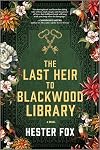
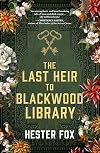
The Last Heir to Blackwood Library
by Hester Fox
On This Page
Description
"With the stroke of a pen, twenty-three-year-old Ivy Radcliffe becomes Lady Hayworth, owner of a sprawling estate on the Yorkshire moors. Ivy has never heard of Blackwood Abbey, or of the ancient bloodline from which she's descended. With nothing to keep her in London since losing her brother in the Great War, she warily makes her way to her new home. The abbey is foreboding, the servants reserved and suspicious. But there is a treasure waiting behind locked doors: a magnificent library. show more Despite cryptic warnings from the staff, Ivy feels irresistibly drawn to its dusty shelves, where familiar works mingle with strange, esoteric texts. And she senses something else in the library too, a presence that seems to have a will of its own. Rumors swirl in the village about the abbey's previous owners, about ghosts and curses, and an enigmatic manuscript at the center of it all. And as events grow more sinister, it will be up to Ivy to uncover the library's mysteries in order to reclaim her own story--before it vanishes forever"-- show lessTags
Recommendations
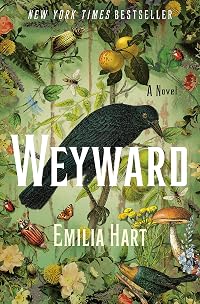
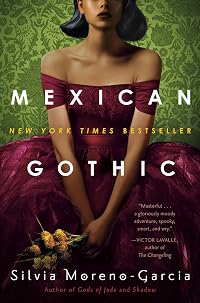
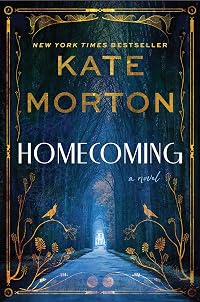
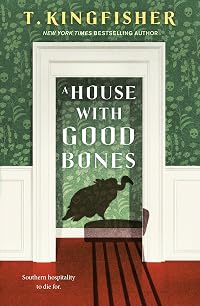
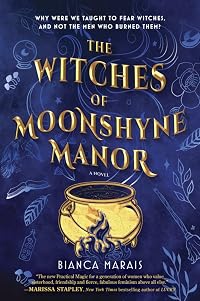
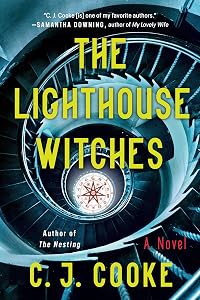
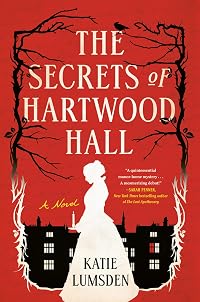
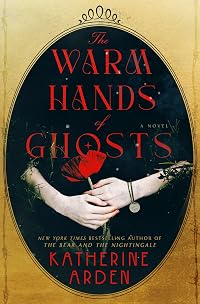
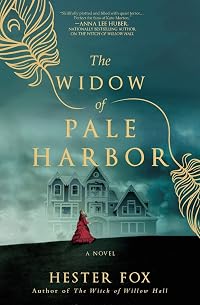
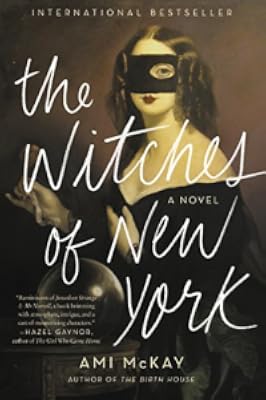
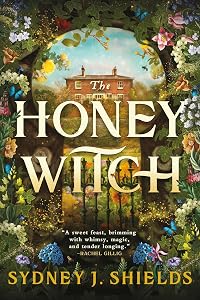
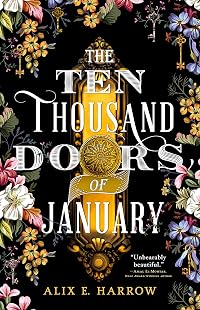



Member Recommendations
Member Reviews
The Last Heir to Blackwood Library by Hester Fox is one of the best modern-day examples of Gothic fiction. The heroine’s name, Ivy Radcliffe, reeks of a Gothic story as it exudes innocence and privilege. Then it takes place on the Yorkshire moors because of course it does. All that aside, Ms. Fox’s story is fantastic. She cleverly uses certain aspects of her story to keep you guessing. Eventually, you find yourself racing through the pages to discover Ivy’s fate.
The Last Heir to Blackwood Library meets all the requirements for Gothic fiction. Set on the moors of York, most of the action occurs in Blackwood Abbey, an honest-to-goodness abbey from the 1300s that became the property of one family during Henry VIII’s conversion show more mandates. From almost the first moment Ivy enters the property, she senses that a malevolent entity is haunting her. Her servants are less than forthcoming when answering her many questions, and the village citizens look at her with curiosity and concern. There is the hint of a romance and more than a hint of the past coming back to impact the present in the form of one hell of a legacy. It makes for an emotional and terrifying story you can’t stop reading.
I mentioned above that Ivy Radcliffe is a name that feels Gothic because it evokes innocence. Yes, Ivy is innocent in many ways. While her life until her inheritance revolved around the streets of London, loving parents and a loving brother protected her from the rougher elements. She is streetwise but not necessarily wise about people, something that does cause issues. However, being named for a vine does not make her weak-minded or weak-willed. Ivy is just as strong and stubborn as her namesake, and it serves her well in the long run.
One of the cleverest aspects of The Last Heir to Blackwood Library is that the family legacy means that the story we get may or may not be what is happening. To say more would spoil the story, but Ms. Fox uses this family legacy to her advantage by creating doubt in the reader’s mind. It adds one more layer of mystery to a story filled with many unanswered questions.
I adore Gothic fiction, but finding a good one written recently has not been easy. Thankfully, Hester Fox comes through with a book I would include with the Bronte sisters in a list. The Last Heir to Blackwood Library has everything you could ever want in a Gothic novel. More importantly, Ms. Fox blends the elements so well that the story becomes all-encompassing. If you want an eerie book to tide you over until Halloween, The Last Heir to Blackwood Library is perfect. show less
The Last Heir to Blackwood Library meets all the requirements for Gothic fiction. Set on the moors of York, most of the action occurs in Blackwood Abbey, an honest-to-goodness abbey from the 1300s that became the property of one family during Henry VIII’s conversion show more mandates. From almost the first moment Ivy enters the property, she senses that a malevolent entity is haunting her. Her servants are less than forthcoming when answering her many questions, and the village citizens look at her with curiosity and concern. There is the hint of a romance and more than a hint of the past coming back to impact the present in the form of one hell of a legacy. It makes for an emotional and terrifying story you can’t stop reading.
I mentioned above that Ivy Radcliffe is a name that feels Gothic because it evokes innocence. Yes, Ivy is innocent in many ways. While her life until her inheritance revolved around the streets of London, loving parents and a loving brother protected her from the rougher elements. She is streetwise but not necessarily wise about people, something that does cause issues. However, being named for a vine does not make her weak-minded or weak-willed. Ivy is just as strong and stubborn as her namesake, and it serves her well in the long run.
One of the cleverest aspects of The Last Heir to Blackwood Library is that the family legacy means that the story we get may or may not be what is happening. To say more would spoil the story, but Ms. Fox uses this family legacy to her advantage by creating doubt in the reader’s mind. It adds one more layer of mystery to a story filled with many unanswered questions.
I adore Gothic fiction, but finding a good one written recently has not been easy. Thankfully, Hester Fox comes through with a book I would include with the Bronte sisters in a list. The Last Heir to Blackwood Library has everything you could ever want in a Gothic novel. More importantly, Ms. Fox blends the elements so well that the story becomes all-encompassing. If you want an eerie book to tide you over until Halloween, The Last Heir to Blackwood Library is perfect. show less
The Last Heir to Blackwood Library definitely had all of the elements that I love in a gothic story; forboding house, magnificent library, secrets galore, sinister servants, strange and veiled warnings, too friendly strangers, and the list goes on. And until about 50% into the story, I was really enjoying it as I enjoyed all of those ambiguous warnings, the sinister housekeeper, and trying to figure out what was happening with Ivy. The old manor was a wonderful place to set a story, with those haunted moors, the fog, the eerie happenings, and of course, that library. Unfortunately, the so-called independent heroine takes a nose-dive into dependency, does a deep-dive into her alter-ego, and for the rest of the book she becomes so show more annoying I almost didn't finish it.
Ivy is the main character in the story and the author tries to push how independent she is by talking about these things that she does, like set up a library service for the townspeople who like to read but can't afford books. Yes, that is fine and dandy, and I did admire that action, but the first man who enters her life and pays her just a smidgeon of attention? Well, she becomes engaged to him because she doesn't like to be lonely and thinks she needs his wealth in order for others to appreciate her in society. And this is after she notices his fixation on her house and her library. And then she just allows his family to walk all over her and do what they want with her house. She is, in essence, a character in a story who doesn't really do all that much so character development is almost nil, and her actions don't really progress the story; in fact, she almost becomes a secondary character in her own story. I almost would have preferred the story to be told from another person's POV, anyone else's POV. Every time something happens to her, she just gives up. She doesn't fight for her house, for her rights, for her sanity, for nothing. Every time something is done to her, she just gives in and I grew so frustrated with her character.
The plot itself actually started rather strong and I did enjoy the first third of the book. There were a lot of things happening and I was enjoying myself trying to figure them out. I like these types of plots, even if they can be a bit formulaic as they are a lot of fun. But when she became engaged, everything went flat. The author had her making terrible decisions, despite the fact the author constantly told us what a great person Ivy was through the various characters, but nothing she did actually verified that concept, so it got old, fast. I don't know how this descended into a helpless woman scenario, but there were so many things that Ivy could have done to protect and save herself. Making women seem weak and helpless just seems like a lazy way to go about things, you know?
Verdict
The Last Heir to Blackwood Library could have been a good book about women saving each other and overcoming curses, but instead the plot was spoiled by a weak main character controlled by men who made poor decisions and couldn't problem-solve her way out of anything that was happening to her. Grrr. I thought the characters were bland and boring, and the plot did not have a lot of nuance to it which meant the further into the book we went, the less interesting it was. It's a shame as there was a lot of potential here, but I had to force myself to read the last 100 pages or so. show less
Ivy is the main character in the story and the author tries to push how independent she is by talking about these things that she does, like set up a library service for the townspeople who like to read but can't afford books. Yes, that is fine and dandy, and I did admire that action, but the first man who enters her life and pays her just a smidgeon of attention? Well, she becomes engaged to him because she doesn't like to be lonely and thinks she needs his wealth in order for others to appreciate her in society. And this is after she notices his fixation on her house and her library. And then she just allows his family to walk all over her and do what they want with her house. She is, in essence, a character in a story who doesn't really do all that much so character development is almost nil, and her actions don't really progress the story; in fact, she almost becomes a secondary character in her own story. I almost would have preferred the story to be told from another person's POV, anyone else's POV. Every time something happens to her, she just gives up. She doesn't fight for her house, for her rights, for her sanity, for nothing. Every time something is done to her, she just gives in and I grew so frustrated with her character.
The plot itself actually started rather strong and I did enjoy the first third of the book. There were a lot of things happening and I was enjoying myself trying to figure them out. I like these types of plots, even if they can be a bit formulaic as they are a lot of fun. But when she became engaged, everything went flat. The author had her making terrible decisions, despite the fact the author constantly told us what a great person Ivy was through the various characters, but nothing she did actually verified that concept, so it got old, fast. I don't know how this descended into a helpless woman scenario, but there were so many things that Ivy could have done to protect and save herself. Making women seem weak and helpless just seems like a lazy way to go about things, you know?
Verdict
The Last Heir to Blackwood Library could have been a good book about women saving each other and overcoming curses, but instead the plot was spoiled by a weak main character controlled by men who made poor decisions and couldn't problem-solve her way out of anything that was happening to her. Grrr. I thought the characters were bland and boring, and the plot did not have a lot of nuance to it which meant the further into the book we went, the less interesting it was. It's a shame as there was a lot of potential here, but I had to force myself to read the last 100 pages or so. show less
It’s difficult at times to separate one’s feelings about a story from one’s feelings about the characters inhabiting it. In this case, I found the story compelling enough to lay aside my frequent irritation at the protagonist, Ivy, and her uncanny ability to make any situation worse through her steadfast insistence on ignoring the advice of people around her. I suppose she was being gaslit by both her manipulative fiancé and a sadistic ghost, so that explains some of her behavior; I had to remind myself that she really didn’t have the situational awareness that we, the readers, did.
I will say this: the only male character who didn’t strike me as unbearably sulky at a very unattractive level was the butler. And we didn’t show more really get to hear him speak all that much, come to that.
But the idea of this haunted, hungry library in a centuries-old abbey pulled me in completely, and the curse and bonds laid upon the involved families was fascinating to me. I felt immersed; this is a story I’d love to see staged or filmed, though it would need to be splendidly done to meet my expectations. show less
I will say this: the only male character who didn’t strike me as unbearably sulky at a very unattractive level was the butler. And we didn’t show more really get to hear him speak all that much, come to that.
But the idea of this haunted, hungry library in a centuries-old abbey pulled me in completely, and the curse and bonds laid upon the involved families was fascinating to me. I felt immersed; this is a story I’d love to see staged or filmed, though it would need to be splendidly done to meet my expectations. show less
The Last Heir to Blackwood Library is Hester Fox's debut novel.
I loved the cover and the title promised a good read. (Isn't that true of all books with 'library in the title?)
1929 England. Twenty three year old Ivy Ratcliffe inherits Blackwood Abbey and becomes Lady Haywood overnight. She is a very distant relative of the last Haywood and had never known the man. But she's excited about the move...
Oh, all the pieces are here for a read with lots of Gothic influence. A young woman alone in the world, staff that are standoffish and secretive, a handsome jack of all trades, a smarmy antagonist, secrets and a manor with a dark history. Also - a library to rival those of any university. Ivy loves books and is thrilled to be the new mistress show more of the library.
So, up to a certain point, the book was following a script that I had excited and was enjoying. Then Fox threw in a spanner and changed the direction things were going. I now understood how the prologue would tie in. I'm going to be a bit obtuse here as I don't want to provide spoilers. The initial bit of the new direction was quite good and I was on board for it. I did question Ivy's ignoring of some 'episodes'. But that was part of the Gothic feel as well. But as it progressed, I had a little bit of doubt. I wasn't completely sold on the catalyst for what transpires. Another thing that annoyed me a bit was the amnesia that Ivy develops. She becomes the quintessential unreliable narrator. I felt like some of the interactions (yes, no, maybe so) played out one time too many perhaps.
But that aside, I think this is a good debut and I would pick up Fox's next book. show less
I loved the cover and the title promised a good read. (Isn't that true of all books with 'library in the title?)
1929 England. Twenty three year old Ivy Ratcliffe inherits Blackwood Abbey and becomes Lady Haywood overnight. She is a very distant relative of the last Haywood and had never known the man. But she's excited about the move...
Oh, all the pieces are here for a read with lots of Gothic influence. A young woman alone in the world, staff that are standoffish and secretive, a handsome jack of all trades, a smarmy antagonist, secrets and a manor with a dark history. Also - a library to rival those of any university. Ivy loves books and is thrilled to be the new mistress show more of the library.
So, up to a certain point, the book was following a script that I had excited and was enjoying. Then Fox threw in a spanner and changed the direction things were going. I now understood how the prologue would tie in. I'm going to be a bit obtuse here as I don't want to provide spoilers. The initial bit of the new direction was quite good and I was on board for it. I did question Ivy's ignoring of some 'episodes'. But that was part of the Gothic feel as well. But as it progressed, I had a little bit of doubt. I wasn't completely sold on the catalyst for what transpires. Another thing that annoyed me a bit was the amnesia that Ivy develops. She becomes the quintessential unreliable narrator. I felt like some of the interactions (yes, no, maybe so) played out one time too many perhaps.
But that aside, I think this is a good debut and I would pick up Fox's next book. show less
I'm in two minds over this novel (which I read for free on Kindle Unlimited, so I can't really complain!) I can never resist a story about books or libraries, obviously, and there is a well-paced plot with deeper meaning about war and how women were treated in peace time, but the whole book just felt so derivative, like every classic gothic novel stitched together.
Ivy Radcliffe was a clever nod but I felt like the other 'borrowed' books should have been more clearly acknowledged - Rebecca, The Woman in White, even Lady Chatterley's Lover! The Brontës and Wuthering Heights get a direct mention, presumably as the reason why an American author would risk setting a story in a vaguely defined 'Yorkshire', complete with terrible weather and show more worse dialect! I felt like the author was recycling rather than referencing these classic tomes, which threw me out of the story. If each chapter had been a book title, or Ivy had been reading that particular novel at the time, this reliance on timeworn tropes could have been an 'aha!' moment, instead of 'been there, read that'.
I did appreciate the history and atmosphere of the house, and the ambiguity of the servants, but Mellors, sorry Ralph, and the drawn out 'romance' with Ivy clogged up the story in places. And Arthur was a ridiculous moustache-twirling villain straight out of a pantomime; I know Ivy was under the influence of the house, but come on! Also, he should have been a wealthy industrialist and not another nobleman with a title, because he smacked of new money.
A cleverly crafted story perfect for the season, with unreliable perspectives, gaslighting, mad monks and houses built on evil, but a little too familiar in places for my taste. show less
Ivy Radcliffe was a clever nod but I felt like the other 'borrowed' books should have been more clearly acknowledged - Rebecca, The Woman in White, even Lady Chatterley's Lover! The Brontës and Wuthering Heights get a direct mention, presumably as the reason why an American author would risk setting a story in a vaguely defined 'Yorkshire', complete with terrible weather and show more worse dialect! I felt like the author was recycling rather than referencing these classic tomes, which threw me out of the story. If each chapter had been a book title, or Ivy had been reading that particular novel at the time, this reliance on timeworn tropes could have been an 'aha!' moment, instead of 'been there, read that'.
I did appreciate the history and atmosphere of the house, and the ambiguity of the servants, but Mellors, sorry Ralph, and the drawn out 'romance' with Ivy clogged up the story in places. And Arthur was a ridiculous moustache-twirling villain straight out of a pantomime; I know Ivy was under the influence of the house, but come on! Also, he should have been a wealthy industrialist and not another nobleman with a title, because he smacked of new money.
A cleverly crafted story perfect for the season, with unreliable perspectives, gaslighting, mad monks and houses built on evil, but a little too familiar in places for my taste. show less
It's obvious from the start that Last Heir is going to be a light and quaint historical thriller/romance, so I knew what I was getting into here. Fox's prose is sound and her background interests help to create a believable historio-fantastic setting, but her character development is malnourished and cardboard-thin. Books, abbeys, post-war trauma, and the ghost of a mad monk combine to promise an escapist romp through the Yorkshire moors, but for me the surprisingly anti-feminist template and overly cozy coincidence and cleanliness of the plot lines made for a disappointing journey. I was intrigued by her treatment of lending out 'haunted' books that directly influenced real-world situations based upon their contents, but that was only show more explored for a brief section and then wholly forgotten for the rest of the story. In my opinion, expanding on that premise would have made for a much more interesting and enjoyable plot. Fox certainly has the chops to have done it, but alas. show less
The Last Heir to the Blackwood Library by Hester Fox is a gothic tale. The author created a rich environment with the foggy moors, a shabby manor house, grim domestics, objects moving on their own, cold spots, and an ominous library. The story begins in 1927 when Ivy Radcliffe inherits Blackwood Abbey and becomes Lady Hayworth. The spiritualist movement had a resurgence in the 1920s (people who lost loved ones during the war wanted to find a way to reach them). Ivy finds herself drawn to the manor’s extensive library. The housekeeper seems determined to keep Ivy away from it, but Ivy cannot resist the libraries allure. Ivy Radcliffe is an independent, stubborn woman who is also naïve. There are times when she will stand up to someone show more and others when she backs down (would you sleep in a bedroom where strange things have been happening so you would not inconvenience the staff). I loved the descriptions of the library. There were some intriguing books in it. There are two potential love interests for Ivy. Ivy finds the manor houses curt driver (also gardener, handyman, and stable boy) appealing as well as a charming local aristocrat. I could have done with less of this element and less repetition regarding the two men’s attributes. We also see how the Great War affected different people. The war continues to haunt soldiers and those who were left behind. The story does move at a slower pace. The pace improves toward the end as the story reaches it climax. The author is detail oriented which is good and bad. It creates a rich atmosphere, but it does slow down the story. The book does contain mild foul language and graphic violence (fair warning). I liked the paranormal component and the mystery. There was a surprise or two. I was left with a lingering question or two at the end. I am glad that I stuck with the story and finished it (after reading the prologue, I was tempted to put the book at the bottom of my TBR pile). The Last Heir to the Blackwood Library is a spooky story with an intriguing inheritance, dour domestics, an alluring library, an appealing aristocrat, a firm friend, a spooky presence, and a mad monk. show less
Members
- Recently Added By
Lists

mom
729 works; 1 member

Kate & Cheyanne's Horror Extravaganza
144 works; 6 members

TBR of Books I Don't Own
132 works; 1 member
Author Information

8 Works 1,988 Members
Common Knowledge
- Canonical title
- The Last Heir to Blackwood Library
- People/Characters
- Ivy Radcliffe; Mrs. Hewitt; Ralph; Alfred Mabry
- Important places
- Yorkshire, England, UK
- Dedication
- In loving memory of DJF
- First words
- They bricked her up on Saint George's Day.
- Last words
- (Click to show. Warning: May contain spoilers.)Lady Hayworth has also graciously opened the Blackwood library to visitors, and welcomes anyone and everyone to experience her incomparable collection of books and manuscripts.
Classifications
Statistics
- Members
- 677
- Popularity
- 42,482
- Reviews
- 23
- Rating
- (3.28)
- Languages
- English, French
- Media
- Paper, Audiobook, Ebook
- ISBNs
- 19
- ASINs
- 4