Theory of Colours
by Johann Wolfgang von Goethe
On This Page
Description
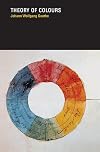
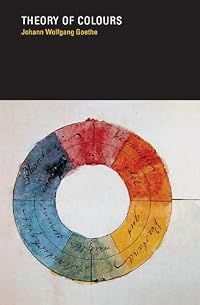
This work by Johann Wolfgang von Goethe (1749-1832) was translated into English in 1840 by Sir Charles Eastlake (1793-1865), painter and later keeper of the National Gallery. Goethe's 1810 work was rejected by many contemporary scientists because it appeared to contradict the physical laws laid down by Newton. However, its focus on the human perception of the colour spectrum, as opposed to the observable optical phenomenon, was attractive to, and influential upon, artists and philosophers. show more As Eastlake says in his preface, the work's dismissal on scientific grounds had caused 'a well-arranged mass of observations and experiments, many of which are important and interesting', to be overlooked. Eastlake also puts Goethe's work into its aesthetic and scientific context and describes its original reception. His clear translation of Goethe's observations and experiments on colour and light will appeal to anyone interested in our responses to art. show lessTags
Recommendations





















Member Recommendations

bertilak In particular, see Goethe's section on pathological colours.
Member Reviews
This was a very curious book. The beginning is all observations of experiments that Goethe used to make his conclusions, which he then extrapolates on during the next section of his book. I found it quite original and interesting, despite the data being old and somewhat archaic, and there are some great passages of prose to glimpsed upon in here. I recommend it for those interested in classics, Goethe, and early scientific books.
3.25 stars.
3.25 stars.
Still reeling. I have no idea how to rate this thing, or even to describe it, other than as an unintentional, bizarre comedy.
New binding from Harcourt cost $160
È questa la prima traduzione italiana del capolavoro di Goethe sul colore, materia alla quale egli dedicò una parte significativa della propria vita. In quest'opera Goethe scandaglia scientificamente la storia e i presupposti metafisici dell'arte attraverso l'esame di ben 350 personalità che hanno contribuito alla strutturazione di una teoria dell'arte e del colore. L'excursus temporale, da Socrate e Aristotele, da Plotino a Galilei fino a Newton, è dei più avvincenti e singolari; è una storia del colore e dell'arte vista quale vicenda dell'umanità e del pensiero.
Jul 2, 2015Italian
> Babelio : https://www.babelio.com/livres/Goethe-Traite-des-couleurs/61067
> [Question de]. Goethe, « Le Traité des couleurs ». In: Question de n°1, 1973. p.119 (Bibliothèque)
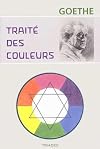
Ce texte fondamental parmi les écrits scientifiques de Goethe n'avait jamais été traduit en français : souvent de savants commentateurs en ont parlé. Mais nul ne s’était jusqu’à ce jour hasardé à nous le présenter. C’est chose faite, et avec intelligence et clarté.
Cet ouvrage est déroutant à plus d’un point de vue : il nous offre une véritable logique des correspondances à travers la vision chromatique de l’immortel auteur des deux Faust.
Pour Goethe, les couleurs ne sont pas seulement des phénomènes physiques : elles sont également show more des réalisations physiologiques et psychologiques. La perception du monde coloré est un des chemins vers le monde intérieur, celui qui est tout éclairé de la diaphane lumière spirituelle.
Nous croyons qu’il est aujourd’hui bon de lire en français, ou de relire, pour ceux qui avaient pris connaissance du texte en langue allemande, cet ouvrage qui n’a pas vieilli sur près de deux cents ans : il ne pouvait vieillir, car il est, par le génie même de son auteur, animé d’une vie de l’âme et de l’esprit, celle-là même qui fait les oeuvres intemporelles.
*Première édition française aux éditions Triades, 4, rue de la Grande-Chaumière, Paris (1973)
Traduction intégrale par Henriette Bideau ; avant-propos, introduction et notes par Rudolf Steiner (texte de 1883) ; préface de Paul-Henri Bideau. show less
> [Question de]. Goethe, « Le Traité des couleurs ». In: Question de n°1, 1973. p.119 (Bibliothèque)
Ce texte fondamental parmi les écrits scientifiques de Goethe n'avait jamais été traduit en français : souvent de savants commentateurs en ont parlé. Mais nul ne s’était jusqu’à ce jour hasardé à nous le présenter. C’est chose faite, et avec intelligence et clarté.
Cet ouvrage est déroutant à plus d’un point de vue : il nous offre une véritable logique des correspondances à travers la vision chromatique de l’immortel auteur des deux Faust.
Pour Goethe, les couleurs ne sont pas seulement des phénomènes physiques : elles sont également show more des réalisations physiologiques et psychologiques. La perception du monde coloré est un des chemins vers le monde intérieur, celui qui est tout éclairé de la diaphane lumière spirituelle.
Nous croyons qu’il est aujourd’hui bon de lire en français, ou de relire, pour ceux qui avaient pris connaissance du texte en langue allemande, cet ouvrage qui n’a pas vieilli sur près de deux cents ans : il ne pouvait vieillir, car il est, par le génie même de son auteur, animé d’une vie de l’âme et de l’esprit, celle-là même qui fait les oeuvres intemporelles.
*Première édition française aux éditions Triades, 4, rue de la Grande-Chaumière, Paris (1973)
Traduction intégrale par Henriette Bideau ; avant-propos, introduction et notes par Rudolf Steiner (texte de 1883) ; préface de Paul-Henri Bideau. show less
Jul 24, 2019 (Edited)French
TEORÍA DE LOS COLORES
INTRODUCCIÓN
"La geometría deja el espiritu como lo encuentra"
Voltaire
"¿Cuál es entonces la intención que han tenido mis estudios
de óptica? Mi intención ha sido: recopilar todas las
experiencias en esta disciplina, hacer todos los ensayos y
llevarlos adelante en toda su diversidad, pero también de
modo que sean fácilmente reproducibles y no se escapen a
la visión de la mayoría. Y luego presentar las proposiciones
en las que puedan ser expresadas las experiencias del
género más elevado, y aguardar a ver en qué medida también se
ordenan bajo un principio más elevado".
GÉNESIS Y COMPOSICIÓN DE ZUR FARBENLEHRE
N sus Comversaciones con Goethe transcribe Johann Peter Eckermann lo siguien
te: "A todo lo que he show more producido como poeta sola repetir lGoethe)- no le
concedo gran importancia, pues en mi época los ha habido muy buenos; otros más
excelentes aún existieron antes que yo, y mejores los habrá tal vez después de mi
paso por el mundo. Pero, que en mi época, y en una ciencia tan dificil como la de
los colores, haya sido el único capaz de descubrir el buen camino, constituye para... show less
INTRODUCCIÓN
"La geometría deja el espiritu como lo encuentra"
Voltaire
"¿Cuál es entonces la intención que han tenido mis estudios
de óptica? Mi intención ha sido: recopilar todas las
experiencias en esta disciplina, hacer todos los ensayos y
llevarlos adelante en toda su diversidad, pero también de
modo que sean fácilmente reproducibles y no se escapen a
la visión de la mayoría. Y luego presentar las proposiciones
en las que puedan ser expresadas las experiencias del
género más elevado, y aguardar a ver en qué medida también se
ordenan bajo un principio más elevado".
GÉNESIS Y COMPOSICIÓN DE ZUR FARBENLEHRE
N sus Comversaciones con Goethe transcribe Johann Peter Eckermann lo siguien
te: "A todo lo que he show more producido como poeta sola repetir lGoethe)- no le
concedo gran importancia, pues en mi época los ha habido muy buenos; otros más
excelentes aún existieron antes que yo, y mejores los habrá tal vez después de mi
paso por el mundo. Pero, que en mi época, y en una ciencia tan dificil como la de
los colores, haya sido el único capaz de descubrir el buen camino, constituye para... show less
Sep 8, 2018Spanish
Ratings
Members
- Recently Added By
Author Information

3,036+ Works 51,315 Members
Johann Wolfgang von Goethe, 1749-1832 Johann Wolfgang von Goethe was born in Frankfurt am Main. He was greatly influenced by his mother, who encouraged his literary aspirations. After troubles at school, he was taught at home and gained an exceptionally wide education. At the age of 16, Goethe began to study law at Leipzig University from 1765 to show more 1768, and he also studied drawing with Adam Oeser. After a period of illness, he resumed his studies in Strasbourg from 1770 to 1771. Goethe practiced law in Frankfurt for two years and in Wetzlar for a year. He contributed to the Frankfurter Gelehrte Anzeigen from 1772 to 1773, and in 1774 he published his first novel, self-revelatory Die Leiden des Jungen Werthers. In 1775 he was welcomed by Duke Karl August into the small court of Weimar, where he worked in several governmental offices. He was a council member and member of the war commission, director of roads and services, and managed the financial affairs of the court. Goethe was released from day-to-day governmental duties to concentrate on writing, although he was still general supervisor for arts and sciences, and director of the court theatres. In the 1790s Goethe contributed to Friedrich von Schiller´s journal Die Horen, published Wilhelm Meister's Apprenticeship, and continued his writings on the ideals of arts and literature in his own journal, Propyläen. The first part of his masterwork, Faust, appeared in 1808, and the second part in 1832. Goethe had worked for most of his life on this drama, and was based on Christopher Marlowe's Faust. From 1791 to 1817, Goethe was the director of the court theatres. He advised Duke Carl August on mining and Jena University, which for a short time attracted the most prominent figures in German philosophy. He edited Kunst and Altertum and Zur Naturwissenschaft. Goethe died in Weimar on March 22, 1832. He and Duke Schiller are buried together, in a mausoleum in the ducal cemetery. (Bowker Author Biography) show less
Some Editions
Awards and Honors
Notable Lists
Series
Belongs to Publisher Series
Work Relationships
Is contained in
Is abridged in
Common Knowledge
- Canonical title
- Theory of Colours
- Original title
- Zur Farbenlehre
- Original publication date
- 1810-05-16
- People/Characters
- Johann Wolfgang von Goethe
- Important events
- 19th century
- First words
- The desire of knowledge is first stimulated in us when remarkable phenomena attract our attention.
- Last words
- (Click to show. Warning: May contain spoilers.)From this consideration he can derive some encouragement for the prosecution of the remainder of his task; and although not satisfied with the result of his efforts, yet re-assured by the sincerity of his intentions, he ventures to recommend his past and future labours to the interest of his contemporaries and posterity.
- Original language
- German
Classifications
Statistics
- Members
- 525
- Popularity
- 56,704
- Reviews
- 6
- Rating
- (3.93)
- Languages
- 13 — Czech, Danish, Dutch, English, Finnish, French, German, Italian, Norwegian (Bokmål), Portuguese, Russian, Spanish, Swedish
- Media
- Paper, Ebook
- ISBNs
- 69
- UPCs
- 2
- ASINs
- 9