On This Page
Description
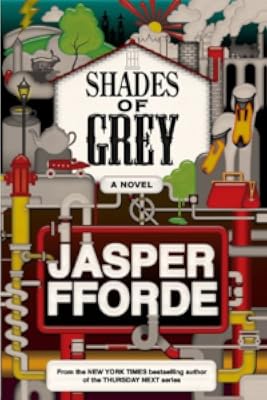
Welcome to Chromatacia, where for as long as anyone can remember society has been ruled by a Colortocracy. Social hierachy is based upon one's limited color perception. society is dominated by color. In this world, you are what you can see, and Eddie Russett, a better-than-average red perception wants to move up.Tags
Recommendations










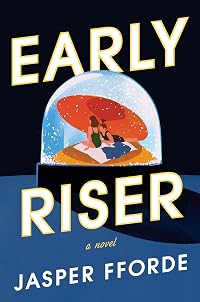
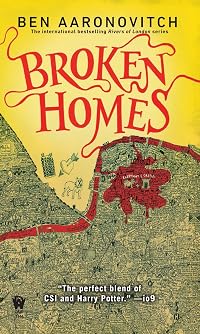
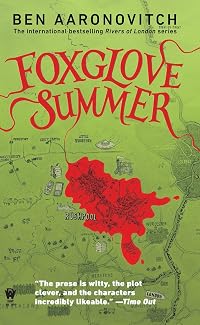

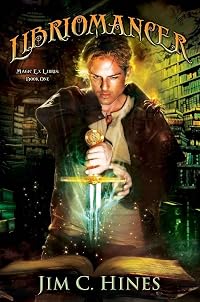
Member Recommendations


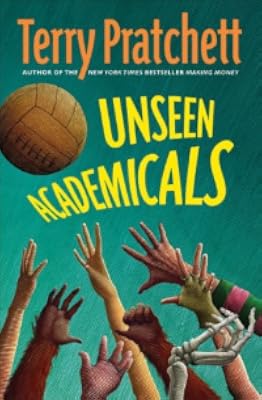
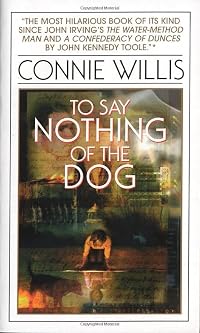
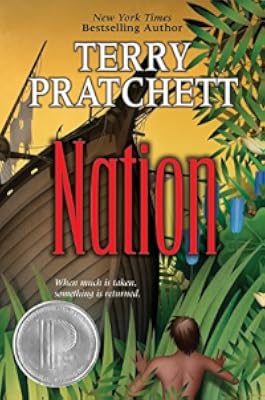
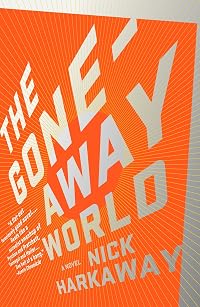
TomWaitsTables The dystopic comedy by by Jasper Fforde, not the adult novel read by housewives.
ngoomie Very different societies, and yet I can see similar threads between the two that indicate to me that Jasper Fforde was likely to some degree inspired by Brave New World, from things like the specific application of the caste system (they are based largely off of immutable traits that affect how one interacts with the world), to near-worship of a mythologized figure referred to as "Our {name}" ("Our Munsell" in Shades of Grey, "Our Ford" in Brave New World) who serves a historically and current societally important role.
Also recommended by Othemts
112

bertilak In particular, see Goethe's section on pathological colours.
12
KCLibrarian Both books create believable societies unlike our own in some ways, but recognizably human in other ways. Both raise challenging societal questions and have some surprise twists and turns along the way. Both authors deftly ease their readers into the fantasy worlds they create, and by the time the story ends, leave readers wanting more.
16
Member Reviews
Eddie Russett travels with his chromaticologist father (a doctor who treats patients by showing them swatches of particular colors) across the country to East Carmine, a semi-rural village where things are a bit weirder than Eddie is used to. He’s left behind his rich almost-half-fiancée Constance Oxblood but is confident he can earn some merits and do well on his eyesight exam and return to her. Throwing a wrench into his plans is Jane, a grey who can hardly see any color, who is beautiful, rebellious, and a stone-cold bitch (whom Eddie immediately falls in love with). Eddie gets wrapped up in the schemes of these people who don’t always follow the color hierarchy the way they’re supposed to. The high-color prefects are horribly show more corrupt, and the greys are smart and have rich (figuratively) lives, nothing really makes any sense, and the scales start to fall from his eyes. He can’t decide whether to go back to his old life or forge a new path outside of the color wheel, until he visits the abandoned city of High Saffron and learns things he can’t unknow.
This is almost a perfect, poignant dystopian story about authoritarianism, disability rights, and how fascists use complex social hierarchies to distract people from rising up against them, but it’s too chaotic and absurd for that. And yet, the chaos and absurdity somehow make it better than perfect. Nothing maps perfectly onto our world, nor any of the things that influence it, like the board game Risk or Albert Munsell (not really a horrible despot, as far as I can tell!). Everything is absurd, without real logic, and therefore there can be no gaps in logic.
My favorite absurdities:
-looking at a certain color green gets you high
-spoons are precious because they were left off the list of goods to manufacture
-librarians are deeply valued, but books keep getting banned to the point that there are more librarians than books
-for entertainment everyone listens to people tapping gossip or stories on the radiator pipes in morse code
I only have the smallest quibble with the story, which is the sense of time. The whole book takes place over 4 days, and several times there are 4 or 5 dramatic events in a row, and then everyone eats lunch. But the absurdity fills in all logic holes - maybe days in this world are much longer than ours?
Is this my favorite book ever? It might be. It just really tickles me in all the right ways. show less
This is almost a perfect, poignant dystopian story about authoritarianism, disability rights, and how fascists use complex social hierarchies to distract people from rising up against them, but it’s too chaotic and absurd for that. And yet, the chaos and absurdity somehow make it better than perfect. Nothing maps perfectly onto our world, nor any of the things that influence it, like the board game Risk or Albert Munsell (not really a horrible despot, as far as I can tell!). Everything is absurd, without real logic, and therefore there can be no gaps in logic.
My favorite absurdities:
-looking at a certain color green gets you high
-spoons are precious because they were left off the list of goods to manufacture
-librarians are deeply valued, but books keep getting banned to the point that there are more librarians than books
-for entertainment everyone listens to people tapping gossip or stories on the radiator pipes in morse code
I only have the smallest quibble with the story, which is the sense of time. The whole book takes place over 4 days, and several times there are 4 or 5 dramatic events in a row, and then everyone eats lunch. But the absurdity fills in all logic holes - maybe days in this world are much longer than ours?
Is this my favorite book ever? It might be. It just really tickles me in all the right ways. show less
In this dystopian future world, color equals status. The Colortocracy is based not on skin tones, but instead on what shades of red, blue, purple, yellow, etc. that an individual can see. People are judged by what color they can perceive and in what saturation.
Fforde has created a complicated and fascinated society. Instead of money, people have merits. When they become difficult they are sent to Reboot to be reprogrammed to behave better. All of this takes place after “The Something That Happened,” though no one knows what exactly that was. The new world is set up with a strict rule structure that must be blindly adhered to. Here’s a great example, for years parents follow the rule “Every child should receive a glass of milk show more and a smack in the afternoon.” Finally someone realizes that this is simply a typo and should be “snack.” After loads of paperwork and the careful navigation of loopholes the rule was changed.
The book, the first in a series, follows Eddie Russet and his father (a Chromaticologist, who heals people of their maladies using color swatches). They travel to East Carmine, far from the busy city they’re used to. There they meet a “colorful” cast of characters including the prickly Jane Grey and the nonexistent Apocryphal man.
Just like Fforde’s Thursday Next series, the reader must be willing to suspend reality and be swept along in the flood of his intellectual imagination. His writing is clever and provides a constant stream of witty twists and dialogue. If you’ve read his work before and loved it, this is more of the same, unique, hilarious and wonderful. If you haven’t liked his writing in the past, this won’t change that. I am firmly in the loved it camp and will continue to read everything he writes. show less
Fforde has created a complicated and fascinated society. Instead of money, people have merits. When they become difficult they are sent to Reboot to be reprogrammed to behave better. All of this takes place after “The Something That Happened,” though no one knows what exactly that was. The new world is set up with a strict rule structure that must be blindly adhered to. Here’s a great example, for years parents follow the rule “Every child should receive a glass of milk show more and a smack in the afternoon.” Finally someone realizes that this is simply a typo and should be “snack.” After loads of paperwork and the careful navigation of loopholes the rule was changed.
The book, the first in a series, follows Eddie Russet and his father (a Chromaticologist, who heals people of their maladies using color swatches). They travel to East Carmine, far from the busy city they’re used to. There they meet a “colorful” cast of characters including the prickly Jane Grey and the nonexistent Apocryphal man.
Just like Fforde’s Thursday Next series, the reader must be willing to suspend reality and be swept along in the flood of his intellectual imagination. His writing is clever and provides a constant stream of witty twists and dialogue. If you’ve read his work before and loved it, this is more of the same, unique, hilarious and wonderful. If you haven’t liked his writing in the past, this won’t change that. I am firmly in the loved it camp and will continue to read everything he writes. show less
"The cucumber and the tomato are both fruit; the avocado is a nut. To assist with the dietary requirements of vegetarians, on the first Tuesday of the month a chicken is officially a vegetable."
Jasper Fforde's latest is a post-apocalyptic book that makes hardly any sense at all for the first thirty or forty pages. They you start to get a hang of the sort of world these people live in now, and it all starts making sense. This book one took me a good week to get through (and that's a long time for me--I'm a super-fast reader, when I get time to read, that is), not because it was bad but because it was so...dense. Yep. Dense is a good word. This was my first Fforde book, so I don't know if he always writes like this but I liked it. So much show more information, such a complex world with incredible attention to detail. Excellent characters, twisty-turny plot, amazing worldbuilding.
Fforde has created a whole new surreality: a world in which people's vision is limited to a single color in the ROYGBIV spectrum. The story is set in the future, about 500 years after Something Happened. No one knows what, but when it was all done, it left the survivors with a determination to hold their society together by following The Rules. The Rules cover everything from appropriate attire, conduct, and speech, to strange things like the prohibition of the number between 72 and 74. And your place in society is determined by what colors you can see.
The basics? People can each see one or two shades of color, because something happened to make people's pupils shrink to tiny pinpricks, which somehow limits people to a single spectrum of color visibility. There's synthetic color, which everyone can see. And there are Greys, who can't see any color at all. The social and political strata is broken down into which colors people can see, and how much of it is visible to them.
All of the above was really confusing to me, at first, because the book never infodumps. It could probably have explained all of that, but from what I understand, it wouldn't be a Fforde narrator if he stopped to bring the reader up to date. Instead, we see the world through Eddie Russet’s eyes, and so we have to learn quickly. Those who don't read a lot of genre fiction may find this jarring or difficult to follow, but it was one of the things that kept me reading early on; I wanted to figure out this awesomely complicated word Fforde had built. I had to go back and reread quite a few pages, to make sure I understood what was going on there. But I didn’t mind at all!
Probably one of the most interesting things about the book is that the description is lush and textured, but rarely includes any mention of color. Eddie, as his last name might indicate, is a Red. So he only sees in the red spectrum, and he makes special note of spots of "his" color. Yet he manages to describe everything, even sunsets, in beautiful detail, and without ever using the word "grey." (The author is Welsh, so that's how he spells it.)
It wouldn't be a Fforde book without the gentle satire and little in-jokes, and they're in there, without ever detracting from the seriousness of the plot*. A librarian fondly remembers titles, but gets them wrong in very humorous ways. (I think she was told the names like a story, only learning them by route, so they are sometimes slightly confused but understandable, and sometimes completely unknown by me.) The characters often discover relics of our time, and try to figure them out in ways that might remind the reader of the seagull in Disney's Little Mermaid.
All of the above adds up to a very enjoyable read, and one I highly recommend. What sheer cleverness!! I can't image where Jasper Fforde comes up with these ideas, but I've very glad he does. The society and culture portrayed in Shades of Grey is so absolutely foreign that you may have a really difficult time getting through it as well. But if you can manage to just accept it and keep reading, the novel is worthwhile. Masterful, even.
Bottom line, I liked it. It left me thinking about it for quite a while after. Especially about what it’s like being an Apocryphal Man…. The Green Room…. Chasing the Frog……
This novel may be a slow read at first -- from what I understand, Fforde takes time to craft his universes but tends to set his readers down in the middle of things at the beginning, so it took a bit to soak up enough information before the Colortocracy organization made sense. Once everything clicked, though, I couldn't put the book down. The final pages were all action and social un-niceties, the kind of whirlwind ending that makes you long for the sequel in your hands so you can keep the story going and won't have to stop for a year or so. Ah well. Re-reading potential: high!
A sneak peak from one of the last pages:
Volume 2 will be titled Painting by Numbers
Volume 3 will be The Gordini Protocols
(No news on when the second volume will be out.)
Novels in the world of Fforde:
The Most Serious Affair at Stiles
(The Mysterious Affair at Styles, Agatha Christy)
Murdoch on the Orientated Ex-Best
(Murder on the Orient Express)
The Glass Quay
(The Glass Key)
A Missed Similie’s Foaling in Snow
(Miss Smilla’s Sense of Snow)
Gawky Park
(Gorky Park)
The Science of the Slams
(The Silence of the Lambs)
The Pig’s Leap
(The Big Sleep)
Monday Morning
(Monday Mourning, Kathy Reichs)
The Force Bear
(The Fourth Bear)
The Complete Sheer Luck Homes
(The Complete Sherlock Holmes)
Art:
Frowny Girl Removing Beardy’s Head, by Caravaggio
(Judith Beheading Holofernes)
http://www.wga.hu/frames-e.html?/html/c/caravagg/03/17judit.html
http://www.jasperfforde.com/grey/grey1.html show less
Jasper Fforde's latest is a post-apocalyptic book that makes hardly any sense at all for the first thirty or forty pages. They you start to get a hang of the sort of world these people live in now, and it all starts making sense. This book one took me a good week to get through (and that's a long time for me--I'm a super-fast reader, when I get time to read, that is), not because it was bad but because it was so...dense. Yep. Dense is a good word. This was my first Fforde book, so I don't know if he always writes like this but I liked it. So much show more information, such a complex world with incredible attention to detail. Excellent characters, twisty-turny plot, amazing worldbuilding.
Fforde has created a whole new surreality: a world in which people's vision is limited to a single color in the ROYGBIV spectrum. The story is set in the future, about 500 years after Something Happened. No one knows what, but when it was all done, it left the survivors with a determination to hold their society together by following The Rules. The Rules cover everything from appropriate attire, conduct, and speech, to strange things like the prohibition of the number between 72 and 74. And your place in society is determined by what colors you can see.
The basics? People can each see one or two shades of color, because something happened to make people's pupils shrink to tiny pinpricks, which somehow limits people to a single spectrum of color visibility. There's synthetic color, which everyone can see. And there are Greys, who can't see any color at all. The social and political strata is broken down into which colors people can see, and how much of it is visible to them.
All of the above was really confusing to me, at first, because the book never infodumps. It could probably have explained all of that, but from what I understand, it wouldn't be a Fforde narrator if he stopped to bring the reader up to date. Instead, we see the world through Eddie Russet’s eyes, and so we have to learn quickly. Those who don't read a lot of genre fiction may find this jarring or difficult to follow, but it was one of the things that kept me reading early on; I wanted to figure out this awesomely complicated word Fforde had built. I had to go back and reread quite a few pages, to make sure I understood what was going on there. But I didn’t mind at all!
Probably one of the most interesting things about the book is that the description is lush and textured, but rarely includes any mention of color. Eddie, as his last name might indicate, is a Red. So he only sees in the red spectrum, and he makes special note of spots of "his" color. Yet he manages to describe everything, even sunsets, in beautiful detail, and without ever using the word "grey." (The author is Welsh, so that's how he spells it.)
It wouldn't be a Fforde book without the gentle satire and little in-jokes, and they're in there, without ever detracting from the seriousness of the plot*. A librarian fondly remembers titles, but gets them wrong in very humorous ways. (I think she was told the names like a story, only learning them by route, so they are sometimes slightly confused but understandable, and sometimes completely unknown by me.) The characters often discover relics of our time, and try to figure them out in ways that might remind the reader of the seagull in Disney's Little Mermaid.
All of the above adds up to a very enjoyable read, and one I highly recommend. What sheer cleverness!! I can't image where Jasper Fforde comes up with these ideas, but I've very glad he does. The society and culture portrayed in Shades of Grey is so absolutely foreign that you may have a really difficult time getting through it as well. But if you can manage to just accept it and keep reading, the novel is worthwhile. Masterful, even.
Bottom line, I liked it. It left me thinking about it for quite a while after. Especially about what it’s like being an Apocryphal Man…. The Green Room…. Chasing the Frog……
This novel may be a slow read at first -- from what I understand, Fforde takes time to craft his universes but tends to set his readers down in the middle of things at the beginning, so it took a bit to soak up enough information before the Colortocracy organization made sense. Once everything clicked, though, I couldn't put the book down. The final pages were all action and social un-niceties, the kind of whirlwind ending that makes you long for the sequel in your hands so you can keep the story going and won't have to stop for a year or so. Ah well. Re-reading potential: high!
A sneak peak from one of the last pages:
Volume 2 will be titled Painting by Numbers
Volume 3 will be The Gordini Protocols
(No news on when the second volume will be out.)
Novels in the world of Fforde:
The Most Serious Affair at Stiles
(The Mysterious Affair at Styles, Agatha Christy)
Murdoch on the Orientated Ex-Best
(Murder on the Orient Express)
The Glass Quay
(The Glass Key)
A Missed Similie’s Foaling in Snow
(Miss Smilla’s Sense of Snow)
Gawky Park
(Gorky Park)
The Science of the Slams
(The Silence of the Lambs)
The Pig’s Leap
(The Big Sleep)
Monday Morning
(Monday Mourning, Kathy Reichs)
The Force Bear
(The Fourth Bear)
The Complete Sheer Luck Homes
(The Complete Sherlock Holmes)
Art:
Frowny Girl Removing Beardy’s Head, by Caravaggio
(Judith Beheading Holofernes)
http://www.wga.hu/frames-e.html?/html/c/caravagg/03/17judit.html
http://www.jasperfforde.com/grey/grey1.html show less
Color. Look around. Note the shades of greens and blues out the window. The yellow and orange threads in a carpet. Now imagine all but one shade gone. You can only see one natural color. Everything else comes through to you through artificial paints, as if Ted Turner’s colorization had taken over the rest of the palette. And that’s only if your town can afford to keep the artificial color pumps on.
Welcome to Jasper Fforde’s new novel, Shades of Grey. Since an unexplained incident sometime in the distant past, almost everyone in the world can see only one color. People are ranked according to which color they can see and how much of it they can see. The Greys see no color and are at the bottom of the caste system. Reds are just show more above them, with higher status and power granted the further along the color spectrum you are. Signs tell us the univision world was once very similar to, or perhaps was, our world: Picasso and Vermeer paintings still exist.
At the start of the novel — or rather, right after the main character tells readers he’s being digested by a tree — Eddie Russet accompanies his father to an outlying village with little synthetic color. As the village prefects explain their looser interpretations of the color laws, readers get tantalizing glimpses of the rules that govern Fforde’s latest world. Great Leapbacks have erased most technology, etiquette must be followed, and spoons are incredibly important to one’s self worth.
All Eddie wants is to earn enough credits to leave the village and earn the hand of his beloved Constance, a member of the highly regarded Oxblood family. A Grey named Jane soon ends his hopes of a normal, unassuming life by introducing him to thoughts of revolution and forcing him to decide what matters most: marrying up and upholding the laws of the community or falling in love and standing up for honor and integrity.
The Univision world has existed for hundreds of years, so characters are familiar with intricacies readers are not. Some parts of the world are very similar to the real world, while others are not. It’s easy to get bogged down in the differences and throw your hands up and walk away. Readers familiar with Fforde’s Thursday Next novels may have a leg up in understanding Shades of Grey. The best approach is to tilt your head slightly to get a different perspective and let Fforde’s deftly drawn characters and well-paced plot pull you along. It’s not necessary to understand all the laws of the world. After all, Eddie is starting to question some of them and even break one or two. Besides, Fforde plans two more books in the series, which may — or may not — explain why swans attack and what causes Mildew show less
Welcome to Jasper Fforde’s new novel, Shades of Grey. Since an unexplained incident sometime in the distant past, almost everyone in the world can see only one color. People are ranked according to which color they can see and how much of it they can see. The Greys see no color and are at the bottom of the caste system. Reds are just show more above them, with higher status and power granted the further along the color spectrum you are. Signs tell us the univision world was once very similar to, or perhaps was, our world: Picasso and Vermeer paintings still exist.
At the start of the novel — or rather, right after the main character tells readers he’s being digested by a tree — Eddie Russet accompanies his father to an outlying village with little synthetic color. As the village prefects explain their looser interpretations of the color laws, readers get tantalizing glimpses of the rules that govern Fforde’s latest world. Great Leapbacks have erased most technology, etiquette must be followed, and spoons are incredibly important to one’s self worth.
All Eddie wants is to earn enough credits to leave the village and earn the hand of his beloved Constance, a member of the highly regarded Oxblood family. A Grey named Jane soon ends his hopes of a normal, unassuming life by introducing him to thoughts of revolution and forcing him to decide what matters most: marrying up and upholding the laws of the community or falling in love and standing up for honor and integrity.
The Univision world has existed for hundreds of years, so characters are familiar with intricacies readers are not. Some parts of the world are very similar to the real world, while others are not. It’s easy to get bogged down in the differences and throw your hands up and walk away. Readers familiar with Fforde’s Thursday Next novels may have a leg up in understanding Shades of Grey. The best approach is to tilt your head slightly to get a different perspective and let Fforde’s deftly drawn characters and well-paced plot pull you along. It’s not necessary to understand all the laws of the world. After all, Eddie is starting to question some of them and even break one or two. Besides, Fforde plans two more books in the series, which may — or may not — explain why swans attack and what causes Mildew show less
Centuries in the future, our descendants live in a Chromotocracy- a caste system where your entire life is determined by the one color you can see. If you’re an unfortunate gray, with no color sight, you’re relegated to the ranks of laborer. In this first book of the series, lead characters uncover the conspiracy by the Collective to maintain control over society through the indoctrination of their youth and keeping the color lines pure through arranged marriages. This is a really clever sci-fi with a thin veil over commentary around race, social systems and bias.
The fun in reading a Jasper Fforde novel is experiencing the clever ideas and landscapes that he can come up with, and here (Shades of Grey) is no exception. What a world! Governed by colors and filled with people that can only see certain colors, and what colors you can see determines your place on the heirarchy. Sort of ingenious. Then on top of that you have to marvel at the clues he laid about the beginnings of this clearly dystopian society. Where did it come from? Why do the people have such narrow pupils that they can only see during the day? Who built the amazing technology they have (embedded into their roads, for instance)? And why are their supposedly modern maps based on a Parker Bros. Risk (tm) board?
That said, with all of show more that fun going on, it was a little frustrating to read. Just a little. Let me explain.
First of all, not much happened in the first three-quarters of the book. Lots and lots of setup and exposition. And when things did start happening, they resolved themselves quickly. The ending of this story left *nearly* everything wrapped up neatly, with a few minor cliffhangers which, combined with the truly unique world Fforde created, makes me quite interested/curious about a sequel (which I understand he's working on already, if Wikipedia can be believed).
Second, even though obvious dangers lurked throughout, I never really got a sense of dread from the protagonist (a young man, a "Red," named Eddie) even though people (and things) were trying to kill him and he seemed to be walking into more and more dangerous situations every time he turned around. And each time he did, he (for the story was told in first person narrative) was never too concerned. Therefore I, the reader, was never too concerned. I think that says something about the story, but I'm not really sure what. It didn't make me like it any less. But it didn't help me like it any more, either.
Overall a very fun and enjoyable read. I listened to most of it on a cross-country road trip and read the last 100 pages or so when I got where I was going. If the sequel had been out, I would have picked it up immediately after finishing the last page. show less
That said, with all of show more that fun going on, it was a little frustrating to read. Just a little. Let me explain.
First of all, not much happened in the first three-quarters of the book. Lots and lots of setup and exposition. And when things did start happening, they resolved themselves quickly. The ending of this story left *nearly* everything wrapped up neatly, with a few minor cliffhangers which, combined with the truly unique world Fforde created, makes me quite interested/curious about a sequel (which I understand he's working on already, if Wikipedia can be believed).
Second, even though obvious dangers lurked throughout, I never really got a sense of dread from the protagonist (a young man, a "Red," named Eddie) even though people (and things) were trying to kill him and he seemed to be walking into more and more dangerous situations every time he turned around. And each time he did, he (for the story was told in first person narrative) was never too concerned. Therefore I, the reader, was never too concerned. I think that says something about the story, but I'm not really sure what. It didn't make me like it any less. But it didn't help me like it any more, either.
Overall a very fun and enjoyable read. I listened to most of it on a cross-country road trip and read the last 100 pages or so when I got where I was going. If the sequel had been out, I would have picked it up immediately after finishing the last page. show less
Shades of Grey : the Road to High Saffron by Jasper Fforde. Reviewed from advance reader copy received through LibraryThing Early Reviewer Program.
Wow. If you thought the Thursday Next books were weird, you ain't seen nuthin' yet!
Eddie Russett is a red in a society run by a Colortocracy. Every person can see a certain range of colours, and position in society is ruled by what you can see, from the lowest (the greys) to the highest (the purples). It's a very regulated place: original thought is not highly regarded, spoons are not on the list of things that can be manufactured, viewing colour swatches is used to heal illness and injury, whole towns support themselves by mining coloured objects from the ruins of cities from “before” show more and underground feedpipes channel colour to keep parks green. Eddie's advancement seems assured by his above average red perception and a potential marriage to a member of the prestigious Oxblood family. However, when Eddie and his father move to the town of East Carmine, everything changes. He meets the Grey, Jane, begins to see the flaws in his supposedly perfect society and begins on the road to revolution.
I really liked this book. It was kind of hard to wrap my head around the whole “colourtocracy” thing at first, and the way society had changed since the unknown event that had changed it from our world to the colour-based one, but once I was a few pages into it, the characters and the story grabbed me and I have to admire Fforde's worldbuilding, which is clever, creative and consistent. Fans of Fforde's other books will definitely enjoy this one and look forward to the two sequels. show less
Wow. If you thought the Thursday Next books were weird, you ain't seen nuthin' yet!
Eddie Russett is a red in a society run by a Colortocracy. Every person can see a certain range of colours, and position in society is ruled by what you can see, from the lowest (the greys) to the highest (the purples). It's a very regulated place: original thought is not highly regarded, spoons are not on the list of things that can be manufactured, viewing colour swatches is used to heal illness and injury, whole towns support themselves by mining coloured objects from the ruins of cities from “before” show more and underground feedpipes channel colour to keep parks green. Eddie's advancement seems assured by his above average red perception and a potential marriage to a member of the prestigious Oxblood family. However, when Eddie and his father move to the town of East Carmine, everything changes. He meets the Grey, Jane, begins to see the flaws in his supposedly perfect society and begins on the road to revolution.
I really liked this book. It was kind of hard to wrap my head around the whole “colourtocracy” thing at first, and the way society had changed since the unknown event that had changed it from our world to the colour-based one, but once I was a few pages into it, the characters and the story grabbed me and I have to admire Fforde's worldbuilding, which is clever, creative and consistent. Fans of Fforde's other books will definitely enjoy this one and look forward to the two sequels. show less
 This review was written for LibraryThing Early Reviewers.
Members
- Recently Added By
Published Reviews
ThingScore 92
In structure, Shades of Grey moves like most other books in the sci-fi/fantasy genre, but in tone, it has more in common with comic novels such as Catch-22.
added by WeeklyAlibi
Fforde is an author of immense imagination. Not satisfied with just a few layers of Dickensian jokes and revisions of the physical universe, he creates an archeological treasure trove for readers.
added by Shortride
All this is serenely silly, but to dispel a black mood and chase away the blues, this witty novel offers an eye-popping spectrum of remedies.
added by Katya0133
Lists

Best Dystopias
280 works; 271 members

Best Science Fiction Novels
816 works; 430 members

Recommend the 20 best books you've read in the last five years
2,168 works; 606 members

Jean's Sci Fi/Fantasy Reading list
189 works; 12 members

Dystopian and Apocalyptic Literature
350 works; 74 members

Favourite Books
1,819 works; 316 members

Best Laugh Out Loud Books
143 works; 49 members

One Book, Many Authors
441 works; 40 members

Top Five Books of 2017
757 works; 231 members

Books Read in 2019
4,052 works; 110 members

Top Five Books of 2025
954 works; 303 members
Top Five Books of 2024
795 works; 264 members

Books We Love to Reread
688 works; 296 members

Books Read in 2024
4,623 works; 126 members

Books Read in 2022
5,168 works; 114 members

Ambleside Books
459 works; 18 members

Books Read in 2014
2,343 works; 89 members

Books Read in 2018
4,360 works; 110 members

Adult Books for YA Readers
194 works; 6 members
To Read
617 works; 7 members
Books I may read for February 2012 TIOLI
23 works; 5 members

A Rainbow of Books: Colors in the Title
570 works; 24 members

Best Books Read for TIOLI
49 works; 14 members

Books discovered on LibraryThing
256 works; 36 members
Favorite Science Fiction
456 works; 218 members
Talk Discussions
Past Discussions
Shades of Grey in Fforde Ffans (March 2012)
Author Information

39+ Works 74,743 Members
He worked for many years in the film industry as a camera technician. He was raised in England, he lives & works in Wales. (Publisher Provided) Author Jasper Fforde was born on January 11, 1961 in London, England. He spent numerous years as a focus puller in the film industry, where he worked on films such as Quills, Golden Eye, and Entrapment. show more His first novel, The Eyre Affair, was published in 2001. He is the author of the Thursday Next, Nursery Crime and Dragonslayer series and the novel Shades of Gray. In 2004, he won the Wodehouse Prize for comic fiction for The Well of Lost Plots. In 2013, his title The Last Dragonslayer made The New York Times best seller list. (Bowker Author Biography) show less
Some Editions
Awards and Honors
Awards
Distinctions
Notable Lists
Series

Belongs to Publisher Series
Flipback (4)
Work Relationships
Is contained in
Common Knowledge
- Canonical title
- Shades of Grey
- Original title
- Shades of Grey: The Road to High Saffron
- Original publication date
- 2009-12-29 (Viking USA) (Viking USA); 2010-01-14 (Hodder & Stoughton General) (Hodder & Stoughton General)
- People/Characters
- Edward Russett; Jane Grey; Violet deMauve; Tommo Cinnabar; Courtland Gamboge; Holden Russett (show all 9); the Apocryphal man (Mr. Baxter); Lucy Ochre; The Colorman (Matthew Gloss)
- Important places
- East Carmine; High Saffron; Rusty Hills; Vermillion
- Epigraph
- There is no light or colour as a fact in external nature. There is merely motion of material...When the light enters your eyes and falls on the retina, there is motion of material. Then your nerves are affected and your brain... (show all) is affected, and again this is merely motion of material...The mind in apprehending experiences sensations which, properly speaking, are qualities of the mind alone. —Alfred North Whitehead
- Dedication
- Tabitha
Welcoming you to the undeniably
enjoyable and generally underrated
sense of being known as existence - First words
- 2.4.16.55.021: Males are to wear dress code #6 during inter-Collective travel. Hats are encouraged but not mandatory.
- Quotations
- It began with my father not wanting to see the Last Rabbit and ended up with my being eaten by a carnivorous plant. It wasn't really what I'd planned for myself—I'd hoped to marry into the Oxbloods and join their dynastic s... (show all)tring empire. But that was four days ago, before I met Jane, retrieved the Caravaggio and explored High Saffron. So instead of enjoying aspirations of Chromatic advancement, I was wholly immersed within the digestive soup of a yataveo tree. It was all frightfully inconvenient.
Apart we are together. - Last words
- (Click to show. Warning: May contain spoilers.)It took part of me with it.
- Blurbers
- Charles, Ron; Maslin, Janet; Freeman, John; Rose, Lloyd
- Original language
- English
- Canonical DDC/MDS
- 823.92
- Canonical LCC
- PR6106.F67
Classifications
Statistics
- Members
- 4,479
- Popularity
- 3,290
- Reviews
- 278
- Rating
- (4.08)
- Languages
- 5 — English, French, German, Hungarian, Russian
- Media
- Paper, Audiobook, Ebook
- ISBNs
- 35
- UPCs
- 1
- ASINs
- 26
