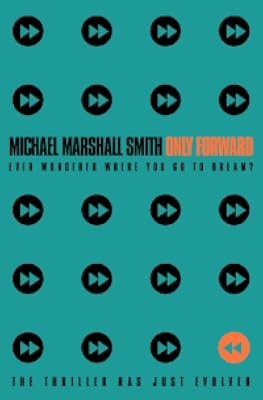
Only Forward
by Michael Marshall Smith
On This Page
Description
Michael Marshall Smith's surreal, groundbreaking, and award-winning debut which resonates with wild humour interlaced with dark recollections of an emotional minefield. May we introduce you to Stark. Oh, and by the way -- good luck. Stark is the private investigator who goes to work when Something Happens to you. And when a Something happens it's no good chanting 'go away go away go away' and cowering in a corner, because a Something always comes from your darkest past and won't be beaten show more until you face it. And that's not easy in a city where reality is twisting and broken, a world in which friends can become enemies in a heartbeat -- and where your most secret fear can become a soul-shredding reality. And the worst of it is, for this nightmare you don't even have to be asleep... Considered a modern classic, and consistently featured in lists of Books To Read Before Your Head Explodes, ONLY FORWARD is a novel you'll never forget. show lessTags
Recommendations

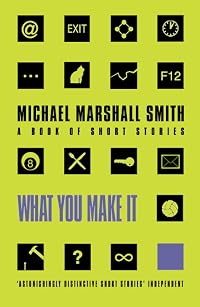
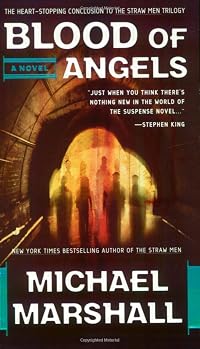
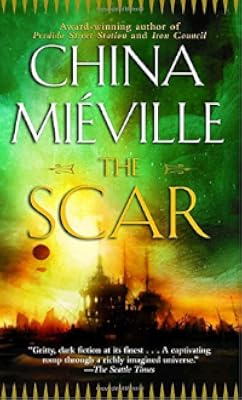
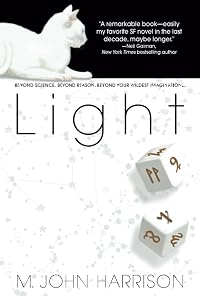

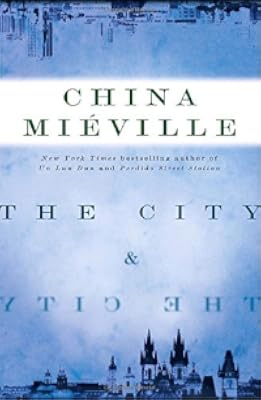
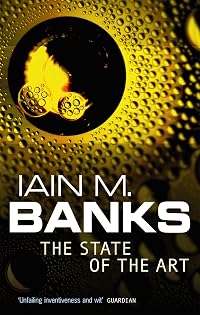
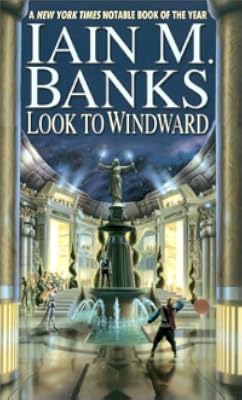
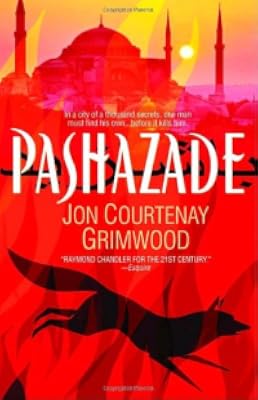





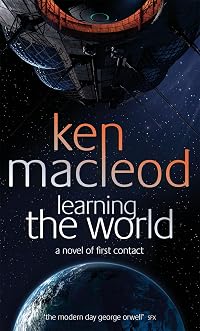
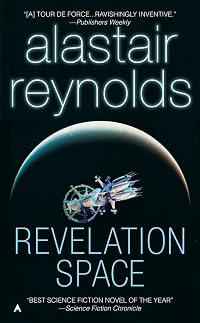
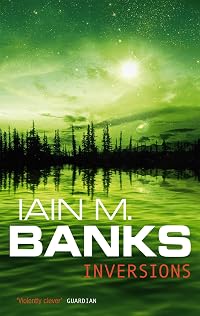
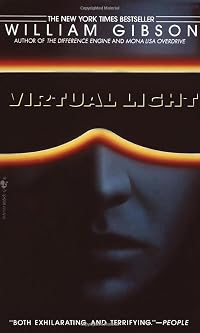
Member Recommendations
Member Reviews
Holy shit. That was one of the most intense, crazy, twisty, emotional, and powerful novels I think I've ever read. The world-building is amazingly good, but there is so much more to this than tthat. I literally gasped throughout the second half. Not what I was expecting, but in a complex, exhilarating way.
Fantastic! A virtuoso first novel that begins, ostensibly, as a detective yarn with a sense of humor but that takes the reader to weird, unexpected places. It's great fun to see this novel's characters interact with the playfully strange settings that Smith has concocted for them, which often blur the line between lifestyle choice, sense perception, and self. There are parts to the novel that recall the heavily pixelated video games that were new when the novel was first published. There are others that describe a theory of a more permanent self and address deep trauma, healing and the slow, inevitable, accretion of experience. There are moments that recall spy novel chase scenes and fantasy-novel battles. And there are a lot of jokes show more and obscure British slang terms: "Only Forward" belongs squarely in the tradition of humorous, off-kilter British science fiction. Not all of this works all the time -- there were moments when I grew kind of tired of the cartoon ultraviolence -- but so much of it, especially the stuff dealing with human emotions and memory, does. While it's true that Smith's prose can get a bit purple by the standards of literary fiction, but the more plot-oriented sections fairly sparkle with acrid British wit and top-shelf, perfectly deadpan funny bits and puns. This Smith guy can really write.
Speaking of, "Only Forward" is one of those books that makes me think that demolishing the boundaries between literature and genre fiction -- which I tend to be pretty mindful of, even when I leave my book snob comfort zone -- might be the right thing to do after all. It's not just Smith's obvious talents as a writer that make this one an interesting hybrid: by borrowing ideas and images from non-literary genres, seems to expand the repertoire of elements that can be used to discuss really serious literary themes. It is, in a certain sense, a book about how one might survive in a world that seems increasingly fractured, digitized, and creepily responsive to consumer needs while being unable to deal with the sort of basic emotional pain that has haunted humans since we lived in caves. I'd never even heard of the author before picking up "Only Forward" during a Kindle sale: I've got a more of his books on my little device now. This one is highly recommended to SF fans, readers who don't venture too far beyond the Literary neighborhood, and readers who love cats. And that's an awful lot of people. show less
Speaking of, "Only Forward" is one of those books that makes me think that demolishing the boundaries between literature and genre fiction -- which I tend to be pretty mindful of, even when I leave my book snob comfort zone -- might be the right thing to do after all. It's not just Smith's obvious talents as a writer that make this one an interesting hybrid: by borrowing ideas and images from non-literary genres, seems to expand the repertoire of elements that can be used to discuss really serious literary themes. It is, in a certain sense, a book about how one might survive in a world that seems increasingly fractured, digitized, and creepily responsive to consumer needs while being unable to deal with the sort of basic emotional pain that has haunted humans since we lived in caves. I'd never even heard of the author before picking up "Only Forward" during a Kindle sale: I've got a more of his books on my little device now. This one is highly recommended to SF fans, readers who don't venture too far beyond the Literary neighborhood, and readers who love cats. And that's an awful lot of people. show less
"I made a mental note to tell the next Street Engineer I met that they were doing a damn fine job. Sort of an embarrassing thing to think, but I knew it was safe; I always lose my mental notes."
Glad I'm not the only one. I had some intelligent things to say about Only Forward, but I can't find my mental sticky notes. I do know that I found the beginning undeniably clever and almost unputdownable. My reading updates show chuckling and snerking through the first hundred pages.
"Working out what that might be was going to be important, and I put a memo in my mental file to have a crack at it when I could be bothered. My mental memos are different from my mental notes: I always do something about them eventually, and they're typed so I can show more read what they say."
And then suddenly my updates stopped, because, damn, that shit started to get real, going from world-weary, cynical humor to semi-thriller to something deeper and more devastating.
"I could defend myself, say it isn't easy... but I won't, because that's not the point. The point is too deep, too personal and too small to explain. The point is not for spectators. Nothing that's important, really important, looks impressive, because it only means something to the person that does it. Staying alive, for example, not dying: it looks so easy, but sometimes it's almost too difficult to be borne."
A really good book that is unlike most things I've read, but perhaps similar in tone and scope to [b:The Gone-Away World|3007704|The Gone-Away World|Nick Harkaway|https://i.gr-assets.com/images/S/compressed.photo.goodreads.com/books/1328322676l/3007704._SX50_.jpg|3038235], [b:Cursed|6720404|Cursed|Jeremy C. Shipp|https://i.gr-assets.com/images/S/compressed.photo.goodreads.com/books/1348068211l/6720404._SY75_.jpg|6916531] or [b:Pandemonium|3191189|Pandemonium|Daryl Gregory|https://i.gr-assets.com/images/S/compressed.photo.goodreads.com/books/1320403877l/3191189._SX50_.jpg|3224200]. Probably some people might feel there is a similarity with Vonnegut, but it's been a very long time since I read him, and I found Stark to be far more accessible than any of Vonnegut's characters. All take a skewed view of the world, people sort of making connections and an emotional undercurrent to make something quite interesting. First published in 1994, it feels amazingly current in 2017. Note: also an award winner, with the British Fantasy Award in 1995 and the Philip K. Dick award in 2000.
Set in a Britain of the future, it is one we can almost recognize, where cities have become something like gated communities known as Neighborhoods, where people of a kind can band together and really support what they believe in. Some of these cities make perfect sense, such as Idyll, "an old Neighborhood, where people come and go quietly and peacefully. They don't care about anyone else, and they have no argument with anyone. They just want to be left alone to be kind and gentle to each other. I know that sounds kind of weird, but it works for them." Some are just futuristically weird, like Colour, where the narrator, Stark lives. Colour has color rules, including a strict after-dark black jacket code.
Someone who is clearly quite important to Stark, although it isn't exactly clear how or why, asks him for a favor, to find someone who has gone missing from the Type A Neighborhood. It is unprecedented, and while Stark wonders "which kind of job this might be," it seems straightforward so he agrees.
Much of the story is like that; Smith tells us what we need to know, but we know Stark is holding things back. And that's fine. He's wit is as dry as pixie dust, but it's as funny as hell. For instance, take his description of trying to answer the phone:
"It was a long and arduous journey, full of trials, setbacks and heroic derring-do on my part. I was almost there, for example, when I ran out of cigarettes, and had to go back to fetch another packet."
Then there's catching up with an old friend:
"We chewed the rag for a while. I recapped the last few months, mentioned a couple of mutual acquaintances I'd run into. Ji told me his land had expanded another half mile to the north, which explained his bars continued existence, recounted a couple of especially horrific successes and used the word "fuck" just over 400 times."
At his business meeting:
"'Uh-huh,' I said, reeling under the impact of so much bad film dialogue. "So put a trace on him. "
The humor eventually fades somewhat, leaving a different, more emotionally sincere tone in its wake. It ended up having more of an emotional impact than I expected, particularly for a book that had me giggling through the beginning.
Visiting different Neighborhoods gives Stark a chance to engage in entertaining social commentary. It's soon apparent Mr. A has left his Neighborhood, which means we get to visit some of the other ones nearby. The world-building doesn't make a ton of literal sense; I suppose one could think of it as metaphorical, and indeed it is a commentary on how we choose to live with those like us, but his vision is also extremely interesting.
I unquestionably enjoyed it most of the way through, but found the ending... not at all what I expected. It took a turn that didn't entirely work for me and called into question most of the preceding story. That's an unsettling feeling to have in a book, but I think it was unsettling in a good way, raising questions about authorial intent, narrators, etc. Wastrel has a nice analysis of the book. I admit, most of that didn't occur to me when reading, which is, I think, the better kind of revolutionary story. It was only much later after reading that I thought of the Vonnegut comparison, who honestly, was kind of a chore in high school, even when I read him for fun. I actually started re-reading this all over again, enjoying it just as much. One of those book you keep thinking about after finishing. Read at your own risk.
Four and a half stars, rounding up, because there aren't many books I remember so well three months after finishing. show less
Glad I'm not the only one. I had some intelligent things to say about Only Forward, but I can't find my mental sticky notes. I do know that I found the beginning undeniably clever and almost unputdownable. My reading updates show chuckling and snerking through the first hundred pages.
"Working out what that might be was going to be important, and I put a memo in my mental file to have a crack at it when I could be bothered. My mental memos are different from my mental notes: I always do something about them eventually, and they're typed so I can show more read what they say."
And then suddenly my updates stopped, because, damn, that shit started to get real, going from world-weary, cynical humor to semi-thriller to something deeper and more devastating.
"I could defend myself, say it isn't easy... but I won't, because that's not the point. The point is too deep, too personal and too small to explain. The point is not for spectators. Nothing that's important, really important, looks impressive, because it only means something to the person that does it. Staying alive, for example, not dying: it looks so easy, but sometimes it's almost too difficult to be borne."
A really good book that is unlike most things I've read, but perhaps similar in tone and scope to [b:The Gone-Away World|3007704|The Gone-Away World|Nick Harkaway|https://i.gr-assets.com/images/S/compressed.photo.goodreads.com/books/1328322676l/3007704._SX50_.jpg|3038235], [b:Cursed|6720404|Cursed|Jeremy C. Shipp|https://i.gr-assets.com/images/S/compressed.photo.goodreads.com/books/1348068211l/6720404._SY75_.jpg|6916531] or [b:Pandemonium|3191189|Pandemonium|Daryl Gregory|https://i.gr-assets.com/images/S/compressed.photo.goodreads.com/books/1320403877l/3191189._SX50_.jpg|3224200]. Probably some people might feel there is a similarity with Vonnegut, but it's been a very long time since I read him, and I found Stark to be far more accessible than any of Vonnegut's characters. All take a skewed view of the world, people sort of making connections and an emotional undercurrent to make something quite interesting. First published in 1994, it feels amazingly current in 2017. Note: also an award winner, with the British Fantasy Award in 1995 and the Philip K. Dick award in 2000.
Set in a Britain of the future, it is one we can almost recognize, where cities have become something like gated communities known as Neighborhoods, where people of a kind can band together and really support what they believe in. Some of these cities make perfect sense, such as Idyll, "an old Neighborhood, where people come and go quietly and peacefully. They don't care about anyone else, and they have no argument with anyone. They just want to be left alone to be kind and gentle to each other. I know that sounds kind of weird, but it works for them." Some are just futuristically weird, like Colour, where the narrator, Stark lives. Colour has color rules, including a strict after-dark black jacket code.
Someone who is clearly quite important to Stark, although it isn't exactly clear how or why, asks him for a favor, to find someone who has gone missing from the Type A Neighborhood. It is unprecedented, and while Stark wonders "which kind of job this might be," it seems straightforward so he agrees.
Much of the story is like that; Smith tells us what we need to know, but we know Stark is holding things back. And that's fine. He's wit is as dry as pixie dust, but it's as funny as hell. For instance, take his description of trying to answer the phone:
"It was a long and arduous journey, full of trials, setbacks and heroic derring-do on my part. I was almost there, for example, when I ran out of cigarettes, and had to go back to fetch another packet."
Then there's catching up with an old friend:
"We chewed the rag for a while. I recapped the last few months, mentioned a couple of mutual acquaintances I'd run into. Ji told me his land had expanded another half mile to the north, which explained his bars continued existence, recounted a couple of especially horrific successes and used the word "fuck" just over 400 times."
At his business meeting:
"'Uh-huh,' I said, reeling under the impact of so much bad film dialogue. "So put a trace on him. "
The humor eventually fades somewhat, leaving a different, more emotionally sincere tone in its wake. It ended up having more of an emotional impact than I expected, particularly for a book that had me giggling through the beginning.
Visiting different Neighborhoods gives Stark a chance to engage in entertaining social commentary. It's soon apparent Mr. A has left his Neighborhood, which means we get to visit some of the other ones nearby. The world-building doesn't make a ton of literal sense; I suppose one could think of it as metaphorical, and indeed it is a commentary on how we choose to live with those like us, but his vision is also extremely interesting.
I unquestionably enjoyed it most of the way through, but found the ending... not at all what I expected. It took a turn that didn't entirely work for me and called into question most of the preceding story. That's an unsettling feeling to have in a book, but I think it was unsettling in a good way, raising questions about authorial intent, narrators, etc. Wastrel has a nice analysis of the book. I admit, most of that didn't occur to me when reading, which is, I think, the better kind of revolutionary story. It was only much later after reading that I thought of the Vonnegut comparison, who honestly, was kind of a chore in high school, even when I read him for fun. I actually started re-reading this all over again, enjoying it just as much. One of those book you keep thinking about after finishing. Read at your own risk.
Four and a half stars, rounding up, because there aren't many books I remember so well three months after finishing. show less
Science fiction and crime are a wonderful paring, mix with a dollop of the surreal and you get something special.
PI Stark lives in The City. A place where people gravitate to neighbourhoods full of like-minded people. So those who want silence go live in Quiet, those who love the cut and thrust and business never stop working in The Action Centre. Into this Stark gets a missing person case. A seemingly straightforward case, but obviously it’s going to be tangled and dangerous. It’s going to involve gun fights and mad escapes and cats. It’s going to finally make him confront who he is.
The action in the first is superb and characters fall into their allotted place nicely but it all really shines due the setting which is the star of show more the show for the 1st half (but never overwhelms the story). It's just so very cool and evocative; from the city of colour (where walls harmonise with your outfit) to the city of cats (where only cat lovers are allowed to visit), from Red (where the violent gangsters live) to Stable (which hides itself off from reality with tall walls and an enclosed eco-system).
Well maybe I lied about the characters. Our narrator is unreliable, he tells you only what is relevant and what's relevant constantly changes. It is a masterful hook, makes you feel at sea and uncertain but desperate to read more and you are certainly rewarded when the book starts shifting to be something else. No plot spoilers though. It could be jarring I suppose but I found it much too clever end enjoyable for that. show less
PI Stark lives in The City. A place where people gravitate to neighbourhoods full of like-minded people. So those who want silence go live in Quiet, those who love the cut and thrust and business never stop working in The Action Centre. Into this Stark gets a missing person case. A seemingly straightforward case, but obviously it’s going to be tangled and dangerous. It’s going to involve gun fights and mad escapes and cats. It’s going to finally make him confront who he is.
The action in the first is superb and characters fall into their allotted place nicely but it all really shines due the setting which is the star of show more the show for the 1st half (but never overwhelms the story). It's just so very cool and evocative; from the city of colour (where walls harmonise with your outfit) to the city of cats (where only cat lovers are allowed to visit), from Red (where the violent gangsters live) to Stable (which hides itself off from reality with tall walls and an enclosed eco-system).
Well maybe I lied about the characters. Our narrator is unreliable, he tells you only what is relevant and what's relevant constantly changes. It is a masterful hook, makes you feel at sea and uncertain but desperate to read more and you are certainly rewarded when the book starts shifting to be something else. No plot spoilers though. It could be jarring I suppose but I found it much too clever end enjoyable for that. show less
Well. That was an intense ride.
The City and all its quirky talking computers and robots gave off the vibe of Toon Town from the future, or like those old Disney cartoons where everything on screen--from the hill to the trees to the sun itself--keep bouncing in place, expanding and shrinking, a world alive.
The surreality, the silliness of the first half of the novel had me questioning whether it was entirely unreal. That state of ambiguous suspension was much more interesting than the trip into Jeamland, when things became straight-up dreamlike and delusional.
The ending was not surprising. The novel doesn't really make sense upon close inspection, from an SF-nal perspective. Why should traveling into Jeamland take Stark and Rafe 100s show more of years into the future? And if it took them once into the future, why are there no jumps into farther futures despite repeated trips in and out of Jeamland? Why should Rafe hate Stark so much, the given reason didn't explain anything. Unless I'm to infer that he hated Stark having more-intelligent girlfriends, more-loving parents, compared to his own family history that produced a bad boy? The ending is really a version of--and then I woke up, and realized it was all a dream. Except this one would be--and then I woke up, and realized it was all caused by my dream bleeding into real life.
I really liked Alkland. This poor man who essentially got caught up in Stark's trauma wreaking havoc in the real world, suffered a ton, and then died without ever waking up from his hideous dream suffering. Stark ended up finding contentment, having worked through HIS trauma and now free to explore a future, saying that even he deserved it. I gueeeeess. Except he built this new and lighthearted future on an innocent man's death.
For all the flaws, it's a very unusual novel, and works in parts as SF, adventurous travelogue, meta-fiction about psychology. I would recommend it. show less
The surreality, the silliness of the first half of the novel had me questioning whether it was entirely unreal. That state of ambiguous suspension was much more interesting than the trip into Jeamland, when things became straight-up dreamlike and delusional.
The ending was not surprising. The novel doesn't really make sense upon close inspection, from an SF-nal perspective. Why should traveling into Jeamland take Stark and Rafe 100s
I really liked Alkland. This poor man who essentially got caught up in Stark's trauma wreaking havoc in the real world, suffered a ton, and then died without ever waking up from his hideous dream suffering. Stark ended up finding contentment, having worked through HIS trauma and now free to explore a future, saying that even he deserved it. I gueeeeess. Except he built this new and lighthearted future on an innocent man's death.
For all the flaws, it's a very unusual novel, and works in parts as SF, adventurous travelogue, meta-fiction about psychology. I would recommend it. show less
This review and others posted over at my blog.
This book is utterly weird and I loved it! It is the first book from my Mr. B’s subscription that my girl Melissa gifted me for my birthday. I’d never heard of M.M. Smith before (he also writes as just Michael Smith) and now I need to get my hands on more of his work.
If you like sci-fi that is also fantastical and strange and at times, really disgusting and scary, then this is the book for you. The description on the back really didn’t prepare me for anything that happened in this book, other than Stark being a detective. And that’s ok!
This is a tough book to describe and part of my enjoyment definitely came from not knowing what the fuck was going to happen next and learning the show more “rules” of this sci-fi universe. Stark is the lovable loser type (tropey, but it works so well with detectives that I don’t mind) who can’t seem to get his life in control or his advanced technology to listen to him. He does really care for his cat though. Who doesn’t love a man who values cats!?
Only Forward is one of those stories that doesn’t spell everything out for you. This is neither good nor bad – at times I enjoy a lot of detail and a rundown of the world’s rules, etc. but other times I like to figure things out for myself. This doesn’t mean I figured out everything about the Neighborhoods and the technology though! Far from it. Per usual, I think I was a little lost. But in a good way. I filled in some details myself and decided not to wonder too hard about others, which I think is what Smith is going for. This is a book more about the experiences and characters, not about knowing precisely how everything in their world works.
While reading I laughed, I mumbled to myself, I said “ew” more than a few times and scratched my head a lot. This was a very enjoyable read and I was certain it was a series. I mean, what book about a detective isn’t!? It’s the perfect set up! Alas, this appears to be a standalone (at least, from what I could tell during my furious late-night research after I finished this – Smith’s website doesn’t allude to any other Stark books) and I’m disappointed.
I’m happy to have discovered a new author to love though. If you’re into weird sci-fi (weird-fi? Weird-sci?) then I think you should give this a shot. If it helps sweeten the deal, Neil Gaiman does the forward in my edition. If Neil Gaiman enjoyed a book enough to write a forward, I’m certainly willing to give it a shot! show less
This book is utterly weird and I loved it! It is the first book from my Mr. B’s subscription that my girl Melissa gifted me for my birthday. I’d never heard of M.M. Smith before (he also writes as just Michael Smith) and now I need to get my hands on more of his work.
If you like sci-fi that is also fantastical and strange and at times, really disgusting and scary, then this is the book for you. The description on the back really didn’t prepare me for anything that happened in this book, other than Stark being a detective. And that’s ok!
This is a tough book to describe and part of my enjoyment definitely came from not knowing what the fuck was going to happen next and learning the show more “rules” of this sci-fi universe. Stark is the lovable loser type (tropey, but it works so well with detectives that I don’t mind) who can’t seem to get his life in control or his advanced technology to listen to him. He does really care for his cat though. Who doesn’t love a man who values cats!?
Only Forward is one of those stories that doesn’t spell everything out for you. This is neither good nor bad – at times I enjoy a lot of detail and a rundown of the world’s rules, etc. but other times I like to figure things out for myself. This doesn’t mean I figured out everything about the Neighborhoods and the technology though! Far from it. Per usual, I think I was a little lost. But in a good way. I filled in some details myself and decided not to wonder too hard about others, which I think is what Smith is going for. This is a book more about the experiences and characters, not about knowing precisely how everything in their world works.
While reading I laughed, I mumbled to myself, I said “ew” more than a few times and scratched my head a lot. This was a very enjoyable read and I was certain it was a series. I mean, what book about a detective isn’t!? It’s the perfect set up! Alas, this appears to be a standalone (at least, from what I could tell during my furious late-night research after I finished this – Smith’s website doesn’t allude to any other Stark books) and I’m disappointed.
I’m happy to have discovered a new author to love though. If you’re into weird sci-fi (weird-fi? Weird-sci?) then I think you should give this a shot. If it helps sweeten the deal, Neil Gaiman does the forward in my edition. If Neil Gaiman enjoyed a book enough to write a forward, I’m certainly willing to give it a shot! show less
Weird. Really. Hard to classify too. The first half of the book follows Stark, who is hired to find an important person, who is believed to have been kidnapped. He lives in an interesting alternative world, with many oddball friends and neighborhoods, my favorite of which is the Cat Neighborhood. About halfway through, everything changes as we are abruptly transitioned into a dreamworld, with little upfront explanation. As the explanation unfolds bit by bit, we long for a cohesive end. There is an ending, but it was unsatisfying as we learned how Stark became who he is. Perhaps most frustrating, at least to me, was the introduction of central and pivotal characters in the last 20-25 pages.
Members
- Recently Added By
Lists

The Guardian's 1000 Novels Everyone Must Read
1,005 works; 552 members
Author Information

86+ Works 8,438 Members
Some Editions
Awards and Honors
Series
Belongs to Publisher Series
Common Knowledge
- Canonical title
- Only Forward
- Original title
- Only Forward
- Original publication date
- 1994-04
- People/Characters
- Stark; Zenda Renn; Fell Alkland
- Important places
- The City; Colour; Red
- Dedication
- For my family - David, Margaret and Tracey - and in memory of Mr. Cat
- First words
- Once there was a boy in a house.
- Quotations
- You haven't seen untidiness until you've seen a room where gravity has failed twice in different directions.
- Last words
- (Click to show. Warning: May contain spoilers.)Everyone deserves a happy ending. Even me.
- Blurbers
- Barker, Clive
- Original language*
- Englisch
*Some information comes from Common Knowledge in other languages. Click "Edit" for more information.
Classifications
Statistics
- Members
- 1,348
- Popularity
- 17,880
- Reviews
- 43
- Rating
- (4.01)
- Languages
- 7 — Czech, Dutch, English, French, German, Japanese, Spanish
- Media
- Paper, Ebook
- ISBNs
- 22
- ASINs
- 4