On This Page
Description
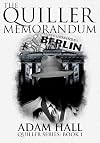
You are a secret agent working for the British in Berlin. You are due to go home on leave, but you are being followed by the enemy—or your own people. A man meets you in the theater and briefs you on a plot to revive the power of Nazi Germany. You do not believe him, but you remember that one of the suspects mentioned was a senior SS officer you met while you were working as a spy in Nazi Germany. Next you make contact with a beautiful girl who may know something. Someone tries to kill show more both of you.Your name is Quiller. You are the hero of an extraordinary novel that shows how a spy works, how messages are coded and decoded, how contacts are made, how a man reacts under the influence of truth drugs, and that traces the story of a vastly complex, entertaining, convincing, and sinister plot.
. show less
Tags
Recommendations




















Member Reviews
Impressive novel, very well written and flawless in some passages. Reading it in 2010 takes you into another world - a past that shouldn't seem so distant, but is. It's 1965 or so, and there are still Nazis loose in Germany, hiding behind new identities, playing a cat and mouse game with the forces of the Allies in Berlin, while plotting their return - to steal a line from Norma Desmond. Their nemesis is a man known only as Quiller, an agent from a mysterious Bureau, headquartered in London. Quiller has a long memory, as we find out, as we slowly begin to understand how he came to know so much about Nazi death camps. There is nothing in this novel the least bit frivolous - no Bond-like humor as Quiller gets himself into some tight show more situations and through them comes to understand better his enemies' plans and what they are hoping to find out from him. Some of the best passages in the book are Quiller's interior calculations, as he tries to determine, for instance, how he escaped alive from a situation that looked like certain death. The turning points in the book, however, rely on Quiller's miscalculations - he is not a flawless thinking machine. At times, towards the end, it gets just a little too mental; when necessary, Quiller can make himself believe the total opposite of the truth, if it suits his purposes of the moment. In that sense, he is as frightening and single-minded as those he pursues - and just as cold blooded in accomplishing his mission. Perhaps that is what makes the character so fascinating.
This is the first book I have read in the series, and the first book by this author under any of his various pseudonyms. I will undoubtedly pick up the next in the series, but I'm not sure how Hall will manage to keep up this type of intensity novel after novel. show less
This is the first book I have read in the series, and the first book by this author under any of his various pseudonyms. I will undoubtedly pick up the next in the series, but I'm not sure how Hall will manage to keep up this type of intensity novel after novel. show less
Quiller vs Phönix
A review of the Spectrum eBook (March 4, 2019) of the Collins hardcover originally published as [book:The Berlin Memorandum|1304605] (UK 1965).
I had read most of the early Quiller books back in the 1970s and enjoyed this revisit to the early days of the "shadow executive" as he was frequently labelled in the later books. Quiller was always excessive in his descriptions of espionage tradecraft and the books were the most deglamourizing of all of the post-James Bond golden age of cold war espionage writing in the 1960s (i.e. the early years of John le Carré, Len Deighton a.o.).
Quiller is not as undercover as he often later was. The initial mission has him working with the so-called Z Commission Polizei in West Germany show more in order to identify and prosecute Nazi war criminals. His mission is extended when he learns that another agent has been assassinated by a shadowy neo-Nazi organization known as Phönix. Quiller's new mission is to identify a former SS commander who is back in Germany and planning a coup d'etat.
The book's structure sets the template for the future series. Events are not always chronological as we have constant flashbacks and flashforwards throughout. Quiller resents his field controllers and argues with them. He takes pride in not carrying guns or gadgets. The tradecraft detail is overly descriptive about such things as tailing targets, how to persevere under interrogation and torture, how to withstand truth drugs, how to code break a letter substitution cypher, etc. All of these will likely be wearisome to the casual reader who is only looking for a standard suspense thriller.
The pleasure in this re-read was to discover the occasional poetic similes and metaphors in Adam Hall's writing which I had overlooked in the past. Lines like "pin me and drag me along the wall like a paintbrush dipped in red" and "dreams are gone in the first few seconds of waking, like ghosts at cockcrow" and "if anything ever talked, it wouldn’t be me. It would be the half-dead remains of the thing called Quiller, jabbering in its death throes" conveyed a brutal and stark noir beauty as events led to the final confrontation.
Trivia and Links
The book was retitled from the original The Berlin Memorandum (UK) to The Quiller Memorandum for US release. It was then adapted as a feature film with that same title The Quiller Memorandum"> (1966) directed by Michael Anderson with a script by [author:Harold Pinter|1197] and starring American actor George Segal as the lead character. The author was not happy with the adaptation. You can watch a trailer for the film on YouTube here.
Adam Hall was one of the many pennames used by author [author:Elleston Trevor|141844] (1920-1995) who was born as Trevor Dudley-Smith. His most popular books were the Quiller series (1965-1996) of 19 novels which were also adapted into a one season TV series Quiller (1975) although only a single episode was an adaptation of a novel. show less
A review of the Spectrum eBook (March 4, 2019) of the Collins hardcover originally published as [book:The Berlin Memorandum|1304605] (UK 1965).
I had read most of the early Quiller books back in the 1970s and enjoyed this revisit to the early days of the "shadow executive" as he was frequently labelled in the later books. Quiller was always excessive in his descriptions of espionage tradecraft and the books were the most deglamourizing of all of the post-James Bond golden age of cold war espionage writing in the 1960s (i.e. the early years of John le Carré, Len Deighton a.o.).
Quiller is not as undercover as he often later was. The initial mission has him working with the so-called Z Commission Polizei in West Germany show more in order to identify and prosecute Nazi war criminals. His mission is extended when he learns that another agent has been assassinated by a shadowy neo-Nazi organization known as Phönix. Quiller's new mission is to identify a former SS commander who is back in Germany and planning a coup d'etat.
The book's structure sets the template for the future series. Events are not always chronological as we have constant flashbacks and flashforwards throughout. Quiller resents his field controllers and argues with them. He takes pride in not carrying guns or gadgets. The tradecraft detail is overly descriptive about such things as tailing targets, how to persevere under interrogation and torture, how to withstand truth drugs, how to code break a letter substitution cypher, etc. All of these will likely be wearisome to the casual reader who is only looking for a standard suspense thriller.
The pleasure in this re-read was to discover the occasional poetic similes and metaphors in Adam Hall's writing which I had overlooked in the past. Lines like "pin me and drag me along the wall like a paintbrush dipped in red" and "dreams are gone in the first few seconds of waking, like ghosts at cockcrow" and "if anything ever talked, it wouldn’t be me. It would be the half-dead remains of the thing called Quiller, jabbering in its death throes" conveyed a brutal and stark noir beauty as events led to the final confrontation.
Trivia and Links
The book was retitled from the original The Berlin Memorandum (UK) to The Quiller Memorandum for US release. It was then adapted as a feature film with that same title The Quiller Memorandum"> (1966) directed by Michael Anderson with a script by [author:Harold Pinter|1197] and starring American actor George Segal as the lead character. The author was not happy with the adaptation. You can watch a trailer for the film on YouTube here.
Adam Hall was one of the many pennames used by author [author:Elleston Trevor|141844] (1920-1995) who was born as Trevor Dudley-Smith. His most popular books were the Quiller series (1965-1996) of 19 novels which were also adapted into a one season TV series Quiller (1975) although only a single episode was an adaptation of a novel. show less
WW2 has been over for 15 years and the Cold War is beginning to gain momentum. British agent Quller is set loose in Berlin to undermine a neo-Nazi organisation that is plotting a spectacular atrocity that will overrun the German government and restore the Party to power. Quiller chooses to work alone, with no weapon, no contacts and only a paper-thin cover story.
I haven't seen the movie of this and I suspect it would work better than the novel did. There is an exciting thriller in here, but it was buried under the strangeness of the descriptions of Quiller's thought processes and apparently superhuman ability to analyse every life or death situation to the nth degree before deciding which way to move or whether to duck. Quiller only had show more to set foot on a street and would know instantly whether or not he was being followed and there seemed no limit to his capacity for escape, evasion and awesome tradecraft. I just didn't find him a believable character (like Bond but without the charisma). show less
I haven't seen the movie of this and I suspect it would work better than the novel did. There is an exciting thriller in here, but it was buried under the strangeness of the descriptions of Quiller's thought processes and apparently superhuman ability to analyse every life or death situation to the nth degree before deciding which way to move or whether to duck. Quiller only had show more to set foot on a street and would know instantly whether or not he was being followed and there seemed no limit to his capacity for escape, evasion and awesome tradecraft. I just didn't find him a believable character (like Bond but without the charisma). show less
Content warning: this book contains a scene implying rape, as well as descriptions of Nazi atrocities during the Second World War.
West Berlin, the 1960s: Quiller is a spy for “The Bureau” whose main task is to unmask and take down neo-Nazis. During the war, he infiltrated concentration camps and liberated as many prisoners as he could. He is haunted by what he saw in the camps and single-minded in the pursuit of his work. He insists on working without cover from the Bureau, even if this means his death.
This is a grittier sort of thriller. It felt a bit more violent than le Carré or Deighton, but shared their disillusionment with the world at large. In that sense this book is definitely not like James Bond. It was certainly gripping show more (I read it in maybe 24 hours), but it’s not the sort of thing I’m routinely seeking out in my reading, mainly for the items in the content warning above. Also, there is only one female character in the whole book, sadly typical of a 1960s thriller.
Interesting fact: this book was written by Elleston “Flight of the Phoenix” Trevor under a pen name. So if you liked that book, you might like this one. And if you like this one there are 18 more books in the series to keep you busy. I’ll stop with this one, though. show less
West Berlin, the 1960s: Quiller is a spy for “The Bureau” whose main task is to unmask and take down neo-Nazis. During the war, he infiltrated concentration camps and liberated as many prisoners as he could. He is haunted by what he saw in the camps and single-minded in the pursuit of his work. He insists on working without cover from the Bureau, even if this means his death.
This is a grittier sort of thriller. It felt a bit more violent than le Carré or Deighton, but shared their disillusionment with the world at large. In that sense this book is definitely not like James Bond. It was certainly gripping show more (I read it in maybe 24 hours), but it’s not the sort of thing I’m routinely seeking out in my reading, mainly for the items in the content warning above. Also, there is only one female character in the whole book, sadly typical of a 1960s thriller.
Interesting fact: this book was written by Elleston “Flight of the Phoenix” Trevor under a pen name. So if you liked that book, you might like this one. And if you like this one there are 18 more books in the series to keep you busy. I’ll stop with this one, though. show less
Sort of a mixed effect clouds this novel. Adam Hall/Elleston Trevor certainly produces the unexpected. The book is built around a continual number of reveals. Each reveal, in turn, provides a separate level of truth--or, as it may be, self-deception. In many ways, it creates mystery through the notion of exploring "mystery" itself. Hall's truncated writing style contributes to this effect. Also the increasing descent into the minutiae of spycraft plays into the reveal, plot-wise as well as psychologically. So, at this level, The Berlin Memorandum, aka The Quiller Memorandum is quite an impressive piece of work.
But many times you come to a work with other expectations. A Cold War spy novel set in West Berlin is among the most expectation show more laden stories you can try to create. And I suppose I wanted to see atmosphere. But there is very little of it. Perhaps because to load the story with atmosphere would interfere with the psychological reveals mentioned above, it may have been impossible to carry this out. At any rate, the Cold War Berlin that I knew personally doesn't exist in this novel. It's hidden behind mists, clouds, and a clutter of streets--as Quiller engages, loses, and re-engages with his "tags." Just as a sidenote, the film version of the novel does impart enormous atmosphere into its production. But it does so at the cost of the layering of the reveals. The movie also tidies up the plot, too. Perhaps in a way the author would not have approved??? For confusion and clarity were never meant to be the end result of a spy game conducted between conspiring ex-Nazis and British secret service agents in an occupied city under the control of four different countries. show less
But many times you come to a work with other expectations. A Cold War spy novel set in West Berlin is among the most expectation show more laden stories you can try to create. And I suppose I wanted to see atmosphere. But there is very little of it. Perhaps because to load the story with atmosphere would interfere with the psychological reveals mentioned above, it may have been impossible to carry this out. At any rate, the Cold War Berlin that I knew personally doesn't exist in this novel. It's hidden behind mists, clouds, and a clutter of streets--as Quiller engages, loses, and re-engages with his "tags." Just as a sidenote, the film version of the novel does impart enormous atmosphere into its production. But it does so at the cost of the layering of the reveals. The movie also tidies up the plot, too. Perhaps in a way the author would not have approved??? For confusion and clarity were never meant to be the end result of a spy game conducted between conspiring ex-Nazis and British secret service agents in an occupied city under the control of four different countries. show less
Adam Hall (one of Elleston Trevor' many pseudonyms) wrote many classic spy stories, and this one is considered one of his best. Apparently, it was made into a classic movie and there is even a website compiled by Trevor devotees. He was the author of [book:Flight of the Phoenix] which became a really great movie. His Quiller books have been compared favorably to Le Carre' novels although the first was written before Le Carre' Trevor himself has noted the similarity but claims his Quiller is much less intellectual. Quiller is a secret agent, a spy, and in this early work he has been assigned to track down a neo-Nazi organization (this was written in the sixties) called Phoenix that is directed by Heinrich Zossen. Quiller is familiar with show more Zossen whom he last saw at an execution pit. During the war, Quiller had operated under cover as a German soldier and attempted to save the lives of Jews. He considered his mission a failure. Indeed, much of what we know about Quiller comes from negatives. He doesn' smoke or drink, has no relatives, apparently owns nothing, and his relationship with his controllers could best be described as untrusting. He knows they manipulate him, but he must put up with it because they are his only entree into the shadowy moral never-never-land that he thrives in. He despises fools and dilettantes, priding himself in his professionalism. He also refuses to carry a gun, claiming that not having one gives him a substantial psychological edge over his enemies. There' a great explanation of his rationale that I can' resist quoting in its entirety because it accurately reflects my own position. Quiller has been drugged and captured by the Phoenix group and is being held for interrogation. There are about four men in the room and he explains why not having a weapon provides him with an advantage. " you have the advantage unarmed providing the enemy knows that you are....Knowing you have no gun they' not afraid of you. There is a natural spur to alertness. Unarmed you disarm them. . . .A gun is psychologically a penis substitute and a symbol of power, the age range of toy shop clientele begins at about six or seven, rises sharply just before puberty and declines rapidly soon after the discovery of the phallus and its power. From then on guns are for kids and the effete freaks and misfits who must seek psycho-orgasmic relief shooting pheasants." Great line. So Quiller must rely on his wits (refreshing change). show less
I don't usually read spy/thriller novels, but it was a gift and I'll read anything about hunting down Nazis. I really enjoyed this book. It was like every spy movie I ever saw finally made sense to me because I was inside the spy's head...sooo that's why they do that! became an exclamation I uttered every few chapters.
I have a pile of books too huge to think about adding any more Quiller books to it right now, but I am interested in following this character a bit more. I recommended the book to my Dad, too.
I have a pile of books too huge to think about adding any more Quiller books to it right now, but I am interested in following this character a bit more. I recommended the book to my Dad, too.
Members
- Recently Added By
Lists

The Top 100 Crime Novels of All Time
100 works; 15 members

Books set in Berlin
46 works; 4 members

Read the book and saw the movie
1,170 works; 192 members

Edgar Award
418 works; 15 members
Author Information

Some Editions
Awards and Honors
Awards
Distinctions
Notable Lists
Series

Belongs to Publisher Series
Mirabilia (15)
Work Relationships
Has the adaptation
Common Knowledge
- Canonical title*
- The Quiller Memorandum
- Original title
- The Berlin Memorandum
- Alternate titles
- The Quiller Memorandum
- Original publication date
- 1965
- People/Characters
- Quiller
- Related movies
- The Quiller Memorandum (1966 | IMDb)
- Dedication
- For Robert Aldrich who made a Phoenix fly
- First words
- A couple of air-hostesses came in through the glass doors, crisp and pure-looking in Lufthansa uniform.
- Last words
- (Click to show. Warning: May contain spoilers.)I must be getting old, getting old.
- Original language
- English
*Some information comes from Common Knowledge in other languages. Click "Edit" for more information.
Classifications
Statistics
- Members
- 482
- Popularity
- 62,891
- Reviews
- 16
- Rating
- (3.69)
- Languages
- 5 — Danish, English, Estonian, Finnish, Norwegian
- Media
- Paper, Audiobook, Ebook
- ISBNs
- 25
- ASINs
- 19