Oral History
by Lee Smith
On This Page
Description
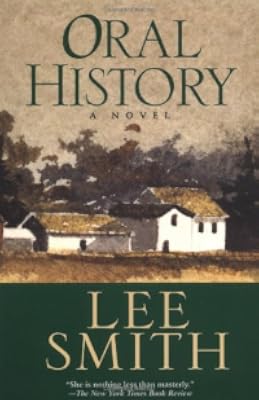
A curse laid on the inhabitants of Hoot Owl Holler follows each succeeding generation for a century, in a tale of love, murder, obsession, and betrayal set in Appalachia.Tags
Recommendations





Member Recommendations
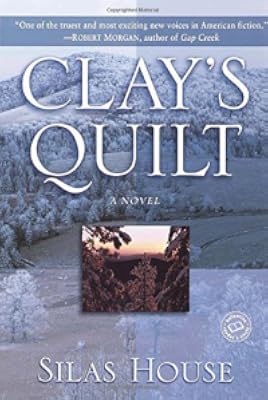
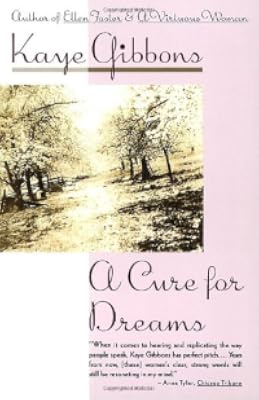
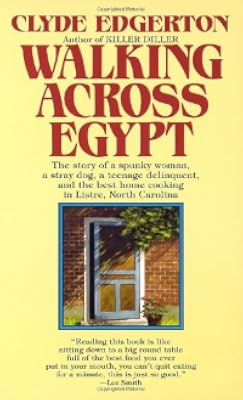
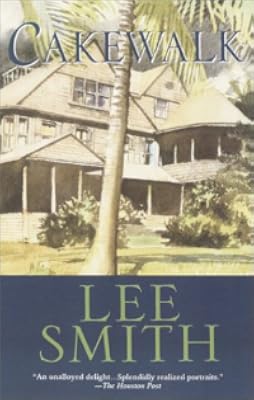
LCBrooks Narrative Appalachian historical fiction.
Member Reviews
When I was growing up, all family history was oral. My Daddy would tell tales of his Uncle Bunny, a man who had been dead twenty years before I was born, and bring him to life, so that he felt like a presence still there. This is what Lee Smith does so perfectly in her novels--she reaches into the past, plucks out fascinating characters, and brings them completely to life.
In Oral History, a young college student goes to the mountains of Virginia to research her family ancestry, and we are treated to their real stories, seen through the eyes of others who witnessed their lives unfold. The mountain setting of Hoot Owl Holler is as much a character as the people. It is nestled between three mountains, and it influences events by walling show more people in or setting them free. The very handsome Almarine Cantrell begins this story and three generations of Cantrells then weave a tale of fate and adversity that makes the legend of a curse seem more possible than not.
Smith has a rare command of the language of the mountains, and she presents her characters without condescending to them, another rarity. She knows the music and the old-time remedies, and she uses the expressions that peppered a Southern childhood and have now almost passed out of existence. Who doesn’t like a little mystery and some backwoods superstitions? She speaks of people who believe in witches and curses and makes you wonder if they are crazy or just more sensitive to another dimension than we are.
Three years of summers coming and going, and snow on the ground in the cold, and I’m still traveling my mountains but I know it in my heart I’m slowing down. I can tell how I’m getting old. Some days I’ll set by my fire all day, and think back on things that was, and them things is ever as clear to me as the here and now. Some days I swear I can’t tell no difference between them, and I tell you, I don’t give a damn.
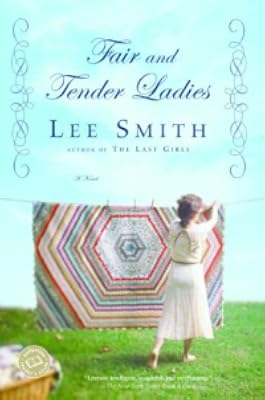
I love Lee Smith. She is the genuine article. This book does not rival Fair and Tender Ladies, but it comes close. I will continue to read her until I have exhausted her work and then, if I am granted a long enough life, I will start over again. show less
In Oral History, a young college student goes to the mountains of Virginia to research her family ancestry, and we are treated to their real stories, seen through the eyes of others who witnessed their lives unfold. The mountain setting of Hoot Owl Holler is as much a character as the people. It is nestled between three mountains, and it influences events by walling show more people in or setting them free. The very handsome Almarine Cantrell begins this story and three generations of Cantrells then weave a tale of fate and adversity that makes the legend of a curse seem more possible than not.
Smith has a rare command of the language of the mountains, and she presents her characters without condescending to them, another rarity. She knows the music and the old-time remedies, and she uses the expressions that peppered a Southern childhood and have now almost passed out of existence. Who doesn’t like a little mystery and some backwoods superstitions? She speaks of people who believe in witches and curses and makes you wonder if they are crazy or just more sensitive to another dimension than we are.
Three years of summers coming and going, and snow on the ground in the cold, and I’m still traveling my mountains but I know it in my heart I’m slowing down. I can tell how I’m getting old. Some days I’ll set by my fire all day, and think back on things that was, and them things is ever as clear to me as the here and now. Some days I swear I can’t tell no difference between them, and I tell you, I don’t give a damn.
I love Lee Smith. She is the genuine article. This book does not rival Fair and Tender Ladies, but it comes close. I will continue to read her until I have exhausted her work and then, if I am granted a long enough life, I will start over again. show less
This was a re-read of a book I remember liking as a teenager. Unfortunately, it did not hold up, and I found it a bit of a slog. The rapid jumps in time and narrative voice could have been smoother, and I found it an odd, slightly jarring read. The best part was the beginning, detailing the life and lore of a family in the mountains of western Virginia.
When I signed up for a Southern Literature class, I knew the reading list was going to be good. But, when I read the syllabus, only one classic, Huckleberry Finn, was present. The other two novels were more modern, which initially disappointed me. I was dying to dig into The Sound and the Fury or Blood Meridian. But Oral History came up on the list, and it didn't leave me wanting more.
Yes, this book is similar to a lot of William Faulkner's writing in that it shows every perspective possible of a story. Faulkner often uses a nuclear family going through a series of bad things. Lee Smith on the other hand, does it through the ancestry of a family. It goes almost one hundred years into the history of a rural Appalachian family, and the show more only common through line is the property they live on. Over that time period, Smith wrestles with rampant sexual deviance from the family, poverty, and an unwillingness to be happy from the family members. Every person in this story has a not great ending to their time on the pages.
I'm still upset my professor glossed over the classics, but this book almost made up for it. show less
Yes, this book is similar to a lot of William Faulkner's writing in that it shows every perspective possible of a story. Faulkner often uses a nuclear family going through a series of bad things. Lee Smith on the other hand, does it through the ancestry of a family. It goes almost one hundred years into the history of a rural Appalachian family, and the show more only common through line is the property they live on. Over that time period, Smith wrestles with rampant sexual deviance from the family, poverty, and an unwillingness to be happy from the family members. Every person in this story has a not great ending to their time on the pages.
I'm still upset my professor glossed over the classics, but this book almost made up for it. show less
I found this book hard to review. The writing is good, and I enjoyed the story, for the most part, but I did not care for the portrayal of the Appalachian people. I'm married to one and am close to the whole family, and they and their ancestors lived pretty normal lives, from all accounts. The characters in this book come across as superstitious and uneducated. One scene is towards the end, in coal company housing. The housing isn't what disturbed me. It is the descriptions of filthy conditions, trash everywhere, and dirty children. While that might apply to some people, it does not apply to all. Poor does not mean dirty, trashy, or ignorant. The coal miners worked hard in horrible conditions, and their lives were hard, but not show more necessarily like the description here. I wish some of the stereotypical descriptions could have been left out. show less
Oral History tells the story of multiple generations of the Cantrell family through one or more voices of each generation. The story is plain, gripping, and evocative.
Lee Smith’s words open a view of Appalachia with the surprising honesty of her character Richard Burlage’s photographs. "They were quite a shock to me, validating somehow my theory of photography if not life itself: the way a frame, a photograph, can illumine and enlarge one's vision rather than limit it." (223) The mind’s eye often allows us to ignore what we don’t want to be know, in the same manner that Richard ignored the deforestation and damage caused by mining when he was part of the community. He noted, “Nothing had been done with thought or care of show more consequence, I noted - lumber tripped and the land left, machine parts everywhere rusting, trash and refuse out in the yards in from of the homes, if you could call them that, and children - children everywhere, ragged and dirty, in the road and in the filthy bare yards along it...I had never seen anything like it. The lumber companies had stripped the timber out all the way up the mountain, on both sides of the holler. They were doing it, I recalled, logging this holler, even while I was here...somehow I had thought nothing of it at the time, which caused me to wonder what else I might have missed!" (224) Smith on the other hand scripted every line with care. Anyone who has spent time in that region of the country will recognize the vernacular and the imagery. show less
Lee Smith’s words open a view of Appalachia with the surprising honesty of her character Richard Burlage’s photographs. "They were quite a shock to me, validating somehow my theory of photography if not life itself: the way a frame, a photograph, can illumine and enlarge one's vision rather than limit it." (223) The mind’s eye often allows us to ignore what we don’t want to be know, in the same manner that Richard ignored the deforestation and damage caused by mining when he was part of the community. He noted, “Nothing had been done with thought or care of show more consequence, I noted - lumber tripped and the land left, machine parts everywhere rusting, trash and refuse out in the yards in from of the homes, if you could call them that, and children - children everywhere, ragged and dirty, in the road and in the filthy bare yards along it...I had never seen anything like it. The lumber companies had stripped the timber out all the way up the mountain, on both sides of the holler. They were doing it, I recalled, logging this holler, even while I was here...somehow I had thought nothing of it at the time, which caused me to wonder what else I might have missed!" (224) Smith on the other hand scripted every line with care. Anyone who has spent time in that region of the country will recognize the vernacular and the imagery. show less
I should probably give this book five stars, because it is very well done, but the fact that I could like only one or two characters in the whole book spoiled it for me a little. I know people have their pettinesses, meannesses, etc, but I can't believe that it is mostly negative qualities that make up human character for most people. It also irked me that milk sickness is called dew pizon, which has completely different symptoms, but maybe that is a regional thing? The dialect was so close to the dialect that I grew up with here in rural northwest Florida that I found myself thinking in it after finishing the book, which is a bit of a problem as I, like Jinks, have spent rather a lot of time trying to learn to speak "properly."
It was astounding to delve into Lee Smith's Appalachian family novel after already having been indoctrinated with the works of Frazier and Rash. Of couse, Smith's work pre-dates these two towering modern authors, and as such, has a certain unpolished, shotgunning effect.
Members
- Recently Added By
Lists

Southern Fiction
212 works; 52 members
Author Information

32+ Works 7,045 Members
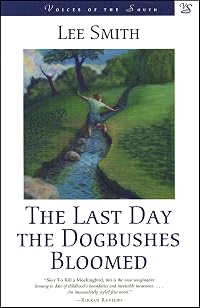
Lee Smith is a novelist, short story writer, and educator. She was born in 1944 in Grundy, Virginia. Smith attended Hollins College in Roanoke, Virginia. In her senior year at Hollins, Smith entered a Book-of-the-Month Club contest, submitting a draft of a novel called The Last Day the Dog Bushes Bloomed. The book, one of 12 entries to receive a show more fellowship, was published in 1968. Smith wrote reviews for local papers and continued to write short stories. Her first collection of short stories, Cakewalk, was published in 1981. Smith taught at North Carolina State University. Her novel, Oral History, published in 1983, was a Book-of-the-Month Club featured selection. She has received two O. Henry Awards, the Robert Penn Warren Prize for Fiction, the North Carolina Award for Fiction, the Lila Wallace/Reader's Digest Award, and the Academy Award in Literature presented by the American Academy of Arts and Letters. (Bowker Author Biography) show less
Awards and Honors
Awards
Notable Lists
Work Relationships
Common Knowledge
- Canonical title
- Oral History
- Original publication date
- 1983
- Epigraph
- Fair and Tender Ladies
Come all you fair and tender ladies
Be careful how you court young men.
They're like a star in a summer's morning,
First appear and then they're gone.
If I'd a-knowed ... (show all)afore I courted
That love, it was such a killin' crime,
I'd a-locked my heart in a box of golden
and tied it up with a silver line. - Dedication
- For Josh and Page
- First words
- Little Luther Wade just sits out there in the porch swing swaying back and forth with his new suspenders on, a little bitty old shriveled-up man so short that his feet in the cowboy books can't even touch the floor.
- Last words
- (Click to show. Warning: May contain spoilers.)It's surrounded by a chain link fence, fronted by the observation deck with redwood benches which fill up every summer night at sunset with those who have paid the extra $4.50 to be here, to sit in this cool misty hush while the shadows lengthen from the three mountains - Hoot Owl, Snowman, and Hurricane - while the night settles in, to be here when dark comes and the wind and the laughter start, to see it with their own eyes when that rocking chair starts rocking and rocks like crazy the whole night long.
Classifications
Statistics
- Members
- 668
- Popularity
- 43,008
- Reviews
- 11
- Rating
- (3.87)
- Languages
- English
- Media
- Paper, Audiobook, Ebook
- ISBNs
- 11
- ASINs
- 4